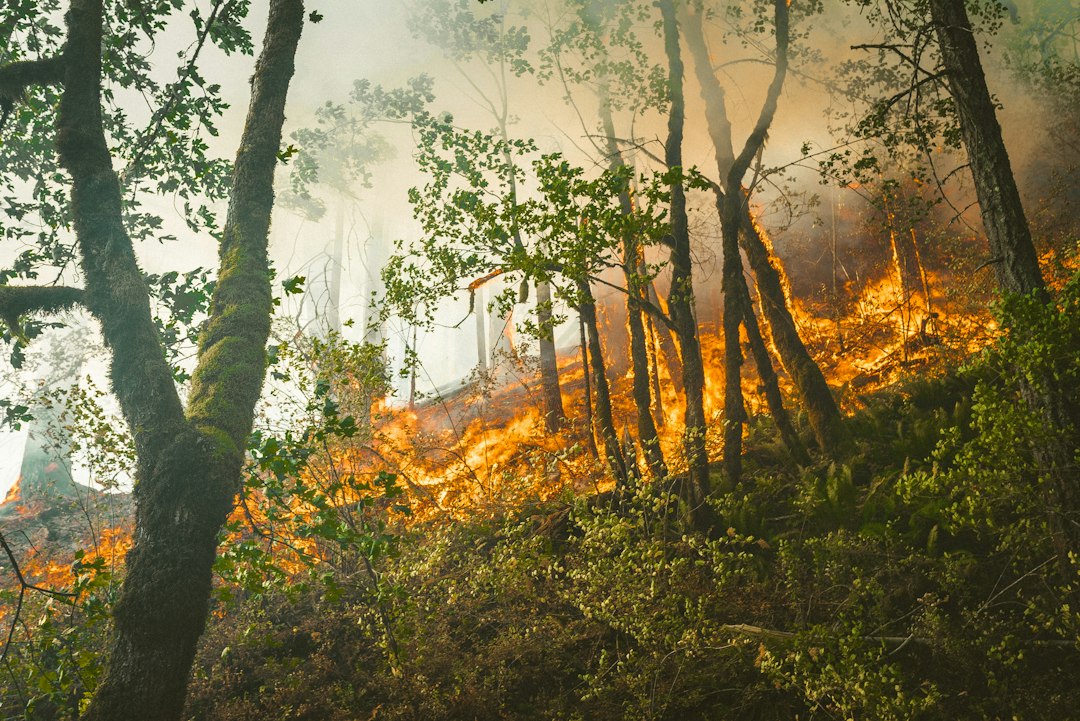
The scent of smoke, a primal alarm, would have been the first undeniable signal. For early humans, whose lives were inextricably woven with the natural world, the arrival of a forest fire was not merely an inconvenience; it was a profound and immediate threat to their very existence. Their reactions, dictated by instinct, observation, and a burgeoning understanding of their environment, would have been swift and varied, shaped by the unique circumstances of each inferno. To comprehend how these ancient hominins navigated such a terrifying event requires us to delve into the limitations and strengths of their existence, their sensory capabilities, and the rudimentary social structures that might have governed their responses.
The Sensory Prelude to Disaster
The earliest indicators of an approaching fire would have been perceived through the senses, honed by generations of survival. The acrid tang of burning wood, a smell both familiar and deeply disturbing, would have been carried on the wind, preceding the visual spectacle. This olfactory warning would have been amplified by the constant need to monitor the environment for threats, a heightened sense of smell that allowed early humans to detect subtle changes in the air, from the presence of predators to the potential for food. Beyond the scent, the sounds of the forest itself would have alerted them. The crackling roar of flames, the snapping of burning branches, and the panicked flight of animals would have created a symphony of destruction, a terrifying cacophony that signaled an imminent danger. The visual cues, once the fire was closer, would have been equally alarming: the ominous glow on the horizon, the billowing plumes of smoke rising into the sky, and the flickering orange tendrils consuming the familiar landscape.
Olfactory Alerts and Environmental Cues
The olfactory sense likely played a pivotal role in the initial detection of forest fires. For early humans, whose understanding of their environment was largely empirical and instinctual, a strong, acrid smell would have been a powerful indicator of something fundamentally wrong. This was not a subtle scent that could be ignored; it was a pervasive and potent warning. The aroma of burning vegetation, a smell intrinsically linked to destruction and danger, would have triggered an immediate, visceral response. This was a scent that carried with it the potential for asphyxiation and severe burns, a potent reminder of their vulnerability. Coupled with this olfactory alarm would have been a suite of other environmental cues. The behavior of animals would have been a critical secondary indicator. The agitated scurrying of small mammals, the panicked flight of birds, and the unusual silence of the forest, devoid of its usual symphony of animal calls, would have signaled a widespread disturbance. Early humans, keenly attuned to the rhythms of the natural world, would have recognized these deviations as harbingers of danger. They would have observed the changing patterns of wind, noting its direction and intensity, as a means of predicting the fire’s likely path. This rudimentary meteorological awareness, born of necessity, would have been crucial for their survival.
Auditory Signatures of an Approaching Blaze
The auditory landscape of a forest fire is a distinctive and terrifying one. Long before the flames reached their immediate vicinity, early humans would have begun to discern a growing cacophony of sounds that signaled the fire’s advance. The initial, distant crackling of burning wood would have gradually intensified, evolving into a more ominous roar as the flames grew and consumed larger areas. The snapping and popping of burning branches, like the rapid-fire volley of an ancient weapon, would have added to the escalating din. The sounds of escaping wildlife, the frantic rustling in the undergrowth, the desperate calls of birds taking flight, would have painted an auditory picture of chaos and desperation. These sounds, amplified by the stillness of the surrounding, untouched forest, would have been impossible to ignore. They would have served as a direct and immediate auditory warning, a primal alarm that demanded a swift and decisive response. The absence of familiar forest sounds, such as the chirping of insects or the calls of nocturnal animals, would have been equally significant, indicating a widespread disruption that affected the entire ecosystem.
Early humans faced numerous challenges in their environment, including the threat of forest fires that could rapidly encroach upon their settlements. When a fire moved beyond their position, they likely employed various survival strategies, such as relocating to safer areas or using firebreaks to protect their camps. This adaptability is a testament to their ingenuity and resilience in the face of natural disasters. For a fascinating exploration of how ancient peoples innovated and adapted to their surroundings, you can read more in this article about unbelievable ancient inventions, which highlights the remarkable capabilities of early civilizations. Check it out here: Unbelievable Ancient Inventions.
Instinctual Flight and the Scramble for Safety
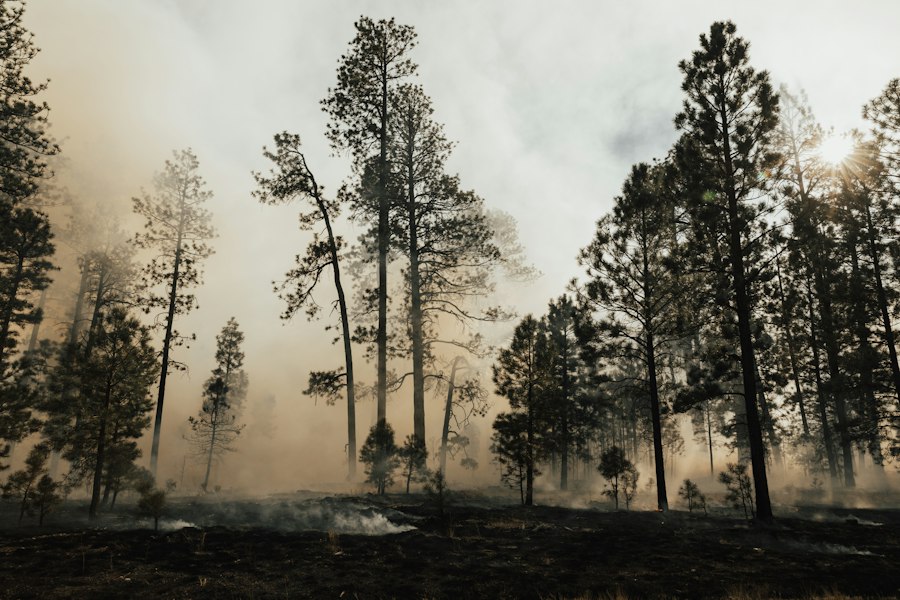
When the sensory warnings reached a critical threshold, instinct would have taken over. The fight-or-flight response, deeply ingrained in the human psyche, would have propelled early humans to abandon their current location and seek safety. This flight would have been driven by an immediate and overwhelming impulse to escape the encroaching danger, a desperate race against the flames. The direction of their escape would have been influenced by a multitude of factors, including the perceived direction of the fire, the availability of escape routes, and the knowledge of safer havens within their territory.
The Primacy of the Escape Reflex
The moment a forest fire presented a clear and present danger, the survival instinct would have overridden all other considerations. The primal urge to flee, deeply embedded in the human genome, would have been the dominant driver of early human behavior. This wasn’t a reasoned decision in the modern sense; it was a powerful, visceral reaction to an existential threat. The sight and sound and smell of the approaching inferno would have triggered a cascade of physiological responses, preparing their bodies for rapid movement. Their hearts would have pounded, their breathing would have quickened, and their muscles would have tensed, all in preparation for the urgent need to escape. This instinctual flight reflex would have been remarkably efficient, allowing them to react with a speed and decisiveness that might seem remarkable to us today. It was a testament to the power of natural selection, favoring those individuals and groups who were most adept at responding to such catastrophic environmental events. The immediate and overwhelming priority was simply to put distance between themselves and the destructive force of the fire.
Navigating Escape Routes: Instinct and Observation
The act of escaping a forest fire was not a random act of running in any direction. It was a carefully orchestrated, albeit often instinct-driven, maneuver that relied on a combination of innate directional sense and learned knowledge of the terrain. Early humans, intimately familiar with their territories, would have instinctively gravitated towards known safe havens: open clearings, riverbanks, or rocky outcrops that might offer some protection from the flames and the intense heat. Their escape routes would have been dictated by the landscape itself. They would have sought to move perpendicular to the fire’s advance, or towards areas where natural firebreaks might exist, such as large bodies of water or areas with less dense vegetation. The knowledge of which paths were less prone to ignition, which ravines offered shelter, and which elevated positions provided a better vantage point to assess the fire’s movement, would have been accumulated over generations. This observational learning, passed down through oral tradition or demonstrated through direct experience, was as crucial as any instinctual response. They would have been acutely aware of prevailing winds and how they might carry embers and spread the fire, factoring this into their escape trajectory.
Seeking Natural Defenses and Improvising Strategies
Beyond immediate flight, early humans possessed a remarkable capacity for observation and adaptation, leading them to seek out and utilize natural defenses offered by their environment. They would have recognized the protective qualities of certain geographical features and, in some instances, might have even attempted to create rudimentary barriers. These strategies, born of necessity and empirical understanding, demonstrate a level of environmental engagement that goes beyond simple reaction.
The Protective Embrace of Water and Stone
Water sources, be they rivers, lakes, or even substantial streams, would have been prime destinations during a forest fire. The presence of water offered a significant protective barrier. Early humans would have understood, intuitively or through experience, that water could dampen flames and create a zone of reduced flammability. They would have sought refuge on riverbanks or islands, using the water itself as a shield. Similarly, rocky outcrops and caves, particularly those with limited vegetation around them, would have offered sanctuary. The stone would not ignite, and the caves could provide shelter from the direct heat and smoke, offering a temporary respite from the inferno. These natural features represented the most reliable and readily available defenses against the onslaught of a wildfire. Their ability to identify and reach these safe havens before being overcome by the fire was a critical survival factor.
Limited but Crucial Attempts at Fire Management
While early humans did not possess the sophisticated fire management techniques of later societies, evidence suggests they may have engaged in rudimentary attempts to mitigate the impact of fires, or even to utilize fire to their advantage. This could have involved backburning small areas to create firebreaks, though this would have required a level of planning and control that might have been challenging. More likely, their “strategies” would have been more reactive, focusing on clearing vegetation around their shelters or encampments to reduce the immediate fuel load. They might have also learned to identify areas that had recently burned and were therefore less susceptible to immediate re-ignition, using these as temporary safe zones. The understanding that fire could be both a destructive force and a tool, however limited, likely began to emerge during these early encounters with wildfires.
The Aftermath: Adaptation and the Scarred Landscape
Once the immediate danger had passed, the surviving early humans would have emerged from their refuges to a drastically altered landscape. The aftermath of a forest fire would have presented a new set of challenges and opportunities, requiring further adaptation and resilience. The scorched earth, devoid of familiar landmarks, would have demanded a reorientation and a renewed effort to locate resources.
Re-emerging into a Changed World
The sight of a world transformed by fire would have been a stark and profound experience. The once vibrant green canopy would have been replaced by blackened, skeletal trees. The familiar scent of the forest floor would have given way to the lingering smell of ash and smoke. For early humans, this would have been a disorienting and potentially dangerous transition. Their established foraging routes might have been destroyed, their water sources contaminated, and their usual shelter sites rendered unusable. The immediate aftermath would have been a period of heightened vulnerability, requiring careful assessment of the damage and a swift plan for survival. They would have had to re-learn their environment, identifying new safe zones and potential hazards.
New Opportunities in the Post-Fire Ecosystem
Paradoxically, forest fires, while devastating, also create opportunities for ecological renewal and, consequently, for early human survival. The cleared land, once the immediate danger subsided, would have allowed sunlight to reach the forest floor, encouraging the growth of new vegetation. This fresh growth, often more palatable and nutritious, would have attracted herbivores, creating new hunting grounds. Furthermore, the fire would have cleared away old, diseased, or decaying plant matter, making way for a healthier ecosystem. Early humans, with their keen observational skills, would have recognized these changes and adapted their foraging and hunting strategies accordingly. They might have learned to predict where new shoots would emerge and where animals would congregate to feed on this fresh vegetation. The post-fire landscape, though initially bleak, offered the promise of renewal and a renewed source of sustenance, albeit one that required a different approach to resource acquisition.
When early humans faced the threat of a forest fire moving beyond their position, they likely employed various survival strategies to adapt to the rapidly changing environment. These strategies may have included seeking refuge in nearby caves or moving to safer areas with abundant resources. Understanding how ancient populations responded to such natural disasters can shed light on our current challenges with climate change. For more insights on how our past informs our present, you can read about the ongoing climate emergency in this related article.
Learning from the Flames: The Evolution of Survival Strategies
| Action Taken | Description | Purpose | Effectiveness |
|---|---|---|---|
| Relocation | Early humans moved away from the fire’s path to safer areas. | To avoid injury and death from flames and smoke. | Highly effective in ensuring survival. |
| Use of Firebreaks | Clearing vegetation to create barriers that slow or stop fire spread. | To control the fire and protect living areas. | Moderately effective depending on fire intensity. |
| Seeking Shelter | Taking refuge in caves, rocky areas, or water bodies. | To shield from heat and smoke inhalation. | Effective for short-term protection. |
| Use of Smoke Signals | Using smoke to communicate danger to other groups. | To warn others and coordinate movement. | Effective for group safety and coordination. |
| Observation and Learning | Studying fire behavior to predict movement and plan escape. | To improve future responses to fires. | Long-term effectiveness in survival strategies. |
The recurring encounters with forest fires were not merely random events; they were critical learning experiences that shaped the evolution of early human survival strategies. Through repeated observation, trial and error, and the transmission of knowledge, these ancient hominins gradually developed more sophisticated ways of predicting, avoiding, and even utilizing fire. This ongoing process of adaptation and learning was fundamental to their long-term success as a species.
The Transmission of Knowledge and the Dawn of Culture
The most significant long-term impact of forest fires on early humans was the development and refinement of survival knowledge. The lessons learned from individual encounters with fire would have been shared within groups, passed down through generations via oral traditions, storytelling, and direct instruction. This transmission of knowledge laid the foundation for the earliest forms of culture, where collective experience informed future behavior. Stories of past fires, of successful escapes and the dangers encountered, would have served as invaluable educational tools, preparing younger generations for the inevitable reoccurrence of these events. This cumulative knowledge would have allowed them to anticipate fire behavior, identify safer routes, and recognize the signs of an impending blaze with greater accuracy over time, thereby increasing their chances of survival and enabling them to thrive in fire-prone environments.
The Enduring Relationship Between Humans and Fire
The history of early humans is inextricably linked to the history of fire. Forest fires, as a natural and often recurring phenomenon, played a crucial role in shaping their interactions with the environment and, ultimately, their evolutionary trajectory. The challenges posed by these infernos fostered innovation, resilience, and a deep understanding of ecological processes. The ability to perceive, react to, and ultimately learn from forest fires was a testament to the adaptability and intelligence of our earliest ancestors, a crucial factor in their enduring legacy and the development of humankind. This ongoing dance with the destructive yet regenerative power of fire would continue to influence human societies for millennia to come.

Life 20,000 Years Ago | When an Ice Age Wildfire Traps Your Primitive Family
FAQs
What strategies did early humans use to escape forest fires?
Early humans likely employed various strategies to escape forest fires, including moving to higher ground or areas with less vegetation. They may have also used their knowledge of the terrain to find safer routes away from the flames and smoke.
How did early humans respond to the aftermath of a forest fire?
After a forest fire, early humans would assess the damage to their environment and resources. They might have scavenged for food, utilized burnt areas for hunting, or gathered materials for shelter from the remnants of the fire.
Did early humans have any methods to prevent forest fires?
While early humans did not have formal methods to prevent forest fires, they may have practiced controlled burns to manage vegetation and reduce the risk of larger, uncontrolled fires. This technique could help promote new growth and attract game animals.
What impact did forest fires have on early human migration?
Forest fires could have significantly influenced early human migration patterns by altering the availability of resources. As certain areas became inhospitable due to fire, groups may have been compelled to move to new locations in search of food and shelter.
How did early humans adapt their lifestyles in response to frequent forest fires?
In response to frequent forest fires, early humans likely adapted their lifestyles by developing more mobile living patterns, creating fire-resistant shelters, and diversifying their food sources to include more resilient plants and animals that thrived in post-fire environments.