
The small, trusting hand of a toddler, reaching out to grasp a mother’s finger, was more than a gesture of affection in the ancient world. It was a vital early warning system. While much of our understanding of early human evolution focuses on the prowess of adult hunters and gatherers, the crucial role of children in ensuring the survival of their mothers, and by extension, their communities, is a fascinating and often overlooked aspect of our ancestral past. The seemingly innocent observations and reactions of young children could have provided invaluable intelligence about the presence of predators, the approach of rival groups, or even subtle shifts in the environment that signaled danger. This article explores the multifaceted ways in which early human children, through their unique sensory perceptions and developmental stages, contributed to their mothers’ ability to detect and respond to external threats, thereby playing an integral part in the intricate tapestry of prehistoric survival.
The Unseen Sentinels: Children’s Heightened Sensory Acuity
Young children possess a remarkable sensory world, one that is often more attuned to subtle nuances than that of adults, whose senses can become dulled by habituation and experience. This heightened acuity, particularly in hearing and smell, could have served as a critical alarm system for their mothers. Imagine a prehistoric landscape, a complex symphony of sounds and scents. An adult might be focused on the task at hand, perhaps preparing food or tending to a fire, their attention narrowed. A child, however, with less cognitive baggage and a more immediate connection to their surroundings, might readily pick up on fainter, more distant sounds.
Auditory Alerts from the Undergrowth
The rustling of leaves, the snapping of a twig, the faint padded footsteps of a predator – these subtle auditory cues, easily missed by a preoccupied adult, could be readily detected by the sensitive ears of a young child. Their smaller ear canals might even be more efficient at capturing higher frequencies, potentially picking up sounds that adults would not perceive. A sudden cry of alarm from a toddler, pointing towards an unseen movement in the bushes, would have immediately alerted their mother to a potential threat. This would not necessarily be a learned response; a child’s natural startle reflex to an unusual sound or movement could be the first indicator. The mother, observing her child’s reaction, would then engage her own senses, scanning the direction the child indicated, seeking confirmation of the perceived danger. Over generations, such responsive mothers, those who heeded their children’s unprompted warnings, would have had a survival advantage. The child’s sensory input, though perhaps not consciously interpreted as “predator,” would trigger a primal caution in the mother.
Olfactory Nuances and Environmental Clues
Similarly, a child’s sense of smell, unburdened by the constant bombardment of complex human-derived scents, might be more sensitive to the primal odors of the wild. The musky scent of a large carnivore, the acrid smell of smoke from a distant, uncontrolled fire, or even the sudden absence of familiar animal scents could all be registered by a child. A child’s distressed whimper or unease, accompanied by a sniffing motion or turning towards a particular direction, could signal to the mother that something in the air was amiss. While direct evidence is scarce, it is plausible that certain pheromonal cues released by stressed animals, which might be imperceptible to adult humans, could be picked up by children and translated into a general sense of unease, prompting the mother to become more vigilant. This intuitive understanding between mother and child, built on the child’s raw sensory input, would have been a powerful survival mechanism. The mother learns to trust these subtle signals, even if she cannot articulate the specific cause, and her increased awareness protects both her and her offspring.
Early human children played a crucial role in helping their mothers identify and respond to outside dangers, as their heightened curiosity and alertness often led to early warnings about potential threats in their environment. This dynamic not only fostered a stronger bond between mothers and children but also contributed to the survival of the group by allowing for quicker reactions to predators or other hazards. For further insights into how human interactions and societal structures have evolved over time, you might find this article interesting: Is the Outer Space Treaty Still Relevant?.
The Power of Observation: Children as Unintentional Watchers

Beyond pure sensory input, young children are incredibly observant. Their world is one of constant learning and exploration, and they notice details that adults often overlook. This innate curiosity, coupled with their lower vantage point, allowed them to observe subtle changes in the behavior of animals and the environment that could signal danger. Their focus might be on a bird suddenly taking flight, a herd of herbivores becoming restless, or a peculiar stillness in the air.
Animal Behavior as an Indicator of Threat
Animals are often the first to sense danger. A change in their behavior – a sudden flock of birds taking to the sky, a herd of deer scattering, or the agitated calls of smaller creatures – are all classic indicators of a predator’s presence. A child, often playing in close proximity to these animals, would be among the first to notice these deviations from the norm. A toddler’s pointing and vocalizations directed at a normally placid group of animals exhibiting unusual nervousness would be a clear signal to their mother. She, in turn, would interpret this as a cue to assess her surroundings more carefully. The child’s simple act of noticing and reacting, even without understanding the specific threat, primes the mother for action. This interspecies communication, mediated by the child’s observation, was a vital layer of protection. The mother’s ability to translate her child’s reaction into a precautionary stance meant that she could often avoid direct confrontation, opting for evasion or defensive measures before the threat became immediate.
Environmental Shifts and Subtle Anomalies
Children’s perception of their environment is less filtered by adult expectations. They might notice a patch of ground that feels unusually soft, a stream that has suddenly changed its flow, or a peculiar absence of insect sounds. These anomalies, though seemingly minor, could be indicators of larger environmental shifts or approaching dangers. For example, a child playing near a river might notice a sudden influx of debris, indicating a downstream disturbance, or a change in water color, suggesting contamination or an approaching flood. Their simple “look!” directed at a specific area, combined with their behavioral cues of curiosity or apprehension, would prompt the mother to investigate. This passive surveillance, conducted by the youngest members of the group, contributed significantly to the collective awareness of potential environmental hazards that could endanger the entire family unit. The mother’s learned ability to attribute significance to her child’s observations would have been a critical factor in her own and her offspring’s long-term survival.
Social Dynamics and the Detection of Human Threats
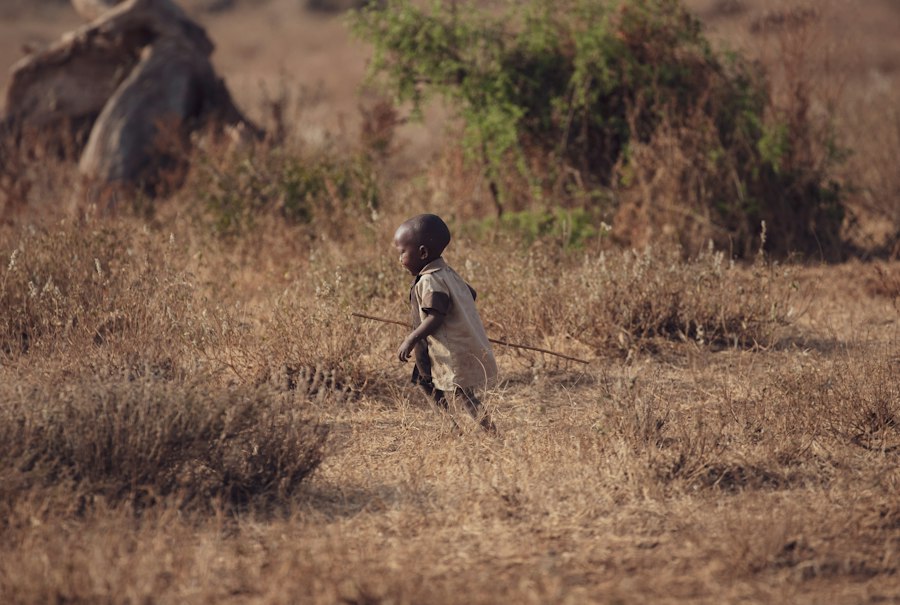
The dangers faced by early humans were not solely from the natural world. Competition with other human groups, whether for resources or territory, presented a significant threat. Children, with their developing social awareness and unfiltered interactions, could inadvertently provide early warnings of approaching rival groups. Their natural inclination to notice strangers and their reactions to unfamiliar human presence could have been a critical early detection mechanism.
Unfamiliar Faces and Distant Encounters
Children are generally more sensitive to novelty and unfamiliar individuals than adults. Their capacity for recognizing familiar faces and their innate wariness of strangers could be a powerful tool. A child’s discomfort, their clinging to their mother, or their pointing and vocalizations towards individuals at a distance, even before the adults could clearly discern them, could signal the presence of outsiders. This alarm, originating from the child, would prompt the mother and other adults to immediately assess the situation, to identify the nature of the approaching group, and to decide on the appropriate course of action – whether to evade, observe from a distance, or prepare for a confrontation. The child’s primal reaction to the unfamiliar, unburdened by complex social negotiations, served as a potent early warning. The mother, attuned to her child’s anxieties, would interpret these signals as a cue for increased vigilance. This preemptive awareness allowed for a more strategic response, potentially avoiding conflict altogether.
The Impact of Social Cues and Emotional Contagion
Children are highly attuned to the emotional states of those around them, particularly their mothers. If the mother sensed a threat, her own anxiety and vigilance would likely be communicated to her child through subtle cues – a tightening of her grip, a change in her tone of voice, or a more watchful demeanor. In turn, the child might become restless or fearful, and this amplified reaction from the child could then serve as a secondary alert to the mother herself and other adults. This emotional contagion, while seemingly a negative aspect of child development, could have had a survival benefit in this context. A child’s amplified fear or distress, triggered by the mother’s own nascent sense of danger, would reinforce the need for heightened awareness and prompt a more immediate and decisive response from the entire group. The collective awareness, thus, was built not only on individual observations but also on the empathetic resonance within the family unit, with children acting as amplifiers of latent anxieties.
Cognitive Development and the Interpretation of Danger Signals
As children grow, their cognitive abilities develop, allowing them to interpret a wider range of signals and to form more nuanced understandings of potential threats. While infants might react purely on instinct and sensory input, older children could begin to associate certain sounds, sights, or behaviors with past experiences of danger. This developing capacity for association and memory played a role in their effectiveness as early warning systems.
Associative Learning and Past Experiences
A child who has experienced the fear associated with a particular predator, or the unease of encountering strangers, will begin to associate those stimuli with negative outcomes. Over time, even a distant growl, a fleeting glimpse of a specific animal’s fur, or the sound of unfamiliar human voices could trigger a learned response of fear or caution in the child. This learned fear, manifested as crying, running to the mother, or pointing, would be a clear signal of a recognized threat. The mother, privy to her child’s past experiences, would be able to interpret these learned reactions with greater accuracy. The child’s ability to recall and react to past danger, even in a rudimentary form, provided a more sophisticated layer of early warning than mere instinct. This associative learning, honed through repeated encounters and survival, made children invaluable in identifying recurring threats.
Pattern Recognition and Subtle Changes
Even before mastering complex language, children possess a remarkable ability for pattern recognition. They learn the typical behaviors of their environment and the usual sounds and sights. Any deviation from these established patterns, even if the specific threat remains unclear, can trigger a child’s alert system. For example, a child might notice that the birds are unusually quiet, that a familiar stream is flowing faster than normal, or that a certain type of insect is absent. These subtle anomalies, when consistently observed and reacted to by the child, would signal to the mother that something out of the ordinary is occurring, prompting her to investigate further. This rudimentary form of pattern recognition, combined with their direct observation, allowed children to identify emerging dangers before they became overtly obvious to adults. The mother’s ability to recognize these recurring patterns in her child’s behavior, and to connect them to potential dangers, would have been a key to her adaptive success.
Early human children played a crucial role in helping their mothers recognize and respond to outside dangers, as their keen senses and curiosity often alerted adults to potential threats in the environment. This dynamic not only fostered a sense of community but also enhanced survival strategies within early human groups. For a deeper understanding of how environmental factors influenced human behavior and community dynamics, you can explore this related article on the impact of environmental migration. It provides valuable insights into how communities adapt to changing surroundings and the implications for social structures. You can read more about it here.
The Collaborative Nature of Survival: Mother-Child Dyads as a Unit
| Metric | Description | Impact on Understanding Outside Dangers |
|---|---|---|
| Vocalizations and Crying | Early human children used distinct cries and sounds to signal discomfort or threats. | Alerted mothers to immediate dangers such as predators or environmental hazards. |
| Behavioral Responses | Children exhibited fear or distress in response to unfamiliar stimuli. | Helped mothers identify potentially dangerous animals or situations. |
| Nonverbal Communication | Gestures and facial expressions indicated unease or alertness. | Provided mothers with cues to investigate or avoid certain areas. |
| Exploratory Play | Children’s interactions with the environment revealed hidden dangers. | Enabled mothers to learn about threats in the surroundings through observation. |
| Social Learning | Children mimicked adult reactions to dangers and shared knowledge within groups. | Enhanced communal awareness and preparedness against external threats. |
Ultimately, the contribution of early human children to detecting outside dangers was not an isolated phenomenon. It was deeply intertwined with the mother-child dyad, a fundamental unit of survival in prehistoric times. The mother’s ability to interpret her child’s signals, coupled with the child’s innate capacity to perceive and react to the environment, created a powerful collaborative system. This symbiotic relationship ensured that potential threats were detected earlier, allowing for more effective avoidance or defense strategies, and thereby significantly increasing the chances of survival for both mother and child, and by extension, for the continuation of the human lineage. The mother’s attentiveness to her child was not just nurturing; it was a crucial component of her own survival strategy, a testament to the profound evolutionary advantage of this intimate partnership. The child, in their vulnerability and their unique perceptual world, became an unexpected but vital guardian, a tiny sentinel whose seemingly simple reactions held the key to navigating a perilous existence.
Intergenerational Knowledge Transfer and Learned Vigilance
Over time, mothers learned to interpret their children’s unique signals and reactions. This learned vigilance, passed down through generations of observation and experience, became an integral part of maternal behavior. A mother who effectively deciphered her child’s cues and responded appropriately would have been more successful in raising offspring. This success, in turn, would have reinforced these learned behaviors in her own children, who would then apply similar interpretations when they became parents. Thus, a form of intergenerational knowledge transfer occurred, not through explicit instruction, but through the practical realities of survival. The child’s innate abilities were amplified by the mother’s learned interpretation, creating a robust and adaptive system for detecting and responding to danger. This collaborative vigilance, rooted in the deepest bonds of family, was a cornerstone of early human resilience. The child’s instinctual reactions, filtered through the mother’s experienced understanding, became a sophisticated early warning system, safeguarding the future of humanity.

Life 20,000 Years Ago | When an Ice Age Wildfire Traps Your Primitive Family
FAQs
How did early human children contribute to their mothers’ awareness of dangers in the environment?
Early human children played a crucial role in alerting their mothers to potential dangers in their surroundings. Their natural curiosity and tendency to explore allowed them to encounter threats, such as predators or hazardous terrain, which they would then communicate to their mothers through vocalizations or body language.
What specific behaviors did children exhibit that helped mothers identify threats?
Children often displayed heightened sensitivity to changes in their environment. They might freeze, point, or make specific sounds when they sensed danger, which served as cues for their mothers to be vigilant. This instinctive behavior helped mothers quickly assess and respond to potential threats.
Did early human children have any formal training to recognize dangers?
No formal training existed; instead, children learned through observation and imitation. They absorbed knowledge from their mothers and other adults about what constituted a threat, gradually developing their ability to recognize and react to dangers in their environment.
How did the presence of children affect the overall safety of early human groups?
The presence of children in early human groups contributed to a collective awareness of dangers. Their ability to detect threats allowed the entire group to respond more effectively, enhancing the safety of the community as a whole. This collaborative vigilance was essential for survival in a perilous environment.
What role did communication play in helping mothers understand outside dangers?
Communication was vital in helping mothers understand outside dangers. Children used vocalizations, gestures, and facial expressions to convey their observations. This non-verbal communication, combined with the mothers’ own experiences, created a shared understanding of potential threats, enabling quicker and more informed responses.