
The Dawn of Resilience: Early Adaptations and the Foundation of Survival
The story of human evolution is fundamentally a narrative of survival. From the earliest hominins to the emergence of Homo sapiens, a relentless series of environmental pressures and opportunities shaped the very traits that allowed our ancestors to persist and eventually thrive. These ancient survival traits were not static; they were dynamic, evolving in response to changing landscapes, the availability of resources, and the ever-present challenges of predation and competition. Understanding this evolutionary journey offers profound insights into the biological and behavioral underpinnings of human existence, revealing a deep wellspring of ingenuity and adaptability that has characterized our species throughout millennia.
The initial chapters of this survival saga unfold in the African savanna, the cradle of humanity. Here, early hominins, transitioning from arboreal life to terrestrial existence, faced a starkly different set of challenges. The open plains offered new foraging opportunities but also exposed them to a greater array of predators. This shift necessitated the development of crucial survival adaptations. Bipedalism, the ability to walk upright on two legs, emerged as a pivotal development. While its origins are debated, its survival advantages are clear. It freed the hands for carrying tools, food, and infants, and likely provided better thermoregulation by reducing exposure to direct sunlight. Furthermore, an elevated stance may have offered improved visibility across the savanna, allowing for earlier detection of both prey and predators. This rudimentary form of “situational awareness” was a cornerstone of survival in a dangerous environment.
Tool Use: The Extension of Hand and Mind
Perhaps one of the most significant leaps in early hominin survival was the advent of tool use. The Oldowan tool industry, dating back over two million years, signifies a critical threshold. These simple stone choppers and flakes, though crude by modern standards, represent a profound cognitive advancement. They provided hominins with the means to access new food sources, such as marrow from scavenged bones, and to process tougher plant materials. The ability to fashion and utilize tools was not merely a physical advantage; it was a testament to evolving cognitive abilities. It required planning, foresight, and a rudimentary understanding of cause and effect. This innovation allowed early humans to exploit ecological niches that would have been inaccessible otherwise, thereby expanding their dietary range and increasing their caloric intake, vital for survival and reproduction.
Social Bonds and Cooperative Strategies
Beyond individual physical and cognitive adaptations, the evolution of social behavior played an indispensable role in human survival. Early hominins, like many primates, likely lived in social groups. However, as pressures mounted, these social bonds likely intensified and became more structured. Cooperation became a powerful survival strategy. Group hunting, even of small game, would have been more successful than solitary efforts. Sharing of resources, particularly food, would have buffered against individual foraging failures. The protection offered by a group against predators was also a significant advantage. This nascent sociality fostered the development of communication, rudimentary forms of social learning, and the beginnings of altruistic behavior – all crucial for the collective survival of the group. The ability to communicate distress, coordinate actions, and learn from the experiences of others laid the groundwork for more complex social structures that would define later human evolution.
Ancient human evolution is a fascinating subject, particularly when examining how survival traits developed over time. One intriguing aspect is the role of navigation skills among early humans, which were crucial for their survival and adaptation to various environments. A related article that delves into this topic is “Navigating the Seas: Ancient Mariners and Their Lost Wayfinding,” which explores how ancient mariners utilized their navigation abilities to traverse vast oceans and discover new lands. This article highlights the importance of these skills in the context of human evolution and survival. For more insights, you can read the article here: Navigating the Seas: Ancient Mariners and Their Lost Wayfinding.
The Cognitive Revolution: Shaping Mind and Society for a Changing World

As hominins evolved, so too did their cognitive capacities. The development of more sophisticated brains led to a cascade of behavioral and social innovations that dramatically enhanced survival prospects. This period witnessed a profound shift from purely instinctual responses to more deliberate, planned, and culturally transmitted behaviors. The ability to adapt to diverse environments, to innovate in the face of new challenges, and to transmit knowledge across generations became hallmarks of our evolving lineage, setting the stage for unprecedented success.
Mastering Fire: A Transformative Tool
The controlled use of fire stands as a monumental achievement in human evolutionary history. Emerging approximately one million years ago, fire provided a suite of survival advantages that were nothing short of revolutionary. The most immediate benefit was warmth, allowing hominins to inhabit colder climates and survive the frigid nights of the African savanna. Fire also served as a powerful deterrent against predators, creating a safe haven for sleeping and gathering. Crucially, fire transformed the human diet. Cooking food made it easier to digest, increasing the availability of nutrients and calories. This dietary shift may have played a role in the further development of the human brain, which is metabolically expensive to maintain. Moreover, cooked food reduced the risk of foodborne illnesses, contributing to improved health and survival rates. The mastery of fire was not just a technological advancement; it was a fundamental alteration of the human relationship with their environment, enabling expansion into new territories and fostering social cohesion around communal hearths.
The Rise of Language and Complex Communication
While direct evidence of early language is scarce, the evolutionary trajectory of human anatomy, particularly the vocal tract and brain structures associated with language, strongly suggests its increasing importance. The development of complex communication, perhaps initially through gestures and vocalizations, allowed for more nuanced social interactions, the coordination of activities, and the transmission of vital knowledge and skills. Language facilitated the sharing of information about food sources, dangers, and social relationships. It enabled the development of complex social structures, rituals, and shared belief systems, which fostered group cohesion and identity. The ability to convey abstract ideas and to plan collaboratively through verbal communication provided a significant cognitive edge, enabling our ancestors to solve problems more effectively and to adapt to novel situations with greater speed and ingenuity. This linguistic capacity was a crucial building block for the cultural evolution that would follow.
Innovations in Hunting and Resource Acquisition
The Paleolithic era, characterized by the widespread use of stone tools, saw significant advancements in hunting strategies and resource acquisition. From the earlier reliance on scavenging, hominins evolved into increasingly skilled hunters. The development of more sophisticated tools, such as spear points and axes, allowed for the effective hunting of larger game. Cooperative hunting strategies, coordinated through advanced communication, enabled groups to tackle prey that would have been impossible to subdue individually. Furthermore, the development of techniques for preserving food, such as drying and smoking, allowed for the storage of surpluses, buffering against periods of scarcity. This improved ability to reliably acquire and manage resources was fundamental to supporting larger and more stable populations, increasing reproductive success and overall survival.
Adapting to a Dynamic Planet: Migrations and Environmental Challenges
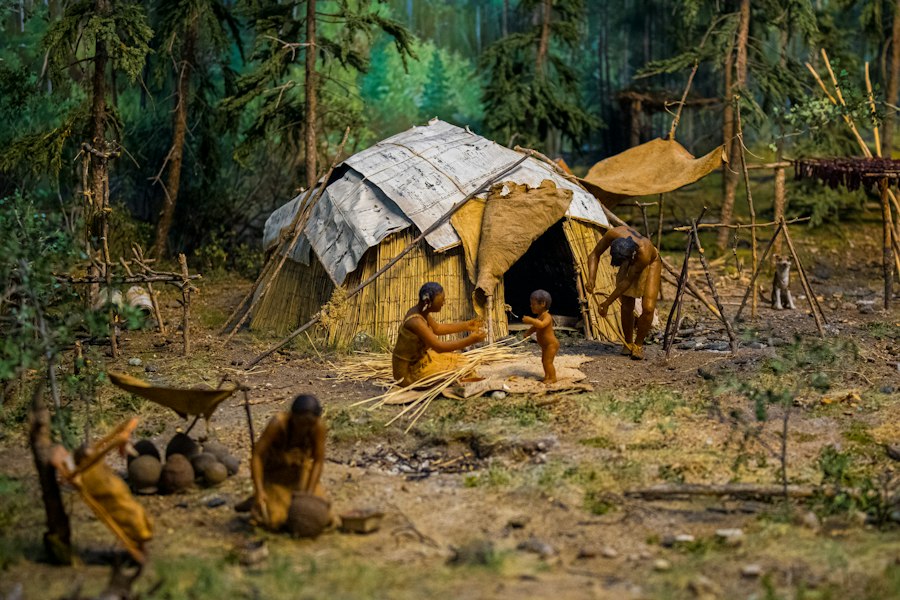
As human populations grew and spread, they encountered a vast array of new environments, each presenting unique challenges and demanding novel survival strategies. The migrations out of Africa, beginning perhaps as early as two million years ago, represent a testament to the remarkable adaptability of our ancestors. This dispersal into diverse climatic zones, from the temperate regions of Eurasia to the colder landscapes of the north, necessitated the evolution of physiological and behavioral adaptations that allowed humans to thrive in conditions far removed from their ancestral African homeland.
Physiological Adaptations to New Climates
The expansion into different climatic zones triggered significant physiological adaptations. For instance, populations settling in colder regions likely developed adaptations to conserve heat. These could include changes in body shape, such as a more compact build with shorter limbs, which minimizes surface area to volume ratio and reduces heat loss. Increased metabolic rates to generate internal heat may also have been a factor. Conversely, populations in hotter regions might have developed adaptations to dissipate heat more effectively, such as a more linear build and enhanced sweating capabilities. The ability to adapt to varying levels of solar radiation, including the development of skin pigmentation to protect against harmful UV rays, was also a critical survival trait that evolved in response to different geographical locations.
Developing Technologies for Diverse Environments
The migration of humans across the globe was intimately linked with the development of new technologies tailored to specific environmental conditions. In colder regions, the invention of clothing made from animal hides and fur was essential for protection against the elements. The creation of more sophisticated shelters, such as tents and later more permanent dwellings, provided refuge from harsh weather. In environments with scarce plant resources, the reliance on hunting and fishing intensified, leading to the development of specialized tools for these activities, such as harpoons and fishing nets. The ability to adapt and innovate technologically was key to overcoming the limitations of their biological makeup and to successfully colonizing new territories.
The Role of Diet in Geographic Adaptation
Dietary flexibility was another crucial survival trait that facilitated human migration. As humans moved into new territories, they encountered different flora and fauna. The ability to exploit a wide range of food sources, from the megafauna of the Pleistocene to the marine life of coastal regions, allowed them to adapt to varied ecological niches. This dietary plasticity was often supported by the development of new foraging and hunting techniques. For example, the ability to process otherwise inedible plants through techniques like grinding or fermentation, or the development of methods for hunting specific animals, allowed humans to extract sustenance from environments that might have been challenging for less adaptable species. The human capacity for dietary diversification was a powerful engine of survival and expansion.
The Agricultural Revolution: A New Era of Human-Environment Interaction
The advent of agriculture, beginning around 10,000 years ago, marked a fundamental turning point in human history. This transition from nomadic hunter-gatherer lifestyles to settled agricultural communities brought about profound changes in human societies, diets, and our relationship with the environment. While it offered new avenues for survival and population growth, it also introduced novel challenges and pressures that continued to shape human evolution.
Domestication: Shaping Plants and Animals for Human Needs
The deliberate cultivation of plants and the domestication of animals represented a radical departure from previous survival strategies. By selecting and breeding specific species, humans began to actively shape their environment to meet their needs. This led to the development of staple crops, such as wheat, rice, and maize, which provided a reliable and abundant food source. Similarly, the domestication of animals like cattle, sheep, and pigs provided not only a consistent supply of meat and dairy but also labor and materials for clothing and tools. This shift towards agriculture allowed for the support of larger, sedentary populations, leading to the rise of villages, towns, and eventually cities. However, this reliance on a narrow range of crops also introduced new vulnerabilities to disease and famine if those crops failed.
The Double-Edged Sword of Sedentary Life and Population Density
Sedentary life and increased population density brought about by agriculture had a complex impact on human survival. On one hand, it fostered the development of more complex social structures, specialized labor, and the accumulation of knowledge and technology. It allowed for greater investment in childcare and education, potentially leading to improved offspring survival. On the other hand, increased proximity to domesticated animals and denser human populations created new breeding grounds for infectious diseases. Epidemics, which would have been less common in nomadic societies, became a significant threat, leading to periods of widespread mortality. The evolution of immune systems to better combat these novel pathogens became a critical aspect of human survival in the agricultural era.
The Dawn of Civilization and New Forms of Competition
The surplus resources generated by agriculture facilitated the development of specialized roles beyond basic subsistence. This led to the emergence of artisans, traders, and eventually rulers, laying the foundation for civilizations. However, this societal stratification and the accumulation of resources also introduced new forms of competition, not just between human groups for land and resources, but also within societies. Warfare, driven by territorial disputes and the desire for control over valuable assets, became a more prominent factor in human survival and mortality. The evolution of social and political structures, and the development of strategies for defense and conflict resolution, became increasingly important for the survival and success of communities.
The study of ancient human evolution reveals fascinating insights into how survival traits developed over time, shaping our ancestors’ ability to adapt to their environments. Researchers have identified key characteristics such as bipedalism and increased brain size that played crucial roles in survival. For those interested in understanding the broader implications of survival strategies, a related article discusses the impact of modern challenges on financial resilience, which can be explored further in this insightful piece. This connection highlights how the principles of survival, whether in ancient times or today, continue to influence our lives in various ways.
Enduring Legacies: The Modern Human and the Echoes of Survival
| Time Period | Key Evolutionary Trait | Survival Advantage | Developmental Notes |
|---|---|---|---|
| ~7 million years ago | Bipedalism | Freed hands for tool use, improved energy efficiency in movement | Early hominins like Sahelanthropus showed adaptations for upright walking |
| ~2.5 million years ago | Stone tool use | Improved ability to process food, hunt, and defend | Oldowan tools mark the beginning of technological innovation |
| ~1.8 million years ago | Increased brain size | Enhanced cognitive abilities for problem-solving and social interaction | Homo erectus showed significant brain expansion compared to predecessors |
| ~400,000 years ago | Control of fire | Cooking food, warmth, protection from predators | Evidence from hearths and charred bones suggests controlled use of fire |
| ~300,000 years ago | Development of language | Improved communication and social coordination | Likely gradual development; anatomical changes in vocal tract support speech |
| ~50,000 years ago | Complex tools and culture | Enhanced adaptability and transmission of knowledge | Emergence of symbolic art, advanced hunting tools, and social structures |
The traits that allowed our ancient ancestors to survive and reproduce have not vanished; they are woven into the very fabric of modern humanity. While our environments and challenges have transformed dramatically, the fundamental biological and behavioral predispositions forged in the crucible of evolutionary history continue to influence our lives, our societies, and our future. Understanding these enduring legacies offers a profound perspective on what it means to be human.
The Adaptive Immune System: A Legacy of Pathogen Encounters
One of the most direct and significant legacies of ancient human survival is our adaptive immune system. Throughout millennia, our ancestors faced a constant barrage of pathogens – bacteria, viruses, and parasites. Those individuals with more robust or adaptable immune responses were more likely to survive infections and pass on their genetic material. This ongoing evolutionary arms race with microbes has shaped our immune system into a highly sophisticated defense network. The variations in immune responses observed across different human populations today are, in part, a reflection of the specific pathogens they encountered and evolved alongside in their ancestral environments. The ongoing challenge of novel infectious diseases highlights the continued importance of this ancient survival mechanism.
Innate Tendencies: Fear, Cooperation, and Resourcefulness
Many of our innate behavioral tendencies can be traced back to the survival pressures of our ancestors. The innate fear of heights, snakes, and spiders, for example, likely evolved as a protective mechanism against genuine dangers in ancestral environments. Our capacity for cooperation, empathy, and altruism, while seemingly complex, has deep roots in the necessity of group cohesion for survival and reproduction. The drive to acquire and hoard resources, while sometimes leading to modern anxieties, can be seen as an echo of the constant need for food security in a world where scarcity was a frequent threat. Our inherent resourcefulness, our ability to learn, innovate, and adapt to new circumstances, is perhaps the most profound and enduring legacy of our evolutionary past.
The Ongoing Evolution of Human Resilience
Human evolution has not ceased; it continues, albeit at a pace often imperceptible to individual lifetimes. Modern challenges, such as climate change, globalization, and technological advancements, are posing new evolutionary pressures. While direct biological selection may be less overt than in the past, cultural evolution, technological innovation, and our own choices are actively shaping our future. The enduring human capacity for adaptation, the very trait that allowed our ancient ancestors to overcome the challenges of their time, remains our most potent tool for navigating the complexities of the present and ensuring our survival in the ages to come. The story of human survival traits is not a closed chapter; it is an ongoing narrative of resilience, ingenuity, and the continuous interplay between humanity and its ever-changing world.

Life 20,000 Years Ago | When an Ice Age Wildfire Traps Your Primitive Family
FAQs
What are some key survival traits that developed in ancient humans?
Key survival traits that developed in ancient humans include bipedalism, which allowed for efficient movement and the ability to cover long distances; larger brain size, which facilitated complex problem-solving and social interactions; and the development of tools for hunting and gathering, which improved food acquisition and survival rates.
How did environmental changes influence human evolution?
Environmental changes, such as climate shifts and the availability of resources, played a significant role in human evolution. For instance, the transition from forested areas to open savannas prompted early humans to adapt by becoming bipedal and developing new foraging strategies, which ultimately influenced their physical and cognitive development.
What role did social structures play in the survival of ancient humans?
Social structures were crucial for the survival of ancient humans as they facilitated cooperation in hunting, gathering, and child-rearing. Group living provided protection against predators, allowed for the sharing of resources, and enabled the transmission of knowledge and skills, which enhanced the overall survival of the community.
How did the development of language impact human evolution?
The development of language significantly impacted human evolution by enhancing communication and social cohesion. It allowed for the sharing of complex ideas, coordination during hunting, and the establishment of social norms, which contributed to more organized societies and improved survival strategies.
What evidence do we have of ancient human survival traits?
Evidence of ancient human survival traits can be found in archaeological findings, such as tools, fossilized remains, and cave paintings. These artifacts provide insights into the behaviors, diets, and social structures of early humans, illustrating how they adapted to their environments and developed traits that ensured their survival over time.