
The story of humanity is not one of effortless ascension, but a relentless saga of survival, punctuated by moments of breathtaking innovation. For millennia, our ancestors navigated a world far more perilous and unpredictable than our modern sensibilities can easily grasp. Their existence was a constant negotiation with the environment, a delicate dance between the immediate need to survive and the persistent drive to adapt and improve. This primal struggle forged the very foundations of our species, shaping our biology, our behavior, and ultimately, our capacity for progress. The tale of prehistoric human evolution is a testament to resilience, a chronicle of ingenuity born from necessity, and a profound illustration of how life finds a way, even in the face of overwhelming odds.
The Crucible of Environment: Forging Early Hominins
The initial chapters of our evolutionary journey were written in the crucible of Africa’s diverse and often challenging environments. Early hominins, those ancient relatives who walked upright long before the advent of Homo sapiens, faced a relentless barrage of pressures. These were not the abstract threats of modern life, but immediate, visceral dangers: the specter of starvation, the chilling threat of predators, and the constant struggle for shelter against the elements. Survival was the paramount concern, and it was within this unforgiving context that the earliest flickers of innovation began to manifest.
The Dawn of Bipedalism: A Revolutionary Shift
One of the most pivotal adaptations in our lineage was the evolution of bipedalism, the ability to walk habitually on two legs. This seemingly simple change, which occurred millions of years ago, had profound implications for our ancestors’ survival. While the exact pressures driving this shift are still debated, several compelling theories exist. The savanna hypothesis suggests that as forests receded and grasslands expanded, bipedalism allowed hominins to see over tall grasses, spotting both predators and potential food sources more effectively. It may have also been more energy-efficient for covering long distances in search of scarce resources. Furthermore, freeing the hands was a crucial precursor to tool use, opening up a universe of new possibilities. Imagine early hominins, no longer solely reliant on four limbs for locomotion, now able to carry food, water, or even offspring, while still maintaining vigilance. This was not merely a change in gait; it was a fundamental reorientation of their relationship with the world, a crucial step towards the cognitive and manipulative capabilities that would define our species.
Early Foragers: Mastering the Art of Subsistence
The diet of early hominins was a direct reflection of their environment and their evolving capabilities. They were primarily foragers, their survival dependent on their ability to locate and exploit available plant and animal resources. This required an intimate understanding of their surroundings, a mental map of edible plants, fruit-bearing trees, and the seasonal movements of game. The development of keen observational skills, coupled with a growing reliance on memory, was essential. They learned to identify poisonous plants, to discern ripe fruits from unripe ones, and to understand the subtle signs that indicated the presence of prey. This was a form of sophisticated ecological knowledge, passed down through generations, that underpinned their very existence. The transition from opportunistic scavenging to more deliberate hunting, though gradual, marked another significant leap. It demanded cooperation, planning, and the development of rudimentary strategies for cornering and incapacitating animals. This early reliance on a varied diet, rich in nutrients from both plants and animals, likely played a crucial role in fueling the energetic demands of our evolving brains.
The fascinating journey of prehistoric human evolution and the various adaptation techniques employed by our ancestors is a captivating subject that sheds light on the resilience and ingenuity of early humans. For those interested in exploring this topic further, a related article titled “Unearthing Ancient Secrets: Revealing Hidden History” provides valuable insights into the archaeological discoveries that have shaped our understanding of human development. You can read more about these intriguing findings by visiting the article here: Unearthing Ancient Secrets: Revealing Hidden History.
The Spark of Ingenuity: Early Tool Use and Fire
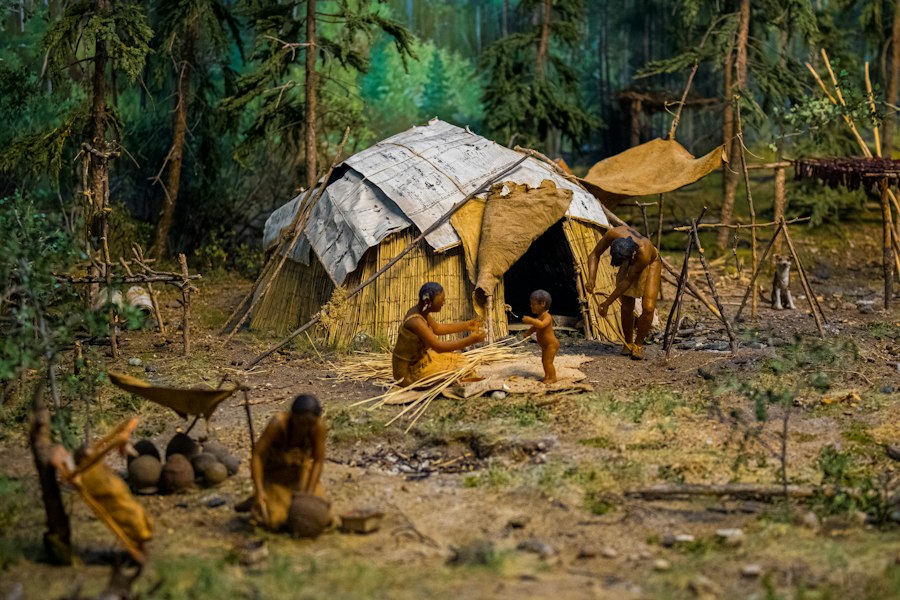
The evolution of intelligence is inextricably linked to the development of our capacity for tool use. The ability to fashion and employ objects to extend our physical capabilities marked a turning point, allowing our ancestors to interact with their environment in novel and increasingly sophisticated ways. This period saw not just the opportunistic use of natural objects, but the deliberate modification of materials to create implements that enhanced their survival.
The Dawn of Stone Tools: Extending the Hand
The earliest evidence of hominin technological prowess comes in the form of stone tools, dating back over two million years. These were not the intricate blades of later eras, but rather simple choppers and flakes, painstakingly crafted by striking one stone against another. The Oldowan tool industry, characterized by these basic implements, represents a monumental achievement. These tools allowed early hominins to butcher carcasses more efficiently, to crack open bones for marrow, and to process tougher plant materials. Imagine the sheer effort involved in manually tearing flesh from bone or crushing hard seeds. Stone tools provided a mechanical advantage, transforming what would have been arduous and sometimes impossible tasks into manageable endeavors. The creation of these tools was not an accident; it required foresight, an understanding of the properties of stone, and the dexterity to execute the necessary blows. This early technological development was not just about better access to food; it was a powerful demonstration of cognitive abilities, including planning, problem-solving, and the transmission of knowledge.
The Taming of Fire: A Transformative Force
Perhaps no single innovation had a more profound impact on prehistoric human evolution than the mastery of fire. While the precise timeline of its control is still debated, the ability to intentionally create, maintain, and utilize fire fundamentally altered the trajectory of our species. Fire offered a suite of revolutionary benefits that directly addressed the core challenges of survival.
Cooking and Nutrition: Unlocking New Possibilities
The most immediate and significant advantage of fire was its application to cooking. Cooking food breaks down complex carbohydrates and proteins, making them more digestible and releasing more nutrients. This meant that our ancestors could derive greater nutritional value from their diet, with less energy expenditure on digestion. This dietary improvement is widely believed to have been a critical factor in the evolution of larger brains, which are notoriously energy-demanding organs. Moreover, cooking could also neutralize toxins in certain plants and kill parasites and pathogens in meat, making a wider range of food sources safer and more accessible. This dietary expansion, facilitated by fire, provided the energetic fuel necessary for continued cognitive development and physical growth.
Shelter, Safety, and Social Bonds: Beyond Sustenance
The benefits of fire extended far beyond the culinary. It provided a vital source of warmth, allowing hominins to survive in colder climates and to venture into new territories previously uninhabitable. At night, fire served as a potent deterrent against predators, offering a crucial layer of security in a world teeming with dangers. This newfound safety likely allowed for more relaxed social interactions and the development of more complex group behaviors. Furthermore, the hearth became a focal point for social gatherings. Around the flickering flames, stories were told, knowledge was shared, and social bonds were strengthened. This communal aspect of fire use fostered a sense of belonging and cooperation, crucial for the survival and success of early human groups. The ability to control and utilize fire was not just a technological leap; it was a social and cultural revolution, laying the groundwork for the development of human societies.
The Expanding Mind: Cognitive Advances and Social Complexity

As our ancestors’ lives became slightly more stable, thanks to innovations like tool use and fire, their brains began to expand, fueling further cognitive advancements. This period saw the emergence of more complex thought processes, symbolic behavior, and the development of increasingly sophisticated social structures, all of which were crucial for navigating an ever-changing world and outcompeting other hominin species.
Language and Communication: The Threads of Connection
The development of language is arguably one of the most significant cognitive milestones in human evolution. While the exact origins of language are difficult to pinpoint in the fossil record, its emergence would have had a profound impact on social cohesion, knowledge transfer, and collaborative efforts. Imagine the limitations of gestural communication when trying to coordinate a hunt for large game or to convey intricate instructions for tool making. Spoken language, even in its most rudimentary forms, would have allowed for the transmission of complex ideas, past experiences, and future plans with unprecedented efficiency. It enabled the sharing of learned behaviors and the development of cultural traditions, ensuring that valuable survival strategies were not lost with the passing of individuals. The ability to articulate abstract concepts, to tell stories, and to plan collectively would have given cognitively advanced hominins a significant advantage in their ability to adapt and thrive.
Art and Symbolism: The Dawn of Abstract Thought
The appearance of art and symbolic representation, evident in cave paintings, carvings, and personal adornments, signals a dramatic leap in cognitive sophistication. These early forms of expression, dating back tens of thousands of years, are not merely decorative; they offer insights into the minds of our ancestors, revealing their capacity for abstract thought, imagination, and the development of shared belief systems. These artistic endeavors suggest a growing concern with meaning, ritual, and perhaps even an early understanding of mortality. The creation of these artifacts required planning, fine motor control, and the ability to conceive of representations of the world around them, or even of internal states and emotions. This blossoming of symbolic thinking laid the groundwork for the development of complex cultures, religions, and the rich tapestry of human experience that we know today. It demonstrated that our ancestors were not simply reacting to their environment but were actively interpreting and imbuing it with meaning.
Migration and Adaptation: The Global Spread of Humanity
With a suite of powerful adaptations in place – bipedalism, tool use, control of fire, and increasingly complex cognitive abilities – our ancestors were no longer confined to their African homeland. The story of human evolution is also a story of dispersal, a grand migration that saw Homo sapiens spread across the globe, encountering and adapting to a vast array of new environments. This epic journey was a testament to human resilience and ingenuity, a continuous process of learning and innovation driven by the need to thrive in diverse ecological niches.
Out of Africa: A World of New Challenges
The “Out of Africa” hypothesis posits that modern humans originated in Africa and then migrated out to populate the rest of the world. This was not a single, rapid event, but a gradual process that unfolded over tens of thousands of years. As humans ventured beyond their ancestral continent, they encountered radically different climates, landscapes, and ecosystems. From the frozen tundras of the north to the arid deserts of the south, each new environment presented unique challenges to survival. This necessitated further adaptations, both biological and cultural.
Diversifying Survival Strategies: From Hunter-Gatherers to Early Agriculture
As humans settled in different regions, their subsistence strategies evolved to meet the specific demands of their new homes. In some areas, hunter-gatherer lifestyles continued, with groups developing highly specialized knowledge of their local flora and fauna. They became masters of their immediate environments, developing intricate tracking skills, knowledge of medicinal plants, and efficient methods for harvesting seasonal resources. In other regions, however, entirely new paradigms began to emerge. The observation that certain plants could be cultivated and animals could be domesticated led to the revolutionary development of agriculture. This shift, which began around 10,000 years ago, marked a fundamental change in human society. It allowed for more stable food supplies, leading to population growth and the development of settled communities. While agriculture brought new challenges, such as increased susceptibility to disease and the need for resource management, it also paved the way for the development of complex civilizations, with specialized labor, social hierarchies, and the eventual rise of cities and states. This transition from nomadic foraging to settled agriculture represents one of the most significant self-inflicted environmental transformations in human history, driven by innovation and the pursuit of greater security.
The fascinating journey of prehistoric human evolution and the various adaptation techniques employed by our ancestors reveal much about survival in harsh environments. For a deeper understanding of how resources and wealth have influenced human development throughout history, you can explore this insightful article on elite assets in times of crisis. It highlights the importance of resource management and adaptability, which are themes that resonate with the challenges faced by early humans. To read more, visit this article.
The Legacy of Resilience: Lessons for the Future
| Story/Discovery | Time Period | Location | Key Adaptation Technique | Significance |
|---|---|---|---|---|
| Use of Fire by Homo Erectus | Approx. 1.5 million years ago | Africa | Controlled use of fire for cooking and warmth | Improved diet, protection from predators, social gatherings |
| Development of Stone Tools (Oldowan) | Approx. 2.6 million years ago | East Africa | Creation of simple stone flakes for cutting | Enhanced ability to process food and hunt |
| Neanderthal Adaptations to Cold | Approx. 400,000 – 40,000 years ago | Europe and Western Asia | Robust body build, use of animal hides, shelter construction | Survival in Ice Age climates |
| Migration Out of Africa | Approx. 60,000 years ago | Africa to Eurasia | Use of boats, clothing, and advanced tools | Expansion into diverse environments worldwide |
| Development of Language | Approx. 100,000 years ago | Likely Africa | Complex vocal communication | Improved cooperation and cultural transmission |
| Domestication of Plants and Animals | Approx. 12,000 years ago | Fertile Crescent and other regions | Agriculture and animal husbandry | Transition from hunter-gatherer to settled societies |
The journey of prehistoric human evolution is far from a simple narrative of progress; it is a complex tapestry woven with threads of struggle, adaptation, and relentless ingenuity. The challenges faced by our ancestors – the constant threat of starvation, the pursuit of shelter, the need to outmaneuver predators – were existential in their nature. Their triumphs, from the mastery of fire to the development of language, were not inevitable but hard-won victories forged through observation, experimentation, and the transmission of knowledge.
The Enduring Human Drive: A Constant for Adaptation
What is perhaps most striking about the story of our evolution is the enduring human drive to adapt and innovate. Faced with adversity, our ancestors did not simply succumb; they found new ways to survive, to thrive, and to ultimately shape their world. This innate capacity for problem-solving, for creativity born from necessity, is a defining characteristic of our species. It is a legacy that has been passed down through countless generations, embedded in our very being. The innovations of our prehistoric forebears were not merely about immediate survival; they were the foundational steps that allowed for the development of increasingly complex societies, the accumulation of knowledge, and the eventual conquest of the planet.
Echoes in the Modern World: Applying Ancient Lessons
The lessons learned from our prehistoric past resonate deeply in the modern world. In an era of unprecedented technological advancement and global challenges, the principles of adaptation and innovation remain paramount. Understanding how our ancestors responded to environmental pressures, how they developed sustainable subsistence strategies, and how they fostered social cohesion in the face of uncertainty can provide valuable insights for navigating the complex issues of our time. The same ingenuity that allowed early hominins to harness fire can be applied to developing sustainable energy sources. The collaborative spirit that facilitated early hunts can inform approaches to global cooperation on issues like climate change and public health. The resilience that enabled our ancestors to survive and spread across the globe is a testament to the indomitable spirit of humanity, a spirit that continues to drive us forward, to seek solutions, and to adapt to whatever challenges the future may hold. The echoes of their survival and innovation are not just in the fossil record; they are in the very fabric of our being, urging us to continue the ongoing saga of human adaptation and progress.

Life 20,000 Years Ago | When an Ice Age Wildfire Traps Your Primitive Family
FAQs
What are the key stages of prehistoric human evolution?
The key stages of prehistoric human evolution include the emergence of early hominins around 6-7 million years ago, the development of the genus Homo approximately 2.5 million years ago, and the appearance of anatomically modern humans (Homo sapiens) around 300,000 years ago. Significant milestones include the use of tools, control of fire, and the development of language and social structures.
How did prehistoric humans adapt to their environments?
Prehistoric humans adapted to their environments through various techniques such as tool-making for hunting and gathering, developing clothing from animal hides for protection against the elements, and creating shelters using natural materials. They also learned to control fire for warmth, cooking, and protection, which significantly enhanced their survival rates.
What role did climate change play in human evolution?
Climate change played a crucial role in human evolution by altering habitats and food availability. As climates shifted, early humans had to adapt to new environments, leading to changes in diet, migration patterns, and social structures. For example, the transition from forested areas to open savannas prompted the development of bipedalism and more complex social behaviors.
What are some examples of prehistoric human social structures?
Prehistoric human social structures varied widely but often included small, kin-based groups or bands that relied on cooperation for hunting and gathering. Evidence suggests that these groups had defined roles, with some individuals specializing in tool-making or foraging. As societies evolved, more complex structures emerged, including larger communities and trade networks.
How did prehistoric humans communicate and share knowledge?
Prehistoric humans likely communicated through a combination of vocalizations, gestures, and early forms of symbolic expression, such as cave paintings and carvings. These methods facilitated the sharing of knowledge about hunting techniques, foraging locations, and social norms, which were crucial for survival and cultural development.