
The biting winds and gnawing hunger were not mere inconveniences for early humans; they were potent sculptors of our very lineage. The constant interplay between frigid environments and precarious food availability forged resilience, innovation, and ultimately, the adaptive traits that allowed our ancestors to thrive and spread across the globe. Understanding these pressures is crucial to appreciating the deep evolutionary roots of human endurance and ingenuity.
The Unforgiving Crucible of Ice Age Landscapes
The Pleistocene epoch, often referred to as the “Ice Age,” cast a long shadow over early human existence. Vast ice sheets periodically advanced and retreated, dramatically reshaping landscapes and presenting formidable challenges. These dramatic climatic shifts dictated much of the environmental context in which early hominins evolved and persisted.
Adapting to Extreme Cold: Clothing, Shelter, and Behavior
Survival in perpetually cold or seasonally frigid environments necessitated a multifaceted approach. Early humans, lacking the thick fur coats of many other mammals, had to rely on external adaptations. The development and refinement of clothing were paramount. Initially, this likely involved the use of animal hides, crudely fashioned to provide a barrier against the elements. Over time, the techniques for processing these hides, including scraping, tanning, and stitching, would have improved, offering greater insulation and protection. The discovery and control of fire played an indispensable role, not only for warmth but also for processing food and deterring predators, making encampments more tenable in cold climates.
Shelter also evolved from simple, opportunistic havens to more complex constructions. Natural caves and rock overhangs offered immediate protection, but as populations grew and mobility became more strategic, early humans began to construct more durable shelters. These could range from rudimentary windbreaks made of branches and animal bones to more elaborate structures like tents made of hides stretched over frames or semi-subterranean dwellings dug into the earth, offering better insulation against the cold. Behavioral adaptations were equally critical. Huddling together for warmth, migrating to warmer regions during the harshest periods, and developing communal living strategies to share resources and maintain body heat were all vital survival mechanisms.
Navigating the Perils of Scarce Resources
The fluctuating climate of the Pleistocene was intrinsically linked to the availability of food. Ice ages meant vast tracts of land were covered in ice or were too cold to support the diverse flora and fauna found in warmer periods. This led to significant shifts in prey populations and their distribution. Early humans, primarily hunter-gatherers, were directly dependent on the environment for their sustenance.
The unpredictability of prey availability, coupled with the seasonal limitations of plant foods, meant that periods of abundance were often punctuated by prolonged stretches of scarcity. This required an intimate knowledge of the local ecosystems, an understanding of animal migration patterns, and the development of sophisticated hunting techniques. Spears, projectile points, and traps were crucial tools that allowed for more efficient and safer hunting. The ability to track animals, anticipate their movements, and cooperate in large hunts were hallmarks of successful early human groups.
In exploring the challenges faced by early human populations, the interplay between cold exposure and limited food reserves is a critical factor that shaped survival strategies. An insightful article that delves into the environmental influences on ancient societies can be found at Unraveling the Mysteries of Geomorphology. This piece discusses how geomorphological changes affected the availability of resources and the adaptations necessary for humans to thrive in harsh climates, highlighting the significance of understanding these historical contexts.
The Evolutionary Imperative of Food Storage and Conservation

The constant threat of food scarcity, particularly during lean seasons or periods of environmental upheaval, drove the evolution of behaviors and physiological adaptations related to food storage and conservation. This was not merely about accumulating surplus; it was about strategic planning and resource management.
Ingenuity in Preservation: Drying, Smoking, and Freezing
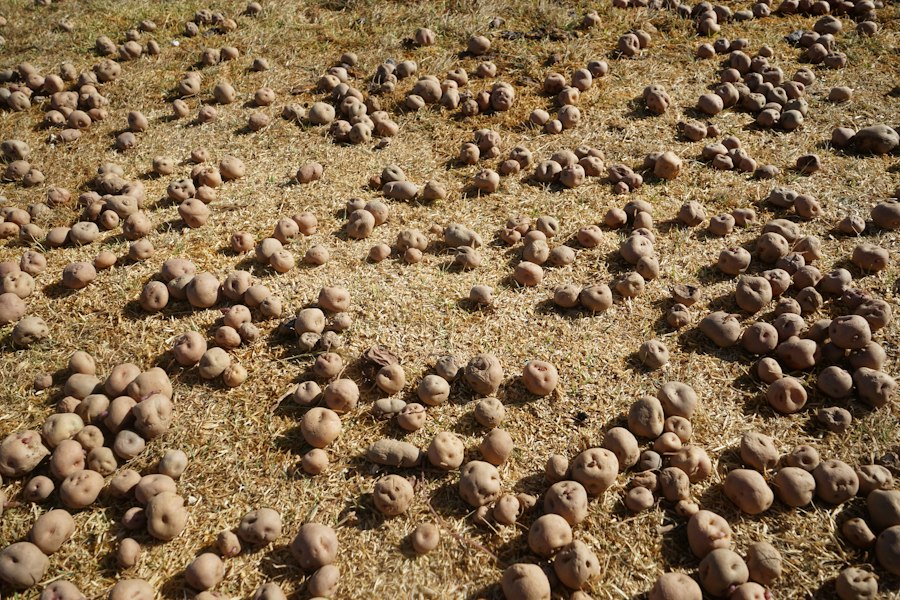
Early humans were remarkably innovative in their methods of preserving food. Drying, a simple yet effective technique, was likely one of the earliest forms of preservation. By removing moisture, drying inhibits the growth of bacteria and fungi, extending the shelf life of meat, fish, and fruits. Exposure to the sun and wind would have been the primary means of drying. Smoking, often a byproduct of fires used for cooking, also provided a method of preservation. The smoke imparted flavor and antimicrobial compounds to the food, further increasing its longevity.
In colder regions, the natural refrigeration provided by freezing offered a significant advantage. Meat and fish could be stored outdoors during winter months, effectively preserved by the sub-zero temperatures. This allowed for a more consistent food supply, even when hunting opportunities were limited. Archaeological evidence, such as caches of preserved food items, supports the widespread practice of these preservation techniques among early human populations. The development of containers, whether made of animal skins, woven materials, or carved wood, would have further facilitated the storage and protection of these preserved resources.
The Social and Economic Ramifications of Surplus
The ability to store food had profound social and economic implications. It reduced the immediate pressure to hunt and gather daily, allowing for greater flexibility in daily activities and potentially freeing up time for other endeavors, such as toolmaking, social interaction, and the development of cultural practices. Furthermore, a surplus of preserved food could become a valuable commodity for trade and exchange between groups, fostering intergroup relationships and the development of more complex social structures.
The knowledge of where and how to store food would have become a critical component of cultural transmission, passed down from generation to generation. Groups that were more successful at managing their food reserves would have had a distinct survival advantage, leading to population growth and the expansion of their territories. This also may have led to the emergence of social hierarchies, with individuals or groups who controlled food stores holding positions of influence and authority.
The Physiology of Endurance: Adapting to Nutritional Stress
Beyond behavioral and technological adaptations, the repeated exposure to periods of food scarcity also left an indelible mark on human physiology. Our bodies evolved to cope with, and even benefit from, intermittent nutritional stress.
Metabolic Flexibility and Fat Storage
Modern humans exhibit remarkable metabolic flexibility, a trait that likely evolved in response to the boom-and-bust cycles of food availability in our evolutionary past. This flexibility allows our bodies to efficiently switch between using carbohydrates and fats for energy. During periods of caloric restriction, the body can tap into its fat reserves for fuel, minimizing the loss of muscle mass. This ability to efficiently store and mobilize fat is a direct evolutionary consequence of living in environments where consistent food intake was not guaranteed.
The development of adipose tissue, or body fat, served as a crucial energy buffer. While excessive fat storage can be detrimental in modern sedentary lifestyles, for early humans, a moderate amount of body fat was a life-saving resource during times of famine. This stored energy allowed individuals to survive prolonged periods without food, maintaining essential bodily functions until more resources became available. The hormonal mechanisms that regulate fat storage and mobilization are complex and deeply rooted in our evolutionary history, reflecting the selective pressures imposed by fluctuating food availability.
Enhanced Cognitive Function and Problem-Solving
Periods of scarcity also likely selected for enhanced cognitive abilities. The need to find food in challenging environments, to remember the locations of rare resources, and to develop innovative solutions to overcome obstacles would have favored individuals with greater problem-solving skills and memory capacity. The constant need to adapt to changing circumstances and to anticipate future needs would have driven the evolution of more complex brains.
The challenges of cold exposure and limited food reserves demanded a high degree of planning, foresight, and cooperation. These cognitive demands would have placed a selective pressure on traits associated with abstract thought, spatial reasoning, and social intelligence. The ability to learn from past experiences, to share knowledge with others, and to devise novel strategies for survival were all crucial for success. This ongoing cognitive arms race, driven by environmental pressures, is a fundamental aspect of human evolution.
Social Structures and Cooperation in the Face of Adversity
The challenges of cold exposure and limited food reserves were not faced in isolation. The evolutionary trajectory of humans is inextricably linked to our capacity for social cooperation. These environmental pressures likely played a significant role in shaping our complex social structures.
The Power of the Group: Shared Hunting and Resource Distribution
In environments where prey was scarce or dangerous, cooperative hunting became an essential strategy. Large game animals required coordinated efforts to track, corner, and bring down. The success of such hunts directly translated into a more substantial and reliable food source for the entire group. This shared success reinforced the bonds of cooperation and fostered a sense of collective responsibility for the well-being of the community.
The equitable distribution of resources, particularly the precious protein from successful hunts, was also critical for group cohesion and survival. While some degree of social stratification may have existed, the overarching need for collective survival likely favored systems that ensured all members of the group had access to essential sustenance, especially during lean times. This shared experience of hardship and mutual reliance would have fostered a deep-seated instinct for altruism and cooperation within human societies.
The Transmission of Knowledge and Survival Strategies
The passing down of knowledge was a vital component of group survival. Understanding how to identify edible plants, track animals, make tools, build shelters, and navigate dangerous territories were all critical skills that needed to be transmitted from one generation to the next. This transmission of knowledge likely occurred through observation, imitation, and direct instruction, forming the basis of early cultural traditions.
The stories, rituals, and shared experiences that bound early human groups together served not only to maintain social cohesion but also to reinforce vital survival knowledge. The elders, possessing a lifetime of experience in navigating the challenges of their environment, would have been repositories of this crucial information. The effectiveness of this knowledge transfer directly impacted the group’s ability to adapt to changing environmental conditions and to overcome the persistent challenges of cold and hunger.
In exploring the challenges faced by early human societies, the interplay between cold exposure and limited food reserves is particularly intriguing. These harsh conditions often forced communities to develop innovative survival strategies, which can be seen in various historical contexts. For a deeper understanding of how ancient civilizations adapted to their environments, you might find it interesting to read about some of the remarkable technologies they employed in this related article. Such adaptations not only highlight human resilience but also shed light on the resourcefulness that defined early life in extreme climates.
The Enduring Legacy: From Survival to Modern Resilience
| Metric | Estimated Value | Relevance to Early History | Source/Notes |
|---|---|---|---|
| Average Temperature During Ice Ages | -4 to -8 °C (relative to present) | Indicates cold exposure levels faced by early humans | Paleoclimate reconstructions |
| Duration of Food Scarcity Periods | Weeks to Months | Periods when limited food reserves impacted survival | Archaeological evidence of seasonal resource availability |
| Body Fat Percentage in Early Humans | 10-15% | Energy reserves for cold exposure and fasting | Anthropological estimates based on skeletal remains |
| Metabolic Rate Increase Due to Cold | 10-30% | Additional energy expenditure to maintain body temperature | Comparative physiology studies |
| Average Daily Caloric Intake | 2500-3500 kcal | Required to sustain activity and thermoregulation | Ethnographic analogs and hunter-gatherer studies |
| Survival Time Without Food | 3-6 weeks | Limits imposed by limited food reserves during cold periods | Medical and anthropological research |
The challenges of cold exposure and limited food reserves in early human history were not simply a chapter in our distant past; they have profoundly shaped who we are today, both physiologically and behaviorally. The adaptations forged in these harsh conditions continue to influence our lives.
A Foundation for Human Expansion and Exploration
The resilience and ingenuity developed by early humans in the face of extreme environmental pressures provided the very foundation for their successful expansion across the globe. Their ability to adapt to diverse climates, from frozen tundras to arid deserts, allowed them to colonize new territories and exploit a wide range of ecological niches. This innate adaptability, honed by millennia of struggle, is a defining characteristic of our species.
The drive to explore and to overcome challenges, a hallmark of human endeavor, can be seen as a direct descendant of the survival instincts that propelled our ancestors through the Ice Age. The capacity for innovation, problem-solving, and cooperation, all critical for surviving in environments of cold and scarcity, continues to be a driving force behind human progress and our ongoing exploration of new frontiers, both physical and intellectual.
Insights into Modern Challenges and Potential Solutions
Understanding our evolutionary past offers valuable insights into contemporary challenges. The physiological mechanisms that allowed our ancestors to cope with periods of food scarcity are relevant to understanding and addressing issues like metabolic health, obesity, and the impact of dietary changes. Furthermore, the social and cooperative strategies that enabled early humans to thrive in adversity offer lessons for building resilient communities and addressing complex global challenges.
The lessons learned from the harsh realities faced by our ancestors serve as a reminder of our deep connection to the natural world and the importance of resilience, innovation, and cooperation. The legacy of cold exposure and limited food reserves is etched into our very DNA, a testament to the enduring power of adaptation and the remarkable journey of human evolution. It highlights that our species’ success is not solely built on comfort, but on the strength forged in the crucible of adversity.

➡️Life 20,000 Years Ago | When Strangers Claim Your Winter Shelter 🚨
FAQs
What role did cold exposure play in early human survival?
Cold exposure significantly influenced early human survival by shaping their behaviors, clothing, and shelter. Early humans adapted to cold climates by developing strategies such as creating insulated clothing from animal hides and constructing shelters that provided protection from harsh weather conditions. These adaptations were crucial for maintaining body heat and ensuring survival during periods of extreme cold.
How did limited food reserves affect early human communities?
Limited food reserves forced early human communities to develop strategies for resource management and food storage. During periods of scarcity, groups had to rely on foraging, hunting, and seasonal migration to find food. This scarcity also led to the development of social structures and cooperation among individuals, as sharing resources became essential for survival.
What types of food sources were available to early humans in cold climates?
In cold climates, early humans primarily relied on hunting large mammals such as mammoths, reindeer, and bison, as well as fishing and gathering edible plants during warmer months. They also utilized preserved food sources, such as dried meat and fish, to sustain themselves during the winter months when fresh food was scarce.
How did early humans adapt their diets to cope with cold exposure?
To cope with cold exposure, early humans adapted their diets to include higher fat and protein content, which provided more energy and insulation. They learned to consume calorie-dense foods, such as fatty meats and fish, which were essential for maintaining body heat and energy levels during harsh winters.
What evidence exists to support the impact of cold exposure and food scarcity on early human evolution?
Archaeological findings, such as tools, remnants of shelters, and animal bones, provide evidence of early human adaptations to cold exposure and food scarcity. Studies of ancient diets through isotopic analysis of bones reveal dietary shifts in response to environmental changes. Additionally, genetic studies indicate adaptations in early humans that enhanced their ability to survive in cold climates, such as variations in fat metabolism.