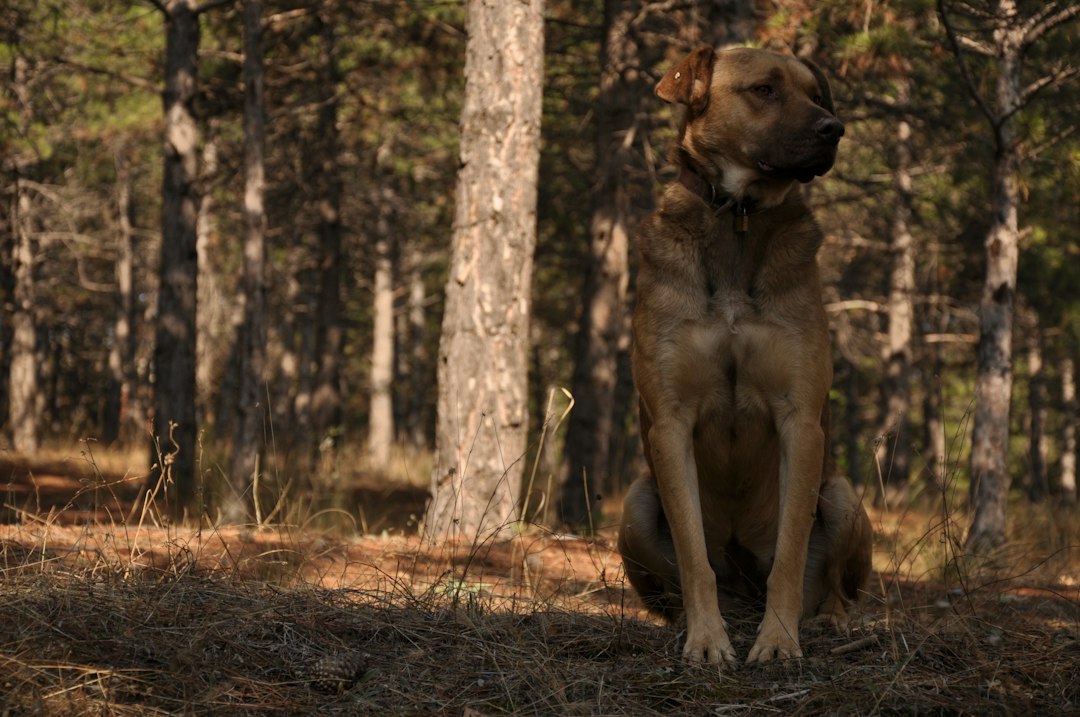
Figuring out exactly when and where our canine companions first branched off from their wolf ancestors is a puzzle that scientists have been piecing together for a long time. The short answer is that while we don’t have a single, definitive “aha!” moment, the latest genetic evidence pushes the timeline back significantly, suggesting dogs were well on their way to being distinct from wolves at least 15,800 years ago, and possibly even earlier in a broader sense. This puts their origins firmly in the late Ice Age, long before humans settled down to farm.
The Deep Roots: Pushing Back the Timeline with DNA
For a while, our understanding of dog domestication was based on a mix of archaeological finds and earlier genetic studies that hinted at an ancient relationship. However, these often lacked the direct, irrefutable proof. The real game-changer has been the ability to extract and analyze ancient DNA from fossilized remains. This technology has allowed researchers to look directly into the genetic makeup of animals that lived millennia ago, and the results have been eye-opening, forcing us to re-evaluate previous timelines.
The Oldest Direct Genetic Snapshot: Türkiye’s Pınarbaşı
One of the most crucial pieces of evidence comes from a site in Pınarbaşı, Türkiye. Here, researchers found remains that, through direct DNA analysis, have been dated to around 15,800 years ago. This isn’t just an estimate based on the tools found nearby or the geological layer; this is direct genetic proof that these animals were indeed dogs, distinct from modern wolves. This finding is significant because it represents the oldest confirmed genetic evidence of domestic dogs we have to date. It provides a concrete anchor point for when dogs were clearly present and genetically identifiable as our earliest canine companions. Before this, the oldest direct genetic evidence was considerably younger, leaving a gap in our understanding of the very beginnings of this relationship.
Early Divergence: Genetically Separate by 14,300 Years Ago
Beyond just finding the oldest individual dog, the genetic data paints a picture of dogs being well-established and already different from wolves by at least 14,300 years ago. Studies examining ancient DNA from sites across Europe, such as Gough’s Cave in the UK, have revealed clear genetic signatures of dogs. These aren’t just wolves with slightly different traits; these are animals that had undergone genetic changes indicating domestication. The presence of these distinct dog genomes across multiple European locations by this time suggests that domestication wasn’t a isolated event in one small area but had already led to dogs spreading and becoming a part of human societies in at least parts of western Eurasia.
The timeline of prehistoric dog domestication is a fascinating subject that sheds light on the deep bond between humans and canines. For those interested in exploring how ancient civilizations interacted with their environment, a related article discusses the intriguing theories surrounding the lost continent of Antarctica. This piece delves into how ancient cultures may have adapted to their surroundings, much like early humans adapted to the presence of dogs in their lives. To read more about this captivating topic, visit this article.
A Reshaped History: What the New Evidence Means
The implications of these older dates are profound. They fundamentally shift our perception of when this critical partnership between humans and dogs began. It means the domestication of dogs predates the advent of agriculture by thousands of years, a period when humans were primarily nomadic hunter-gatherers. This changes the narrative from dogs being a byproduct of settled agricultural life to being companions and helpers during a much more mobile and challenging era of human history.
The 5,000-Year Leap Backward
Previous direct evidence for domesticated dogs often dated to around 9,000 to 10,000 years ago. The new findings from Türkiye and Europe, pushing the confirmed date back to over 15,000 years ago, represent a jump of more than 5,000 years. This isn’t a minor adjustment; it’s a substantial revision of the established timeline. It suggests that the process of domestication was not a recent phenomenon in human prehistory but a deep-seated aspect of our past, one that accompanied our ancestors through the very late stages of the Ice Age. This era was characterized by significant environmental challenges, which likely made the presence of a capable, adaptable animal like the dog even more valuable.
Living with Hunter-Gatherers: An Ancient Partnership
The fact that dogs were already genetically distinct and widespread by 14,300 years ago, living alongside hunter-gatherer groups, implies a long and integrated relationship. These weren’t just occasional encounters; these were animals that were part of human groups, likely aiding in hunting, providing companionship, and perhaps even acting as early warning systems. The domestication process, therefore, must have begun even earlier than these confirmed dates to allow for this level of divergence and spread. This era, before the development of settled agriculture, was a time of constant movement and adaptation, and dogs were seemingly part of that journey from the very beginning.
The Spread and Diversity: Early Canine Networks

The evidence doesn’t just point to an early origin but also suggests that by the late Ice Age, domesticated dogs were not confined to a single region. Instead, they had already begun to travel and spread across different parts of western Eurasia. This indicates a degree of social interaction and movement among human groups that facilitated the dispersal of dogs.
Recent studies have shed light on the fascinating timeline of prehistoric dog domestication, revealing how these loyal companions evolved alongside humans. For those interested in exploring the intricate relationship between early humans and their canine counterparts, a related article offers insights into the craftsmanship of ancient techniques, which parallels the skills required in various aspects of early life. You can read more about this intriguing connection in the article on the art of crafting Damascus steel.
Across Western Eurasia: A Widespread Presence
By around 14,200–14,300 years ago, archaeological and genetic evidence from sites in Türkiye, the UK, Switzerland, and Serbia all point to the presence of domesticated dogs. This geographical spread is crucial. It suggests that dogs were not an isolated development in one location but had successfully integrated into human societies and traveled with them to various regions. The fact that these distinct dog populations can be identified across such a wide area implies a process of domestication that was either relatively widespread or involved early, successful dispersal from a common origin point.
The Mystery of the First Location and Event
Despite these significant advances, the exact geographical origin of dog domestication and the precise nature of the first domestication event remain elusive. While the direct evidence now points firmly to the late Ice Age, the precise location where this process began—whether it was in the Near East, Europe, or elsewhere—is still a subject of ongoing research and debate. Older theories, sometimes based on less direct evidence, suggested origins that ranged much further back, from 18,000 to over 40,000 years ago. While the latest genetic findings narrow the confirmed period to the late Ice Age, they don’t pinpoint the exact “where” or the specific circumstances of that initial domestication. It’s possible that the earliest domestication events might have occurred in areas where preservation conditions are less favorable for ancient DNA, leaving us without direct evidence from those crucial early stages.
Beyond Europe: Emerging Patterns and Future Discoveries
While much of the recent groundbreaking research has focused on European sites and the Near East, a growing body of evidence suggests that the story of dog domestication is far more complex and potentially even older than what can be seen from the European record alone. New findings are beginning to highlight the global nature of this domestication process and its early presence in other parts of the world.
New Clues from the East: Russia and Beyond
A report from early 2026 is shedding light on potentially even earlier and more widespread domestication patterns. This research includes the study of 11,000-year-old dog skulls found in Russia. These findings, along with evidence of early domestic dogs in the Americas and Asia, suggest that the domestication and dispersal of dogs may have been a more intricate and multifaceted process than previously understood, particularly if we rely solely on the European archaeological and genetic record. It’s likely that domestication occurred in multiple locations or that early dogs dispersed very rapidly from a single origin, reaching diverse parts of the globe relatively quickly.
A Complex Global Picture
The inclusion of evidence from Russia, the Americas, and Asia in these recent studies points towards a much broader and more globally distributed domestication narrative. This challenges the idea of a single, isolated origin point. Instead, it hints at a scenario where the process might have unfolded in several places or that the early dog populations were highly mobile and adaptable, spreading with human migration patterns across continents. This complexity means that understanding dog domestication requires looking at evidence from a truly global perspective, piecing together clues from diverse archaeological sites and employing sophisticated genetic analyses to untangle these ancient connections. The more we look, the more intricate and fascinating the story of our first animal companions becomes.

Life 20,000 Years Ago | When Your Ice Age Family Can’t Feed the Dog
FAQs
What is the timeline for dog domestication?
The domestication of dogs is believed to have begun between 20,000 and 40,000 years ago. Genetic studies suggest that dogs diverged from wolves during this period, with evidence of domesticated dogs appearing in archaeological sites around 14,000 to 17,000 years ago.
What role did prehistoric humans play in dog domestication?
Prehistoric humans likely played a crucial role in dog domestication by forming mutually beneficial relationships with wolves. Early humans may have provided food sources for wolves, while wolves helped humans with hunting and protection, leading to a gradual process of domestication.
What evidence supports the timeline of dog domestication?
Evidence supporting the timeline of dog domestication includes archaeological findings of dog remains alongside human settlements, as well as genetic studies that trace the lineage of modern dogs back to ancient wolf populations. Fossils and artifacts from various sites, such as those in Europe and Asia, provide insights into the early relationship between humans and dogs.
How did the domestication process affect dog behavior?
The domestication process led to significant behavioral changes in dogs compared to their wild ancestors. Selective breeding for traits such as sociability, reduced aggression, and increased tolerance of humans resulted in dogs that are more trainable and better suited for companionship and work alongside humans.
What are some theories about the initial reasons for dog domestication?
Several theories exist regarding the initial reasons for dog domestication. One prominent theory suggests that early humans domesticated dogs for their hunting abilities, using them to assist in tracking and retrieving game. Another theory posits that dogs were domesticated for their ability to provide protection and alert humans to dangers, thus enhancing survival in prehistoric environments.