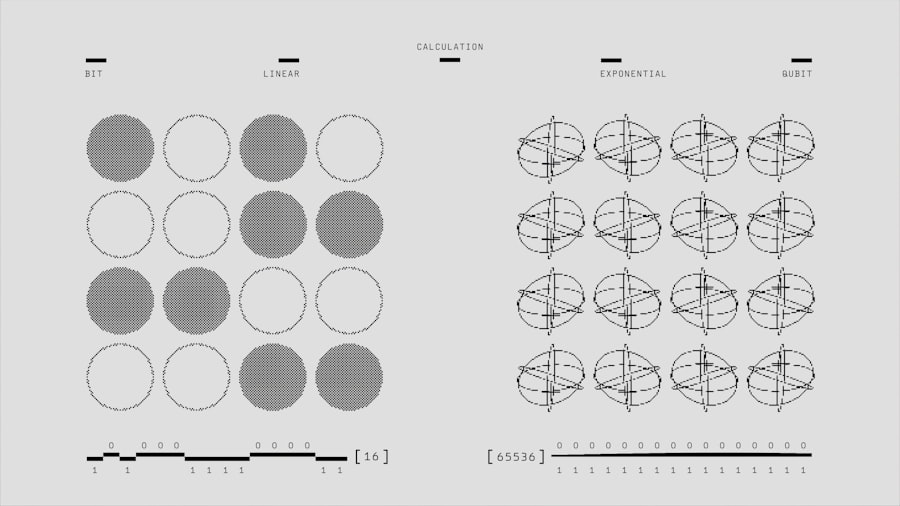
Quantum computing utilizes quantum mechanical principles to process information differently than classical computers. The fundamental unit of quantum computing is the quantum bit, or qubit, which can exist in superposition—a state where it represents both 0 and 1 simultaneously. This property enables quantum computers to perform certain calculations exponentially faster than classical computers, particularly in areas such as cryptography, optimization, and quantum system simulation.
Quantum entanglement is another key principle that enhances quantum computing capabilities. When qubits become entangled, their quantum states become correlated, meaning the measurement of one qubit instantaneously affects the state of its entangled partner, regardless of distance. This phenomenon enables quantum computers to process multiple possibilities in parallel, potentially solving complex problems that would require prohibitive amounts of time on classical computers.
Current research focuses on developing practical applications for quantum computing across multiple industries. In pharmaceuticals, quantum computers could accelerate drug discovery by simulating molecular interactions. In finance, they could optimize portfolio management and risk analysis.
Other potential applications include weather forecasting, artificial intelligence, and materials science. However, quantum computers currently face significant technical challenges, including maintaining quantum coherence and error correction, which researchers are actively working to overcome.
Key Takeaways
- Helium-3 is crucial for cooling quantum computers, enabling their advanced performance.
- A global shortage of Helium-3 is threatening the progress and scalability of quantum computing technologies.
- Collaborative international efforts and innovative solutions are being explored to mitigate the Helium-3 crisis.
- Advances in quantum computing are driving increased demand for Helium-3, intensifying supply challenges.
- Ethical and environmental concerns arise from Helium-3 extraction, necessitating sustainable approaches.
The Importance of Helium-3 in Quantum Computing
Helium-3 is a rare isotope of helium that plays a crucial role in the development and functioning of quantum computers. Its unique properties make it an essential component in various cooling systems used in quantum computing environments. Quantum computers often operate at extremely low temperatures to maintain the stability of qubits and minimize noise, which can disrupt calculations.
Helium-3 is particularly effective as a coolant due to its low boiling point and ability to remain in a liquid state at temperatures close to absolute zero. In addition to its cooling capabilities, helium-3 is also utilized in certain types of qubit designs, particularly those based on superconducting materials. These materials require precise temperature control to achieve superconductivity, a state where electrical resistance drops to zero.
The presence of helium-3 in these systems not only aids in maintaining the necessary low temperatures but also contributes to the overall performance and reliability of quantum devices. As the demand for more powerful and efficient quantum computers grows, the significance of helium-3 in this field cannot be overstated.
The Growing Demand for Helium-3

The demand for helium-3 has surged in recent years, driven by advancements in quantum computing and other scientific fields. As researchers and companies invest heavily in developing quantum technologies, the need for reliable cooling solutions has become paramount. Helium-3 is not only sought after for its role in quantum computing but also for applications in nuclear fusion research, medical imaging, and neutron detection.
This multifaceted demand has placed significant pressure on existing helium-3 supplies. Moreover, as nations around the world recognize the potential of quantum computing to revolutionize industries and enhance national security through improved cryptography, investments in this technology are expected to continue growing. Consequently, the competition for helium-3 resources is intensifying, leading to concerns about sustainability and availability.
The increasing reliance on this rare isotope highlights the urgent need for innovative solutions to ensure a steady supply for future technological advancements.
The Helium-3 Shortage Crisis
The helium-3 shortage crisis has emerged as a pressing issue within the scientific community, exacerbated by geopolitical factors and limited natural reserves. Historically, helium-3 was primarily obtained from the decay of tritium in nuclear weapons programs, but as these programs have diminished, so too has the availability of this critical resource. The extraction of helium-3 from natural sources is not only challenging but also costly, leading to a significant gap between supply and demand.
As the shortage continues to escalate, researchers are increasingly concerned about the implications for ongoing and future quantum computing projects. The limited availability of helium-3 could hinder progress in developing more advanced quantum systems, potentially stalling innovations that could benefit various sectors. This crisis underscores the importance of finding alternative sources or methods for obtaining helium-3 to ensure that the momentum in quantum computing is not lost.
The Impact of Helium-3 Shortage on Quantum Computing
| Metric | Value | Unit | Notes |
|---|---|---|---|
| Global Helium-3 Production | 10 | Liters per year | Estimated annual global production from nuclear reactors |
| Helium-3 Demand in Quantum Computing | 15 | Liters per year | Estimated demand for cooling quantum computers |
| Helium-3 Supply Deficit | 5 | Liters per year | Gap between supply and demand causing the crisis |
| Quantum Computer Cooling Temperature | 0.01 | Kelvin | Temperature achieved using Helium-3 dilution refrigerators |
| Helium-3 Price Increase (Last 5 Years) | 300 | Percent | Price surge due to scarcity and increased demand |
| Alternative Cooling Technologies Development | 3 | Years | Estimated time to viable alternatives to Helium-3 cooling |
The ramifications of the helium-3 shortage on quantum computing are profound and multifaceted. As researchers grapple with dwindling supplies, they face significant challenges in maintaining the operational integrity of their quantum systems. The inability to secure sufficient helium-3 can lead to increased costs and delays in research and development efforts, ultimately slowing down the pace at which new technologies can be brought to market.
Furthermore, the shortage may compel researchers to explore alternative cooling methods or materials that may not offer the same level of performance as helium-3. While some alternatives exist, they often come with trade-offs that could compromise the efficiency and reliability of quantum computations. As a result, the ongoing helium-3 crisis poses a serious threat not only to individual research projects but also to the broader advancement of quantum computing as a whole.
Potential Solutions to the Helium-3 Crisis
Addressing the helium-3 crisis requires a multifaceted approach that encompasses both short-term and long-term strategies. One potential solution involves increasing domestic production through innovative extraction techniques or repurposing existing facilities that previously produced helium-3 as a byproduct of tritium decay.
Additionally, international collaboration may play a vital role in addressing the shortage. Countries with access to helium-3 resources could work together to establish agreements for sharing supplies or jointly investing in extraction technologies. Such partnerships could foster innovation while ensuring that researchers worldwide have access to this critical resource.
Furthermore, exploring alternative isotopes or materials that can serve similar functions in quantum computing may provide additional avenues for mitigating reliance on helium-3.
Advancements in Quantum Computing Technologies
Despite the challenges posed by the helium-3 shortage, advancements in quantum computing technologies continue to progress at an impressive pace. Researchers are exploring various qubit designs beyond those reliant on helium-3 cooling systems, including topological qubits and photonic qubits. These alternative approaches aim to enhance qubit stability and reduce error rates while potentially minimizing dependence on scarce resources.
Moreover, advancements in error correction techniques are helping to improve the reliability of quantum computations. By developing algorithms that can detect and correct errors during calculations, researchers are making strides toward building more robust quantum systems capable of performing complex tasks with greater accuracy. As these technologies evolve, they may pave the way for new applications and use cases that extend beyond traditional quantum computing paradigms.
The Role of Helium-3 in Advancing Quantum Computing
While advancements in quantum computing technologies are promising, helium-3 remains an integral component in many current systems. Its unique properties continue to make it an ideal coolant for maintaining low temperatures necessary for qubit operation. As researchers strive to push the boundaries of what is possible with quantum computing, helium-3’s role cannot be overlooked.
These fields leverage the unique characteristics of helium-3 to develop highly sensitive measurement devices that can detect minute changes in physical phenomena. As such, helium-3 not only supports existing quantum computing efforts but also opens doors to new avenues of research that could further enhance our understanding of quantum mechanics.
Collaborative Efforts to Address the Helium-3 Shortage
Recognizing the urgency of the helium-3 shortage crisis, various stakeholders—including governments, research institutions, and private companies—are beginning to collaborate on solutions. Initiatives aimed at pooling resources and expertise are emerging as a means to tackle this pressing issue collectively. By fostering partnerships across sectors, stakeholders can share knowledge and develop innovative strategies for securing helium-3 supplies.
Additionally, international conferences and workshops focused on helium-3 research are becoming increasingly common. These gatherings provide platforms for scientists and industry leaders to discuss challenges and share insights into potential solutions. By facilitating dialogue among experts from diverse backgrounds, collaborative efforts can lead to breakthroughs that address both immediate supply concerns and long-term sustainability issues related to helium-3 extraction.
The Future of Quantum Computing in Light of the Helium-3 Crisis
The future of quantum computing remains bright despite the challenges posed by the helium-3 crisis. As researchers continue to innovate and explore alternative technologies, there is hope that new solutions will emerge that mitigate reliance on this scarce resource. The ongoing pursuit of advancements in qubit design and error correction techniques may lead to breakthroughs that redefine what is possible within the realm of quantum computation.
Moreover, as awareness grows regarding the importance of sustainable practices within scientific research, there is potential for increased investment in environmentally friendly extraction methods or alternative materials. By prioritizing sustainability alongside technological advancement, researchers can work toward a future where quantum computing thrives without being hindered by resource limitations.
The Ethical and Environmental Implications of Helium-3 Extraction
The extraction of helium-3 raises important ethical and environmental considerations that must be addressed as demand continues to grow. The processes involved in obtaining helium-3 can have significant ecological impacts if not managed responsibly. For instance, extracting helium from natural gas reserves may contribute to greenhouse gas emissions if proper precautions are not taken.
Furthermore, ethical questions arise regarding resource allocation and access to helium-3 supplies. As competition intensifies among nations and industries for this limited resource, it is crucial to consider equitable distribution practices that prioritize scientific advancement while ensuring that all stakeholders have fair access. Balancing technological progress with ethical considerations will be essential as society navigates the complexities surrounding helium-3 extraction and its role in shaping the future of quantum computing.
The ongoing helium-3 crisis poses significant challenges for the advancement of quantum computing technologies, as helium-3 is a crucial resource for certain types of quantum processors. For a deeper understanding of the implications of this crisis on the future of quantum computing, you can read more in this related article: Helium-3 and Quantum Computing: A Crisis in the Making.
📌WATCH THIS! The Gas War: Why 3 Countries Control Your Hospital’s Future
FAQs
What is quantum computing?
Quantum computing is a type of computing that uses quantum bits or qubits, which can represent and process information in ways that classical bits cannot. This allows quantum computers to solve certain complex problems much faster than traditional computers.
What role does helium-3 play in quantum computing?
Helium-3 is a rare isotope of helium used in some quantum computing technologies, particularly in cooling systems. It helps achieve the extremely low temperatures necessary to maintain quantum coherence and enable qubits to function properly.
Why is there a helium-3 crisis?
The helium-3 crisis refers to the shortage and limited supply of helium-3 worldwide. This scarcity is due to its rare natural occurrence and increased demand in various fields, including quantum computing, medical imaging, and national security.
How does the helium-3 shortage affect quantum computing?
The shortage of helium-3 can hinder the development and operation of quantum computers that rely on helium-3 for cooling. Without sufficient helium-3, maintaining the ultra-low temperatures required for stable qubit operation becomes challenging, potentially slowing progress in the field.
Are there alternatives to helium-3 in quantum computing?
Yes, researchers are exploring alternative cooling methods and materials, such as helium-4 or dilution refrigerators that use different isotopes, to reduce dependence on helium-3. However, these alternatives may have limitations or require further development.
What efforts are being made to address the helium-3 crisis?
Efforts include increasing helium-3 production through nuclear reactors, recycling helium-3 from existing sources, developing alternative technologies that do not require helium-3, and improving efficiency in its use across industries.
Is helium-3 used in other applications besides quantum computing?
Yes, helium-3 is also used in neutron detection, medical imaging (such as MRI), cryogenics, and national security applications like radiation detection.
How rare is helium-3?
Helium-3 is extremely rare on Earth, primarily produced as a byproduct of tritium decay in nuclear reactors. Its scarcity contributes to its high cost and the challenges in securing a stable supply.