
Water has served as a fundamental resource for human civilization throughout history, directly influencing societal development and cultural evolution. Ancient civilizations constructed sophisticated water management systems, including aqueducts, canals, and irrigation networks, to capture, transport, and distribute water resources. These infrastructure projects enabled agricultural expansion and urban growth while contributing to the political and economic power of empires.
Analysis of these ancient water systems reveals the advanced engineering capabilities of historical civilizations and demonstrates how water management practices fundamentally shaped social organization and development. Ancient water systems represent significant technological achievements that showcase human innovation in addressing environmental constraints.
These engineering accomplishments required comprehensive knowledge of hydraulic principles, topography, and materials science. The evolution of water management technologies across different civilizations illustrates progressive problem-solving approaches that established foundational principles for modern water infrastructure. Archaeological and historical evidence from these systems provides valuable data on how ancient societies developed sustainable relationships with their water resources and adapted to geographic and climatic conditions.
Key Takeaways
- Ancient water systems were engineering marvels crucial for the development of early societies.
- Environmental changes and natural disasters significantly contributed to the decline of these water systems.
- Political instability and social factors played a key role in the downfall of ancient water infrastructure.
- Technological advancements eventually rendered many ancient water systems obsolete.
- Modern engineering draws valuable lessons and inspiration from the legacy of ancient water systems.
The Engineering Marvels of Ancient Water Systems
The engineering achievements of ancient water systems are nothing short of remarkable. The Romans, for instance, constructed extensive aqueducts that transported water over long distances using gravity alone. These structures, often adorned with arches and bridges, showcased not only technical skill but also an aesthetic appreciation for form and function.
The Aqua Appia, built in 312 BCE, was one of the earliest aqueducts and set a precedent for future constructions. Its ability to deliver fresh water to urban centers was a game-changer, allowing cities to flourish and populations to grow. In addition to aqueducts, ancient civilizations developed complex irrigation systems that transformed arid landscapes into fertile agricultural zones.
The ancient Egyptians utilized the annual flooding of the Nile River to irrigate their fields, employing a system of basins and canals that maximized water retention. Similarly, the Mesopotamians engineered intricate networks of dikes and channels to control river flow and distribute water across their fields. These innovations not only increased agricultural productivity but also demonstrated a sophisticated understanding of hydraulic engineering that would influence future practices.
The Importance of Water Systems in Ancient Societies

Water systems were integral to the functioning of ancient societies, serving as the backbone for agriculture, trade, and urban development. In agrarian societies, access to reliable water sources determined the success of crops and livestock, directly impacting food security and economic stability. The ability to irrigate fields allowed civilizations to support larger populations, leading to urbanization and the rise of complex social structures.
Cities like Babylon and Thebes thrived due to their advanced water management systems, which facilitated trade and cultural exchange. Moreover, water systems played a crucial role in the social fabric of ancient societies. They were often associated with religious practices and rituals, as many cultures revered water as a life-giving force.
Temples and shrines were frequently built near rivers or springs, emphasizing the spiritual significance of these resources. Additionally, public baths and fountains became symbols of civic pride in cities like Rome, where access to clean water was seen as a reflection of societal advancement. Thus, ancient water systems were not merely functional; they were deeply intertwined with the cultural identity and values of civilizations.
Environmental Factors Leading to the Decline of Ancient Water Systems
Despite their ingenuity, many ancient water systems eventually faced decline due to various environmental factors. Climate change played a significant role in altering precipitation patterns and river flows, which could devastate agricultural output. For instance, prolonged droughts could lead to reduced water availability for irrigation, causing crop failures and food shortages.
The collapse of the Hohokam civilization in present-day Arizona is often attributed to such environmental changes, as shifting climate conditions rendered their extensive canal systems ineffective. Additionally, soil degradation due to overuse and poor management practices further exacerbated the challenges faced by ancient water systems. As populations grew and agricultural demands increased, many societies failed to implement sustainable practices that would preserve soil fertility.
This led to salinization and erosion, diminishing the land’s productivity and straining existing water resources. The interplay between environmental factors and human activity ultimately contributed to the decline of these once-thriving water systems.
Political and Social Factors Contributing to the Downfall of Ancient Water Systems
| Ancient Civilization | Water Management System | Reason for Failure | Impact | Approximate Time Period |
|---|---|---|---|---|
| Mesopotamia | Irrigation Canals | Salinization of soil due to poor drainage | Decline in agricultural productivity, contributing to societal collapse | 2000 BCE – 1000 BCE |
| Indus Valley Civilization | Urban Drainage and Water Supply Systems | Possible river course changes and flooding | Abandonment of cities and decline of civilization | 2600 BCE – 1900 BCE |
| Ancient Egypt | Canal Systems for Nile Flood Control | Over-reliance on Nile floods and failure to adapt to changing flood patterns | Reduced agricultural yields and social stress | 3000 BCE – 1000 BCE |
| Ancient Rome | Aqueducts and Sewage Systems | Maintenance neglect and silt buildup | Water shortages and public health issues | 500 BCE – 500 CE |
| Angkor Civilization (Cambodia) | Reservoirs and Canals | Hydrological system failure due to drought and overuse | Collapse of urban centers and decline of empire | 9th – 15th Century CE |
In addition to environmental challenges, political and social factors played a significant role in the decline of ancient water systems. As empires expanded or faced internal strife, the maintenance and management of water infrastructure often fell by the wayside. Political instability could lead to neglect or misallocation of resources that were essential for sustaining these systems.
For example, during periods of civil unrest in ancient Rome, aqueduct maintenance was frequently deprioritized, resulting in diminished water supply for urban populations. Social factors also contributed to the downfall of these systems. As societies became more stratified, access to water resources could become inequitable, leading to tensions among different social classes.
In some cases, elite groups monopolized control over water distribution, exacerbating inequalities and fostering discontent among lower classes. This social unrest could further destabilize political structures, creating a vicious cycle that ultimately undermined the very foundations upon which these ancient water systems were built.
Technological Advancements and the Obsolescence of Ancient Water Systems
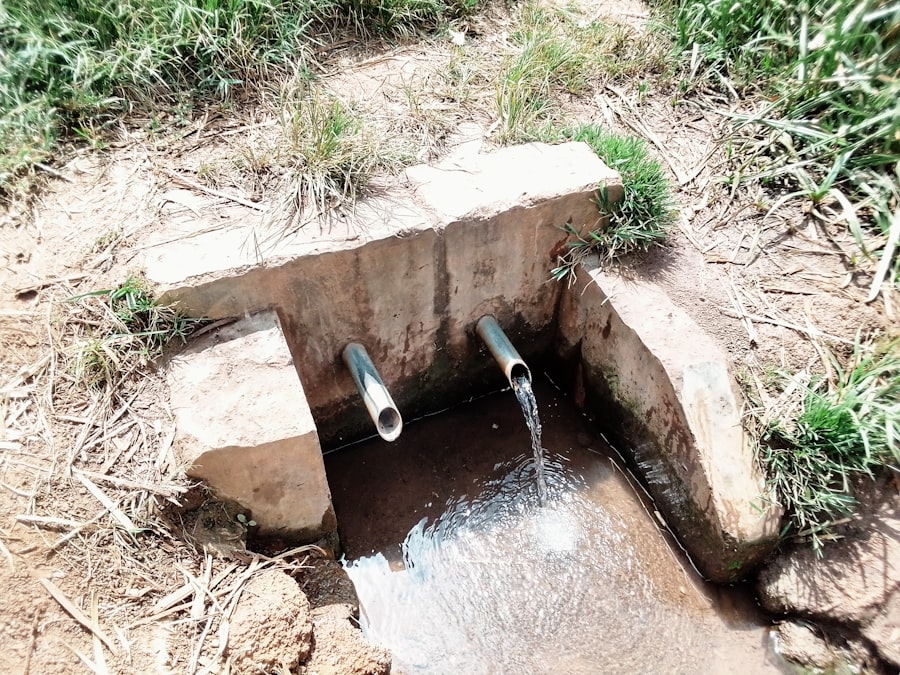
As time progressed, technological advancements began to render many ancient water systems obsolete. The advent of new materials and construction techniques allowed for more efficient methods of water management that surpassed traditional practices. For instance, the introduction of pumps and modern piping systems revolutionized how water was transported and distributed in urban areas.
These innovations made it possible to deliver water directly into homes rather than relying on public fountains or aqueducts. Moreover, industrialization brought about significant changes in society’s relationship with water resources. The demand for large-scale agricultural production led to the development of mechanized irrigation systems that could cover vast areas more efficiently than ancient methods ever could.
As a result, many historical water systems fell into disrepair or were abandoned altogether as communities adapted to new technologies that promised greater efficiency and convenience.
Natural Disasters and their Impact on Ancient Water Systems
Natural disasters have historically posed significant threats to ancient water systems, often leading to their destruction or degradation. Flooding from rivers could overwhelm irrigation canals or aqueducts, causing extensive damage that required considerable resources for repair. In some cases, catastrophic events such as earthquakes could disrupt entire networks of water distribution, leaving communities without access to this essential resource.
The impact of such disasters was not merely physical; they often had profound social consequences as well. Communities reliant on specific water systems faced immediate crises when those systems failed due to natural calamities. This could lead to mass migrations as people sought more stable environments or alternative sources of water.
The resilience of ancient societies was frequently tested by these events, revealing both their vulnerabilities and their capacity for adaptation in the face of adversity.
The Legacy of Ancient Water Systems in Modern Engineering
The legacy of ancient water systems continues to resonate in modern engineering practices today. Many contemporary water management techniques draw inspiration from the innovations developed by ancient civilizations.
Furthermore, the study of ancient water systems has informed contemporary approaches to sustainable water management. As modern societies grapple with issues such as climate change and population growth, lessons learned from history can guide efforts to create resilient infrastructure that meets current needs while preserving resources for future generations. By understanding the successes and failures of ancient civilizations in managing their water resources, engineers today can develop more effective strategies for addressing contemporary challenges.
Lessons Learned from the Downfall of Ancient Water Systems
The decline of ancient water systems offers valuable lessons for modern societies regarding resource management and sustainability. One key takeaway is the importance of maintaining equitable access to water resources across different social strata. Ensuring that all members of society have access to clean water is crucial for fostering social cohesion and preventing unrest.
Additionally, the need for sustainable practices in agriculture and land use is underscored by historical examples of soil degradation and over-extraction of resources. Modern societies must prioritize environmental stewardship by implementing practices that protect ecosystems while meeting human needs. This includes investing in technologies that enhance efficiency without compromising long-term sustainability.
Efforts to Preserve and Restore Ancient Water Systems
In recent years, there has been a growing recognition of the importance of preserving and restoring ancient water systems as part of cultural heritage conservation efforts. Archaeologists and historians are working diligently to document these structures and understand their historical significance while advocating for their protection against modern development pressures. Restoration projects aim not only to preserve these ancient infrastructures but also to revitalize them for contemporary use where feasible.
In some regions, efforts have been made to rehabilitate traditional irrigation systems that had fallen into disuse, allowing communities to reconnect with their historical practices while benefiting from sustainable agriculture techniques.
The Enduring Impact of Ancient Water Systems
The study of ancient water systems reveals much about human ingenuity and adaptability in response to environmental challenges. These engineering marvels not only facilitated agricultural productivity but also shaped social structures and cultural identities throughout history. While many ancient systems ultimately faced decline due to a combination of environmental factors, political instability, technological advancements, and natural disasters, their legacy endures in modern engineering practices.
As contemporary societies navigate complex issues related to resource management and sustainability, they can draw valuable lessons from the successes and failures of their ancestors. By prioritizing equitable access to clean water and implementing sustainable practices informed by historical examples, modern civilizations can work towards creating resilient infrastructures that honor the legacy of ancient water systems while addressing current challenges. Ultimately, the enduring impact of these ancient innovations serves as a reminder of humanity’s ongoing relationship with one of its most vital resources: water.
Ancient water management systems have long fascinated historians and archaeologists, particularly when examining the reasons behind their failures. One insightful article that delves into this topic is available at