
Metallurgy emerged approximately 6000 BCE when humans first discovered methods to extract metals from ores through heating processes. Copper was among the earliest metals to be successfully extracted and worked, enabling the production of tools and weapons that significantly improved functionality compared to stone implements. This technological development spread across multiple civilizations and led to the creation of bronze around 3000 BCE through the combination of copper and tin, producing an alloy with enhanced strength and durability.
The Iron Age commenced around 1200 BCE, marking a transition to iron as the primary metalworking material. Iron’s greater abundance in nature and superior mechanical properties compared to bronze made it highly advantageous for tool and weapon production. This shift enabled agricultural improvements through better farming implements and influenced military capabilities, territorial expansion, and trade networks.
Metallurgical knowledge transmission between cultures facilitated technological advancement and economic development. The progression from copper to bronze to iron represents measurable improvements in material properties and manufacturing capabilities. These developments directly impacted agricultural productivity, military technology, and commercial activities, establishing metallurgy as a fundamental driver of technological and social change throughout human history.
Key Takeaways
- Metallurgy has evolved from ancient metalworking techniques to advanced modern processes, deeply influencing societies throughout history.
- Materials science plays a crucial role in understanding metal properties and improving metallurgical methods.
- Analyzing and preserving ancient metal artifacts requires specialized techniques like microscopy and spectroscopy.
- Collaborations between archaeologists and materials scientists enhance the study and restoration of historical metal objects.
- Future metallurgical research focuses on innovative technologies and interdisciplinary approaches to expand knowledge and applications.
The Role of Materials Science in Metallurgy
Materials science plays a pivotal role in understanding and advancing metallurgy. It encompasses the study of the properties, performance, and applications of materials, including metals and alloys. By examining the atomic structure and behavior of metals, materials scientists can develop new alloys with enhanced properties tailored for specific applications.
This interdisciplinary field combines principles from physics, chemistry, and engineering to innovate and improve metallurgical processes. For instance, advancements in materials science have led to the creation of high-strength steel used in construction and aerospace industries, showcasing how scientific research can directly impact metallurgy. Moreover, materials science provides insights into the degradation and failure mechanisms of metals over time.
Understanding how environmental factors such as corrosion, fatigue, and thermal stress affect metal performance is crucial for industries that rely on metal components. By applying materials science principles, metallurgists can devise strategies to enhance the durability and longevity of metal products. This synergy between materials science and metallurgy not only fosters innovation but also ensures that metalworking practices evolve in response to contemporary challenges.
Ancient Metalworking Techniques
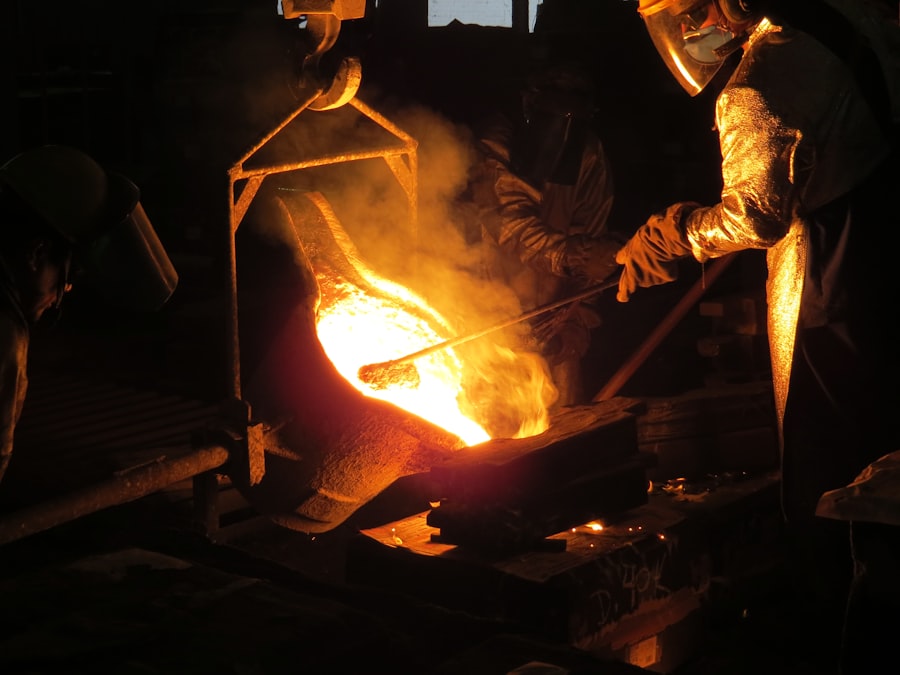
Ancient metalworking techniques were diverse and varied across different cultures, reflecting the ingenuity and resourcefulness of early artisans. One of the most significant methods was casting, where molten metal was poured into molds to create intricate shapes and designs. This technique allowed for the mass production of tools, weapons, and decorative items, showcasing the artistic capabilities of ancient civilizations.
The lost-wax casting method, for example, enabled artisans to produce detailed sculptures and jewelry by creating a wax model that was encased in clay. Once heated, the wax melted away, leaving behind a hollow mold that could be filled with molten metal. Another prominent technique was forging, which involved shaping metal through hammering or pressing while it was still hot.
This method was particularly effective for creating strong and durable tools and weapons. Blacksmiths in ancient societies developed their skills over generations, mastering the art of heating and shaping metal to achieve desired properties. The combination of casting and forging techniques allowed ancient cultures to produce a wide array of metal objects that served both practical and ceremonial purposes.
These techniques not only highlight the technical prowess of ancient metalworkers but also reflect their cultural values and artistic expressions.
Analyzing Ancient Metal Artifacts
The analysis of ancient metal artifacts provides invaluable insights into past civilizations and their metallurgical practices. Archaeologists employ various techniques to study these artifacts, revealing information about their composition, manufacturing methods, and usage. One common approach is metallographic analysis, which involves examining the microstructure of metals under a microscope.
This technique can reveal details about the alloying elements used, the cooling rates during solidification, and any signs of wear or corrosion that may have occurred over time. In addition to metallographic analysis, chemical analysis techniques such as X-ray fluorescence (XRF) are employed to determine the elemental composition of metal artifacts non-destructively. This allows researchers to identify the types of metals used and their sources, shedding light on trade networks and resource availability in ancient societies.
By analyzing these artifacts, scholars can reconstruct historical narratives about technological advancements, cultural exchanges, and economic systems that shaped ancient civilizations.
The Impact of Metallurgy on Ancient Societies
| Material | Period | Region | Primary Use | Metallurgical Technique | Notable Properties |
|---|---|---|---|---|---|
| Bronze (Copper-Tin Alloy) | 3300 – 1200 BCE | Mesopotamia, Egypt, Europe | Tools, weapons, armor, art | Smelting and alloying copper with tin | Harder and more durable than copper alone |
| Iron | 1200 BCE onwards | Middle East, India, Europe | Weapons, tools, construction | Bloomery smelting and forging | Stronger and more abundant than bronze |
| Wootz Steel | 500 BCE – 300 CE | India | Swords and blades | Crucible steel process | High carbon content, known for sharpness and durability |
| Gold | Prehistoric to present | Worldwide | Jewelry, currency, decoration | Cold hammering and annealing | Highly malleable and corrosion resistant |
| Silver | Prehistoric to present | Worldwide | Jewelry, currency, utensils | Smelting and refining | Good conductivity and malleability |
| Lead | Ancient Egypt and Rome | Mediterranean | Pipes, weights, pigments | Smelting from galena ore | Low melting point, dense and malleable |
Metallurgy had a profound impact on ancient societies, influencing various aspects of life from agriculture to warfare. The advent of metal tools revolutionized farming practices by enabling more efficient land cultivation and crop production. With stronger plows made from iron or bronze, farmers could till tougher soils, leading to increased agricultural yields.
This agricultural surplus supported population growth and urbanization, as communities could sustain larger populations with more reliable food sources. In warfare, metallurgy transformed military strategies and power dynamics among ancient civilizations. The production of stronger weapons such as swords, spears, and armor gave certain societies a significant advantage over their rivals.
The ability to forge superior weaponry not only changed the outcomes of battles but also shifted political landscapes as powerful empires expanded their territories through military conquests. Furthermore, metallurgy facilitated trade between cultures as societies sought valuable metals for their own use or for crafting luxury items. The interconnectedness fostered by metallurgy contributed to cultural exchanges that enriched human history.
Advancements in Modern Metallurgy
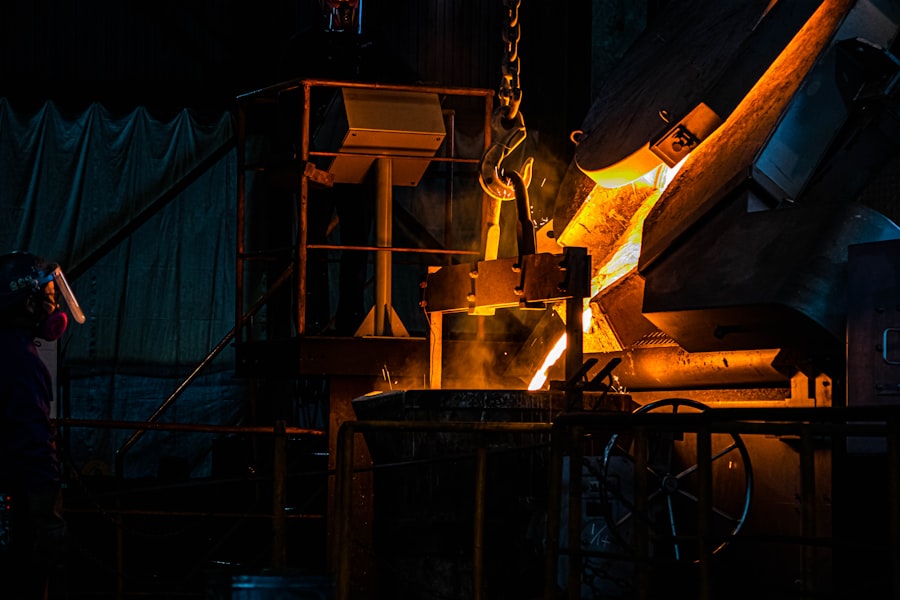
Modern metallurgy has witnessed remarkable advancements driven by technological innovations and scientific research. The development of advanced alloys has led to materials with exceptional properties tailored for specific applications across various industries. For instance, aerospace engineering relies on lightweight yet strong materials such as titanium alloys that enhance fuel efficiency while maintaining structural integrity during flight.
Similarly, advancements in stainless steel production have resulted in corrosion-resistant materials widely used in construction and medical devices. Moreover, modern metallurgy has embraced computational modeling techniques that allow researchers to simulate material behavior under different conditions. These simulations enable scientists to predict how metals will perform in real-world applications without extensive physical testing.
This approach accelerates the development process for new materials while reducing costs associated with trial-and-error experimentation. As industries continue to demand higher performance from materials, modern metallurgy stands at the forefront of innovation, pushing boundaries to meet evolving needs.
Understanding Metal Properties through Materials Science
Understanding metal properties is essential for optimizing their performance in various applications. Materials science provides a framework for studying how different factors influence the mechanical, thermal, electrical, and chemical properties of metals. For example, grain structure plays a crucial role in determining a metal’s strength; finer grains typically result in stronger materials due to increased resistance to deformation.
By manipulating processing conditions such as temperature and cooling rates during manufacturing, metallurgists can tailor these properties to achieve desired outcomes.
The addition of elements like carbon or chromium can significantly enhance properties such as hardness or corrosion resistance.
Through systematic experimentation and analysis, researchers can develop new alloys that meet specific performance criteria for demanding applications in industries ranging from automotive to electronics. This understanding not only drives innovation but also ensures that materials are used efficiently and sustainably.
Preserving and Restoring Ancient Metal Artifacts
The preservation and restoration of ancient metal artifacts pose unique challenges due to their susceptibility to corrosion and degradation over time. Conservators employ various techniques to stabilize these artifacts while maintaining their historical integrity. One common method involves cleaning the surface using gentle mechanical or chemical processes to remove corrosion products without damaging the underlying metal.
This delicate balance requires expertise in both conservation techniques and an understanding of the artifact’s material properties. In some cases, protective coatings may be applied to prevent further corrosion after cleaning. However, conservators must carefully select materials that do not alter the appearance or authenticity of the artifact.
Through meticulous preservation efforts, conservators ensure that these artifacts remain accessible for future generations while providing valuable insights into past cultures.
The Use of Microscopy and Spectroscopy in Metallurgical Research
Microscopy and spectroscopy are indispensable tools in metallurgical research that enable scientists to analyze materials at both macro and micro levels. Microscopy techniques such as scanning electron microscopy (SEM) allow researchers to visualize surface features with high resolution, revealing details about grain structure, defects, and surface morphology. This information is critical for understanding how these factors influence material properties and performance.
Spectroscopy techniques like energy-dispersive X-ray spectroscopy (EDX) complement microscopy by providing elemental composition data at specific locations on a sample’s surface. By combining these analytical methods, researchers can gain comprehensive insights into the relationships between microstructure and material behavior. This knowledge is essential for developing new alloys or improving existing ones by identifying optimal processing conditions that enhance performance characteristics.
The Future of Metallurgical Research
The future of metallurgical research holds exciting possibilities as scientists continue to explore new frontiers in material development and application. One area gaining significant attention is nanotechnology, where researchers manipulate materials at the atomic level to create novel properties not achievable with traditional methods. Nanostructured metals exhibit enhanced strength-to-weight ratios and improved corrosion resistance, making them ideal candidates for advanced applications in aerospace and biomedical fields.
Additionally, sustainability is becoming a central theme in metallurgical research as industries seek environmentally friendly practices. Researchers are exploring ways to recycle metals more efficiently while minimizing waste during production processes. Innovations such as bio-inspired materials or green chemistry approaches may pave the way for sustainable metallurgy that meets modern demands without compromising environmental integrity.
Collaborations between Archaeologists and Materials Scientists
Collaborations between archaeologists and materials scientists have become increasingly important in understanding ancient cultures through their metallurgical practices. By combining archaeological findings with scientific analysis, researchers can gain deeper insights into how societies utilized metals for various purposes. For instance, archaeologists may uncover metal artifacts during excavations while materials scientists analyze their composition using advanced techniques like XRF or SEM.
These interdisciplinary collaborations foster a holistic approach to studying ancient metallurgy by integrating historical context with scientific rigor. Such partnerships not only enhance our understanding of past civilizations but also contribute to preserving cultural heritage through informed conservation practices. As both fields continue to evolve, their collaboration will undoubtedly yield new discoveries that enrich our knowledge of human history through the lens of metallurgy.
Ancient materials science, particularly in metallurgy, has provided invaluable insights into the technological advancements of early civilizations. One fascinating aspect is the development of bronze, which marked a significant turning point in human history. For a deeper exploration of this topic, you can read more in the article available at this link. This article delves into the techniques and innovations that shaped ancient metallurgy and its impact on society.
WATCH THIS! The Impossible Technology They Erased From History
FAQs
What is ancient materials science?
Ancient materials science refers to the study and understanding of how early civilizations discovered, processed, and utilized natural materials such as metals, ceramics, and composites to create tools, weapons, and artifacts.
What is metallurgy in ancient times?
Metallurgy in ancient times is the branch of materials science focused on the extraction, refining, and manipulation of metals like copper, bronze, iron, and gold by early societies to produce useful objects and technologies.
Which metals were commonly used in ancient metallurgy?
Common metals used in ancient metallurgy include copper, tin (for bronze), gold, silver, and iron. Bronze, an alloy of copper and tin, was especially significant during the Bronze Age.
How did ancient people extract metals?
Ancient people extracted metals through mining ores followed by smelting, a process where ores were heated in furnaces to separate the metal from impurities.
What is the significance of the Bronze Age in metallurgy?
The Bronze Age marks a period when humans developed the ability to create bronze by alloying copper with tin, leading to stronger and more durable tools and weapons compared to those made from stone or pure copper.
How did ancient metallurgists shape and work metals?
Ancient metallurgists shaped metals by techniques such as casting molten metal into molds, hammering (forging), annealing (heating and cooling to alter properties), and alloying to improve strength and durability.
What role did metallurgy play in ancient societies?
Metallurgy was crucial for the advancement of ancient societies, enabling the production of superior tools, weapons, and ornaments, which contributed to economic development, warfare, and cultural expression.
How do modern scientists study ancient metallurgy?
Modern scientists study ancient metallurgy through archaeological excavations, metallurgical analysis using microscopy and spectroscopy, and experimental archaeology to replicate ancient techniques.
What are some famous ancient metallurgical artifacts?
Famous artifacts include the Iron Pillar of Delhi, ancient Egyptian gold jewelry, the Bronze Age swords and tools from Europe, and the intricate bronze vessels from ancient China.
Did ancient civilizations understand the science behind metallurgy?
While ancient civilizations did not have modern scientific knowledge, they developed empirical techniques and practical knowledge through trial and error to manipulate metals effectively.