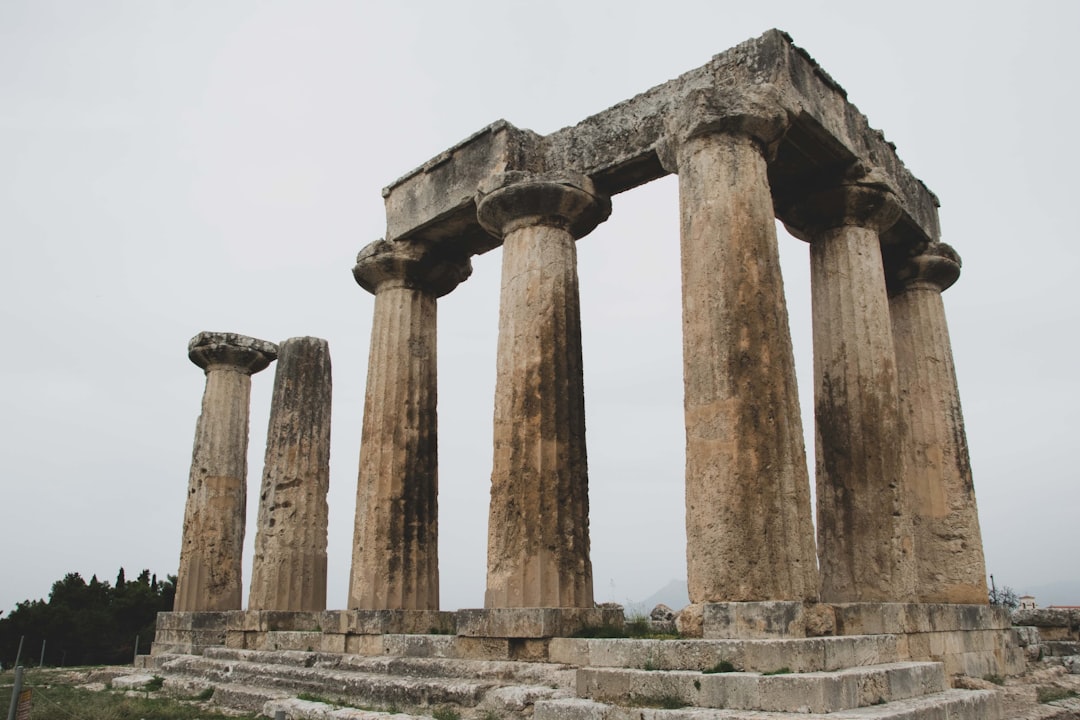
Ancient Greece made substantial contributions to technological development between approximately 800 BCE and 146 BCE. Greek inventors and engineers created innovations in multiple fields including mechanical engineering, hydraulics, optics, and construction techniques. These developments emerged from systematic observation of natural phenomena and mathematical principles, establishing methodologies that influenced subsequent technological progress.
Greek technological achievements addressed practical requirements in urban planning, warfare, agriculture, and maritime activities. Engineers developed sophisticated machines such as the Antikythera mechanism, an analog computer for astronomical calculations, and various types of catapults and siege engines. Architects implemented advanced construction techniques, including the use of precise mathematical ratios and innovative structural elements in temple and public building design.
The Greeks established foundational principles in mechanics, geometry, and physics that enabled technological applications. Notable figures such as Archimedes developed theories of leverage, buoyancy, and mechanical advantage that were applied to practical devices. Hero of Alexandria created early steam-powered devices and automated mechanisms.
These innovations demonstrate the integration of theoretical knowledge with engineering applications, establishing precedents for systematic technological development that continued through subsequent civilizations.
Key Takeaways
- Ancient Greeks pioneered complex devices like the Antikythera Mechanism, showcasing advanced engineering skills.
- Heron of Alexandria invented early steam engines, demonstrating innovative use of steam power.
- Greek advancements included sophisticated war machines and hydraulic engineering techniques.
- Mathematics and geometry were integral to Greek technological and architectural achievements, exemplified by the Parthenon.
- The legacy of ancient Greek technology continues to influence modern innovation and inspires ongoing research into lost technologies.
The Antikythera Mechanism: A Marvel of Ancient Engineering
Among the most remarkable artifacts from ancient Greece is the Antikythera Mechanism, an intricate device discovered in a shipwreck off the coast of Antikythera in 1901. Often regarded as the world’s first analog computer, this remarkable mechanism was designed to predict astronomical positions and eclipses for calendrical and astrological purposes. Its complexity is astonishing, featuring a series of gears and dials that demonstrate an advanced understanding of mechanical engineering and celestial movements.
The craftsmanship involved in its creation suggests that the Greeks possessed sophisticated knowledge of mathematics and astronomy far ahead of their time. The Antikythera Mechanism serves as a testament to the ingenuity of ancient Greek technology. Researchers have spent decades studying its components, revealing that it could calculate the cycles of the Moon and the positions of the planets with remarkable accuracy.
This device not only highlights the Greeks’ fascination with the cosmos but also underscores their ability to create sophisticated tools that blended science with artistry. The mechanism’s discovery has sparked renewed interest in ancient Greek technology, prompting scholars to reevaluate the extent of their scientific achievements.
The Invention of the Steam Engine by Heron of Alexandria
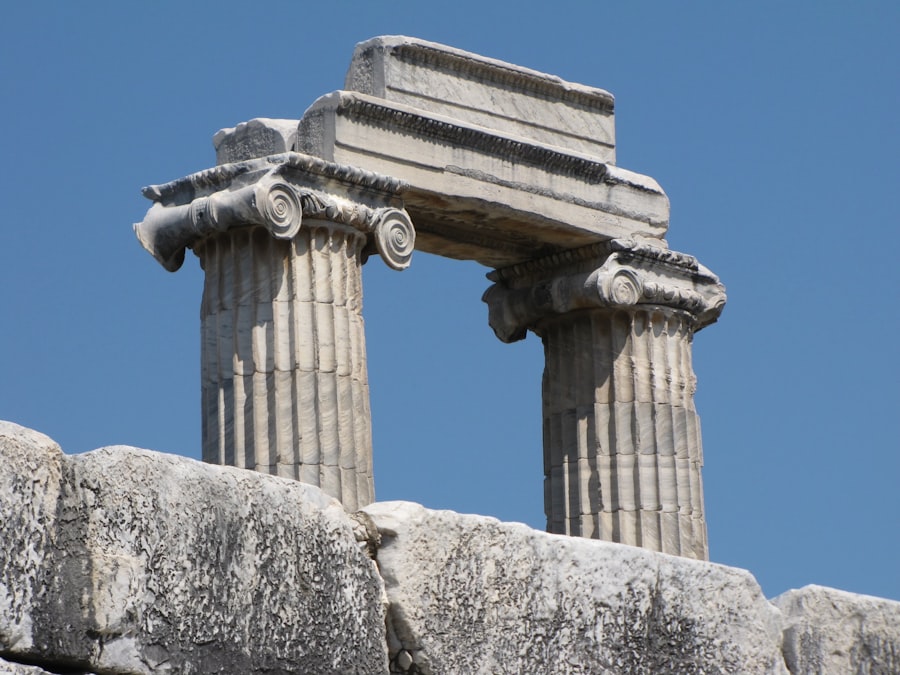
Heron of Alexandria, a brilliant engineer and inventor of the first century AD, is credited with creating one of the earliest known steam engines, known as the aeolipile. This device utilized steam pressure to create rotational motion, demonstrating an understanding of thermodynamics that would not be fully appreciated until centuries later. The aeolipile consisted of a hollow sphere mounted on a pair of nozzles that expelled steam, causing the sphere to spin.
While Heron’s invention was primarily a novelty rather than a practical machine for industrial use, it laid the groundwork for future developments in steam power. Heron’s work extended beyond the aeolipile; he authored several treatises on mechanics and engineering that detailed various inventions, including automated devices powered by steam and water. His contributions illustrate a remarkable blend of creativity and scientific inquiry, showcasing how ancient Greeks approached problem-solving through experimentation and observation.
Although Heron’s steam engine did not lead to immediate industrial applications, it foreshadowed the transformative power of steam technology that would emerge during the Industrial Revolution centuries later.
The Development of Advanced War Machines and Siege Weapons
The ancient Greeks were not only innovators in peaceful technologies but also excelled in military engineering. The development of advanced war machines and siege weapons played a crucial role in their military strategies. Innovations such as the catapult and the ballista revolutionized warfare by allowing armies to launch projectiles over great distances with precision.
These machines were designed to breach fortifications or target enemy troops from afar, demonstrating a sophisticated understanding of mechanics and physics. The Greeks also employed tactics involving siege towers and battering rams, which showcased their ingenuity in overcoming defensive structures. These war machines were often constructed using local materials and required skilled craftsmanship to ensure their effectiveness in battle.
The strategic use of technology in warfare not only influenced military outcomes but also shaped the political landscape of ancient Greece. The ability to construct formidable siege weapons allowed city-states to assert dominance over rivals, highlighting how technological advancements could alter power dynamics in the ancient world.
The Use of Hydraulic Engineering in Ancient Greece
| Technology | Description | Known Uses | Reason for Loss | Modern Equivalent |
|---|---|---|---|---|
| Antikythera Mechanism | Ancient analog computer used to predict astronomical positions and eclipses | Astronomical calculations, calendar predictions | Complexity and lack of documentation; technology not replicated for centuries | Modern mechanical and digital computers |
| Greek Fire | Incendiary weapon used in naval warfare, capable of burning on water | Naval battles, defense mechanisms | Secret formula lost over time, possibly due to military secrecy | Modern incendiary weapons and flamethrowers |
| Hero’s Steam Engine (Aeolipile) | Early steam-powered device demonstrating rotary motion | Experimental demonstration of steam power | Not developed into practical technology; knowledge not expanded upon | Modern steam engines and turbines |
| Automata | Mechanical devices designed to imitate human or animal actions | Entertainment, religious ceremonies, early robotics | Technological complexity and loss of craftsmanship | Modern robotics and automation |
| Water Clocks (Clepsydra) | Devices measuring time by the regulated flow of water | Timekeeping in courts, astronomy, and daily life | Superseded by mechanical clocks and loss of precise construction methods | Modern clocks and timers |
Hydraulic engineering was another area where ancient Greek technology flourished. The Greeks developed sophisticated systems for managing water resources, which were essential for agriculture, urban planning, and public health. Aqueducts, cisterns, and drainage systems were constructed to transport water from distant sources to cities and farms, showcasing an impressive understanding of fluid dynamics and civil engineering principles.
These innovations not only improved water supply but also contributed to sanitation and hygiene in urban areas. One notable example of hydraulic engineering is the aqueduct system used in Athens, which supplied water to its citizens through a network of channels and pipes. This infrastructure was vital for supporting a growing population and facilitating trade and commerce.
Additionally, hydraulic devices such as water clocks (clepsydra) demonstrated the Greeks’ ability to harness water power for practical applications. The advancements in hydraulic engineering reflect a society that prioritized public welfare and environmental management, laying the foundation for future developments in civil engineering.
The Construction of the Parthenon: A Testament to Greek Architectural Innovation
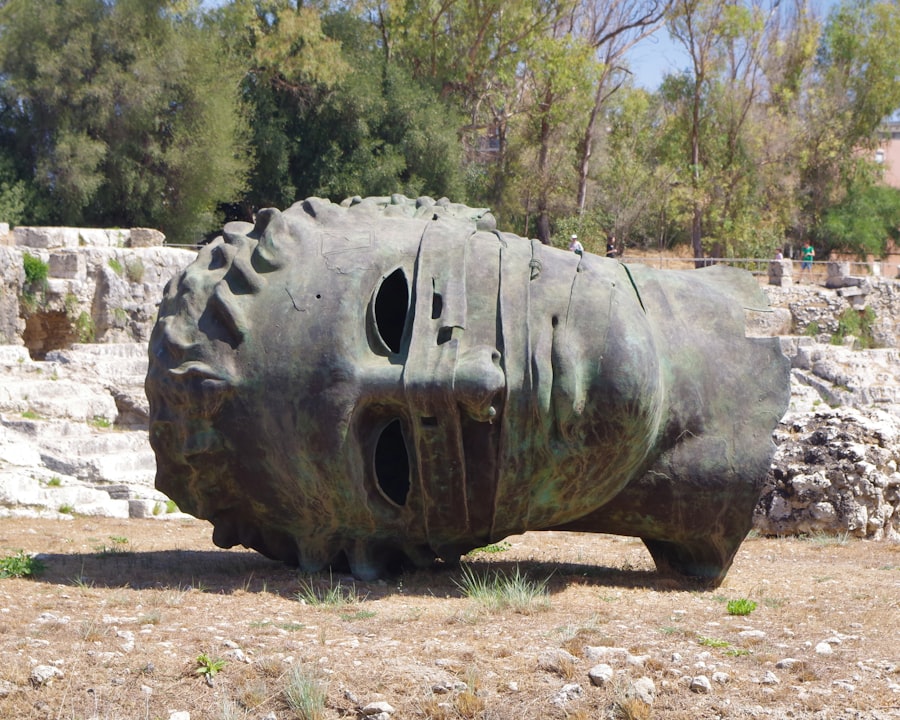
The Parthenon stands as one of the most iconic symbols of ancient Greece, representing not only artistic achievement but also remarkable architectural innovation. Constructed between 447 and 432 BC on the Acropolis of Athens, this temple dedicated to the goddess Athena exemplifies the principles of classical architecture. Its design incorporates elements such as columns, friezes, and pediments that reflect a deep understanding of proportion and symmetry.
The use of entasis—slight curvature in columns—demonstrates an advanced grasp of optical illusion, ensuring that the structure appears perfectly straight to the human eye. The construction techniques employed in building the Parthenon were equally impressive. Skilled artisans utilized local marble and advanced tools to create intricate sculptures and reliefs that adorned its exterior.
The project required meticulous planning and coordination among architects, engineers, and laborers, showcasing a high level of organization within ancient Greek society. The Parthenon’s enduring legacy as a masterpiece of architecture continues to inspire modern architects and serves as a reminder of the innovative spirit that characterized ancient Greek civilization.
The Use of Mathematics and Geometry in Ancient Greek Technology
Mathematics played a pivotal role in ancient Greek technology, influencing various fields such as engineering, astronomy, and architecture. The Greeks made significant contributions to geometry, developing principles that would later form the basis for modern mathematics. Figures like Euclid and Pythagoras laid down foundational concepts that guided engineers and architects in their designs.
Their work emphasized precision and logical reasoning, enabling Greeks to create structures that were not only functional but also aesthetically pleasing. In engineering applications, mathematical principles were applied to calculate forces, dimensions, and materials needed for construction projects. For instance, when designing bridges or temples, architects relied on geometric ratios to ensure stability and balance.
This integration of mathematics into practical applications highlights how ancient Greeks viewed technology as an extension of intellectual inquiry. Their ability to merge abstract mathematical concepts with tangible engineering solutions set them apart as pioneers in both fields.
The Invention of the Alarm Clock by Plato
Plato’s contributions to philosophy are well-documented; however, his inventive spirit extended beyond abstract thought into practical inventions as well. He is credited with creating one of the earliest known alarm clocks—a device designed to signal specific times throughout the day using water flow mechanisms. This invention reflects Plato’s interest in timekeeping and its implications for daily life and societal organization.
The alarm clock attributed to Plato utilized a system where water would flow into a container until it reached a certain level, triggering a mechanism that produced sound or movement to alert individuals at designated times. This innovation illustrates how ancient Greeks sought to regulate their lives through technology, emphasizing efficiency and productivity. While Plato’s alarm clock may seem rudimentary by modern standards, it represents an early attempt at harnessing technology for practical purposes—a theme that resonates throughout history.
The Legacy of Ancient Greek Technology and its Influence on Modern Innovation
The technological achievements of ancient Greece have left an indelible mark on modern innovation across various fields. Many principles developed by Greek thinkers continue to underpin contemporary science and engineering practices. For instance, concepts from geometry are foundational in architecture and design today, while early mechanical inventions laid the groundwork for modern machinery.
Moreover, the spirit of inquiry fostered by ancient Greek philosophers has influenced generations of thinkers who followed them. The emphasis on observation, experimentation, and rational thought remains central to scientific methodology today. As modern society grapples with complex challenges such as climate change and technological advancement, revisiting ancient Greek innovations can provide valuable insights into sustainable practices and creative problem-solving approaches.
The Mysteries of Lost Ancient Greek Technology: Unraveling the Enigma
Despite their remarkable achievements, many aspects of ancient Greek technology remain shrouded in mystery due to lost knowledge over time. Numerous inventions have been documented only through fragmented texts or archaeological remnants, leaving scholars puzzled about their full capabilities or intended uses. For instance, references to advanced machines described by ancient writers often lack detailed explanations or illustrations.
This enigma surrounding lost technologies invites ongoing research and exploration into ancient Greek ingenuity. Archaeologists continue to uncover artifacts that challenge previous assumptions about technological capabilities during this period. By piecing together historical accounts with physical evidence, researchers strive to reconstruct a more comprehensive understanding of how these technologies functioned within their cultural context.
Rediscovering and Preserving Ancient Greek Technological Achievements
Efforts to rediscover and preserve ancient Greek technological achievements have gained momentum in recent years as scholars recognize their significance in understanding human history.
Additionally, interdisciplinary collaborations between historians, engineers, and archaeologists foster new insights into how these technologies were developed and utilized.
Preserving ancient Greek technology is not merely an academic pursuit; it serves as a bridge connecting past achievements with contemporary challenges. By studying these innovations, modern society can draw inspiration from ancient wisdom while addressing current issues through innovative solutions rooted in historical context. As researchers continue to unravel the mysteries surrounding ancient Greek technology, they contribute to a richer narrative about human ingenuity that transcends time and culture.
In conclusion, ancient Greek technology represents a remarkable chapter in human history characterized by creativity, innovation, and intellectual curiosity. From sophisticated machinery like the Antikythera Mechanism to architectural masterpieces such as the Parthenon, these achievements reflect a society deeply engaged with both science and art.
Ancient Greek technology has long fascinated historians and archaeologists, particularly regarding the innovations that were lost over time. One intriguing article that delves into this topic is titled “The Lost Technologies of Ancient Greece,” which explores various inventions and engineering marvels that have not survived the ages. You can read more about it in this