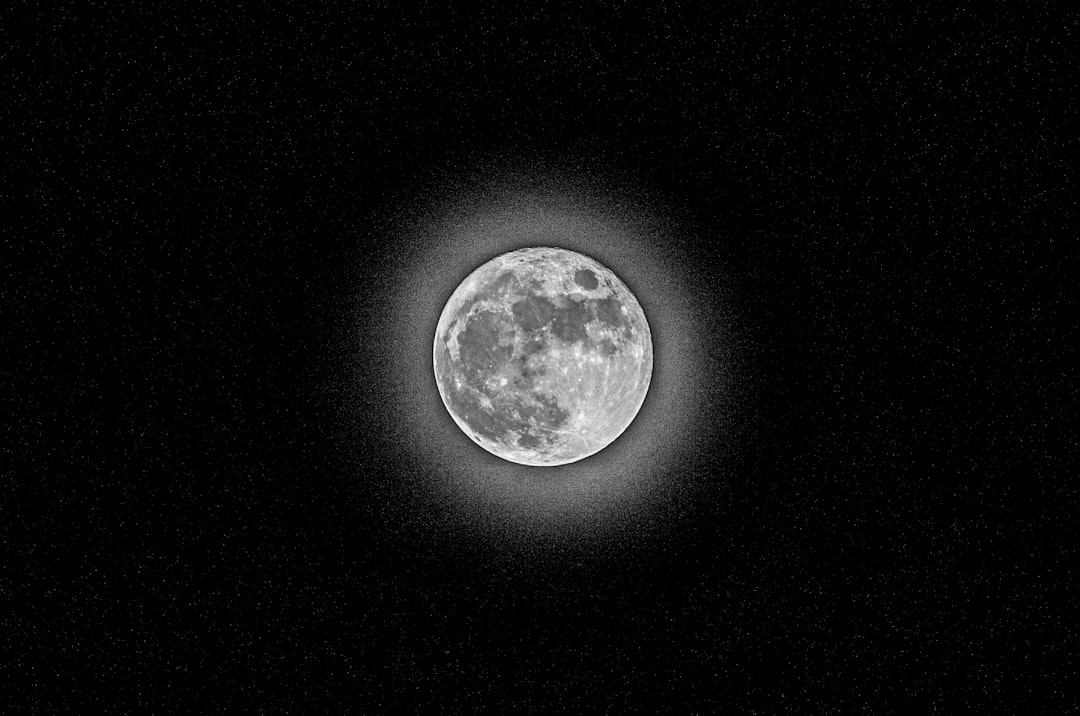
The Saros Cycle is a period of approximately 18 years, 11 days, and 8 hours that plays a crucial role in the prediction of eclipses. This cycle is significant because it allows astronomers to forecast when solar and lunar eclipses will occur, as well as their visibility from various locations on Earth. The Saros Cycle is based on the alignment of the Earth, Moon, and Sun, which occurs in a repeating pattern.
Each Saros cycle consists of a series of eclipses that share similar geometrical characteristics, such as the distance between the Earth and the Moon and the angle at which the Sun’s light strikes the Moon or Earth. The cycle’s duration means that after one Saros, the Sun, Earth, and Moon return to nearly the same relative positions in a three-body system. This alignment results in a series of eclipses that can be observed from different parts of the world.
The Saros Cycle is not only a fascinating astronomical phenomenon but also a tool that has been used for centuries to understand celestial events and their implications for life on Earth.
Key Takeaways
- The Saros Cycle is a period of approximately 18 years used to predict eclipses.
- It was historically discovered through careful observation of lunar and solar eclipse patterns.
- The cycle influences the timing and recurrence of lunar months and eclipses.
- Ancient cultures relied on the Saros Cycle for calendrical and religious purposes.
- Modern astronomy uses the Saros Cycle to accurately forecast future eclipses and lunar events.
History and Discovery of the Saros Cycle
The history of the Saros Cycle dates back to ancient civilizations, particularly those in Mesopotamia, who were among the first to document celestial events. The Babylonians, with their keen observations of the night sky, recognized patterns in lunar and solar eclipses.
The term “Saros” itself is derived from the ancient Greek word “saros,” which means “to repeat,” reflecting the cyclical nature of these celestial events. The formal recognition of the Saros Cycle as a distinct phenomenon came much later, during the Renaissance period when astronomers began to apply mathematical principles to their observations. Notable figures such as Johannes Kepler contributed to the understanding of eclipse cycles by analyzing historical records and refining calculations.
This period marked a significant advancement in astronomy, as scholars sought to explain not only when eclipses would occur but also why they happened in the first place.
How the Saros Cycle Affects Lunar Months
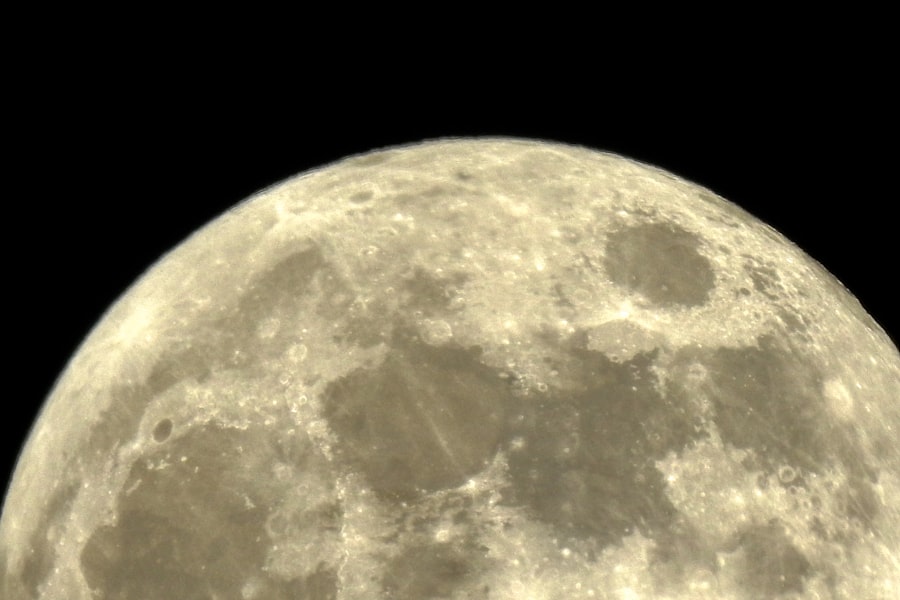
The Saros Cycle has a profound impact on lunar months, which are traditionally defined by the phases of the Moon. A lunar month lasts about 29.53 days, which is the time it takes for the Moon to complete one full cycle of phases from new moon to new moon. The Saros Cycle, with its duration of approximately 6585.32 days, encompasses about 235 lunar months.
This relationship between the Saros Cycle and lunar months highlights how interconnected celestial mechanics are. As a result of this connection, eclipses tend to occur in clusters during specific periods within the Saros Cycle. For instance, if a lunar eclipse occurs on a particular date, it is likely that another eclipse will occur approximately 18 years later, following a similar path across the sky.
This predictability allows astronomers to anticipate not only when eclipses will happen but also their characteristics, such as whether they will be total or partial.
The Importance of the Saros Cycle in Astronomy
The Saros Cycle holds immense importance in astronomy for several reasons. First and foremost, it provides a reliable framework for predicting eclipses, which has been invaluable for both scientific research and cultural practices throughout history. By understanding this cycle, astronomers can create detailed eclipse calendars that inform people about upcoming celestial events.
This knowledge has practical applications in various fields, including navigation, agriculture, and even religious observances. Moreover, the Saros Cycle serves as a reminder of the intricate relationships between celestial bodies. It illustrates how gravitational forces and orbital mechanics govern the movements of the Earth, Moon, and Sun.
By studying these relationships through the lens of the Saros Cycle, astronomers can gain insights into broader cosmic phenomena and refine their models of celestial dynamics. This understanding not only enhances our knowledge of our solar system but also contributes to our comprehension of other planetary systems beyond our own.
Understanding the Mechanics of the Saros Cycle
| Metric | Value | Unit | Description |
|---|---|---|---|
| Length of Saros Cycle | 223 | Lunar Months | Number of synodic months in one Saros cycle |
| Length of Saros Cycle | 6585.3211 | Days | Duration of one Saros cycle in days |
| Synodic Month | 29.53059 | Days | Average length of one lunar synodic month |
| Draconic Months in Saros | 242 | Draconic Months | Number of draconic months in one Saros cycle |
| Anomalistic Months in Saros | 239 | Anomalistic Months | Number of anomalistic months in one Saros cycle |
| Purpose | Eclipse Prediction | The Saros cycle is used to predict eclipses due to the alignment of the Sun, Earth, and Moon | |
To fully appreciate the Saros Cycle, one must delve into its underlying mechanics. The cycle is rooted in three key astronomical cycles: the synodic month (the time it takes for the Moon to return to the same phase), the draconic month (the time it takes for the Moon to return to the same node), and the anomalistic month (the time it takes for the Moon to return to its perigee). These three cycles interact in such a way that they create a repeating pattern over time.
The synodic month lasts about 29.53 days and is responsible for the phases of the Moon. The draconic month is approximately 27.21 days long and relates to the points where the Moon’s orbit intersects with Earth’s orbital plane. Finally, the anomalistic month lasts about 27.55 days and pertains to variations in the Moon’s distance from Earth due to its elliptical orbit.
The combination of these cycles results in an intricate dance that ultimately leads to the formation of eclipses during specific intervals within each Saros.
Predicting Eclipses with the Saros Cycle
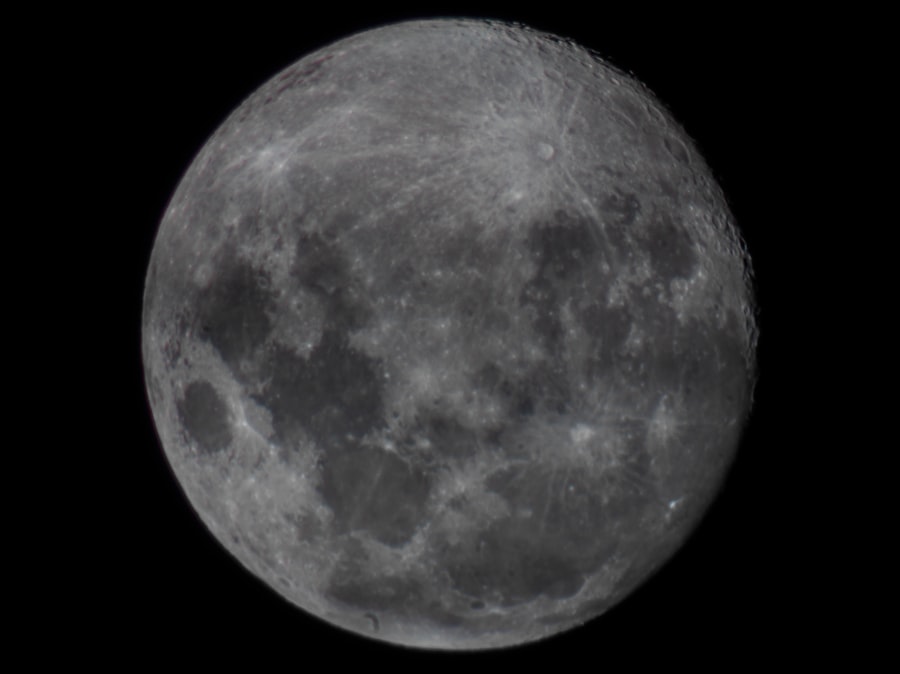
Predicting eclipses using the Saros Cycle involves careful calculations based on historical data and astronomical observations. Astronomers can identify past eclipses and determine their characteristics by analyzing records from various cultures throughout history. Once they establish a pattern within a particular Saros cycle, they can project future eclipses with remarkable accuracy.
For example, if an eclipse occurs on a specific date in one Saros cycle, astronomers can expect another eclipse to occur approximately 18 years later on a similar date. This predictive capability allows scientists to create eclipse maps that illustrate where future eclipses will be visible from Earth. Such maps are invaluable for both amateur astronomers eager to witness these celestial events and researchers studying their effects on Earth’s atmosphere and environment.
The Relationship Between the Saros Cycle and Solar Eclipses
The relationship between the Saros Cycle and solar eclipses is particularly noteworthy due to its implications for understanding these dramatic celestial events. Solar eclipses occur when the Moon passes directly between Earth and the Sun, casting a shadow on Earth’s surface. The alignment required for this phenomenon is rare; however, because of the predictable nature of the Saros Cycle, solar eclipses can be anticipated with precision.
Each solar eclipse within a Saros cycle shares similar characteristics with others in that cycle, including duration and path across Earth’s surface. This means that if an observer witnesses a total solar eclipse at a specific location during one Saros cycle, they can expect another total solar eclipse at that same location approximately 18 years later. This cyclical pattern has allowed astronomers to study solar eclipses over centuries and has contributed significantly to our understanding of solar dynamics.
The Impact of the Saros Cycle on Ancient Cultures and Beliefs
Throughout history, ancient cultures have placed great significance on celestial events, often interpreting them as omens or messages from deities. The Saros Cycle played a pivotal role in shaping these beliefs as civilizations observed patterns in lunar and solar eclipses. For instance, many ancient societies viewed eclipses as harbingers of change or disaster, leading them to develop rituals aimed at appeasing gods or seeking protection during these events.
In Mesoamerican cultures such as the Maya, astronomical observations were integral to their calendars and agricultural practices. They meticulously recorded eclipses and used this knowledge to guide planting and harvesting cycles. Similarly, ancient Chinese astronomers recognized eclipses as significant events that required careful observation and interpretation.
The ability to predict eclipses through understanding the Saros Cycle not only enhanced their scientific knowledge but also reinforced their cultural narratives surrounding celestial phenomena.
Modern Applications of the Saros Cycle
In contemporary times, the Saros Cycle continues to find relevance in various fields beyond traditional astronomy. Its predictive capabilities are utilized in space exploration missions where understanding celestial alignments is crucial for navigation and timing purposes. Additionally, meteorologists study eclipse patterns to analyze atmospheric changes that may occur during these events.
Furthermore, educators leverage knowledge about the Saros Cycle to engage students in astronomy lessons. By illustrating how ancient civilizations used this cycle for predictions, teachers can foster an appreciation for both historical context and scientific inquiry among students. The ongoing fascination with eclipses ensures that interest in understanding cycles like the Saros remains vibrant across generations.
How to Calculate the Saros Cycle
Calculating the Saros Cycle involves understanding its components and applying mathematical principles related to lunar phases and orbital mechanics. To determine when an eclipse will occur within a specific Saros cycle, astronomers begin by identifying an existing eclipse’s date and characteristics. They then add approximately 18 years, 11 days, and 8 hours to this date to find subsequent eclipses within that cycle.
This calculation requires precise knowledge of lunar cycles and an understanding of how they interact with Earth’s orbit around the Sun. Astronomers often use software tools or databases that compile historical eclipse data to facilitate these calculations efficiently. By employing these methods, they can create comprehensive eclipse calendars that serve both scientific research and public interest.
The Future of Lunar Month Predictions with the Saros Cycle
As technology advances, so too does humanity’s ability to predict lunar months and eclipses using tools informed by the Saros Cycle. With improved computational models and access to vast amounts of astronomical data, researchers are refining their predictions with greater accuracy than ever before. This progress not only enhances our understanding of celestial mechanics but also opens new avenues for exploration beyond our solar system.
In addition to traditional methods of prediction based on historical data, modern astronomers are increasingly utilizing artificial intelligence algorithms capable of analyzing complex patterns within vast datasets. These innovations promise to revolutionize how future generations approach lunar month predictions while deepening our appreciation for cycles like the Saros that have captivated humanity for millennia. In conclusion, the Saros Cycle stands as a testament to humanity’s enduring fascination with celestial phenomena.
From its historical roots in ancient cultures to its modern applications in science and education, this cycle continues to illuminate our understanding of eclipses and their significance within our universe.
The Saros cycle is a fascinating astronomical phenomenon that describes the period of approximately 18 years, 11 days, and 8 hours between similar solar and lunar eclipses. This cycle is crucial for predicting eclipses and understanding their recurrence. For more insights into related astronomical events and cycles, you can explore this article on lunar months and their significance in the context of eclipses at Real Lore and Order.
WATCH THIS! 🚨 Divers Found THIS at the Bottom of the Sea—Scientists Still Can’t Explain It
FAQs
What is the Saros cycle?
The Saros cycle is a period of approximately 18 years, 11 days, and 8 hours after which similar solar and lunar eclipses repeat. It is used to predict eclipses based on the alignment of the Earth, Moon, and Sun.
How long is a lunar month?
A lunar month, also known as a synodic month, is about 29.53 days long. It is the time it takes for the Moon to complete one full cycle of phases, from new moon to new moon.
How are the Saros cycle and lunar months related?
The Saros cycle is closely related to lunar months because it is based on the alignment of three lunar cycles: the synodic month (29.53 days), the draconic month (27.21 days), and the anomalistic month (27.55 days). The Saros cycle combines these to predict when eclipses will recur.
Why does the Saros cycle last about 18 years?
The Saros cycle lasts about 18 years because it is the time it takes for the Moon to return to nearly the same position relative to the Earth and Sun, aligning the lunar nodes and phases so that similar eclipses occur.
Can the Saros cycle predict all eclipses?
The Saros cycle can predict many eclipses, but not all. It is highly effective for forecasting eclipses that share similar geometry, but variations in the Earth-Moon distance and orbital mechanics mean some differences occur.
What is the significance of the Saros cycle in astronomy?
The Saros cycle is significant because it provides a reliable method for predicting eclipses over long periods. Ancient astronomers used it to understand and forecast eclipse patterns, and it remains a valuable tool in modern astronomy.
How many eclipses occur in one Saros cycle?
A Saros cycle typically includes about 70 to 80 eclipses, both solar and lunar, occurring at intervals of approximately 18 years, 11 days, and 8 hours.
Is the Saros cycle the same for solar and lunar eclipses?
Yes, the Saros cycle applies to both solar and lunar eclipses. The cycle predicts when eclipses of similar geometry will repeat, whether the Moon is blocking the Sun (solar eclipse) or the Earth is casting a shadow on the Moon (lunar eclipse).