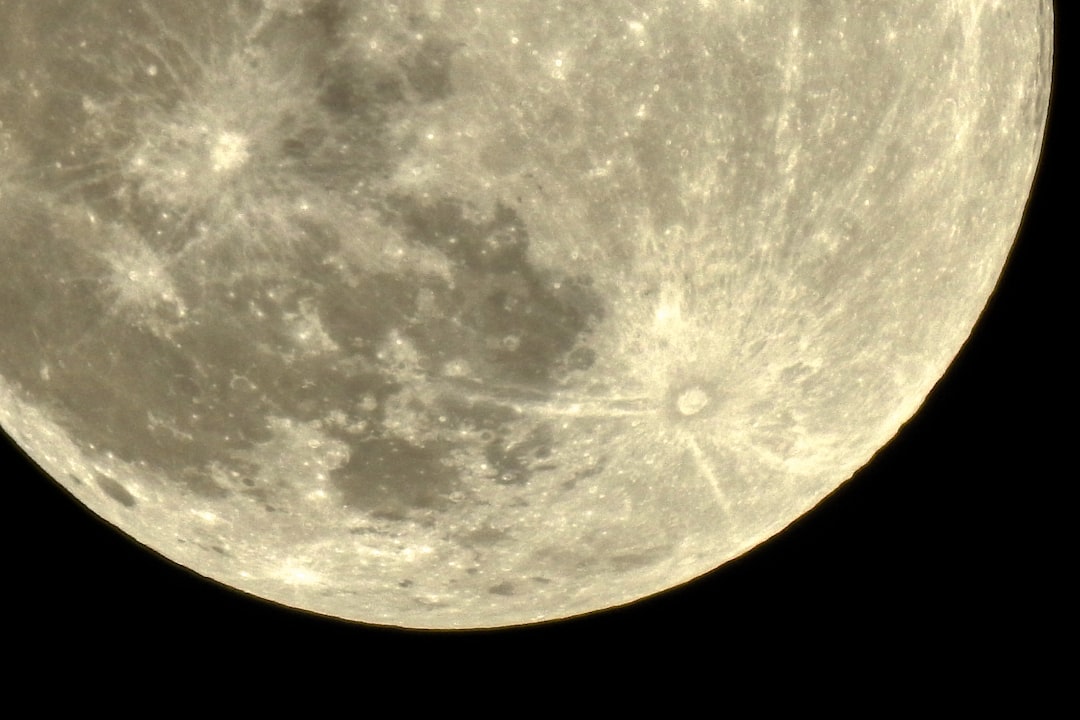
The Hipparchus Lunar Anomaly represents a fascinating intersection of ancient astronomy and modern scientific inquiry. Named after the renowned Greek astronomer Hipparchus, who made significant contributions to the understanding of celestial bodies, this anomaly refers to a peculiar phenomenon observed in the Moon’s motion. Specifically, it highlights discrepancies between the Moon’s predicted and actual positions in the sky, raising questions about the underlying mechanics of lunar motion.
As researchers delve deeper into this anomaly, they uncover layers of complexity that not only challenge existing astronomical models but also offer insights into the broader dynamics of celestial mechanics. The significance of the Hipparchus Lunar Anomaly extends beyond mere academic curiosity. It serves as a reminder of the intricate relationship between observation and theory in the field of astronomy.
The anomaly has implications for our understanding of gravitational forces, orbital mechanics, and even the historical evolution of astronomical thought. As scientists continue to explore this phenomenon, they are not only seeking to resolve the discrepancies in lunar motion but also to enhance our comprehension of the universe’s fundamental laws.
Key Takeaways
- The Hipparchus Lunar Anomaly is a longstanding irregularity observed in the Moon’s motion, first noted in ancient times.
- Various theoretical models have been proposed to explain the anomaly, but no definitive mechanism has been confirmed.
- Recent technological advancements and collaborative research efforts have provided new insights into the anomaly’s underlying causes.
- Understanding the anomaly could have significant implications for lunar science, orbital mechanics, and space exploration.
- Despite progress, challenges and controversies remain, guiding future research directions to fully unlock the anomaly’s mechanism.
Historical Background of the Hipparchus Lunar Anomaly
The roots of the Hipparchus Lunar Anomaly can be traced back to ancient civilizations that first attempted to chart the heavens. Hipparchus himself, who lived during the second century BCE, is often credited with laying the groundwork for observational astronomy. His meticulous records of celestial events and his development of a star catalog were revolutionary for his time.
However, it was his work on lunar motion that would later give rise to the anomaly named in his honor. In the centuries following Hipparchus, astronomers continued to refine their understanding of the Moon’s orbit. The Ptolemaic system, which dominated medieval astronomy, attempted to explain lunar motion through a geocentric model.
The Hipparchus Lunar Anomaly was identified as a significant deviation from expected lunar positions, prompting further investigation into its causes. This historical context underscores the evolution of astronomical thought and highlights how early observations laid the foundation for contemporary research.
Theoretical Explanations for the Hipparchus Lunar Anomaly

Various theoretical frameworks have been proposed to explain the Hipparchus Lunar Anomaly, each contributing unique perspectives on lunar dynamics. One prominent explanation revolves around gravitational interactions between celestial bodies. The Moon’s orbit is influenced not only by Earth’s gravity but also by the gravitational pull of other planets and the Sun.
These interactions can lead to variations in the Moon’s speed and trajectory, resulting in observable discrepancies. Another theoretical approach considers the role of relativistic effects as described by Einstein’s theory of general relativity. While classical Newtonian mechanics provides a solid foundation for understanding celestial motion, relativistic corrections may be necessary to account for anomalies like those observed in lunar motion.
This perspective invites a reevaluation of long-held assumptions about gravitational forces and their impact on orbital mechanics, suggesting that a more nuanced understanding of physics may be required to fully grasp the complexities of lunar motion.
Recent Discoveries and Research on the Hipparchus Lunar Anomaly
In recent years, advancements in technology and observational techniques have led to renewed interest in the Hipparchus Lunar Anomaly. Researchers have employed high-precision instruments such as laser ranging and satellite-based observations to gather data on the Moon’s position with unprecedented accuracy. These modern tools have allowed scientists to refine their models and better understand the factors contributing to the anomaly.
Recent studies have also explored the potential influence of tidal forces on lunar motion. The gravitational interaction between Earth and the Moon creates tidal bulges that can affect the Moon’s orbit over time. By examining these tidal effects in conjunction with other gravitational influences, researchers are beginning to piece together a more comprehensive picture of the mechanisms at play in the Hipparchus Lunar Anomaly.
This ongoing research not only sheds light on lunar dynamics but also enhances our understanding of Earth-Moon interactions.
Understanding the Mechanism Behind the Hipparchus Lunar Anomaly
| Metric | Description | Value | Unit | Notes |
|---|---|---|---|---|
| Lunar Anomaly | Angular distance of the Moon from its perigee | 0 – 360 | Degrees | Measured in degrees along the Moon’s orbit |
| Mean Motion of Moon | Average angular velocity of the Moon | 13.176 | Degrees per day | Used in Hipparchus’ lunar model calculations |
| Epicycle Radius | Radius of the lunar epicycle in Hipparchus’ model | 5.5 | Earth radii (approximate) | Represents the Moon’s orbit eccentricity |
| Deferent Radius | Radius of the deferent circle in the lunar model | 60 | Earth radii (approximate) | Base circle for the epicycle motion |
| Maximum Lunar Anomaly Correction | Maximum angular correction applied to lunar position | 5.1 | Degrees | Accounts for the Moon’s elliptical orbit |
| Period of Anomaly Cycle | Time for the lunar anomaly to complete one cycle | 27.55 | Days | Corresponds to anomalistic month |
To fully grasp the Hipparchus Lunar Anomaly, it is essential to investigate its underlying mechanisms. One key aspect involves analyzing the Moon’s elliptical orbit around Earth, which is not a perfect circle but rather an elongated path influenced by various gravitational forces. This elliptical nature leads to variations in orbital speed, causing discrepancies between predicted and observed positions.
Additionally, researchers are examining how perturbations from other celestial bodies contribute to these anomalies. The gravitational pull from planets such as Jupiter and Venus can create subtle shifts in the Moon’s orbit, complicating predictions based solely on Earth-Moon dynamics. By integrating these factors into their models, scientists aim to develop a more accurate representation of lunar motion that accounts for both classical mechanics and modern astrophysical insights.
Potential Implications of Unlocking the Hipparchus Lunar Anomaly Mechanism
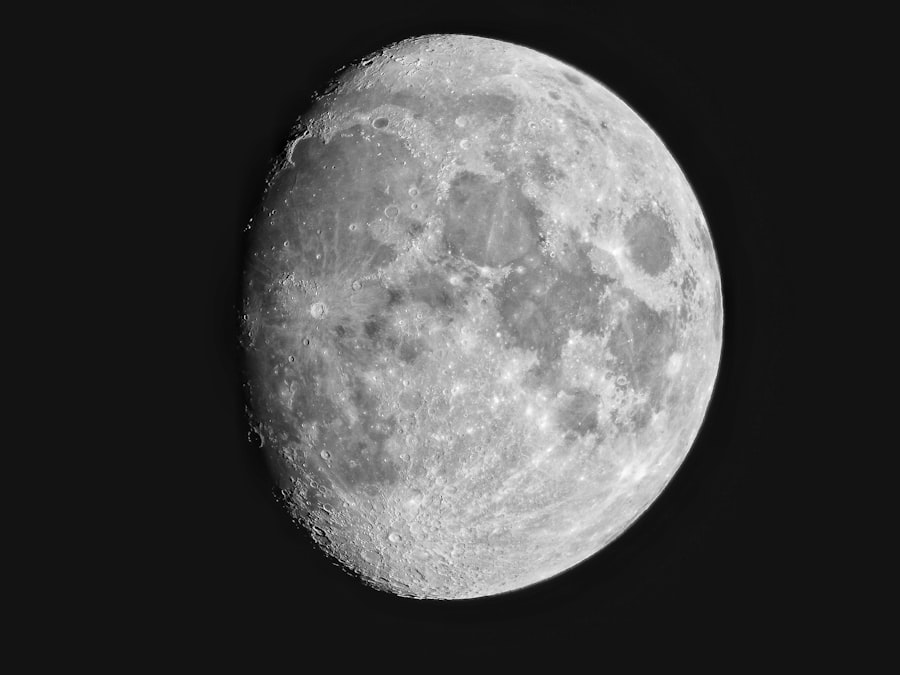
Unlocking the mechanism behind the Hipparchus Lunar Anomaly holds significant implications for various fields of study. For astronomers, resolving this anomaly could lead to more accurate predictions of lunar positions, enhancing navigation systems that rely on precise celestial measurements. Improved models could also benefit space missions aimed at exploring or utilizing lunar resources, as accurate orbital data is crucial for mission planning.
Beyond practical applications in astronomy and space exploration, understanding this anomaly may also contribute to broader scientific discussions about gravitational physics and celestial mechanics. Insights gained from studying lunar motion could inform theories related to planetary formation, orbital stability, and even dark matter interactions within our solar system. Thus, unraveling the mysteries of the Hipparchus Lunar Anomaly could have far-reaching consequences that extend well beyond its immediate context.
Challenges and Controversies Surrounding the Hipparchus Lunar Anomaly
Despite advancements in research, challenges and controversies persist regarding the Hipparchus Lunar Anomaly. One significant hurdle lies in reconciling historical observations with modern data. The methods used by ancient astronomers were often imprecise by today’s standards, leading to questions about the reliability of their records.
Discrepancies between ancient calculations and contemporary measurements can complicate efforts to understand the anomaly’s origins. Moreover, differing interpretations of data can lead to debates within the scientific community about which theoretical frameworks best explain the observed phenomena. Some researchers advocate for traditional Newtonian models, while others push for relativistic approaches or even alternative theories that challenge established paradigms.
This ongoing discourse reflects the dynamic nature of scientific inquiry and highlights how unresolved questions can stimulate further exploration and debate.
Tools and Technologies Used in Studying the Hipparchus Lunar Anomaly
The study of the Hipparchus Lunar Anomaly has been greatly enhanced by advancements in technology and observational tools. High-precision telescopes equipped with advanced imaging systems allow astronomers to track lunar positions with remarkable accuracy. These instruments can capture minute changes in position over time, providing valuable data for researchers seeking to understand discrepancies in lunar motion.
Additionally, satellite missions such as NASA’s Lunar Reconnaissance Orbiter (LRO) have revolutionized our understanding of the Moon’s surface and its gravitational field. By mapping lunar topography and measuring gravitational variations, these missions contribute critical information that aids in modeling lunar dynamics. The integration of these technologies has opened new avenues for research, enabling scientists to approach the Hipparchus Lunar Anomaly from multiple angles.
Collaborative Efforts in Unraveling the Hipparchus Lunar Anomaly Mechanism
Collaboration among scientists from various disciplines has proven essential in unraveling the complexities surrounding the Hipparchus Lunar Anomaly. Astronomers, physicists, mathematicians, and engineers are coming together to share insights and expertise that enhance collective understanding. Interdisciplinary teams are leveraging diverse skill sets to tackle challenges that no single field could address alone.
International collaborations have also emerged as key players in this research landscape. Joint efforts among space agencies and academic institutions facilitate data sharing and resource pooling, allowing for more comprehensive studies of lunar dynamics. These collaborative initiatives not only foster innovation but also promote a global approach to solving one of astronomy’s enduring mysteries.
Future Directions in Research on the Hipparchus Lunar Anomaly
Looking ahead, future research on the Hipparchus Lunar Anomaly is poised to explore new frontiers in both observational techniques and theoretical frameworks. As technology continues to advance, researchers anticipate even greater precision in measuring lunar positions and gravitational influences. Upcoming missions aimed at studying celestial bodies within our solar system may provide additional data that could shed light on this anomaly.
Moreover, interdisciplinary approaches will likely play a crucial role in future investigations. By integrating insights from fields such as astrophysics, geophysics, and computational modeling, scientists can develop more robust models that account for complex interactions within our solar system. This holistic perspective may ultimately lead to breakthroughs that resolve longstanding questions surrounding lunar motion.
The Significance of Unlocking the Hipparchus Lunar Anomaly Mechanism
In conclusion, unlocking the mechanism behind the Hipparchus Lunar Anomaly represents a significant endeavor within contemporary astronomy and physics. As researchers continue to explore this phenomenon through advanced technologies and collaborative efforts, they stand on the brink of potentially transformative discoveries that could reshape our understanding of celestial mechanics. The implications extend far beyond academic curiosity; they touch upon practical applications in navigation, space exploration, and fundamental physics.
The journey toward unraveling this anomaly serves as a testament to humanity’s enduring quest for knowledge about the universe. Each step taken toward understanding lunar motion not only honors the legacy of ancient astronomers like Hipparchus but also paves the way for future generations of scientists eager to explore the cosmos’ mysteries.
The Hipparchus lunar anomaly mechanism is a fascinating topic that delves into ancient astronomical observations and their implications for understanding lunar motion. For those interested in exploring more about the historical context and significance of such mechanisms, you can read a related article on this subject at