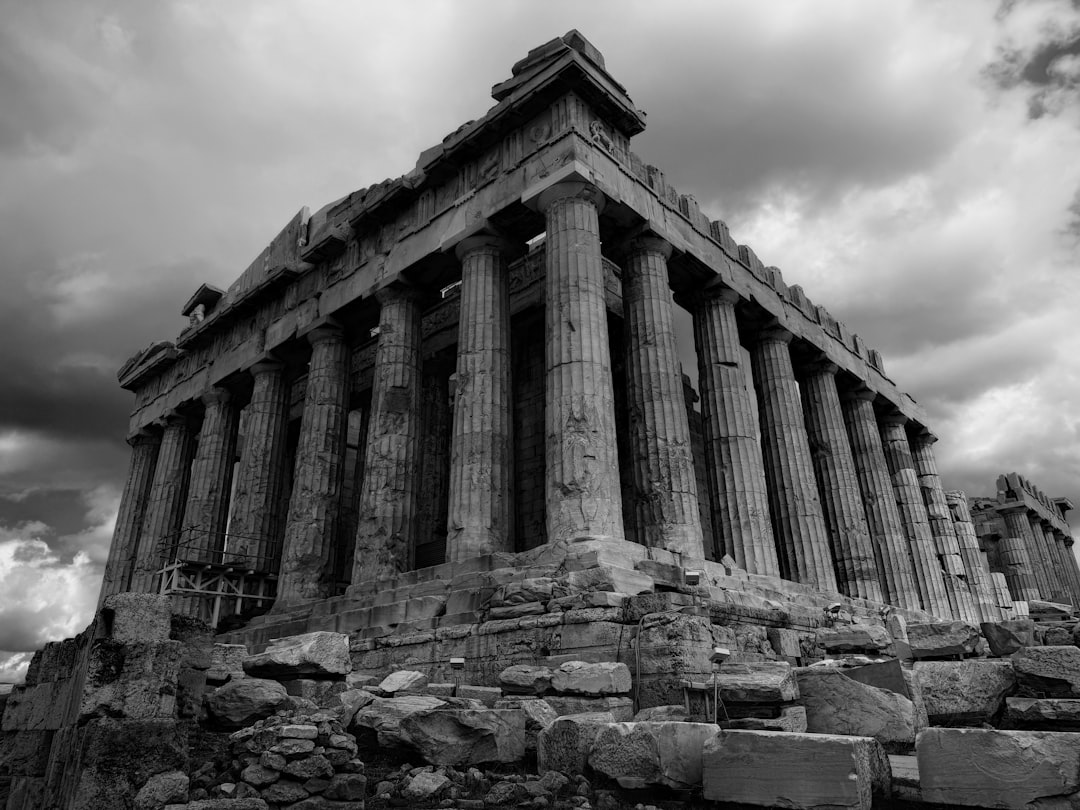
Ancient Greece served as a foundational center for astronomical study, where philosophers, mathematicians, and astronomers systematically observed and analyzed celestial phenomena. Greek scholars approached astronomy through both empirical observation and theoretical modeling, moving beyond mythological explanations to develop rational frameworks for understanding the cosmos. Early Greek astronomers including Thales (c.
624-546 BCE) and Anaximander (c. 610-546 BCE) established fundamental principles of astronomical inquiry. Thales successfully predicted a solar eclipse in 585 BCE and proposed that celestial bodies were physical objects rather than deities.
Anaximander created one of the first known models of the universe, positioning Earth as a cylinder suspended in space without support. Later astronomers built upon these foundations with increasingly sophisticated methods. Hipparchus (c.
190-120 BCE) developed the magnitude scale for stellar brightness, discovered the precession of equinoxes, and compiled the first comprehensive star catalog. Ptolemy (c. 100-170 CE) synthesized Greek astronomical knowledge in his work “Almagest,” creating a geocentric model that accurately predicted planetary positions for over a millennium.
Greek astronomical work served practical purposes beyond theoretical understanding. Astronomers developed calendars for agricultural planning, navigation techniques for maritime trade, and timing systems for religious festivals. The integration of astronomical knowledge into Greek society influenced agricultural practices, political decision-making, and religious ceremonies, demonstrating the practical applications of their celestial studies.
Key Takeaways
- Ancient Greeks combined philosophy, mathematics, and observation to predict eclipses accurately.
- Eclipse warnings held significant cultural, religious, and political importance in Greek society.
- Greek astronomers developed early mathematical models and tools that advanced eclipse studies.
- Mythology and religion shaped how eclipses were interpreted and communicated to the public.
- The legacy of Greek eclipse predictions influences modern astronomy and remains relevant today.
The Role of Eclipse Warnings in Ancient Greek Society
Eclipses were among the most awe-inspiring celestial events observed by the ancient Greeks. These occurrences, whether solar or lunar, were often interpreted as significant omens that could herald change or disaster. The Greeks believed that eclipses were messages from the gods, warning them of impending doom or signaling the need for societal introspection.
As such, eclipse warnings played a crucial role in shaping public perception and response to these celestial phenomena. In a society where superstition and religion were deeply embedded in daily life, the ability to predict eclipses became a powerful tool for leaders and priests. Accurate predictions could bolster a ruler’s authority, as they demonstrated a connection to divine knowledge.
Conversely, misinterpretations could lead to panic and unrest among the populace. Thus, the ability to foresee an eclipse was not just an academic exercise; it had real implications for governance and social stability.
The Influence of Greek Philosophers on Eclipse Predictions
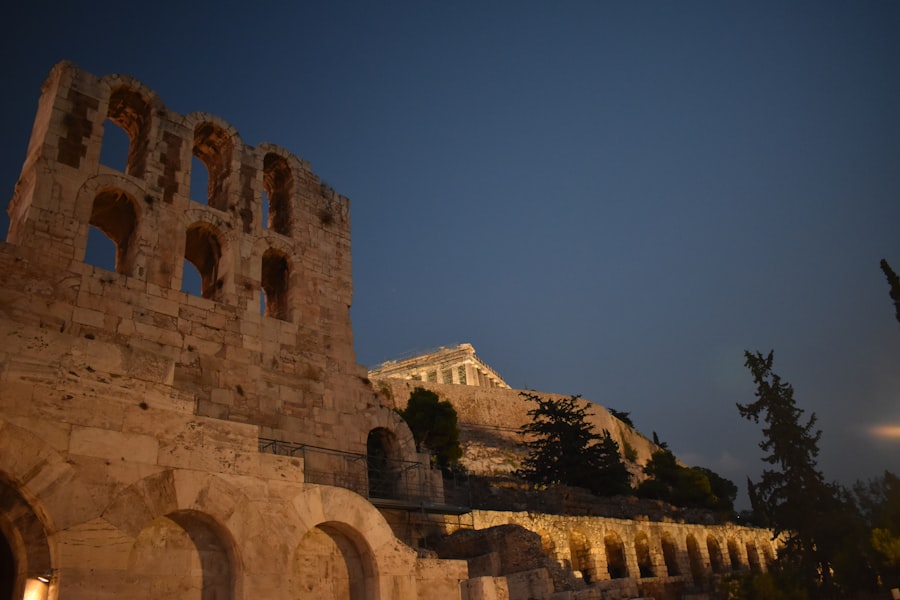
Greek philosophers made significant contributions to the understanding and prediction of eclipses through their systematic approach to observation and reasoning. Figures such as Aristotle and Plato laid the philosophical groundwork for understanding celestial mechanics. Aristotle’s geocentric model posited that the Earth was at the center of the universe, surrounded by concentric spheres containing celestial bodies.
This model influenced how eclipses were understood, as they were seen as disruptions in the natural order of these spheres. Moreover, philosophers like Anaxagoras introduced the idea that eclipses were natural phenomena rather than divine interventions. His assertion that the moon reflected sunlight provided a more scientific explanation for lunar eclipses, challenging prevailing myths.
This shift towards rational thought paved the way for later astronomers to develop more accurate predictive models based on empirical evidence rather than superstition. The philosophical discourse surrounding eclipses encouraged a culture of inquiry that would ultimately lead to advancements in astronomical science.
Ancient Greek Observatories and Astronomical Tools
The ancient Greeks constructed various observatories and utilized a range of astronomical tools to enhance their understanding of celestial events. One notable example is the Tower of the Winds in Athens, which served as both a weather vane and an astronomical observatory. This structure allowed astronomers to observe celestial movements while also providing practical information about weather patterns, demonstrating the interconnectedness of astronomy and daily life.
In addition to physical structures, the Greeks developed several instruments that facilitated their astronomical observations. The astrolabe, for instance, was a sophisticated device used to measure the altitude of stars and planets. This tool enabled astronomers to track celestial movements with greater precision, allowing for more accurate predictions of events such as eclipses.
The combination of observatories and advanced tools exemplified the Greeks’ commitment to understanding the cosmos, laying the foundation for future astronomical advancements.
The Use of Mythology and Religion in Eclipse Interpretation
| Year | Location | Type of Eclipse | Warning Method | Historical Source | Significance |
|---|---|---|---|---|---|
| 585 BCE | Ancient Greece (Lydia) | Total Solar Eclipse | Prediction by Thales of Miletus | Herodotus, “Histories” | Stopped a battle between Medes and Lydians |
| 412 BCE | Athens | Partial Solar Eclipse | Recorded observations and warnings by astronomers | Plutarch, “Life of Alcibiades” | Used for political and military planning |
| 431 BCE | Delphi | Lunar Eclipse | Oracle interpretations and priestly warnings | Thucydides, “History of the Peloponnesian War” | Seen as an omen for the Peloponnesian War |
| 399 BCE | Athens | Lunar Eclipse | Philosophical and religious interpretations | Plato, “Apology” | Associated with the trial of Socrates |
Mythology and religion played a pivotal role in how ancient Greeks interpreted eclipses. Celestial events were often woven into the fabric of their myths, with gods and goddesses frequently associated with specific astronomical phenomena. For instance, a solar eclipse might be interpreted as Apollo’s chariot being obscured by darkness, while lunar eclipses could be seen as a sign of discord among deities.
These interpretations provided a narrative framework through which people could make sense of unpredictable cosmic events. Religious rituals often accompanied eclipses, as communities sought to appease the gods or seek forgiveness for perceived transgressions. Sacrifices and prayers were common practices during these times, reflecting a deep-seated belief that celestial events were directly linked to divine will.
This intertwining of mythology and astronomy not only shaped individual beliefs but also influenced collective societal responses to eclipses, reinforcing the importance of celestial phenomena in ancient Greek culture.
The Development of Mathematical Models for Eclipse Predictions
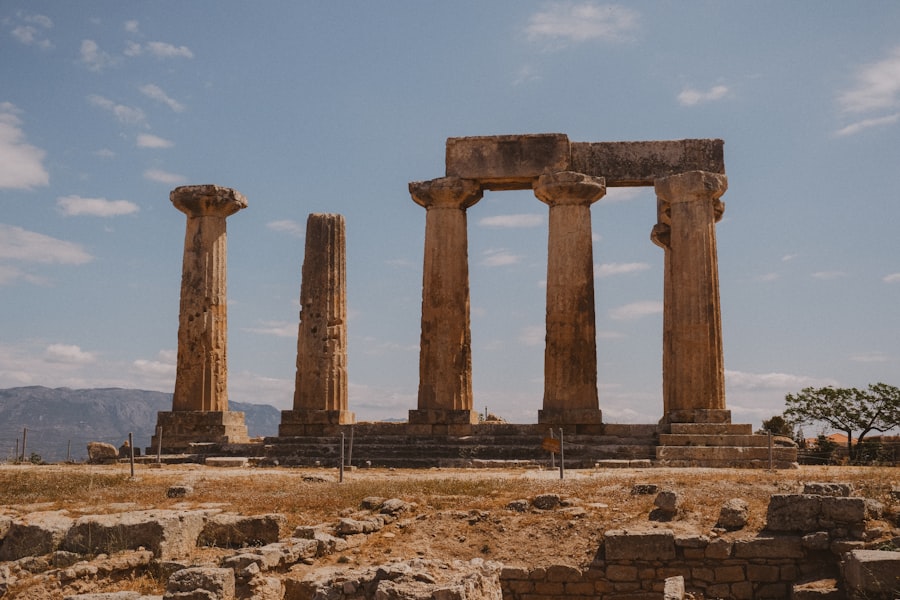
As Greek astronomers sought to refine their understanding of eclipses, they began developing mathematical models that would allow for more accurate predictions. Ptolemy’s Almagest is one of the most significant works from this period, providing detailed calculations for predicting both solar and lunar eclipses based on geometric principles. His work synthesized earlier knowledge while introducing new methods that would influence astronomers for centuries.
The mathematical models developed by Greek astronomers relied heavily on geometry and trigonometry, reflecting their advanced understanding of mathematics at the time. By calculating the relative positions of celestial bodies, they could predict when eclipses would occur with remarkable accuracy. This mathematical approach marked a significant departure from earlier mythological interpretations, emphasizing observation and calculation over superstition.
The Contributions of Ancient Greek Astronomers to Eclipse Studies
Ancient Greek astronomers made substantial contributions to the study of eclipses that laid the groundwork for future generations. Figures such as Hipparchus are often credited with creating one of the first comprehensive catalogs of stars and celestial events, including detailed records of eclipses. His meticulous observations allowed him to identify patterns in eclipse occurrences, leading to more reliable predictions.
Another notable figure is Aristarchus of Samos, who proposed an early heliocentric model of the solar system. Although his ideas were not widely accepted during his time, they represented a significant shift in thinking about celestial mechanics. His work on measuring distances between celestial bodies contributed to a deeper understanding of how eclipses occur and how they can be predicted based on relative positions within the solar system.
The Cultural and Political Impact of Eclipse Warnings in Ancient Greece
Eclipse warnings had profound cultural and political implications in ancient Greece. When an eclipse was predicted accurately, it could enhance a leader’s credibility and authority among their subjects. Rulers who could foresee such events were often viewed as possessing divine insight or favor from the gods, which could solidify their power during times of uncertainty.
Conversely, an unexpected eclipse could lead to panic or unrest within society. Leaders were often held accountable for failing to predict such events, which could result in political upheaval or loss of power. Thus, eclipse warnings served not only as scientific endeavors but also as tools for political maneuvering within the complex landscape of ancient Greek society.
The Legacy of Ancient Greek Eclipse Warnings in Modern Astronomy
The legacy of ancient Greek eclipse warnings continues to resonate within modern astronomy. The methodologies developed by Greek astronomers laid foundational principles that are still relevant today. Their emphasis on observation, mathematical modeling, and systematic inquiry has shaped contemporary approaches to studying celestial phenomena.
Moreover, many modern astronomical tools can trace their origins back to ancient Greek innovations. Instruments like telescopes have evolved from early observational tools used by Greek astronomers, demonstrating how their contributions have endured through time. The predictive models established by figures like Ptolemy remain influential in contemporary astronomy, showcasing the lasting impact of ancient Greek thought on modern scientific practices.
Comparisons with Other Ancient Civilizations’ Approach to Eclipse Warnings
While ancient Greece made significant strides in understanding eclipses, other civilizations also developed their own methods for predicting these celestial events. For instance, ancient Mesopotamian astronomers meticulously recorded lunar cycles and developed calendars that included eclipse predictions based on their observations.
However, what set ancient Greece apart was its philosophical approach to astronomy. While other civilizations often intertwined astrology with their astronomical observations, Greek thinkers sought rational explanations grounded in mathematics and empirical evidence. This distinction fostered a culture of inquiry that propelled advancements in scientific thought across various disciplines.
The Continued Relevance of Ancient Greek Eclipse Warnings in Contemporary Science
The principles established by ancient Greek astronomers regarding eclipse warnings remain relevant in contemporary science today. Modern astronomers continue to rely on mathematical models and observational data to predict eclipses accurately. The rigorous methodologies developed by their ancient counterparts have been refined but still echo through modern practices.
Furthermore, the cultural significance attributed to eclipses persists in contemporary society. Eclipses continue to captivate public interest and inspire awe, much like they did in ancient Greece. Educational initiatives often draw upon historical perspectives to engage audiences with astronomy, highlighting how ancient knowledge informs current scientific understanding.
In conclusion, ancient Greece’s interest in astronomy laid a rich foundation for understanding celestial phenomena such as eclipses. Through careful observation, philosophical inquiry, and mathematical modeling, Greek astronomers made significant contributions that continue to influence modern science today. Their legacy serves as a reminder of humanity’s enduring quest to comprehend the cosmos and its mysteries.
In ancient Greece, eclipses were often viewed with a mix of awe and fear, leading to various interpretations and warnings from philosophers and astronomers of the time. These celestial events were sometimes seen as omens, prompting significant reactions from both the public and leaders.