
Greek civilization, spanning from the 8th century BCE to the 6th century CE, produced significant technological innovations alongside its well-documented achievements in philosophy, art, and politics. Greek inventors and engineers developed practical solutions to complex problems, creating technologies that influenced medicine, mathematics, architecture, and military engineering. Ancient Greek technological development built upon knowledge from earlier civilizations, particularly Egyptian and Mesopotamian innovations.
Greek scholars and craftsmen adapted existing technologies while developing new methodologies and approaches. This synthesis of inherited knowledge and original research produced technological advances that influenced subsequent civilizations and contributed to the foundation of modern engineering and scientific practices.
Key Takeaways
- Ancient Greece pioneered significant advancements in engineering, medicine, mathematics, and astronomy.
- Greek architecture and construction showcased remarkable sophistication and innovation.
- Military technology developed by the Greeks enhanced their defense and warfare capabilities.
- Greek inventions and hydraulic engineering greatly improved daily life and water management.
- The legacy of Greek technology profoundly influenced modern science, engineering, and society.
The Engineering Marvels of Ancient Greece
The engineering prowess of ancient Greece is perhaps best exemplified by their construction of monumental structures that have withstood the test of time. The Parthenon, a temple dedicated to the goddess Athena, stands as a testament to their architectural ingenuity. Built between 447 and 432 BCE, this iconic structure showcases the Greeks’ mastery of symmetry, proportion, and the use of columns.
The Parthenon not only served a religious purpose but also symbolized the power and cultural achievements of Athens during its Golden Age. In addition to grand temples, the Greeks excelled in creating complex infrastructure such as aqueducts and roads. The aqueducts were vital for supplying water to cities, demonstrating an understanding of hydraulics that was advanced for their time.
These engineering feats facilitated urban growth and improved public health by providing clean water. Furthermore, the extensive road networks enabled trade and communication across vast distances, contributing to the economic prosperity of Greek city-states.
Greek Innovations in Medicine and Healthcare
The realm of medicine in ancient Greece was marked by significant advancements that laid the groundwork for modern healthcare practices. Hippocrates, often referred to as the “Father of Medicine,” revolutionized the field by advocating for a systematic approach to diagnosis and treatment. He emphasized the importance of observation and documentation, encouraging physicians to rely on empirical evidence rather than superstition or divine intervention.
This shift towards rationality in medicine was a pivotal moment in the history of healthcare. Moreover, the Greeks made notable strides in surgical techniques and medical instruments. They developed tools such as scalpels and forceps, which allowed for more precise operations.
The establishment of medical schools, particularly in cities like Alexandria, fostered an environment of learning and collaboration among physicians. This emphasis on education and knowledge-sharing contributed to a more sophisticated understanding of human anatomy and disease, setting a precedent for future medical advancements.
Advancements in Mathematics and Astronomy
Mathematics and astronomy flourished in ancient Greece, driven by a desire to understand the universe and its underlying principles. Figures like Euclid and Pythagoras made groundbreaking contributions that would shape mathematical thought for centuries. Euclid’s “Elements” systematically compiled knowledge about geometry, establishing foundational principles that are still taught in schools today.
His work not only influenced mathematics but also laid the groundwork for logical reasoning in various disciplines. In astronomy, Greek thinkers such as Aristarchus and Ptolemy made significant strides in understanding celestial bodies and their movements. Aristarchus proposed a heliocentric model of the solar system long before Copernicus, suggesting that the Earth revolves around the Sun.
Ptolemy’s geocentric model dominated for centuries but was instrumental in advancing observational techniques. The Greeks’ meticulous observations and mathematical calculations paved the way for future astronomers, ultimately leading to a more accurate understanding of the cosmos.
The Sophistication of Greek Architecture and Construction
| Technology | Description | Period | Impact |
|---|---|---|---|
| Antikythera Mechanism | Ancient analog computer used to predict astronomical positions and eclipses. | 2nd century BCE | Demonstrated advanced understanding of astronomy and mechanical engineering. |
| Water Clocks (Clepsydra) | Devices to measure time by the regulated flow of water. | 5th century BCE | Improved timekeeping for civic and legal purposes. |
| Archimedes’ Screw | Machine for raising water, used in irrigation and drainage. | 3rd century BCE | Enhanced agricultural productivity and water management. |
| Greek Fire | Incendiary weapon used in naval warfare, capable of burning on water. | 7th century CE (Byzantine continuation) | Provided military advantage in naval battles. |
| Automata | Mechanical devices designed to imitate human or animal actions. | 3rd century BCE | Early robotics and entertainment technology. |
| Trireme Warships | Advanced naval vessels with three rows of oars for speed and maneuverability. | 5th century BCE | Dominated naval warfare in the Mediterranean. |
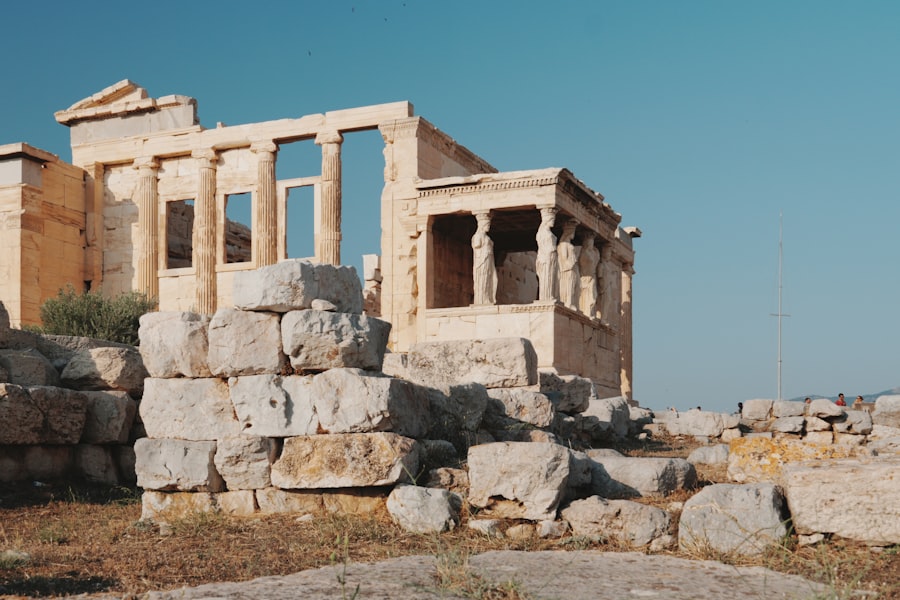
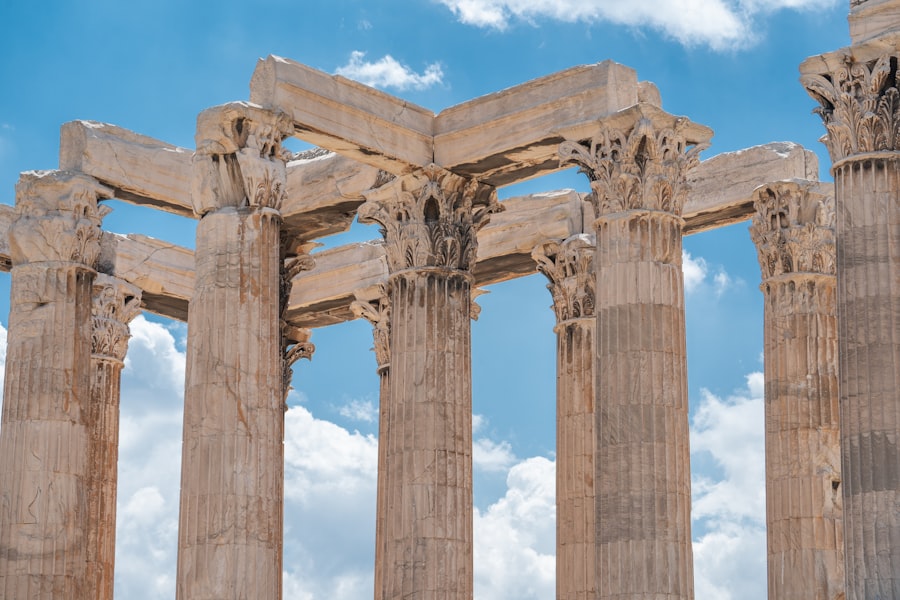
Greek architecture is renowned for its elegance and sophistication, characterized by distinct styles such as Doric, Ionic, and Corinthian columns. These architectural orders not only served aesthetic purposes but also reflected the cultural values of the time. The Greeks believed that beauty was synonymous with order and harmony, principles that were meticulously applied in their architectural designs.
Temples, theaters, and public buildings were constructed with an emphasis on proportion and symmetry, creating spaces that were both functional and visually striking. The construction techniques employed by the Greeks were equally impressive. They utilized local materials such as marble and limestone, showcasing their ability to harmonize with the natural environment.
The use of advanced tools and techniques allowed them to create intricate sculptures and detailed friezes that adorned their structures. This attention to detail not only enhanced the visual appeal but also conveyed stories and cultural narratives that resonated with the public.
Greek Contributions to Military Technology
The military innovations of ancient Greece played a crucial role in shaping warfare strategies that would influence future generations. The Greeks developed advanced weaponry such as the phalanx formation, which revolutionized infantry tactics.
The discipline and training required for this formation underscored the importance of organization in military success. Additionally, Greek naval technology saw significant advancements with the development of triremes—fast and agile warships equipped with multiple rows of oars. These vessels enabled Greek city-states to dominate naval warfare during conflicts such as the Persian Wars.
The strategic use of naval power allowed them to control trade routes and project military strength across the Mediterranean. The innovations in military technology not only secured victories but also contributed to the expansion of Greek influence throughout the region.
The Ingenious Inventions of Ancient Greek Scientists
Ancient Greek scientists were at the forefront of innovation, creating inventions that showcased their ingenuity and understanding of natural phenomena. Archimedes, one of the most celebrated figures in this regard, made significant contributions to physics and engineering. He is credited with inventing the Archimedean screw—a device used for raising water—and formulating principles related to buoyancy and levers.
His work laid the foundation for future scientific inquiry and practical applications. Another notable inventor was Hero of Alexandria, who created various mechanical devices that demonstrated principles of pneumatics and hydraulics. His inventions included early steam engines and automated machines that captivated audiences with their complexity.
These innovations not only served practical purposes but also sparked curiosity about mechanics and engineering among his contemporaries, inspiring future generations to explore scientific possibilities.
The Impact of Greek Technology on Daily Life
The technological advancements of ancient Greece had a profound impact on daily life, transforming how people lived, worked, and interacted with their environment. Innovations in agriculture, such as improved plowing techniques and irrigation systems, increased crop yields and supported population growth. This agricultural surplus allowed for greater specialization in trades and crafts, leading to a more complex economy.
Moreover, advancements in domestic technology enhanced everyday living conditions. The introduction of pottery techniques allowed for more efficient storage and cooking methods, while innovations in textiles improved clothing production. These developments not only made life more comfortable but also fostered a sense of community as people engaged in trade and shared resources within their localities.
Greek Achievements in Water Management and Hydraulic Engineering
Water management was a critical aspect of ancient Greek civilization, particularly given the geographical challenges posed by mountainous terrain and limited water sources. The Greeks excelled in hydraulic engineering, constructing aqueducts that transported water from distant sources to urban centers. These aqueducts were marvels of engineering, utilizing gravity to ensure a steady flow of water while minimizing waste.
In addition to aqueducts, they developed sophisticated drainage systems that helped manage stormwater and prevent flooding in cities. The ability to control water resources not only improved public health by providing clean drinking water but also supported agricultural practices by ensuring reliable irrigation systems. This mastery over water management was essential for sustaining growing populations and fostering economic development.
The Legacy of Greek Technology and its Influence on Modern Society
The legacy of Greek technology is evident in numerous aspects of modern society, from scientific principles to architectural designs. Many contemporary scientific methods can be traced back to Greek thinkers who emphasized observation, experimentation, and logical reasoning. The foundations laid by figures like Euclid in mathematics continue to influence educational curricula worldwide.
Architecturally, Greek styles have inspired countless buildings throughout history, with neoclassical designs echoing the elegance of ancient temples.
Furthermore, advancements in fields such as medicine and engineering continue to reflect the innovative spirit fostered during this remarkable period.
Uncovering the Secrets of Greek Technological Prowess
The secrets behind Greek technological prowess lie not only in their individual inventions but also in their collective approach to knowledge and inquiry. The Greeks fostered an environment where curiosity was encouraged, leading to collaborative efforts among scholars across various disciplines. This interdisciplinary approach allowed for cross-pollination of ideas that spurred innovation.
Moreover, their emphasis on education played a crucial role in nurturing future generations of thinkers and inventors. Institutions such as Plato’s Academy and Aristotle’s Lyceum became centers for intellectual exchange, where ideas could be debated and refined. This commitment to learning ensured that knowledge was preserved and built upon over time, creating a legacy that would inspire countless civilizations that followed.
In conclusion, ancient Greece stands as a beacon of technological advancement that has left an indelible mark on human history. From engineering marvels to medical innovations, their contributions have shaped various fields while influencing modern society in profound ways. As scholars continue to uncover the secrets behind Greek technological prowess, it becomes increasingly clear that their legacy is not merely a relic of the past but a foundation upon which contemporary civilization continues to build.
Greek civilization is renowned for its remarkable advancements in technology, which laid the groundwork for many modern innovations. One fascinating aspect of this technological prowess is explored in the article on ancient Greek engineering techniques. For a deeper understanding of how these innovations shaped the ancient world, you can read more in this related article: Ancient Greek Engineering.
WATCH THIS! 🚨 Divers Found THIS at the Bottom of the Sea—Scientists Still Can’t Explain It
FAQs
What were some key technological advancements of ancient Greek civilization?
Ancient Greek civilization made significant advancements in various fields including engineering, architecture, mathematics, and mechanics. Notable technologies include the development of the water screw (Archimedes’ screw) for irrigation, advanced construction techniques for temples and theaters, early forms of cranes and pulleys, and innovations in shipbuilding.
How did Greek technology influence later civilizations?
Greek technological innovations laid the groundwork for Roman engineering and later European advancements. Their principles in mechanics, hydraulics, and architecture were studied and expanded upon during the Renaissance and continue to influence modern engineering and science.
Who were some prominent Greek inventors or scientists associated with advanced technology?
Prominent figures include Archimedes, known for his work in mechanics and inventions like the Archimedes’ screw; Hero of Alexandria, who created early steam-powered devices; and Philo of Byzantium, who contributed to pneumatics and military technology.
What role did mathematics play in Greek technological development?
Mathematics was fundamental to Greek technology. The Greeks applied geometry and mathematical principles to design structures, develop mechanical devices, and understand natural phenomena, which enabled precise engineering and architectural achievements.
Did ancient Greeks have advanced military technology?
Yes, the Greeks developed advanced military technology such as improved weaponry, siege engines like catapults, and naval innovations including the trireme warship, which was fast and maneuverable, giving them an advantage in naval battles.
How did Greek architecture demonstrate their technological capabilities?
Greek architecture showcased advanced technology through the use of precise measurements, the development of the three classical orders (Doric, Ionic, Corinthian), and innovations like the use of entasis (a slight curve in columns) to correct optical illusions, reflecting their understanding of engineering and aesthetics.
Were there any Greek inventions related to everyday life?
Yes, Greeks invented various devices for daily use, including water clocks (clepsydras), early vending machines, and mechanical theaters that used automated figures, demonstrating their ingenuity in applying technology to entertainment and timekeeping.
How did Greek technology contribute to scientific understanding?
Greek technology facilitated scientific exploration by providing tools and instruments for observation and experimentation, such as astrolabes for astronomy and mechanical models to explain planetary movements, which helped advance knowledge in physics and astronomy.