
The Antikythera Mechanism, often hailed as the world’s first analog computer, has captivated historians, archaeologists, and scientists alike since its discovery in 1901. This ancient device, retrieved from a shipwreck off the coast of the Greek island of Antikythera, is a complex assembly of gears and dials that has puzzled experts for over a century. Its intricate design suggests a level of technological sophistication that was previously thought to be unattainable in the ancient world.
The mechanism’s primary function appears to be astronomical, allowing users to predict celestial events such as eclipses and the positions of celestial bodies. However, the full extent of its capabilities remains shrouded in mystery, leading to ongoing debates about its purpose and the knowledge possessed by its creators. The enigma surrounding the Antikythera Mechanism extends beyond its physical structure; it raises profound questions about the technological advancements of ancient civilizations.
Scholars have speculated about the potential influences of Hellenistic science and philosophy on its design, suggesting that it may have been a product of a highly advanced workshop. The device’s existence challenges the conventional narrative of technological progress, prompting researchers to reconsider the achievements of ancient cultures and their understanding of mathematics and astronomy. As investigations continue, the Antikythera Mechanism stands as a testament to human ingenuity, inviting further exploration into the depths of ancient knowledge.
Key Takeaways
- The Antikythera Mechanism is an ancient Greek device revealing advanced technological knowledge.
- Researchers are actively searching for the original workshop where the mechanism was crafted.
- The shipwreck where the mechanism was found provides crucial clues about its origin and use.
- Modern technology has been essential in deciphering the mechanism’s complex functions and purpose.
- Studying the mechanism offers valuable insights into ancient engineering and civilization advancements.
The Search for the Workshop Location
The quest to locate the workshop where the Antikythera Mechanism was crafted has become a focal point for researchers delving into ancient Greek technology. Historical records indicate that the mechanism was likely produced in a bustling center of learning and innovation, possibly in cities like Athens or Rhodes. These locations were known for their advancements in science and philosophy during the Hellenistic period, making them prime candidates for the birthplace of such an extraordinary device.
However, pinpointing the exact workshop has proven to be a formidable challenge, as much of the evidence has been lost to time. Archaeological efforts have sought to uncover remnants of ancient workshops that could have produced the Antikythera Mechanism. Excavations in various sites across Greece have revealed tools and artifacts indicative of advanced metalworking and craftsmanship.
Researchers have also turned to ancient texts and writings that might provide clues about the artisans who created this remarkable device. By piecing together historical references and archaeological findings, scholars hope to reconstruct a clearer picture of the environment in which the Antikythera Mechanism was conceived and built.
Clues from the Antikythera Shipwreck
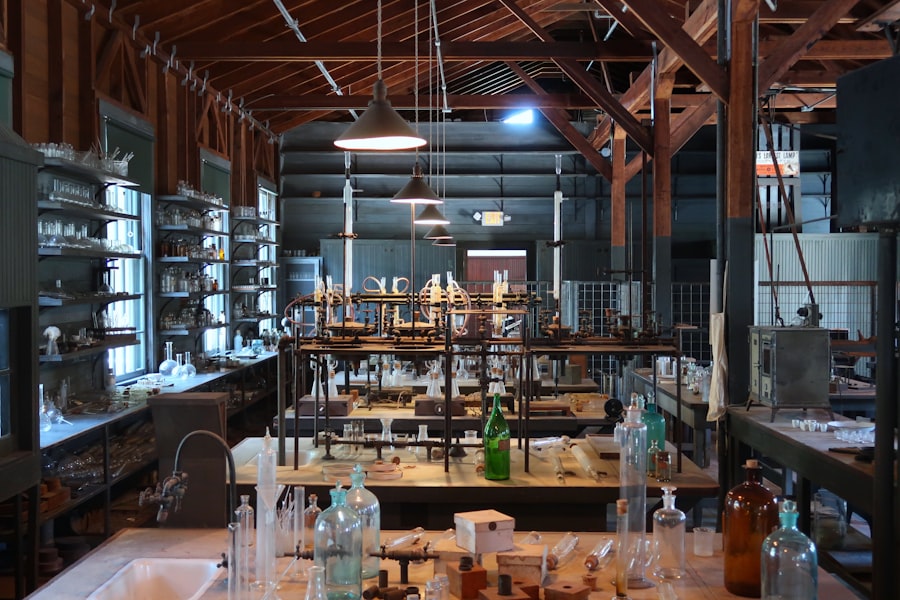
The shipwreck that yielded the Antikythera Mechanism has provided invaluable insights into ancient maritime trade and technology. Discovered by sponge divers in 1900, the wreck contained not only the mechanism but also a trove of artifacts, including pottery, statues, and coins.
The ship itself is believed to have been part of a trade route connecting various Mediterranean cultures, suggesting that the Antikythera Mechanism may have been a valuable cargo intended for an elite patron. The artifacts recovered from the shipwreck have also shed light on the technological capabilities of ancient shipbuilders. The construction techniques employed in building the vessel reflect a high level of craftsmanship and engineering knowledge.
By studying these elements alongside the Antikythera Mechanism, researchers can draw connections between maritime technology and astronomical advancements in ancient Greece. This interplay between different fields of knowledge underscores the complexity of ancient civilizations and their ability to integrate various disciplines into their daily lives.
Deciphering the Purpose of the Antikythera Mechanism
Understanding the purpose of the Antikythera Mechanism has been a central focus for researchers since its discovery. Initial examinations revealed that it was designed to track celestial movements, but further analysis has unveiled a more intricate functionality. The device features multiple dials that correspond to different astronomical cycles, including lunar phases and solar years.
This complexity suggests that it was not merely a tool for navigation but rather a sophisticated instrument for understanding time and celestial phenomena. Scholars have proposed various theories regarding its intended use. Some suggest it may have served as an educational tool for astronomers or philosophers, while others believe it could have been utilized for astrological purposes by those seeking to predict future events based on celestial alignments.
The mechanism’s ability to model astronomical cycles indicates that it was likely employed by individuals with a deep understanding of mathematics and astronomy, further emphasizing its significance in ancient Greek culture.
Uncovering the Ancient Technology
| Workshop Location | Estimated Time Period | Known Artifacts | Significance |
|---|---|---|---|
| Rhodes, Greece | Circa 150-100 BCE | Antikythera Mechanism fragments | Advanced ancient Greek astronomical calculator |
| Corinth, Greece | Circa 200-100 BCE | Similar geared devices (hypothetical) | Possible center for advanced mechanical craftsmanship |
| Alexandria, Egypt | Circa 200-100 BCE | References in historical texts | Hub of Hellenistic science and technology |
The technological prowess demonstrated by the Antikythera Mechanism has prompted extensive research into ancient Greek engineering practices. The device’s intricate gear system is composed of at least 30 interlocking gears, each meticulously crafted to achieve precise movements.
The use of differential gears, which allow for varying speeds between rotating components, showcases an advanced understanding of mechanics that was not fully appreciated until centuries later. Researchers have employed modern imaging techniques, such as X-ray tomography and 3D modeling, to analyze the mechanism’s components without causing damage. These methods have revealed hidden features and inscriptions that provide further insight into its construction and functionality.
By studying these elements, scholars can gain a deeper understanding of how ancient artisans approached complex engineering challenges and what materials they utilized in their work.
The Importance of the Antikythera Mechanism
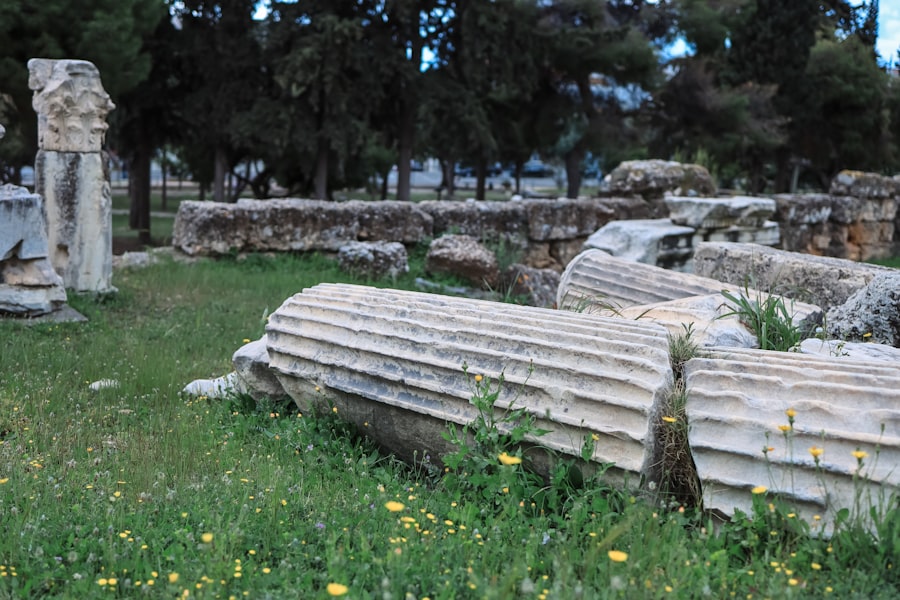
The significance of the Antikythera Mechanism extends far beyond its immediate function as an astronomical device; it represents a pivotal moment in human history where science and technology began to intersect in profound ways. Its existence challenges long-held assumptions about the capabilities of ancient civilizations, suggesting that they possessed knowledge and skills that were previously underestimated. The mechanism serves as a bridge between ancient and modern scientific thought, illustrating how early innovations laid the groundwork for future advancements.
Moreover, the Antikythera Mechanism has become a symbol of curiosity and exploration in the field of archaeology. Its discovery ignited interest in ancient technologies and inspired subsequent generations to seek out lost knowledge from antiquity. As researchers continue to study this remarkable artifact, they are not only uncovering its secrets but also fostering a greater appreciation for the achievements of ancient cultures.
The Role of Modern Technology in the Discovery
Modern technology has played a crucial role in unraveling the mysteries surrounding the Antikythera Mechanism. Advanced imaging techniques have allowed researchers to peer inside its complex structure without damaging its fragile components. X-ray fluorescence (XRF) and computed tomography (CT) scans have provided detailed insights into the arrangement and composition of its gears, revealing features that were previously obscured by corrosion and wear.
Additionally, computer simulations have enabled scholars to recreate how the mechanism would have functioned in its original state. By modeling its movements and interactions between gears, researchers can better understand how it was used by its creators. This fusion of ancient artifacts with cutting-edge technology exemplifies how interdisciplinary approaches can yield new discoveries and deepen our understanding of historical contexts.
The Significance of the Workshop Location
Identifying the workshop location where the Antikythera Mechanism was constructed holds immense significance for historians seeking to understand ancient Greek craftsmanship and technological innovation. The workshop’s location could provide insights into regional variations in engineering practices and reveal connections between different centers of learning during the Hellenistic period. If found, it could serve as a tangible link to the artisans who created this extraordinary device.
Moreover, understanding where such advanced technology was produced can shed light on trade networks and cultural exchanges within the Mediterranean region. It may reveal how knowledge was disseminated among different communities and how ideas evolved over time. The search for this workshop is not merely an archaeological endeavor; it is an exploration into the very fabric of ancient society and its intellectual pursuits.
Insights into Ancient Greek Engineering
The study of the Antikythera Mechanism offers profound insights into ancient Greek engineering practices that were far more advanced than previously recognized. The precision with which its gears were crafted indicates a sophisticated understanding of mechanical principles that would not be seen again until much later in history. This level of craftsmanship suggests that there were skilled artisans who specialized in creating complex devices, hinting at a culture that valued scientific inquiry and technological innovation.
Furthermore, examining how these engineers approached problem-solving can inform modern engineering practices. The principles underlying gear design and mechanical movement found in the Antikythera Mechanism continue to influence contemporary engineering disciplines. By analyzing these ancient techniques, modern engineers can draw inspiration from their ingenuity while recognizing that many foundational concepts have stood the test of time.
Implications for Understanding Ancient Civilization
The implications of studying the Antikythera Mechanism extend beyond mere technological curiosity; they challenge prevailing narratives about ancient civilizations’ capabilities and achievements. This artifact serves as evidence that advanced scientific thought existed long before what is typically acknowledged in historical accounts. It encourages scholars to reevaluate other aspects of ancient cultures that may have been overlooked or underestimated due to biases in historical interpretation.
Moreover, understanding such artifacts fosters a greater appreciation for cultural continuity throughout history. The knowledge embodied in devices like the Antikythera Mechanism reflects humanity’s enduring quest for understanding our place in the cosmos—a pursuit that transcends time and geography. By recognizing these connections, modern society can gain valuable insights into our own technological advancements while honoring those who came before us.
Preserving and Studying the Antikythera Mechanism
Preserving and studying the Antikythera Mechanism is essential not only for historical scholarship but also for future generations’ understanding of ancient technology. Conservation efforts are ongoing to ensure that this fragile artifact remains intact while allowing researchers access to study its intricacies further. Institutions around the world are collaborating to share findings and techniques used in analyzing this remarkable device.
As new technologies emerge, opportunities for deeper exploration will continue to arise. The commitment to preserving such artifacts reflects a broader recognition of their cultural significance and their role in shaping human history. By safeguarding treasures like the Antikythera Mechanism, society honors its past while inspiring future generations to explore, innovate, and seek knowledge beyond what is known today.
The Antikythera Mechanism, an ancient Greek analog computer, has fascinated historians and scientists alike due to its intricate design and purpose. For those interested in exploring more about the historical context and significance of such ancient technologies, a related article can be found at this link. This article delves into the workshop locations and the craftsmanship involved in creating such remarkable artifacts, shedding light on the advanced knowledge of the ancient Greeks.
WATCH THIS! 🚨 Divers Found THIS at the Bottom of the Sea—Scientists Still Can’t Explain It
FAQs
What is the Antikythera Mechanism?
The Antikythera Mechanism is an ancient Greek analog device used to predict astronomical positions and eclipses. It is often considered the world’s first known mechanical computer.
Where was the Antikythera Mechanism discovered?
The mechanism was discovered in 1901 in a shipwreck off the coast of the Greek island Antikythera.
What is the purpose of an Antikythera Mechanism workshop?
An Antikythera Mechanism workshop typically focuses on studying, reconstructing, and understanding the device’s complex gears and functions. Workshops may include lectures, hands-on activities, and demonstrations related to ancient technology and astronomy.
Where are Antikythera Mechanism workshops usually held?
Workshops are often held at museums, universities, or scientific institutions specializing in archaeology, ancient history, or mechanical engineering. Some events may take place in Greece, particularly near the island of Antikythera or in Athens.
Can anyone attend an Antikythera Mechanism workshop?
Many workshops are open to the public, including students, researchers, and enthusiasts. However, some may require prior registration or have limited capacity.
Are there online Antikythera Mechanism workshops available?
Yes, some institutions and experts offer online workshops or webinars that cover the history, mechanics, and significance of the Antikythera Mechanism.
What topics are covered in an Antikythera Mechanism workshop?
Topics often include the history of the mechanism, its discovery, mechanical design, astronomical functions, and its significance in the history of science and technology.
Is the original Antikythera Mechanism displayed somewhere?
Yes, the original fragments of the Antikythera Mechanism are displayed at the National Archaeological Museum in Athens, Greece.