The Suez Canal is a significant engineering achievement and a critical route for international commerce. Its history extends back to ancient Egypt. The idea of creating a waterway between the Mediterranean Sea and the Red Sea originated during the Pharaonic period.
Evidence indicates that during the 19th Dynasty, approximately 1300 BCE, efforts were made to establish a navigable passage through the Suez isthmus. Pharaohs including Senusret II and later Darius I of Persia undertook projects to connect these two seas, recognizing the advantages for trade and military operations. These initial projects established the foundation for the modern Suez Canal.
Ancient Egyptians constructed a network of canals and lakes to support trade and transportation, demonstrating sophisticated knowledge of hydraulic engineering. The waterway served purposes beyond commerce; it also provided strategic military advantages by enabling rapid movement of troops and supplies. The Suez Canal’s historical development reflects the efforts of ancient civilizations to establish trade connections and maintain control over important commercial routes.
The treacherous waters of the Drake Passage are known for their unpredictable weather and challenging navigation.
Key Takeaways
- The Suez Canal has ancient Egyptian origins and has long been a critical link between continents.
- It revolutionized global trade by significantly shortening maritime routes between Europe and Asia.
- The 1956 Suez Crisis marked a major geopolitical event, highlighting the canal’s strategic importance.
- The canal continues to shape modern shipping, enhancing connectivity and economic integration worldwide.
- Environmental, security, and geopolitical challenges will influence the canal’s future role in global maritime trade.
The Canal’s Influence on Global Trade and Shipping
The Suez Canal has profoundly influenced global trade and shipping since its completion in 1869. By providing a direct maritime route between Europe and Asia, it drastically reduced travel time for ships, eliminating the need for the lengthy journey around the southern tip of Africa. This reduction in distance not only cut shipping costs but also allowed for more efficient movement of goods, thereby transforming international trade dynamics.
The canal has become a critical passage for oil, natural gas, and various commodities, making it an essential component of the global supply chain. Moreover, the canal’s strategic location has made it a focal point for shipping companies seeking to optimize their routes. The ability to traverse the Suez Canal has enabled vessels to save significant amounts of time and fuel, which translates into lower operational costs.
As a result, the canal has facilitated an increase in maritime traffic, with thousands of ships passing through each year. This surge in shipping activity has not only bolstered economies around the world but has also underscored the canal’s role as a linchpin in global commerce.
The Suez Crisis: A Turning Point in the Canal’s History

The Suez Crisis of 1956 marked a pivotal moment in the history of the Suez Canal, highlighting its geopolitical significance and the complexities of international relations. Following Egypt’s nationalization of the canal, tensions escalated between Egypt and a coalition of Britain, France, and Israel. The crisis culminated in military intervention aimed at regaining control over this vital waterway.
However, the international response, particularly from the United States and the Soviet Union, led to a withdrawal of foreign troops and a reassertion of Egyptian sovereignty over the canal. This event not only reshaped the political landscape of the Middle East but also underscored the canal’s importance as a symbol of national pride for Egypt. The crisis demonstrated how control over such a critical maritime route could influence global power dynamics.
In the aftermath, the Suez Canal was placed under international management, further solidifying its role as a key player in international trade while also serving as a reminder of the delicate balance between national interests and global commerce.
The Impact of the Suez Canal on Maritime Routes and Navigation
The Suez Canal has had a transformative impact on maritime routes and navigation since its inception. By providing a shortcut between Europe and Asia, it has altered traditional shipping lanes and created new opportunities for trade. Ships that once had to navigate around Africa can now traverse this narrow passage, significantly reducing travel times and enhancing efficiency.
Furthermore, advancements in navigation technology have complemented the canal’s strategic importance. Modern vessels equipped with sophisticated navigation systems can safely navigate through the canal’s narrow channels, ensuring that maritime traffic flows smoothly.
The canal’s design has evolved over time to accommodate larger ships, known as “New Panamax” vessels, which can carry more cargo than ever before. This evolution reflects the ongoing need for adaptation in response to changing global trade patterns and demands.
The Suez Canal’s Role in the Modern Shipping Industry
| Year | Event | Ships Passed | Notable Impact |
|---|---|---|---|
| 1869 | Suez Canal Opening | First ship: SS Ismailia | Reduced Europe-Asia sea route by ~7,000 km |
| 1956 | Suez Crisis – Canal Closure | 0 (Canal closed for 8 months) | Major disruption in global shipping and oil transport |
| 1967-1975 | Six-Day War and Canal Closure | 0 (Canal closed for 8 years) | Forced ships to reroute around Cape of Good Hope |
| 2015 | Expansion of Suez Canal | ~17,000 ships annually | Increased capacity and reduced waiting times |
| 2021 | Ever Given Grounding Incident | ~400 ships delayed over 6 days | Highlighted vulnerability of global supply chains |
In today’s shipping industry, the Suez Canal plays an indispensable role as a conduit for international trade. It serves as a critical link for container ships transporting goods between major markets in Europe, Asia, and beyond. The canal’s ability to accommodate large vessels has made it an essential route for shipping lines seeking to maximize efficiency and reduce costs.
As global trade continues to expand, the canal’s significance is likely to grow even further. Moreover, the Suez Canal Authority has implemented various initiatives to enhance its services and infrastructure. Investments in dredging and widening projects have allowed for increased traffic capacity, ensuring that the canal remains competitive in an ever-evolving shipping landscape.
These efforts not only benefit shipping companies but also contribute to Egypt’s economy by generating revenue from tolls and fees associated with canal usage.
The Economic Significance of the Suez Canal for International Trade
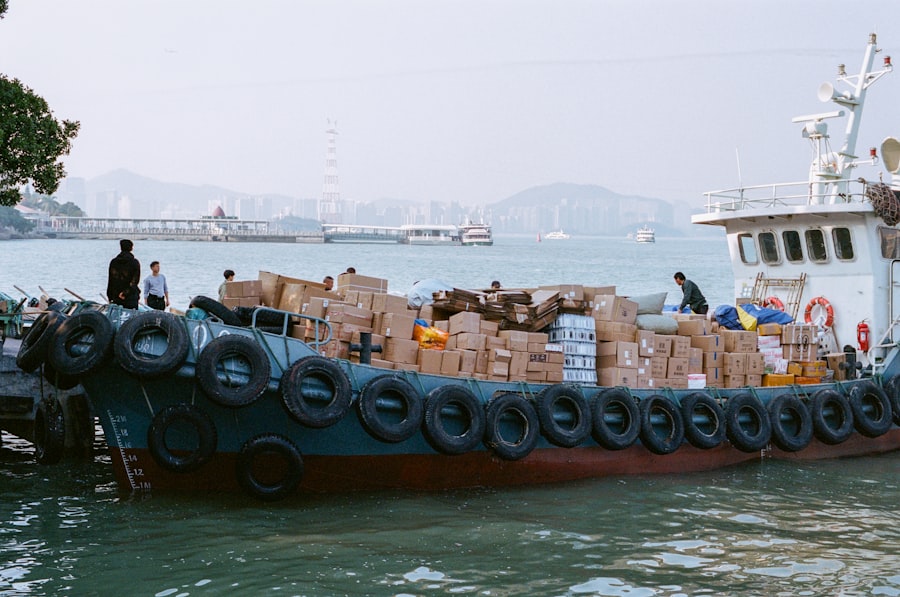
The economic significance of the Suez Canal cannot be overstated; it serves as a vital artery for international trade that impacts economies worldwide. The canal generates substantial revenue for Egypt through tolls charged to passing vessels, contributing significantly to the national economy. This income is crucial for funding infrastructure projects and public services within Egypt, highlighting how a single waterway can have far-reaching economic implications.
Additionally, the canal facilitates trade between nations by providing a reliable route for transporting goods. It enables countries to access markets more efficiently, fostering economic growth and development. For instance, European countries benefit from quicker access to Asian markets, while Asian exporters can reach European consumers with reduced transit times.
This interconnectedness underscores how the Suez Canal serves as a catalyst for economic collaboration on a global scale.
The Suez Canal’s Contribution to Globalization and Connectivity
The Suez Canal has played a pivotal role in advancing globalization by enhancing connectivity between diverse regions of the world. As trade barriers have diminished over time, the canal has emerged as a key facilitator of international commerce, allowing goods to flow seamlessly across borders. This increased connectivity has fostered economic interdependence among nations, creating opportunities for collaboration and cultural exchange.
Moreover, the canal has enabled businesses to expand their reach into new markets, driving innovation and competition. Companies can now source materials from distant locations and distribute products globally with unprecedented ease. This shift has not only transformed supply chains but has also contributed to a more interconnected world where economies are increasingly reliant on one another for growth and prosperity.
The Environmental Implications of the Suez Canal’s Expansion and Maintenance
While the Suez Canal is essential for global trade, its expansion and maintenance raise important environmental considerations. The dredging required to accommodate larger vessels can disrupt local ecosystems and marine habitats. Additionally, increased shipping traffic poses risks such as oil spills and pollution from vessel emissions.
Efforts are being made to mitigate these impacts through sustainable practices and technologies. The Suez Canal Authority has initiated programs aimed at reducing emissions from ships passing through the canal and promoting environmentally friendly practices among shipping companies.
By prioritizing sustainability alongside economic growth, stakeholders can work towards ensuring that this vital waterway remains both functional and environmentally responsible.
The Geopolitical Importance of the Suez Canal in International Relations
The geopolitical importance of the Suez Canal extends beyond its economic implications; it is also a focal point in international relations. Control over this strategic waterway has historically been contested by various powers due to its significance in global trade routes. As nations vie for influence in the region, the canal remains a critical asset that shapes diplomatic interactions and alliances.
In recent years, geopolitical tensions surrounding the canal have resurfaced amid shifting power dynamics in the Middle East. Countries recognize that access to this vital passage can enhance their strategic positioning on the global stage. As such, discussions regarding security arrangements and cooperative agreements often revolve around ensuring safe passage through the canal while addressing broader regional concerns.
The Suez Canal’s Influence on Maritime Security and Safety
Maritime security is paramount in ensuring safe navigation through busy waterways like the Suez Canal. Given its significance as a major shipping route, maintaining security within its confines is essential for protecting vessels from piracy, terrorism, and other threats. The canal’s strategic location makes it vulnerable to geopolitical tensions that could disrupt maritime operations.
To address these challenges, authorities have implemented robust security measures aimed at safeguarding vessels transiting through the canal. Surveillance systems, naval patrols, and international cooperation play crucial roles in enhancing maritime safety within this vital waterway. By prioritizing security initiatives, stakeholders can foster confidence among shipping companies while ensuring uninterrupted trade flows through one of the world’s most important maritime corridors.
The Future of the Suez Canal: Challenges and Opportunities for Shipping Industry
Looking ahead, the future of the Suez Canal presents both challenges and opportunities for the shipping industry. As global trade continues to evolve with advancements in technology and changing consumer demands, stakeholders must adapt to remain competitive. The ongoing expansion efforts aim to accommodate larger vessels while enhancing operational efficiency; however, these initiatives must be balanced with environmental considerations.
Additionally, geopolitical factors will continue to shape the canal’s role in international trade. As nations navigate complex relationships within an increasingly interconnected world, ensuring stability around this vital waterway will be paramount. By embracing innovation and collaboration among stakeholders—ranging from shipping companies to governments—the Suez Canal can continue to thrive as a cornerstone of global commerce while addressing emerging challenges head-on.
In conclusion, the Suez Canal stands as a testament to human ingenuity and ambition throughout history. Its profound impact on global trade, economic development, and international relations underscores its significance as more than just a waterway; it is a symbol of connectivity that shapes our world today and will continue to do so in the future.
The Suez Canal has played a pivotal role in global shipping since its opening in 1869, serving as a crucial shortcut for maritime trade between Europe and Asia. Its historical significance is underscored by various events, including the 1956 Suez Crisis, which highlighted the canal’s strategic importance. For a deeper understanding of the implications of such historical precedents on modern shipping routes, you can read more in this related article: Suez Canal Historical Precedents in Shipping.
WATCH THIS! 🚢 The Red Sea is burning. Panama is drying up. And the Drake Passage
FAQs
What is the historical significance of the Suez Canal in shipping?
The Suez Canal, completed in 1869, is a crucial maritime route connecting the Mediterranean Sea to the Red Sea. It significantly shortened the sea voyage between Europe and Asia, facilitating faster and more efficient global trade and shipping.
When was the Suez Canal constructed and by whom?
The Suez Canal was constructed between 1859 and 1869 under the leadership of French engineer Ferdinand de Lesseps. It was built by the Suez Canal Company, a French-led enterprise, with labor primarily from Egypt.
How did the Suez Canal impact global shipping routes?
Before the canal, ships had to navigate around the southern tip of Africa via the Cape of Good Hope, a much longer and more dangerous route. The Suez Canal provided a direct link between Europe and Asia, reducing travel distance by approximately 7,000 kilometers and cutting shipping time significantly.
What are some historical precedents to the Suez Canal?
Historical precedents include ancient canals and waterways such as the Canal of the Pharaohs, which linked the Nile River to the Red Sea in ancient Egypt. These early efforts demonstrated the strategic importance of connecting the Mediterranean and Red Seas for trade and military purposes.
Has the Suez Canal ever been closed or blocked historically?
Yes, the Suez Canal has been closed or blocked several times, notably during the Suez Crisis in 1956 and after the Six-Day War in 1967, when it remained closed until 1975. More recently, the canal was temporarily blocked in 2021 by the grounding of the container ship Ever Given.
What role does the Suez Canal play in modern shipping?
Today, the Suez Canal remains one of the world’s busiest shipping lanes, handling about 12% of global trade. It is vital for the transport of oil, natural gas, and manufactured goods between Europe, Asia, and Africa.
How has the Suez Canal influenced international relations?
The canal has been a focal point of geopolitical interest and conflict due to its strategic importance. Control over the canal has influenced colonial ambitions, regional conflicts, and international diplomacy throughout its history.
What technological or engineering challenges were faced during the construction of the Suez Canal?
The construction faced challenges such as harsh desert conditions, disease (notably cholera and malaria), and the need to excavate a massive canal without modern machinery. Innovations included the use of steam-powered dredgers and extensive labor organization.
Are there any expansions or modernizations of the Suez Canal?
Yes, the canal has undergone several expansions and modernizations, including the addition of a parallel channel in 2015 to allow two-way traffic in certain sections, improving capacity and reducing transit times.
What types of vessels commonly use the Suez Canal?
The canal accommodates a wide range of vessels, including container ships, oil tankers, bulk carriers, and passenger ships. However, there are size restrictions known as “Suezmax” limits that define the maximum dimensions of ships that can transit the canal.