Nuclear war poses an existential threat to humanity with potentially catastrophic global consequences. Nuclear weapons have the capacity to cause mass casualties, environmental damage, and long-term ecological disruption affecting entire populations and ecosystems worldwide. The development and maintenance of nuclear arsenals by multiple nations creates ongoing geopolitical tensions.
Historical events, including the Cold War and subsequent nuclear proliferation, have established patterns of international relations centered on nuclear deterrence strategies. Current geopolitical conflicts and regional instabilities continue to raise concerns about the risk of nuclear escalation. Key considerations in nuclear security include deterrence theory, which posits that the threat of mutual destruction prevents nuclear weapon use; diplomatic negotiations aimed at reducing arsenals and preventing proliferation; and the ethical questions surrounding the possession and potential deployment of weapons capable of mass destruction.
Preventing nuclear conflict requires comprehensive approaches including arms control agreements, international diplomacy, threat reduction initiatives, and sustained dialogue among nuclear-armed states. Understanding the historical context of nuclear weapons development, analyzing potential consequences of nuclear exchange, and evaluating existing prevention strategies are essential for informed policy discussions on global security. The international community continues to address nuclear risks through various mechanisms, including non-proliferation treaties, verification protocols, and diplomatic channels designed to reduce tensions and prevent accidental or intentional nuclear weapon use.
The documentary provides a detailed analysis of the potential consequences of nuclear war on global security.
Key Takeaways
- Nuclear war poses catastrophic risks to humanity, environment, and global stability.
- Historical nuclear conflicts highlight the devastating potential and long-term consequences.
- Environmental damage from nuclear war includes radiation, climate disruption, and ecosystem collapse.
- Humanitarian crises would involve massive casualties, displacement, and healthcare system collapse.
- Preventing nuclear war requires international cooperation, disarmament efforts, and robust security strategies.
Historical Context of Nuclear Warfare
The history of nuclear warfare is deeply intertwined with the events of the 20th century, particularly during and after World War
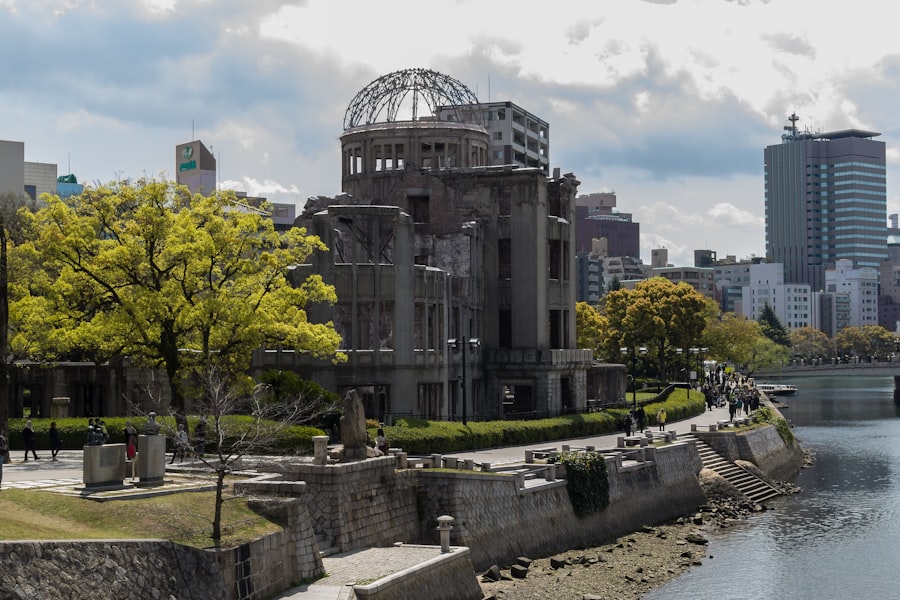
The United States’ decision to drop atomic bombs on Hiroshima and Nagasaki in 1945 marked the first and only use of nuclear weapons in armed conflict. This unprecedented act not only hastened Japan’s surrender but also ushered in a new era characterized by the Cold War, where the threat of mutually assured destruction became a central tenet of international relations. The arms race between the United States and the Soviet Union led to the stockpiling of thousands of nuclear warheads, creating a precarious balance that defined global politics for decades.

As the Cold War progressed, various treaties aimed at curbing nuclear proliferation emerged, including the Treaty on the Non-Proliferation of Nuclear Weapons (NPT) in 1968. Despite these efforts, the proliferation of nuclear technology continued, with countries like India, Pakistan, and North Korea developing their own arsenals. The historical context of nuclear warfare reveals a complex interplay between power dynamics, national security concerns, and ethical considerations.
Each development in this narrative has contributed to shaping contemporary attitudes toward nuclear weapons and their potential use in future conflicts.
Potential Consequences of Nuclear War
The consequences of nuclear war would be catastrophic and far-reaching, extending well beyond immediate destruction. A single nuclear detonation could obliterate entire cities, resulting in millions of casualties within moments. The immediate aftermath would be characterized by widespread chaos, as survivors grapple with injuries, loss of loved ones, and the destruction of infrastructure.
However, the long-term effects would be even more devastating, as radiation exposure leads to increased cancer rates and genetic mutations for generations to come. Moreover, the geopolitical landscape would be irrevocably altered. Nations involved in a nuclear conflict would face international condemnation and isolation, while other countries might be drawn into the fray, escalating tensions further.
The potential for retaliatory strikes could lead to a full-scale global conflict, with devastating consequences for humanity as a whole. The interconnectedness of modern society means that economic systems would collapse, food supplies would dwindle, and social order would disintegrate. The specter of nuclear war serves as a stark reminder of the fragility of human civilization in the face of such overwhelming destructive power.
Environmental Impact of Nuclear War
| Metric | Description | Estimated Value | Unit | Source/Notes |
|---|---|---|---|---|
| Number of Warheads Deployed | Total nuclear warheads used in the scenario | 1,000 | Warheads | Hypothetical mid-scale conflict |
| Average Yield per Warhead | Explosive power of each warhead | 300 | Kilotons TNT equivalent | Based on typical strategic warheads |
| Immediate Fatalities | Deaths within first 24 hours post-detonation | 50,000,000 | People | Includes blast, thermal, and initial radiation |
| Long-term Fatalities | Deaths due to radiation sickness and fallout over 10 years | 30,000,000 | People | Estimated from fallout exposure models |
| Global Temperature Drop | Average decrease in global surface temperature due to nuclear winter | 3.5 | °C | Based on climate simulation studies |
| Agricultural Output Reduction | Estimated decrease in global crop yields | 20 | Percent | Due to reduced sunlight and cooler temperatures |
| Infrastructure Damage | Percentage of urban infrastructure destroyed in targeted areas | 70 | Percent | Based on blast radius and urban density |
| Estimated Economic Impact | Global GDP reduction in first 5 years | 15 | Percent | Includes direct and indirect economic losses |
| Population Displacement | Number of people forced to relocate due to destruction and fallout | 100,000,000 | People | Includes refugees and internally displaced persons |
| Duration of Nuclear Winter | Estimated length of significant climatic disruption | 5 | Years | Based on atmospheric soot and particulate models |
The environmental impact of nuclear war is another critical aspect that cannot be overlooked. Beyond the immediate destruction caused by explosions, nuclear detonations would have profound effects on ecosystems and climate patterns. The phenomenon known as “nuclear winter” suggests that widespread fires ignited by nuclear blasts could inject vast amounts of soot into the atmosphere, blocking sunlight and leading to dramatic drops in temperature worldwide.
Such climatic changes could disrupt agricultural production for years, resulting in widespread famine and food shortages. Additionally, radioactive fallout would contaminate land and water sources, posing long-term health risks to both humans and wildlife. Ecosystems would struggle to recover from the devastation wrought by nuclear conflict, leading to loss of biodiversity and disruption of natural habitats.
The environmental consequences of nuclear war extend far beyond national borders; they threaten the very fabric of life on Earth. As such, understanding these impacts is crucial for fostering a sense of urgency around disarmament and non-proliferation efforts.
Humanitarian Crisis and Nuclear War
A nuclear war would precipitate an unprecedented humanitarian crisis on a global scale. The immediate aftermath would see millions displaced from their homes as cities are reduced to rubble and infrastructure collapses. Refugees fleeing conflict zones would strain resources in neighboring countries, leading to further instability and potential conflicts over limited supplies.
Humanitarian organizations would face immense challenges in providing aid to affected populations amidst chaos and destruction. The psychological toll on survivors would be profound as well. The trauma experienced by those who witness or endure such catastrophic events can lead to long-lasting mental health issues, including post-traumatic stress disorder (PTSD), depression, and anxiety.
The breakdown of social structures and support systems would exacerbate these challenges, leaving individuals to navigate their suffering alone. In this context, addressing the humanitarian implications of nuclear war becomes essential for fostering resilience and recovery in affected communities.
Economic Fallout of Nuclear War
The economic fallout from a nuclear war would be staggering, with repercussions felt across global markets and economies. The immediate destruction of infrastructure—such as transportation networks, power grids, and communication systems—would cripple economic activity in affected regions. Industries reliant on stable conditions would falter, leading to mass unemployment and economic instability.
The ripple effects would extend far beyond national borders as trade routes are disrupted and supply chains collapse. In addition to immediate economic losses, long-term consequences would include skyrocketing healthcare costs due to radiation exposure and injuries sustained during conflict. Governments would face mounting pressure to allocate resources toward recovery efforts rather than investing in development or social programs.
The economic ramifications of nuclear war serve as a stark reminder that such conflicts do not only result in loss of life but also threaten the very foundations of prosperity and stability that societies rely upon.
Political Ramifications of Nuclear War
The political ramifications of nuclear war are profound and multifaceted. A nuclear conflict could lead to significant shifts in power dynamics on both regional and global scales. Nations involved in such a conflict may find themselves isolated from the international community, facing sanctions or military responses from other countries concerned about global security.
This isolation could further exacerbate tensions and lead to a cycle of retaliation that destabilizes entire regions. Moreover, the use of nuclear weapons could undermine existing treaties aimed at preventing proliferation and promoting disarmament. Countries may feel compelled to develop their own arsenals in response to perceived threats from others, leading to an arms race that heightens global insecurity.
The political landscape following a nuclear conflict would likely be characterized by mistrust and hostility among nations, making diplomatic resolutions increasingly difficult to achieve.
Psychological Effects of Nuclear War
The psychological effects of nuclear war extend beyond immediate trauma experienced by survivors; they permeate societies at large.
This anxiety can manifest in various ways—ranging from increased mental health issues to societal divisions fueled by fear-based narratives about national security.
Children growing up in environments where nuclear threats are normalized may experience heightened levels of stress and uncertainty about their futures. This generational trauma can have lasting effects on mental health outcomes and societal cohesion as communities grapple with the implications of living under constant threat. Addressing these psychological effects is crucial for fostering resilience in individuals and communities alike.
Global Security and Nuclear War
Global security is intricately linked to the presence of nuclear weapons; their existence creates a paradox where deterrence can simultaneously promote stability while also posing existential risks. The doctrine of mutually assured destruction has historically prevented direct conflicts between nuclear-armed states but has also led to an environment rife with tension and mistrust. As nations continue to modernize their arsenals and develop new technologies related to nuclear warfare, concerns about accidental launches or miscalculations grow.
Furthermore, non-state actors gaining access to nuclear materials poses an additional layer of complexity for global security efforts. The potential for terrorism involving nuclear weapons or materials raises alarms among governments worldwide, prompting calls for enhanced security measures and international cooperation. In this context, addressing global security concerns requires a multifaceted approach that prioritizes disarmament while also ensuring robust safeguards against proliferation.
Strategies for Preventing Nuclear War
Preventing nuclear war necessitates a comprehensive strategy that encompasses diplomatic engagement, disarmament initiatives, and public awareness campaigns. Diplomatic efforts must prioritize dialogue among nations to address underlying tensions that could escalate into conflict. Building trust through confidence-building measures—such as arms control agreements—can help mitigate fears associated with nuclear arsenals.
Disarmament initiatives play a crucial role in reducing the number of nuclear weapons globally while promoting non-proliferation efforts among nations seeking to develop their own capabilities. Public awareness campaigns can educate citizens about the dangers posed by nuclear weapons while advocating for policies that prioritize peace over militarization. By fostering a culture that values diplomacy over aggression, societies can work collectively toward a future free from the threat of nuclear war.
Conclusion and Call to Action
In conclusion, the specter of nuclear war looms large over humanity’s future—a threat that demands urgent attention from individuals, governments, and organizations alike. The historical context reveals a complex interplay between power dynamics and ethical considerations surrounding these weapons; understanding this context is essential for fostering meaningful dialogue about disarmament and non-proliferation efforts.
As global citizens navigate an increasingly interconnected world fraught with uncertainty, it is imperative that they advocate for policies prioritizing peace over militarization. A collective call to action is necessary: individuals must engage with their communities about the dangers posed by nuclear weapons while urging policymakers to prioritize diplomacy over aggression. Only through concerted efforts can humanity hope to avert the catastrophic consequences associated with nuclear war—ensuring a safer future for generations yet unborn.
In the context of analyzing potential nuclear war scenarios, the article on the implications of global conflict can provide valuable insights. For a deeper understanding of the geopolitical landscape and the factors that could lead to such a catastrophic event, you can read more in this related article: Nuclear War Scenario Analysis. This resource explores various dimensions of nuclear strategy and the consequences of escalation in international relations.
WATCH THIS! ☢️ Nuclear War in 2026: The Real Risks, New Weapons & How Close We Are
FAQs
What is a nuclear war scenario analysis?
Nuclear war scenario analysis is the systematic study and evaluation of potential outcomes, impacts, and strategic considerations related to the use of nuclear weapons in conflict. It involves modeling different scenarios to understand the consequences on military, political, environmental, and humanitarian levels.
Why is nuclear war scenario analysis important?
This analysis helps policymakers, military planners, and researchers anticipate the effects of nuclear conflict, improve preparedness, develop deterrence strategies, and inform arms control and disarmament efforts. It also aids in understanding the risks and potential global consequences of nuclear warfare.
What factors are considered in nuclear war scenario analysis?
Key factors include the number and yield of nuclear weapons used, targets selected, delivery methods, timing and sequence of strikes, defensive capabilities, population density, environmental conditions, and potential retaliatory actions.
Who conducts nuclear war scenario analyses?
Analyses are typically conducted by government defense agencies, international organizations, academic institutions, think tanks, and independent researchers specializing in security studies, military strategy, and nuclear policy.
What are some common methods used in nuclear war scenario analysis?
Methods include computer simulations, war gaming, historical case studies, statistical modeling, and expert elicitation. These approaches help estimate blast effects, radiation spread, casualties, infrastructure damage, and long-term environmental impacts.
Can nuclear war scenario analysis predict the exact outcome of a nuclear conflict?
No, it cannot predict exact outcomes due to the complexity and unpredictability of human decisions, technological variables, and environmental factors. Instead, it provides a range of possible outcomes to inform risk assessment and decision-making.
How does nuclear war scenario analysis address humanitarian impacts?
Analyses assess immediate casualties, long-term health effects from radiation exposure, displacement of populations, disruption of medical services, and broader societal consequences such as famine and economic collapse.
What role does nuclear war scenario analysis play in arms control?
It informs negotiations by illustrating the potential consequences of nuclear exchanges, helping to establish limits on weapon numbers, delivery systems, and testing, and promoting transparency and confidence-building measures.
Are environmental effects considered in nuclear war scenario analysis?
Yes, environmental impacts such as nuclear fallout, climate change effects (e.g., nuclear winter), contamination of water and soil, and damage to ecosystems are integral parts of the analysis.
How often are nuclear war scenario analyses updated?
They are updated periodically to reflect changes in nuclear arsenals, technological advancements, geopolitical shifts, and new scientific data to maintain relevance and accuracy in strategic planning.