
In an increasingly interconnected world, geopolitical flashpoints represent critical areas of concern for global stability and security. These flashpoints are regions or situations characterized by high tensions, often stemming from historical grievances, territorial disputes, or competition over nuclear capabilities. The potential for conflict in these areas presents significant risks to the nations directly involved and to the international community as a whole.
As nations pursue their strategic interests and maintain their alliances, the possibility of nuclear conflict remains a serious concern, making it essential to examine the underlying factors that contribute to these volatile situations. The complexity of contemporary geopolitics is compounded by nuclear weapons proliferation and changes in military strategy and technology. As countries work to expand their power and influence, the consequences of conflict have become more severe.
The interaction between national interests, historical precedents, and technological development creates an unstable equilibrium that can rapidly deteriorate. Comprehending these dynamics is important for policymakers and the public, as errors in judgment or military escalation could result in severe consequences.
Key Takeaways
- Geopolitical flashpoints around the world increase the risk of nuclear conflict due to historical and current tensions.
- North Korea, Iran, India-Pakistan, China, and Russia are key players with nuclear ambitions or disputes heightening global instability.
- Nuclear proliferation and cyber warfare are emerging factors that complicate traditional nuclear deterrence and increase risks.
- Historical context shows that past nuclear crises inform current strategies and highlight the dangers of escalation.
- Mitigating nuclear war risk requires diplomatic efforts, arms control agreements, and addressing cyber threats to maintain global security.
Historical Context of Nuclear War
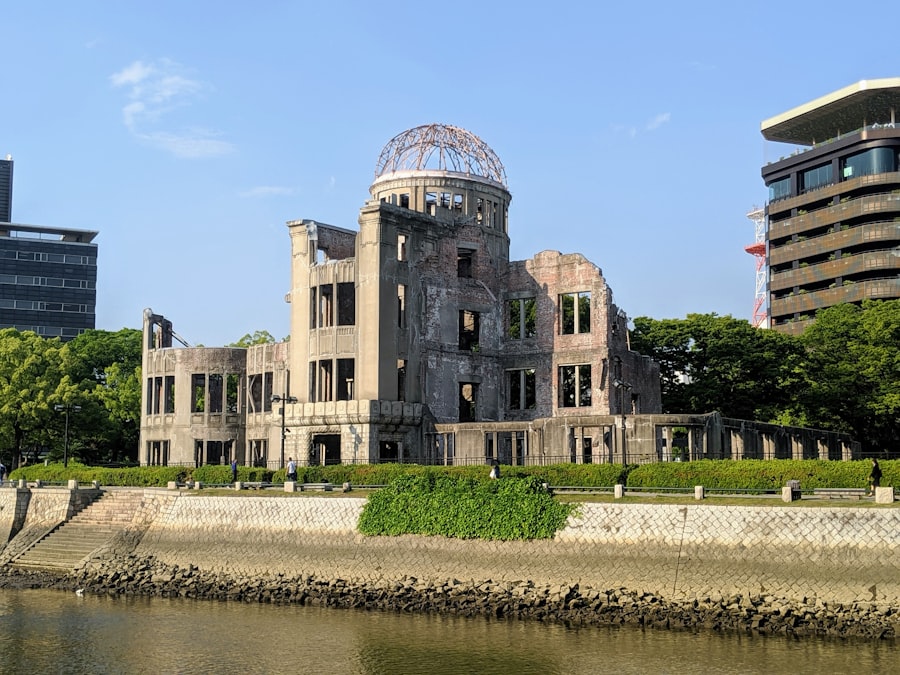
The historical context of nuclear war is rooted in the devastating impact of World War II, which culminated in the atomic bombings of Hiroshima and Nagasaki. These events not only marked the dawn of the nuclear age but also instilled a profound awareness of the destructive potential of nuclear weapons. The subsequent Cold War era saw a dramatic escalation in nuclear arsenals as the United States and the Soviet Union engaged in a tense arms race, each seeking to deter the other through the threat of mutually assured destruction.
This period was characterized by a precarious balance of power, where the fear of nuclear annihilation kept direct conflict at bay. As history progressed, the narrative surrounding nuclear weapons evolved. The end of the Cold War did not lead to a reduction in nuclear tensions; rather, it gave rise to new challenges as emerging powers sought to develop their own nuclear capabilities.
The proliferation of nuclear technology and materials became a pressing concern, with rogue states and non-state actors posing significant threats to global security. The historical lessons learned from past conflicts underscore the importance of diplomacy and international cooperation in preventing nuclear war, as well as the need for robust frameworks to manage and reduce existing arsenals. The documentary provides a detailed analysis of the potential consequences of nuclear war on global security.
Current Geopolitical Hotspots
Today, several geopolitical hotspots around the world are characterized by rising tensions and potential flashpoints for conflict. Regions such as the Korean Peninsula, the Middle East, South Asia, and the South China Sea are at the forefront of international attention due to their complex political landscapes and historical grievances. In these areas, national interests often clash, leading to heightened military posturing and an increased risk of miscalculation.
The interplay between regional powers and global superpowers further complicates these situations, as alliances shift and new rivalries emerge. In addition to traditional military confrontations, economic factors also play a significant role in shaping these hotspots. Competition for resources, trade routes, and strategic advantages can exacerbate existing tensions and create new conflicts.
As nations vie for dominance in an increasingly multipolar world, the potential for localized disputes to escalate into broader confrontations remains a pressing concern. Understanding these current geopolitical hotspots is crucial for anticipating future conflicts and developing strategies to mitigate risks.
North Korea’s Nuclear Ambitions
North Korea’s nuclear ambitions have long been a source of international concern and tension. Since its first nuclear test in 2006, North Korea has pursued a policy of developing its nuclear arsenal as a means of ensuring regime survival and deterring perceived threats from external powers, particularly the United States and South Korea. The regime’s insistence on maintaining its nuclear capabilities has led to a series of sanctions and diplomatic efforts aimed at curbing its ambitions, yet progress has been slow and fraught with setbacks.
The situation on the Korean Peninsula is further complicated by North Korea’s unpredictable leadership and its willingness to engage in provocative actions, such as missile tests and military exercises. These actions not only heighten tensions with neighboring countries but also draw in global powers like China and Russia, who have vested interests in maintaining stability in the region. As North Korea continues to advance its nuclear program, the international community faces a daunting challenge: how to balance deterrence with diplomacy in a way that reduces the risk of conflict while addressing the underlying issues that drive North Korea’s behavior.
Iran’s Nuclear Program
| Geopolitical Flashpoint | Countries Involved | Nuclear Capabilities | Current Tensions | Risk Level |
|---|---|---|---|---|
| Korean Peninsula | North Korea, South Korea, USA, China | North Korea: Nuclear weapons; USA & South Korea: Nuclear umbrella | High missile tests, military drills, diplomatic stalemates | High |
| India-Pakistan Border | India, Pakistan | Both possess nuclear weapons | Frequent skirmishes in Kashmir, political hostility | High |
| Ukraine-Russia Conflict | Russia, Ukraine, NATO countries | Russia: Large nuclear arsenal; Ukraine: No nuclear weapons | Ongoing war, nuclear rhetoric from Russia | Medium-High |
| Middle East (Iran-Israel) | Iran, Israel, USA | Israel: Undeclared nuclear weapons; Iran: Suspected nuclear program | Sanctions, proxy conflicts, nuclear program concerns | Medium |
| South China Sea | China, USA, Taiwan, ASEAN countries | China: Nuclear weapons; USA: Nuclear umbrella for allies | Territorial disputes, military build-up | Medium |
Iran’s nuclear program has been a focal point of international diplomacy and conflict for over two decades. Initially framed as a peaceful endeavor aimed at generating energy, Iran’s nuclear activities have raised suspicions among Western nations regarding their potential military applications. The 2015 Joint Comprehensive Plan of Action (JCPOA) was a significant diplomatic effort aimed at curbing Iran’s nuclear ambitions in exchange for sanctions relief.
S. withdrawal from the agreement in 2018 reignited tensions and led Iran to resume certain aspects of its nuclear program. The implications of Iran’s nuclear aspirations extend beyond its borders, as regional rivals such as Israel and Saudi Arabia view a nuclear-armed Iran as an existential threat.
This perception has led to increased military posturing and calls for preemptive action among these nations. The situation is further complicated by Iran’s involvement in proxy conflicts across the Middle East, which adds layers of complexity to an already volatile environment. As negotiations continue intermittently, the challenge remains: how to ensure that Iran’s nuclear program is kept in check while addressing broader regional security concerns.
India-Pakistan Tensions

The longstanding rivalry between India and Pakistan is one of the most enduring geopolitical flashpoints in South Asia. Rooted in historical grievances stemming from partition in 1947, this conflict has been marked by several wars and ongoing skirmishes over territorial disputes, particularly in Kashmir. Both nations possess nuclear weapons, which adds a dangerous dimension to their rivalry; any escalation could potentially lead to catastrophic consequences.
The dynamics between India and Pakistan are further complicated by external influences, including China’s growing partnership with Pakistan and India’s strategic ties with the United States. This geopolitical chess game creates an environment where miscalculations can easily occur, leading to heightened tensions and military confrontations. Efforts at dialogue have often been undermined by acts of terrorism and military provocations, making it increasingly difficult to find common ground.
As both nations continue to modernize their military capabilities, the risk of conflict remains ever-present.
China’s Territorial Disputes
China’s territorial disputes in the South China Sea and along its borders with India and other neighboring countries have become significant sources of tension in recent years. China’s assertive claims over vast maritime areas have led to confrontations with several Southeast Asian nations, as well as with the United States, which conducts freedom-of-navigation operations in response to China’s expansive claims. These disputes are not merely about territory; they also involve vital shipping routes and access to natural resources.
The situation is further complicated by China’s growing military capabilities and its willingness to project power beyond its borders. As China seeks to establish itself as a dominant regional power, its actions have raised concerns among neighboring countries about potential aggression or coercion. The United States’ commitment to defending its allies in the region adds another layer of complexity, as it seeks to counterbalance China’s influence while avoiding direct confrontation.
The interplay between national interests and regional stability makes China’s territorial disputes a critical flashpoint in contemporary geopolitics.
Russia’s Aggressive Posturing
Russia’s aggressive posturing on the global stage has raised alarms among Western nations and contributed to heightened tensions in Europe and beyond. Following its annexation of Crimea in 2014 and its involvement in conflicts in Ukraine and Syria, Russia has demonstrated a willingness to use military force to achieve its objectives. This behavior has prompted NATO to bolster its presence along Eastern European borders, leading to a renewed arms race reminiscent of Cold War dynamics.
The implications of Russia’s actions extend beyond Europe; they have significant ramifications for global security architecture. As Russia seeks to reassert itself as a great power, its willingness to engage in hybrid warfare—combining conventional military tactics with cyber operations—poses new challenges for international stability. The potential for miscalculation or escalation remains high, particularly as both sides engage in military exercises near each other’s borders.
Understanding Russia’s motivations and strategies is essential for developing effective responses that can mitigate risks while promoting dialogue.
The Role of Nuclear Proliferation
Nuclear proliferation remains one of the most pressing challenges facing global security today. The spread of nuclear weapons technology poses significant risks not only to regional stability but also to international peace as a whole. As more states pursue nuclear capabilities—whether for deterrence or prestige—the likelihood of miscalculations or accidents increases dramatically.
The existence of multiple nuclear-armed states creates a complex web of deterrence relationships that can easily spiral out of control. Efforts to curb proliferation through treaties such as the Treaty on the Non-Proliferation of Nuclear Weapons (NPT) have had mixed results. While some countries have successfully dismantled their programs or refrained from developing them altogether, others have continued down paths that threaten global security.
The challenge lies not only in preventing new states from acquiring nuclear weapons but also in addressing existing arsenals through disarmament initiatives that build trust among nations. A comprehensive approach that combines diplomatic engagement with robust verification mechanisms is essential for mitigating proliferation risks.
The Impact of Cyber Warfare on Nuclear Risk
In an era where technology plays an increasingly central role in warfare, cyber warfare has emerged as a significant factor influencing nuclear risk. Cyber capabilities can be used not only for espionage but also for disrupting critical infrastructure or even manipulating command-and-control systems associated with nuclear arsenals. The potential for cyberattacks on nuclear facilities or communication networks raises profound questions about security protocols and safeguards designed to prevent unauthorized access or accidental launches.
As nations invest heavily in cyber capabilities, the risk of miscalculation grows exponentially. A cyber incident could be misinterpreted as an act of aggression, prompting a rapid military response that could escalate into conflict. Moreover, the anonymity associated with cyber operations complicates attribution efforts; states may find it challenging to determine who is responsible for an attack or whether it was state-sponsored or conducted by non-state actors.
Addressing these challenges requires international cooperation on cybersecurity norms and protocols that can help mitigate risks associated with cyber warfare.
Strategies for Mitigating the Risk of Nuclear War
Mitigating the risk of nuclear war necessitates a multifaceted approach that encompasses diplomacy, arms control agreements, confidence-building measures, and public awareness campaigns. Diplomatic engagement remains crucial; open lines of communication between rival states can help prevent misunderstandings that could lead to escalation. Regular dialogues focused on arms control can foster trust among nations while addressing concerns related to proliferation.
Arms control agreements such as New START between the United States and Russia serve as vital tools for reducing stockpiles and limiting deployment capabilities. Additionally, confidence-building measures—such as joint military exercises or transparency initiatives—can help alleviate fears and build trust among adversaries. Public awareness campaigns aimed at educating citizens about the consequences of nuclear war can also play a role in fostering a culture that prioritizes peace over conflict.
In conclusion, understanding geopolitical flashpoints requires an appreciation for historical context, current dynamics, and emerging threats such as cyber warfare. By adopting comprehensive strategies that prioritize diplomacy and cooperation while addressing proliferation concerns, nations can work towards reducing the risk of nuclear war and fostering a more stable international environment.
In the context of rising tensions and the potential for nuclear conflict, it’s crucial to stay informed about the latest developments in geopolitical flashpoints. A related article that delves into these critical issues can be found at this link. This piece provides an in-depth analysis of the current state of international relations and the risks associated with nuclear escalation.
WATCH THIS! ☢️ Nuclear War in 2026: The Real Risks, New Weapons & How Close We Are
FAQs
What are geopolitical flashpoints?
Geopolitical flashpoints are regions or areas around the world where political tensions, conflicts, or rivalries between countries are particularly high. These areas have the potential to escalate into larger conflicts, including military confrontations.
Why are some geopolitical flashpoints associated with the risk of nuclear war?
Certain geopolitical flashpoints involve countries that possess nuclear weapons or have the capability to develop them. The presence of nuclear arsenals increases the stakes of any conflict, as escalation could potentially lead to the use of nuclear weapons, resulting in catastrophic consequences.
Which regions are commonly considered major geopolitical flashpoints related to nuclear war?
Key regions often cited include the Korean Peninsula, South Asia (particularly India and Pakistan), the Middle East (notably Iran and Israel), and Eastern Europe (especially in relation to Russia and NATO countries). These areas have ongoing disputes or rivalries involving nuclear-armed states.
What factors contribute to the escalation of conflicts at these flashpoints?
Factors include historical animosities, territorial disputes, political instability, military buildups, alliances, and provocative actions or rhetoric. Miscommunication or miscalculation during crises can also increase the risk of escalation.
How do international organizations work to reduce the risk of nuclear war at these flashpoints?
Organizations like the United Nations, the International Atomic Energy Agency (IAEA), and various diplomatic forums promote dialogue, arms control agreements, non-proliferation treaties, and conflict resolution efforts to reduce tensions and prevent nuclear escalation.
What role do nuclear deterrence and arms control treaties play in managing these flashpoints?
Nuclear deterrence aims to prevent conflict by ensuring that any nuclear attack would result in unacceptable retaliation. Arms control treaties, such as the Non-Proliferation Treaty (NPT) and various bilateral agreements, seek to limit the number and spread of nuclear weapons, reducing the likelihood of nuclear war.
Can misunderstandings or accidents at geopolitical flashpoints lead to nuclear war?
Yes, misunderstandings, miscommunications, or accidental launches can potentially trigger unintended nuclear conflict. This risk underscores the importance of communication channels, confidence-building measures, and crisis management mechanisms between nuclear-armed states.
What steps can be taken to reduce the risk of nuclear war at geopolitical flashpoints?
Steps include diplomatic engagement, arms control negotiations, confidence-building measures, conflict resolution initiatives, transparency in military activities, and efforts to address underlying political and security concerns driving tensions.
Is the threat of nuclear war at geopolitical flashpoints currently increasing or decreasing?
The threat level fluctuates based on global political dynamics, regional conflicts, arms control progress, and diplomatic relations. While some periods see reduced tensions due to successful diplomacy, others experience heightened risks due to conflicts, military buildups, or breakdowns in communication.
How can individuals stay informed about the risks associated with geopolitical flashpoints and nuclear war?
Individuals can follow reputable news sources, academic analyses, reports from international organizations, and expert commentary on global security issues. Staying informed helps understand the complexities and supports advocacy for peace and conflict prevention.