Ancient civilizations have significantly influenced modern society across multiple domains. The achievements of the Egyptians, Greeks, Romans, and Mesopotamians continue to affect contemporary life through architecture, philosophy, governance, science, and culture. Understanding these historical connections provides essential context for comprehending current social structures and practices.
The impact of ancient societies is evident in numerous aspects of modern civilization. Architectural principles developed thousands of years ago remain foundational to contemporary building design.
Legal structures in many Western nations derive from Roman law. Scientific methodologies and mathematical systems have roots in ancient Mesopotamian and Greek scholarship. Examining the relationship between ancient and modern societies reveals practical applications of historical knowledge.
Language evolution reflects influences from classical civilizations. Agricultural techniques, trade practices, and artistic traditions show continuity with ancient methods. Governance systems in democracies trace their origins to ancient Greek and Roman models.
The study of ancient civilizations is not merely academic. It provides valuable insights into how societies develop, organize themselves, and solve problems. By analyzing the achievements and failures of past cultures, contemporary society can better understand its own challenges and opportunities.
The contributions of ancient peoples remain relevant because they address fundamental human needs and questions that persist across time periods.
Key Takeaways
- Ancient architectural techniques still inspire modern building designs.
- Many contemporary cultural traditions have roots in ancient rituals and beliefs.
- Modern languages and writing systems evolved from ancient scripts.
- Foundational scientific principles were established by early civilizations.
- Ancient legal, political, and economic systems influence today’s governance and commerce.
Architectural Influence: How ancient building techniques and designs continue to inspire modern architecture
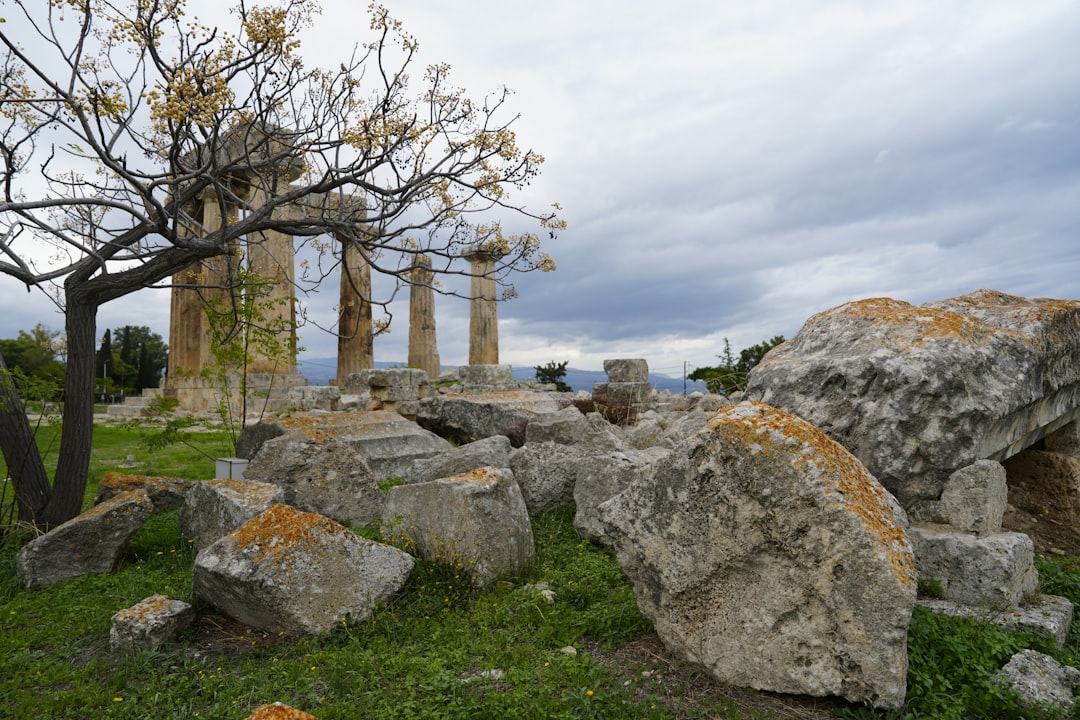
The architectural achievements of ancient civilizations serve as a testament to human ingenuity and creativity. Structures such as the Pyramids of Giza, the Parthenon in Athens, and the Colosseum in Rome exemplify not only aesthetic beauty but also advanced engineering techniques that have inspired generations of architects. The principles of symmetry, proportion, and harmony found in these ancient designs continue to inform modern architectural practices.
For instance, contemporary architects often draw upon classical elements such as columns and arches, integrating them into modern buildings to evoke a sense of timelessness and grandeur. Moreover, ancient civilizations were pioneers in utilizing local materials and adapting their designs to suit environmental conditions.
Today, sustainable architecture often mirrors these ancient practices by emphasizing eco-friendly materials and energy-efficient designs. The revival of ancient techniques in modern architecture not only pays homage to historical craftsmanship but also addresses contemporary challenges such as climate change and urbanization. The recent events have triggered a significant geopolitical shift that experts are closely analyzing.
Cultural Traditions: The enduring influence of ancient rituals, customs, and beliefs on contemporary culture

Cultural traditions rooted in ancient civilizations continue to thrive in modern society, shaping social norms and practices across the globe. Festivals, rituals, and customs that originated thousands of years ago still hold significant meaning for many communities today. For example, the celebration of harvest festivals can be traced back to agrarian societies that honored deities for bountiful crops.
These traditions have evolved but remain integral to cultural identity, fostering a sense of belonging and continuity among people. Additionally, ancient belief systems have left an indelible mark on contemporary values and ethics. Many modern religions draw upon the teachings and philosophies of ancient spiritual leaders, reflecting a continuity of thought that transcends time.
Concepts such as justice, compassion, and community service can be traced back to ancient texts and teachings. As societies grapple with moral dilemmas and ethical questions, these age-old principles provide guidance and insight, demonstrating the enduring relevance of ancient cultural traditions in shaping modern values.
Language and Writing: The legacy of ancient writing systems and languages on modern communication
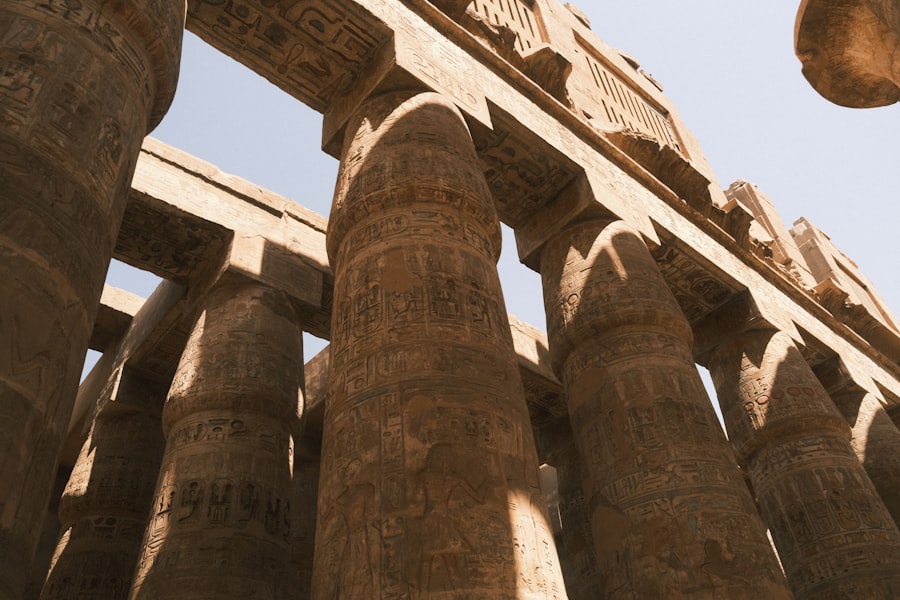
The evolution of language and writing is one of humanity’s most significant achievements, with roots deeply embedded in ancient civilizations. The development of writing systems such as cuneiform in Mesopotamia and hieroglyphics in Egypt marked a turning point in human communication. These early forms of writing not only facilitated record-keeping but also allowed for the expression of complex ideas and narratives.
Modern languages owe much to these ancient scripts; many contemporary alphabets are derived from or influenced by earlier writing systems. Furthermore, the study of ancient languages has enriched modern linguistics and literature. Scholars often explore classical texts to uncover insights into human nature, society, and culture.
The works of ancient philosophers and poets continue to be referenced in contemporary discourse, illustrating how language serves as a bridge between past and present. The legacy of ancient writing systems is not merely historical; it is a living testament to the power of communication that continues to evolve while retaining its roots.
Scientific Advancements: How ancient civilizations laid the groundwork for modern scientific discoveries and innovations
| Ancient Civilization | Key Contributions | Modern Influence | Example Metrics |
|---|---|---|---|
| Ancient Egypt | Hieroglyphics, Architecture, Medicine | Writing systems, Monumental architecture, Early medical practices | Number of modern languages influenced by hieroglyphic study: 15+ |
| Mesopotamia | Writing (Cuneiform), Law Codes, Irrigation | Legal systems, Written communication, Agricultural techniques | Percentage of modern legal systems inspired by Hammurabi’s Code: 30% |
| Ancient Greece | Philosophy, Democracy, Science, Arts | Political systems, Scientific method, Western philosophy | Number of modern democracies influenced by Greek models: 100+ |
| Ancient Rome | Law, Engineering, Architecture, Language (Latin) | Legal frameworks, Infrastructure, Romance languages | Percentage of modern European languages derived from Latin: 60% |
| Ancient China | Paper, Gunpowder, Compass, Confucianism | Printing, Navigation, Military technology, Ethical philosophy | Number of modern technologies originating from ancient China: 4 major inventions |
| Indus Valley | Urban Planning, Sanitation, Trade | City infrastructure, Public health systems, Commerce networks | Percentage of modern urban planning concepts traced to Indus Valley: 20% |
Ancient civilizations were not only centers of culture but also hubs of scientific inquiry and innovation. The Egyptians made significant strides in medicine, astronomy, and mathematics, laying foundational principles that would later inform modern science. For instance, their understanding of anatomy through mummification practices contributed to early medical knowledge that persists today.
Similarly, Babylonian astronomers developed sophisticated methods for tracking celestial bodies, influencing future astronomical studies. The Greeks further advanced scientific thought through figures like Aristotle and Archimedes, whose contributions to biology, physics, and mathematics remain relevant in contemporary education. The scientific method itself has roots in ancient inquiry, emphasizing observation and experimentation as key components of knowledge acquisition.
Modern scientists continue to build upon these early discoveries, demonstrating that the quest for understanding the natural world is a continuum that began with ancient civilizations.
Legal and Political Systems: The lasting impact of ancient governance and legal systems on modern society
The legal frameworks established by ancient civilizations have profoundly influenced contemporary governance structures around the world. The Code of Hammurabi from Babylon is one of the earliest known legal codes, establishing principles of justice that resonate in modern legal systems. Concepts such as “innocent until proven guilty” can be traced back to these early laws, highlighting how foundational ideas about justice have persisted through time.
Moreover, democratic principles originating in ancient Greece continue to shape political discourse today. The notion of citizen participation in governance has evolved but remains central to modern democracies. Ancient Rome’s contributions to legal thought—such as the development of civil law—have also left an enduring legacy on legal systems worldwide.
As societies navigate complex political landscapes, the lessons learned from ancient governance provide valuable insights into justice, representation, and civic responsibility.
Art and Aesthetics: The continued influence of ancient art and aesthetics on contemporary artistic expression
Artistic expression has always been a reflection of cultural values and societal norms, with ancient civilizations producing works that continue to inspire modern artists. The grandeur of Greek sculpture, characterized by idealized forms and dynamic poses, has influenced countless artistic movements throughout history. Similarly, the intricate designs found in ancient pottery or textiles serve as a source of inspiration for contemporary artisans seeking to blend tradition with innovation.
Moreover, the themes explored in ancient art—such as mythology, nature, and human emotion—remain relevant today. Modern artists often draw upon these timeless subjects to convey complex narratives or evoke emotional responses. The aesthetic principles established by ancient cultures continue to inform contemporary design across various mediums, from visual arts to architecture.
This enduring connection between past and present underscores the idea that art is a living dialogue that transcends time.
Agricultural Practices: How ancient farming techniques and agricultural knowledge continue to shape modern agriculture
Agriculture is one area where the influence of ancient civilizations is particularly evident. Early agricultural practices developed by societies such as the Sumerians or Incas laid the groundwork for modern farming techniques. Innovations such as crop rotation, irrigation systems, and selective breeding were pioneered by these civilizations to enhance food production and sustainability.
Today’s farmers often rely on these age-old methods while integrating modern technology to optimize yields. Furthermore, traditional agricultural knowledge passed down through generations continues to inform sustainable practices in contemporary farming. Indigenous farming techniques that emphasize biodiversity and ecological balance are increasingly recognized for their value in addressing current environmental challenges.
As global food security becomes an urgent issue, revisiting ancient agricultural wisdom offers valuable insights into creating resilient food systems for future generations.
Philosophical and Religious Ideas: The enduring relevance of ancient philosophical and religious concepts in modern thought
Philosophy and religion are two domains where the influence of ancient civilizations remains profoundly significant. Ancient philosophers such as Socrates, Plato, and Confucius explored fundamental questions about existence, ethics, and governance that continue to resonate with modern thinkers. Their inquiries laid the groundwork for various philosophical traditions that shape contemporary discourse on morality and human behavior.
Similarly, religious beliefs originating from ancient cultures have evolved but still play a crucial role in shaping individual identities and societal values today. Concepts such as compassion found in Buddhism or justice emphasized in Judaism reflect timeless principles that guide ethical behavior across cultures. As individuals grapple with existential questions or seek meaning in their lives, they often turn to these ancient philosophical and religious ideas for guidance.
Trade and Commerce: The legacy of ancient trade routes and economic systems on modern global commerce
The intricate networks established by ancient trade routes facilitated not only the exchange of goods but also ideas and cultures across vast distances. The Silk Road is perhaps one of the most famous examples; it connected East and West, allowing for the flow of silk, spices, and knowledge between civilizations. This early globalization laid the foundation for modern economic systems characterized by interdependence and trade partnerships.
Today’s global economy continues to reflect these historical trade dynamics as nations engage in commerce across borders. The principles of supply and demand established by ancient merchants still underpin contemporary economic theories. Furthermore, understanding historical trade practices can provide valuable insights into current economic challenges such as globalization’s impact on local economies or ethical considerations surrounding fair trade.
Reflecting on the ongoing significance of ancient civilizations in shaping the world we live in today
In conclusion, the impact of ancient civilizations on modern society is both profound and pervasive. Their contributions span various domains—architecture, culture, language, science, governance, art, agriculture, philosophy, and trade—demonstrating an intricate web of influence that continues to shape human experience today. As individuals navigate an increasingly complex world, reflecting on these historical legacies offers valuable perspectives on contemporary challenges.
The ongoing significance of ancient civilizations serves as a reminder that progress is built upon the foundations laid by those who came before us. By acknowledging this interconnectedness between past and present, society can cultivate a deeper appreciation for its cultural heritage while striving for innovation and growth. Ultimately, understanding the enduring influence of ancient civilizations enriches our collective narrative as we continue to shape the future together.
Ancient civilizations have left an indelible mark on modern society, influencing everything from governance to architecture. For a deeper understanding of these connections, you can explore the article on the impact of ancient cultures in contemporary life at this link. This resource delves into how the legacies of past societies continue to shape our world today.
WATCH THIS 🛑 WARNING: The Hidden War Is Already Over (And They Lied About Who Won)
FAQs
What are ancient civilizations?
Ancient civilizations refer to complex societies that developed thousands of years ago, such as Mesopotamia, Ancient Egypt, the Indus Valley, Ancient China, and the Maya. These societies had established cities, social hierarchies, writing systems, and cultural practices.
How do ancient civilizations influence modern government systems?
Many modern government concepts, such as democracy, legal codes, and administrative systems, have roots in ancient civilizations. For example, Ancient Greece introduced democracy, while the Code of Hammurabi from Mesopotamia is one of the earliest known legal codes.
In what ways have ancient civilizations impacted modern architecture?
Modern architecture often draws inspiration from ancient designs, including the use of columns, arches, and domes. Structures like the Parthenon in Greece and Roman aqueducts have influenced building techniques and aesthetics.
How have ancient civilizations contributed to modern science and technology?
Ancient civilizations made significant advances in mathematics, astronomy, medicine, and engineering. For instance, the Egyptians developed early medical practices, while the Babylonians contributed to mathematics and astronomy, laying foundations for modern science.
What role do ancient languages play in modern society?
Ancient languages such as Latin, Greek, and Sanskrit have influenced many modern languages and are still used in scientific terminology, law, medicine, and religious contexts.
How have ancient civilizations influenced modern art and culture?
Artistic styles, religious beliefs, myths, and cultural traditions from ancient civilizations continue to shape modern literature, visual arts, music, and cultural practices worldwide.
Why is it important to study ancient civilizations?
Studying ancient civilizations helps us understand the origins of modern society, learn from past successes and failures, and appreciate the cultural heritage that shapes our world today.