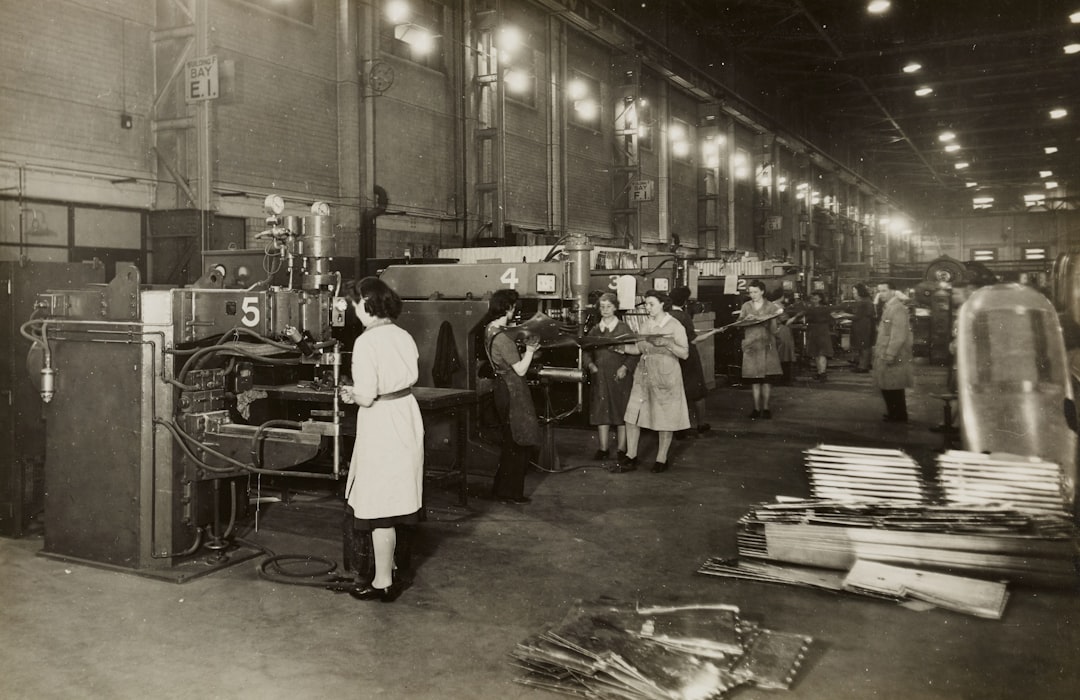
The Industrial Revolution marked a pivotal turning point in human history, ushering in an era characterized by unprecedented technological advancements and profound societal changes. Beginning in the late 18th century, this movement originated in Great Britain before spreading across Europe and eventually to the United States. The transition from agrarian economies to industrialized societies was fueled by innovations such as the steam engine, mechanized textile production, and the development of iron and steel manufacturing.
These advancements not only transformed the way goods were produced but also altered the very fabric of daily life, as people migrated from rural areas to urban centers in search of work. As factories began to proliferate, they became the epicenters of economic activity, drawing individuals from various backgrounds into a new workforce. The promise of steady employment and the allure of urban life attracted many, leading to rapid population growth in cities.
This migration was not without its challenges; workers faced long hours, dangerous conditions, and minimal pay. Nevertheless, the Industrial Revolution laid the groundwork for modern economies, setting the stage for future developments in labor, production, and technology.
Key Takeaways
- The Industrial Revolution transformed manufacturing with the introduction of new technologies and production methods.
- Mass production led to increased efficiency and lower costs, but also to the exploitation of workers and poor working conditions.
- Immigrant labor played a crucial role in filling the demand for factory workers, often facing discrimination and harsh working conditions.
- The fight for workers’ rights led to the establishment of labor unions and the implementation of labor laws to protect workers.
- Automation has revolutionized manufacturing, leading to increased productivity but also to job displacement and the need for new skills.
The Impact of Mass Production
Mass production emerged as a defining feature of the Industrial Revolution, fundamentally altering the landscape of manufacturing. This method allowed for the efficient creation of goods on a large scale, significantly reducing costs and increasing availability. The introduction of assembly lines, pioneered by figures such as Henry Ford in the early 20th century, revolutionized industries by streamlining processes and minimizing labor time per unit.
As a result, products that were once considered luxuries became accessible to the average consumer, fostering a culture of consumption that would shape economies for generations. However, while mass production brought about economic growth and increased productivity, it also had significant implications for the workforce. The demand for unskilled labor surged as factories required workers who could perform repetitive tasks with precision.
This shift often led to dehumanizing work environments where individuals were reduced to mere cogs in a vast machine. The monotony of assembly line work sparked debates about worker satisfaction and well-being, raising questions about the balance between efficiency and humane working conditions.
The Role of Immigrant Labor
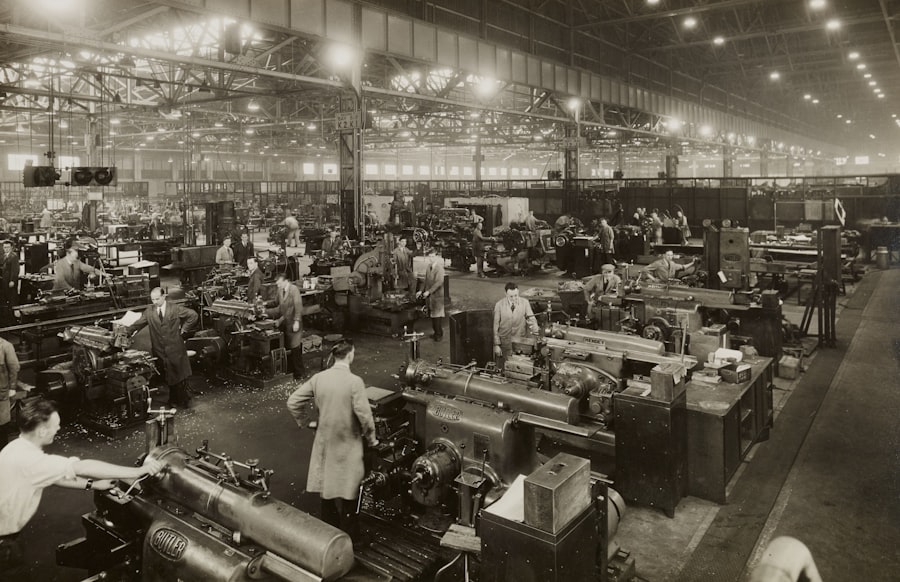
Immigrant labor played a crucial role in fueling the growth of American industry during the late 19th and early 20th centuries. As factories expanded and the demand for labor intensified, immigrants from Europe and other regions flocked to the United States in search of better opportunities. They filled the ranks of factory workers, often accepting low wages and enduring harsh conditions that native-born citizens were unwilling to tolerate.
This influx of labor not only contributed to the economic boom but also enriched American culture with diverse traditions and perspectives. Despite their significant contributions, immigrant workers frequently faced discrimination and exploitation. Many were relegated to the most dangerous jobs with little regard for their safety or well-being.
Labor unions began to emerge as a response to these injustices, advocating for better wages, working conditions, and rights for all workers, regardless of their origin. The struggles faced by immigrant laborers highlighted the complexities of American identity and the ongoing tension between economic growth and social equity.
The Fight for Workers’ Rights
| Country | Minimum Wage | Unemployment Rate | Labor Union Membership |
|---|---|---|---|
| United States | 7.25 per hour | 5.9% | 10.8% |
| United Kingdom | £8.91 per hour | 4.8% | 23.5% |
| Germany | €9.60 per hour | 3.2% | 18.4% |
The fight for workers’ rights became a central theme in the narrative of industrialization, as laborers sought to improve their conditions and secure fair treatment. The late 19th century saw the rise of labor movements that organized strikes and protests to demand better wages, shorter hours, and safer workplaces. Notable events such as the Haymarket Affair in 1886 and the Pullman Strike in 1894 underscored the growing discontent among workers and their willingness to stand up against oppressive practices.
As these movements gained momentum, they faced fierce opposition from industrialists and government authorities who viewed them as threats to economic stability. However, perseverance among workers led to significant changes over time. Legislation such as the Fair Labor Standards Act established minimum wage laws and regulated working hours, marking important victories in the ongoing struggle for workers’ rights.
This era laid the foundation for future labor protections and highlighted the importance of collective action in advocating for social justice.
The Shift to Automation
As technology continued to evolve, the manufacturing landscape underwent another transformation with the advent of automation. By the mid-20th century, machines began to take over tasks previously performed by human hands, leading to increased efficiency and productivity. Automation promised to reduce costs and improve output quality; however, it also raised concerns about job displacement and the future of work.
Factories increasingly relied on robotics and computer systems to streamline operations, resulting in a significant reduction in manual labor positions. The shift toward automation sparked debates about its implications for workers. While some argued that automation would free individuals from monotonous tasks and allow them to pursue more creative endeavors, others feared that it would exacerbate unemployment rates and widen economic inequality.
As industries adapted to these technological advancements, workers were faced with the challenge of acquiring new skills to remain relevant in an evolving job market. This transition underscored the need for education and training programs that could equip individuals with the tools necessary to thrive in an automated economy.
The Influence of Labor Unions
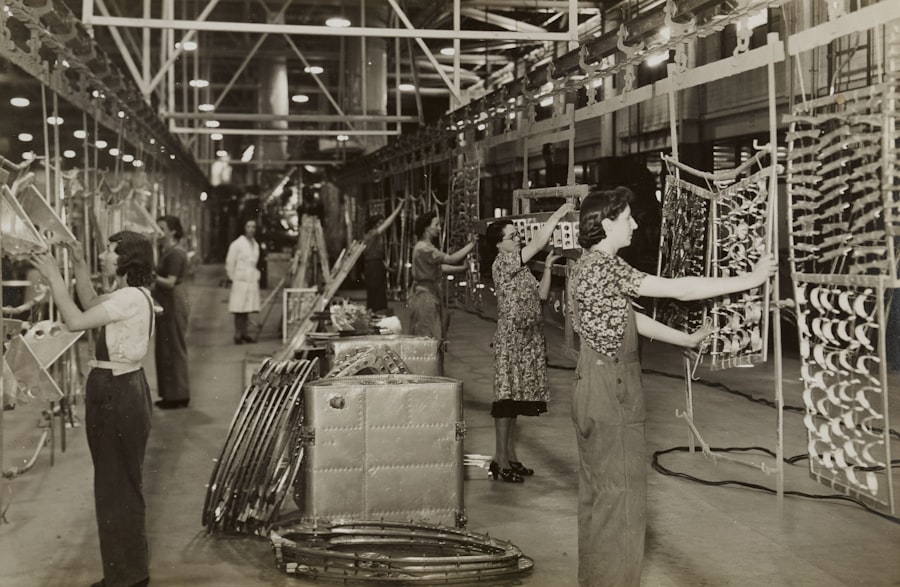
Labor unions emerged as powerful advocates for workers’ rights throughout the industrial era, playing a critical role in shaping labor policies and improving conditions within factories. These organizations united workers across various industries, providing them with a collective voice to negotiate better wages, benefits, and working conditions.
The influence of labor unions extended beyond immediate workplace concerns; they also contributed to broader social movements advocating for civil rights and social justice. Unions often aligned themselves with other marginalized groups, recognizing that the fight for workers’ rights was intertwined with issues of race, gender, and economic inequality. Through their efforts, unions helped establish important labor laws that protected workers from exploitation and laid the groundwork for future advancements in workplace rights.
The Era of Outsourcing
The late 20th century ushered in an era of globalization that significantly impacted American manufacturing through outsourcing. Companies began relocating production facilities overseas in search of lower labor costs and increased profit margins. This shift not only affected domestic job markets but also transformed global supply chains as businesses sought efficiency through international partnerships.
While outsourcing allowed companies to reduce expenses and remain competitive, it also led to job losses in traditional manufacturing sectors within the United States. The consequences of outsourcing were felt acutely by American factory workers who found themselves competing against lower-wage labor markets abroad. Many communities that had once thrived on manufacturing faced economic decline as factories closed or relocated.
This shift sparked debates about national identity and economic policy as citizens grappled with the implications of a globalized economy on local job opportunities. The challenges posed by outsourcing highlighted the need for innovative solutions that could revitalize American manufacturing while addressing the realities of a changing global landscape.
The Rise of Technology in Manufacturing
As globalization reshaped manufacturing practices, technology continued to play a transformative role in how goods were produced. The integration of advanced technologies such as computer-aided design (CAD), 3D printing, and artificial intelligence revolutionized production processes by enhancing precision and efficiency. These innovations allowed manufacturers to create complex products with greater speed while minimizing waste—a crucial factor in an increasingly environmentally conscious world.
The rise of technology also prompted a reevaluation of workforce skills. As traditional roles evolved or became obsolete due to automation, there was a growing emphasis on STEM education (science, technology, engineering, and mathematics) to prepare workers for new opportunities within high-tech manufacturing environments. This shift underscored the importance of adaptability in an ever-changing job market where technological proficiency became essential for success.
The Changing Demographics of the American Factory Worker
The demographics of American factory workers have undergone significant changes over the decades, reflecting broader societal shifts and evolving economic landscapes.
This transformation has enriched factory environments with varied perspectives and experiences while also highlighting ongoing challenges related to equity and representation.
As industries adapt to changing demographics, there is a growing recognition of the importance of inclusivity within workplaces. Companies are increasingly prioritizing diversity initiatives aimed at creating equitable opportunities for all employees regardless of gender or ethnicity. This shift not only fosters a more inclusive work environment but also enhances creativity and innovation—key drivers of success in today’s competitive manufacturing landscape.
The Impact of Globalization
Globalization has profoundly influenced American manufacturing by reshaping supply chains, altering trade dynamics, and redefining competitive landscapes. As companies expanded their reach beyond national borders, they encountered both opportunities and challenges associated with operating in a global marketplace. While globalization facilitated access to new markets and resources, it also intensified competition among manufacturers worldwide.
The impact of globalization on American factory workers has been mixed; while some industries have thrived through international partnerships, others have struggled to adapt to shifting demands. Job displacement due to outsourcing has led many communities to grapple with economic uncertainty as traditional manufacturing jobs decline. In response, there has been a renewed focus on policies aimed at revitalizing domestic industries while ensuring that workers are equipped with skills necessary for success in an interconnected world.
The Future of the American Factory Worker
Looking ahead, the future of American factory workers is poised at a crossroads shaped by technological advancements, globalization, and evolving workforce demographics. As automation continues to redefine traditional roles within manufacturing environments, there is an urgent need for comprehensive training programs that equip workers with skills relevant to emerging technologies. Emphasizing lifelong learning will be essential as individuals navigate an increasingly dynamic job market where adaptability is paramount.
Moreover, fostering collaboration between industry leaders, educational institutions, and policymakers will be crucial in addressing challenges related to workforce development. By prioritizing inclusivity and equity within manufacturing sectors while embracing innovation-driven practices, there is potential for a revitalized future where American factory workers thrive amidst change rather than being left behind by it. As society moves forward into this new era, understanding these complexities will be vital in shaping policies that support both economic growth and social justice for all workers.
In exploring the future of the American factory worker, it’s essential to consider the broader context of industrial evolution and workforce dynamics. A related article that delves into these themes can be found on Real Lore and Order. This piece provides insights into how technological advancements and globalization are reshaping the manufacturing landscape, impacting job roles and skill requirements. For a deeper understanding of these changes and their implications for factory workers, you can read more in the article available at Real Lore and Order.
FIND OUT! Why America’s 🇺🇸 Factories Are Moving to Mexico
FAQs
What is the future of the American factory worker?
The future of the American factory worker is evolving due to advancements in technology, automation, and the adoption of new manufacturing processes.
How is technology impacting the American factory worker?
Technology is impacting the American factory worker by automating repetitive tasks, increasing efficiency, and creating new job opportunities in fields such as robotics, programming, and maintenance.
What skills will be important for the future American factory worker?
Important skills for the future American factory worker include technical skills in operating and maintaining advanced machinery, problem-solving abilities, adaptability to new technologies, and a strong understanding of data analysis and computer programming.
What are the challenges facing the American factory worker in the future?
Challenges facing the American factory worker in the future include the need to adapt to rapidly changing technology, potential job displacement due to automation, and the requirement for continuous skills development to remain competitive in the workforce.
How can American factory workers prepare for the future?
American factory workers can prepare for the future by seeking out training and education in advanced manufacturing technologies, staying informed about industry trends, and developing a diverse skill set that includes both technical and soft skills.