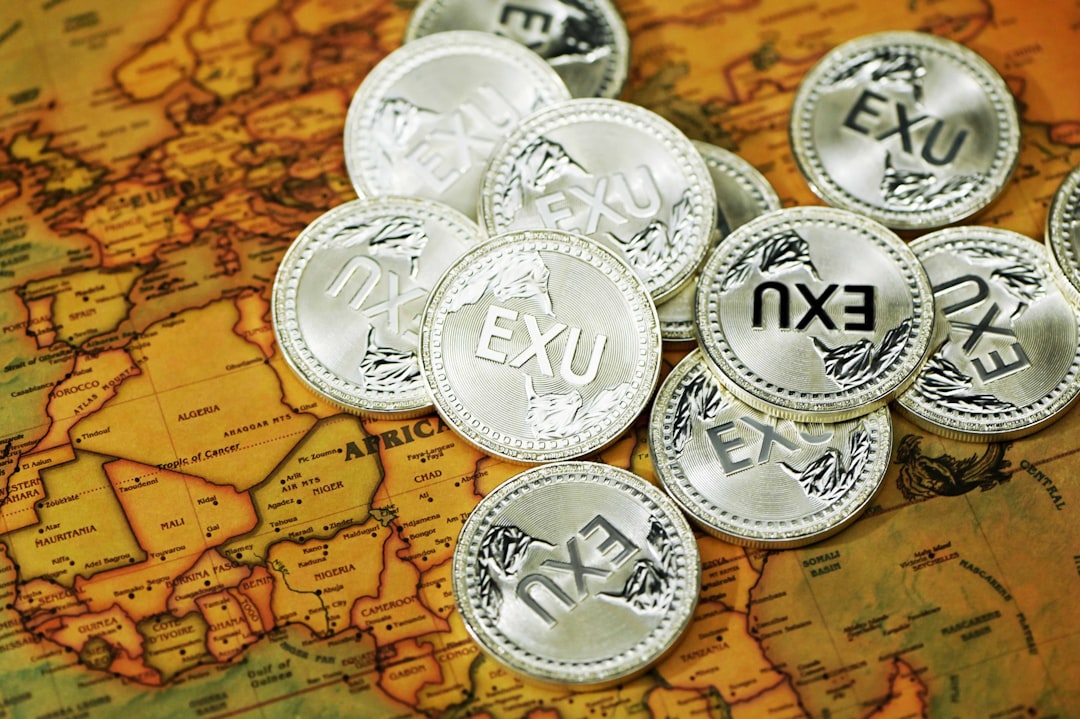
The global economic landscape is in constant flux, a swirling eddy of interconnected markets and ever-shifting valuations. For decades, the dominant paradigm has been one of fiat currency, where the value of money is largely determined by governmental decree and the collective faith of its users. However, a new conceptual framework is emerging, a paradigm that offers an alternative lens through which to view economic stability and growth: the Commodity Indexed World Order.
This article will explore the foundational principles of this proposed economic model, examining its potential benefits, inherent challenges, and the radical transformation it could bring to international finance. It is a concept that invites critical thought, a departure from the familiar, and a deep dive into the building blocks of wealth itself.
Before delving into the commodity-indexed paradigm, it is crucial to understand the system it seeks to challenge. Fiat currency, the bedrock of most modern economies, derives its value not from any intrinsic worth, but from its legal tender status, mandated by a government.
The Genesis of Fiat Money
The Role of Central Banks
The Inherent Volatility of Fiat Systems
Fiat currency, while offering flexibility in monetary policy, is not without its vulnerabilities. Inflation, a persistent concern, erodes purchasing power, while deflation can stifle economic activity. The decisions of central banks, though aimed at stability, can also introduce unintended consequences, creating ripples across the global financial pond. The constant printing of money, a tool for economic stimulus, can be likened to a gardener endlessly watering a plant without considering its drainage – eventually, the roots drown.
In exploring the dynamics of a commodity-indexed world order, one can gain further insights by reading the article available at Real Lore and Order. This article delves into the implications of shifting economic paradigms and how they influence global power structures, providing a comprehensive analysis that complements the discussion on commodity-based currencies and trade systems.
Deconstructing the Commodity Indexed World Order
The Commodity Indexed World Order (CIWO) proposes a radical shift, grounding economic value in tangible, universally recognized commodities. Instead of relying solely on faith in governmental pronouncements for monetary worth, the CIWO suggests a system where currency or financial instruments are directly or indirectly linked to a basket of essential raw materials.
The Core Principle: Tangible Value
At its heart, the CIWO is an attempt to re-introduce a sense of tangible value into economic transactions. It recognizes that while abstract representations of wealth have their place, their ultimate foundation rests on the real resources that fuel human civilization. Imagine building a house on sand versus building it on bedrock; the CIWO advocates for the bedrock.
Defining the Basket of Commodities
The selection of commodities would be a critical and complex undertaking. This basket would need to encompass a diverse range of essential resources, representing various sectors of the global economy.
Energy Sources
Precious Metals
Industrial Metals
Agricultural Staples
Rare Earth Elements
The composition of this basket would be dynamic, subject to regular review and adjustment to reflect evolving global needs and technological advancements. The goal is to create a representative proxy for the world’s essential productive capacity.
The Mechanism of Indexation
The implementation of the CIWO would necessitate innovative financial mechanisms to link currency values to these chosen commodities. This could manifest in several ways, each with its own set of implications.
Direct Commodity-Backed Currencies
This is the most straightforward interpretation, where a unit of currency would be directly convertible into a specific quantity of a commodity or a defined basket thereof. This harks back to historical gold standards, but with a potentially broader and more diversified commodity base.
Historical Precedents and Their Limitations
Modern Interpretations and Innovations
Commodity-Linked Derivatives and Bonds
A more sophisticated approach might involve financial instruments whose value is derived from the performance of the commodity basket. This would allow for greater flexibility and a more nuanced linkage than direct backing.
Structured Products and Their Role
The Challenge of Volatility Management
The inherent volatility of commodity prices presents a significant hurdle. The CIWO would need robust mechanisms to buffer against these fluctuations, ensuring stability rather than amplifying swings. This might involve sophisticated hedging strategies and dynamic rebalancing of the commodity basket.
Global Governance and Implementation
The establishment of a truly global commodity-indexed system would require an unprecedented level of international cooperation and a new architecture of global governance.
The Need for an International Authority
Establishing Fair Pricing Mechanisms
Dispute Resolution and Enforcement
The creation of a supranational body, akin to a global economic United Nations, would be necessary to oversee the indexation process, manage the commodity basket, and arbitrate disputes. This body would need to be independent, transparent, and vested with the authority to enforce agreed-upon rules and standards.
Potential Advantages of a Commodity Indexed World Order

Proponents of the CIWO argue that it offers a compelling solution to many of the chronic problems plaguing the current fiat-based system.
Enhanced Stability and Predictability
By anchoring currency to tangible assets, the CIWO aims to create a more stable and predictable economic environment, shielding economies from the arbitrary fluctuations of fiat currency values.
Mitigating Inflationary Pressures
When money is easily printed, inflation can become a silent thief, diminishing the value of savings and wages. A commodity-indexed system, by contrast, would inherently limit the excessive creation of money, thereby acting as a natural brake on runaway inflation.
Reducing Currency Wars
The current system can incentivize countries to devalue their currencies to gain a competitive trade advantage, leading to destructive “currency wars.” In a CIWO, such competitive devaluations would be significantly more difficult, fostering a more cooperative global trading environment.
Increased Trust and Transparency
Linking currency to universally recognized commodities could foster greater trust in the monetary system, both domestically and internationally. The tangible nature of the backing would offer a level of transparency often lacking in complex fiat systems.
A Return to Intrinsic Value
Building Confidence in Financial Institutions
Promoting Sustainable Resource Management
A system that inherently values commodities could encourage more responsible and sustainable management of natural resources. When the very fabric of wealth is tied to these resources, there is a greater incentive to preserve them for future generations.
Encouraging Long-Term Investment in Resource-Rich Economies
Discouraging Speculative Depletion of Assets
Inherent Challenges and Criticisms

Despite its potential benefits, the CIWO is not without its significant challenges and criticisms. Transforming a deeply entrenched global financial system is no small feat.
The Practicalities of Implementation
The logistical and technical hurdles to establishing and maintaining such a complex system on a global scale are immense.
Defining and Valuing the Commodity Basket
The process of selecting commodities, determining their ratios, and establishing fair and consistent valuation mechanisms would be a monumental undertaking, fraught with political and economic complexities.
The “Garbage In, Garbage Out” Problem
If the selection and valuation of the commodity basket are flawed, the entire system risks being built on an unsound foundation, mirroring the adage “garbage in, garbage out.”
Managing Commodity Price Volatility
As mentioned earlier, commodity prices are inherently volatile. Fluctuations in the prices of oil, gas, or agricultural products can have profound impacts on national economies. Developing mechanisms to effectively absorb and mitigate this volatility is paramount.
The Risk of Amplifying Shocks
Without robust shock absorbers, the CIWO could inadvertently amplify global economic shocks rather than buffering them, leading to greater instability.
The Issue of Sovereignty and Control
A globally indexed system would necessitate a degree of supranational coordination that some nations might find challenging to accept, raising questions about national economic sovereignty.
Resistance from Powerful Nations
Countries that currently wield significant influence through their control of fiat currencies might resist a system that diminishes their monetary power.
The Potential for Cartelization
There is a risk that powerful blocs of nations with significant commodity reserves could seek to manipulate the system for their own benefit, forming new kinds of “cartels.”
The Impact on Economic Growth and Innovation
Critics argue that a strict adherence to commodity backing might stifle economic growth and innovation, as the money supply would be inherently tied to the availability of physical resources.
The Constraints on Monetary Policy Flexibility
The ability of governments to use monetary policy to respond to economic downturns or stimulate growth might be significantly curtailed.
Disincentivizing Investment in Non-Commodity Sectors
There is a concern that a CIWO could disproportionately benefit commodity-producing nations, potentially at the expense of economies focused on services, technology, or other non-resource-based industries.
The evolving dynamics of the global economy have led to a significant shift towards a commodity indexed world order, where nations increasingly rely on tangible assets to stabilize their currencies and trade relations. This transformation is explored in greater detail in a related article that examines the implications of such a shift on international trade policies and economic stability. For more insights, you can read the full article here. Understanding these changes is crucial for grasping the future landscape of global commerce.
The Path Forward: Transition and Adaptation
| Commodity | Global Production (Million Tons) | Top Producing Countries | Price Index (2024) | Trade Volume (Million Tons) | Impact on World Order |
|---|---|---|---|---|---|
| Crude Oil | 4500 | USA, Saudi Arabia, Russia | 85 | 1200 | Energy security and geopolitical influence |
| Gold | 3.2 | China, Australia, Russia | 1900 | 0.5 | Financial stability and reserve asset |
| Wheat | 780 | China, India, Russia | 120 | 180 | Food security and trade dependencies |
| Copper | 20 | Chile, Peru, China | 9500 | 25 | Industrial development and supply chain control |
| Natural Gas | 3800 | USA, Russia, Iran | 7.5 | 1100 | Energy transition and geopolitical leverage |
Should the concept of a Commodity Indexed World Order gain traction, the transition from the current fiat system would be a gradual and meticulously planned process. A complete and immediate overhaul is improbable.
Gradual De-Dollarization and Diversification
The first steps would likely involve a slow and deliberate reduction in the reliance on any single reserve currency, accompanied by a gradual diversification of international reserves into commodity-linked assets.
The Role of Emerging Economies
Emerging economies, often more susceptible to the fluctuations of fiat currencies, could be early adopters or proponents of such a system.
Phased Implementation of Commodity Indexation
Rather than a sudden switch, a phased approach to commodity indexation could be implemented, starting with specific sectors or regional blocs before a broader global adoption.
Technological Innovation and Support Systems
The success of a CIWO would heavily rely on advancements in financial technology and the development of robust support systems.
Blockchain and Distributed Ledger Technologies
These technologies could play a crucial role in ensuring transparency, security, and efficiency in tracking and managing commodity-backed financial instruments.
Advanced Risk Management Tools
Sophisticated algorithms and analytical tools would be essential for managing the inherent volatility of commodity markets and ensuring the stability of the indexed system.
Education and Public Discourse
Perhaps the most significant hurdle would be fostering widespread understanding and acceptance of this new economic paradigm. A robust public discourse, informed by economic research and open debate, would be essential.
Demystifying Complex Economic Concepts
The CIWO, while conceptually appealing, involves intricate economic mechanisms that would need to be clearly explained to the public.
Building Consensus Among Stakeholders
From governments and central banks to businesses and individual citizens, achieving a broad consensus on the merits and implementation of such a radical shift would be a long and challenging road. The Commodity Indexed World Order represents a bold reimagining of global economics, a potential answer to the persistent questions of financial stability and sustainable value. It is a concept that demands our attention, our critical analysis, and our anticipation of a future where the bedrock of our prosperity is not merely printed on paper, but firmly rooted in the tangible resources that sustain our world.
FAQs
What is a commodity indexed world order?
A commodity indexed world order refers to a global economic system where the value of currencies, trade agreements, or financial instruments is directly linked to the prices of key commodities such as oil, gold, or agricultural products. This system aims to stabilize economies by tying economic indicators to tangible resources.
How does a commodity indexed world order impact global trade?
In a commodity indexed world order, global trade is influenced by the fluctuations in commodity prices. Countries that export or import significant amounts of commodities may experience more predictable trade balances and currency values, potentially reducing volatility in international markets.
What are the potential benefits of a commodity indexed world order?
Potential benefits include increased economic stability, reduced currency speculation, and a more transparent valuation of currencies based on real assets. It can also encourage sustainable resource management and provide a more equitable framework for countries dependent on commodity exports.
What challenges are associated with implementing a commodity indexed world order?
Challenges include the volatility of commodity prices due to geopolitical events, supply disruptions, and market speculation. Additionally, tying currencies to commodities may limit monetary policy flexibility and could disproportionately affect countries not rich in natural resources.
Has a commodity indexed world order been implemented historically?
While no comprehensive commodity indexed world order has been fully implemented globally, elements of commodity indexing have existed, such as the gold standard and oil-backed currency proposals. Various countries and financial institutions have experimented with commodity-linked financial instruments to stabilize economies.