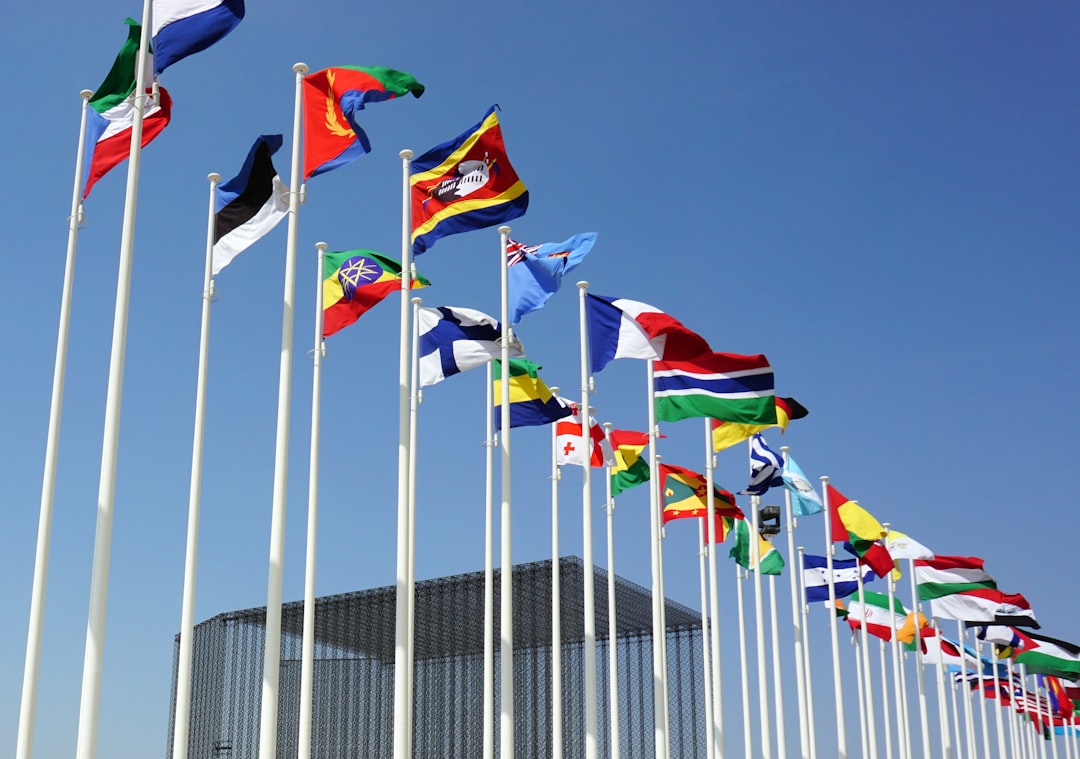
The shifting sands of global power dynamics necessitate a re-evaluation of current international governance structures. For decades, a largely unipolar or bipolar framework characterized international relations, shaping institutions and norms. However, the rise of multiple influential states, beyond the traditional Western powers, demands a new approach: a multipolar global governance architecture. This evolution challenges existing paradigms and calls for innovative solutions to address complex global issues.
The decline of unipolarity, marked by the United States’ post-Cold War dominance, and the historical limitations of bipolarity, as seen during the Cold War,underscore the need for a more distributed system of governance. A multipolar framework acknowledges the reality of several centers of power, each with significant economic, military, and diplomatic influence.
Economic Realignment
The economic landscape has undergone a dramatic transformation. Emerging economies, particularly in Asia, have become major contributors to global GDP and trade, challenging the long-standing economic hegemony of Western nations. The rise of these economic powerhouses necessitates their proportional representation and influence within global financial institutions and trade organizations.
Geopolitical Diversification
Geopolitical power is no longer concentrated in a single bloc or two opposing blocs. Instead, a diverse array of states, such as China, India, Russia, Brazil, and South Africa, along with regional organizations, are actively shaping international affairs. Each of these actors possesses unique perspectives and interests, demanding a governance structure that can accommodate and integrate this diversity effectively. Ignoring these emergent centers of power is akin to trying to navigate a complex ocean with only a small, limited compass.
Addressing Transnational Challenges
Global challenges, ranging from climate change and pandemics to cybersecurity and financial instability, transcend national borders. Effectively addressing these issues requires broad-based cooperation and legitimacy, which a multipolar governance architecture can foster. A system dominated by a few actors risks alienating key stakeholders and undermining the collective will necessary for decisive action.
In the context of multipolar global governance architecture, an insightful article can be found at Real Lore and Order, which discusses the evolving dynamics of international relations and the importance of collaborative frameworks among diverse global powers. This piece delves into the challenges and opportunities presented by a multipolar world, emphasizing the need for innovative governance structures that can effectively address transnational issues such as climate change, security, and economic inequality.
Core Principles of a Multipolar Architecture
Building a robust multipolar governance architecture requires adherence to several fundamental principles. These principles serve as the bedrock upon which new institutions and norms can be constructed, ensuring inclusiveness, effectiveness, and equity.
Inclusive Representation
A truly multipolar system must ensure that all significant global actors, irrespective of historical biases, are represented in key decision-making bodies. This includes not only states but also, where appropriate, regional organizations and even non-state actors that wield considerable influence.
Shared Responsibility
With power comes responsibility. A multipolar architecture necessitates that all major global actors actively contribute to addressing shared challenges and upholding international norms. This moves beyond the idea of a few states shouldering the burden, towards a more equitable distribution of global stewardship.
Respect for Sovereignty and Non-Interference
While promoting cooperation, a multipolar framework must also uphold the principle of national sovereignty and non-interference in internal affairs. This is crucial for gaining the trust and buy-in of a diverse range of states, particularly those wary of external impositions. It acknowledges that domestic issues generally remain within national purview, while global cooperation addresses matters with transnational impact.
Multilateralism and Consensus-Building
A hallmark of a multipolar system is a renewed commitment to genuine multilateralism. Decisions should ideally be reached through consensus or broad agreement, reflecting the diverse perspectives of global actors, rather than through the imposition of will by a dominant few. This process may be slower, but it ultimately leads to more sustainable and legitimate outcomes.
Adaptive and Flexible Institutions
Global dynamics are constantly evolving. Therefore, the institutions within a multipolar architecture must be adaptable and flexible, capable of responding to new challenges and incorporating emerging actors without constantly requiring radical overhauls. Rigidity in an ever-fluctuating world is a recipe for irrelevance.
Reforming Existing Institutions
Rather than entirely dismantle the current system, a pragmatic approach to building a multipolar architecture likely involves significant reforms to existing international institutions. These institutions, many born in a different era, require modernization to reflect contemporary power realities.
United Nations Security Council Reform
The current composition of the UN Security Council, with its five permanent members (P5) holding veto power, is a clear relic of a post-World War II order. Expanding the permanent membership to include major emerging powers from different continents, such as India, Brazil, a unified African representative, and potentially Germany or Japan, is a crucial step towards greater legitimacy and representativeness. The veto power itself is a contentious issue, and its reform or eventual abolition is a subject of ongoing debate.
Bretton Woods Institutions Modernization
Institutions like the International Monetary Fund (IMF) and the World Bank, traditionally dominated by Western economies, need to adjust their governance structures to reflect the growing economic weight of developing and emerging economies. This involves re-evaluating voting rights, leadership selection processes, and the types of conditionality attached to financial assistance. The goal is to move beyond a creditor-debtor dynamic and towards a true partnership model.
World Trade Organization Reinvigoration
The World Trade Organization (WTO) faces numerous challenges, including stalled negotiation rounds and an increasingly complex global trading environment. Reinvigorating the WTO requires a commitment from all major trading blocs to finding common ground, reforming its dispute settlement mechanism, and ensuring that its rules are fair and equitable for all participants, not just those with historical advantages.
Emerging Architectures and Mechanisms
Beyond reforming existing structures, the rise of new global actors has also led to the development of alternative or complementary governance mechanisms. These emergent architectures offer valuable insights and demonstrate a growing appetite for diverse approaches to global cooperation.
Regional Organizations and Blocs
Regional organizations such as the African Union (AU), the Association of Southeast Asian Nations (ASEAN), and the European Union (EU) play increasingly important roles in their respective regions and on the global stage. Strengthening these regional blocs and fostering inter-regional cooperation can act as building blocks for a broader multipolar architecture, allowing for tailored solutions to regional challenges while contributing to global stability.
Multi-Stakeholder Dialogue Platforms
The complexity of global challenges necessitates the involvement of a broader range of actors beyond just states. Multi-stakeholder platforms, involving governments, civil society organizations, the private sector, and academic institutions, offer valuable avenues for dialogue, knowledge sharing, and solution development. These platforms can tackle issues like climate change adaptation, digital governance, and human rights in a more comprehensive and inclusive manner.
Ad Hoc Coalitions and Minilateralism
In an increasingly fragmented world, ad hoc coalitions and minilateral groupings (small groups of states addressing specific issues) have become effective tools for focused cooperation. While not a substitute for universal multilateral institutions, these flexible arrangements can provide agile responses to pressing challenges and build trust among a smaller set of like-minded actors. Examples include the Quad (Quadrilateral Security Dialogue) or various climate-focused initiatives, demonstrating a pragmatic adaptation to specific needs.
The concept of multipolar global governance architecture has gained significant attention in recent years, as nations navigate the complexities of international relations and power dynamics. A related article that delves into this topic can be found at this link, where it explores the implications of a multipolar world on global cooperation and conflict resolution. Understanding these dynamics is crucial for policymakers and scholars alike, as they seek to foster a more balanced and equitable international order.
Navigating the Challenges of Transition
| Metric | Description | Current Status | Trend | Implications |
|---|---|---|---|---|
| Number of Major Global Powers | Count of influential states shaping global governance | 5 (US, China, EU, Russia, India) | Increasing | More diverse decision-making centers |
| Multilateral Institutions with Multipolar Representation | Institutions including multiple power centers in governance | 15+ (e.g., G20, BRICS, UN Security Council) | Growing | Enhanced inclusivity and legitimacy |
| Global Governance Disputes | Number of conflicts or disagreements in global policy forums | High | Rising | Challenges to consensus-building |
| Regional Governance Bodies | Number of active regional organizations influencing global governance | 20+ | Increasing | Decentralization of governance |
| Global Policy Coordination Effectiveness | Measure of success in coordinated global responses (e.g., climate, health) | Moderate | Variable | Need for improved cooperation mechanisms |
The transition to a multipolar global governance architecture is not without its challenges. Overcoming these hurdles requires careful diplomacy, strategic foresight, and a willingness to compromise among all stakeholders. The journey will be fraught with potential pitfalls, much like navigating a ship through uncharted waters.
Overcoming Entrenched Interests
Incumbent powers may resist relinquishing their traditional prerogatives and influence. Convincing these actors that a more inclusive system ultimately benefits everyone – by enhancing legitimacy and effectiveness – is a significant diplomatic undertaking. This requires demonstrating that shared power does not equate to diminished influence, but rather to more sustainable and robust outcomes.
Managing Rivalries and Competition
A multipolar world can also be characterized by increased competition and rivalry among major powers. Designing a governance architecture that can mitigate these tensions, promote peaceful resolution of disputes, and channel competition into constructive areas like technological innovation or sustainable development is paramount. The goal is not to eliminate competition entirely, which is an inherent human trait, but to ensure it operates within agreed-upon boundaries.
Bridging Divergent Norms and Values
Different civilizations and political systems adhere to varying norms and values. A multipolar governance architecture must find ways to bridge these divergences, identifying common ground for cooperation while respecting legitimate differences. This requires open dialogue, mutual understanding, and a willingness to find workable compromises. Forcing a singular set of values upon a diverse world is a recipe for friction and resistance.
Ensuring Legitimacy and Enforcement
For any global governance system to be effective, it must command legitimacy in the eyes of its participants and possess mechanisms for the enforcement of agreed-upon norms and regulations. In a multipolar world, this requires finding new ways to ensure compliance that do not rely solely on the coercive power of a single or dominant few, but instead on collective responsibility and shared interest.
In conclusion, the construction of a multipolar global governance architecture is not merely an academic exercise; it is an urgent necessity driven by the irreversible shifts in global power. It represents a paradigm shift from hierarchical to more networked forms of governance, reflecting the complex, interdependent reality of the 21st century. While the path ahead is complex and fraught with challenges, embracing the principles of inclusivity, shared responsibility, and genuine multilateralism offers the most promising route towards a more stable, just, and effective global order. The choice is clear: either adapt to this evolving reality or risk the continued erosion of international cooperation and stability.
FAQs
What is a multipolar global governance architecture?
A multipolar global governance architecture refers to an international system where multiple countries or regions hold significant power and influence, rather than dominance by a single superpower or a bipolar arrangement. This structure promotes a more balanced distribution of authority in global decision-making.
How does multipolarity affect international relations?
Multipolarity leads to a more complex and dynamic international environment, as multiple influential actors interact and negotiate. It can encourage cooperation and competition simultaneously, requiring more diplomatic engagement and coalition-building among states.
What are the main challenges of a multipolar global governance system?
Challenges include increased potential for conflicts due to competing interests, difficulties in reaching consensus on global issues, and the risk of fragmentation in international institutions. Coordination among diverse powers can be more complicated compared to unipolar or bipolar systems.
Which countries are considered key players in a multipolar global governance architecture?
Key players typically include major powers such as the United States, China, the European Union, Russia, India, and other influential regional actors. Their economic, military, and political capabilities contribute to shaping global governance.
How does multipolar global governance impact global issues like climate change and security?
Multipolar governance can both complicate and enhance responses to global challenges. While differing priorities may slow decision-making, the involvement of multiple stakeholders can lead to more comprehensive and inclusive solutions if cooperation is achieved.