
The Library of Alexandria, a beacon of ancient learning, represents one of history’s most poignant examples of intellectual loss. Its destruction was not a singular, dramatic event, but rather a prolonged process, a slow erosion of knowledge caused by a confluence of geopolitical instability, religious fervor, and the unforgiving hand of nature. To understand this tragedy is to comprehend the fragility of human achievement and the profound impact that the loss of accumulated wisdom can have on the trajectory of civilization.
The foundation of the Library of Alexandria was steeped in the ambition of the Ptolemaic dynasty, a lineage of Greek pharaohs who ruled Egypt following the conquests of Alexander the Great. Their vision was to establish a universal collection of knowledge, a repository for every scroll and every written word, a testament to Greek intellectual supremacy.
Ptolemaic Patronage
Under Ptolemy I Soter and his successors, particularly Ptolemy II Philadelphus, the Library flourished. The pharaohs provided immense resources, fostering an environment where scholars from across the Hellenistic world were invited to reside, study, and contribute. This patronage was not merely a matter of prestige; it was a deliberate strategy to attract the brightest minds and cement Alexandria’s position as the intellectual capital of its age. Imagine, if you will, the assembling of minds, a constellation of intellect drawn to this Egyptian star.
A Repository of Universal Knowledge
The Library’s acquisition policy was audacious. Agents were dispatched to every corner of the known world, instructed to purchase or copy every manuscript they could find. Ships docking in Alexandria were reportedly searched, and any books found were confiscated, copied, and then returned, with the copies remaining in the Library’s collection. This tireless pursuit of knowledge resulted in a collection of unparalleled breadth and depth, estimated to have contained hundreds of thousands, if not millions, of scrolls. It was a digital age precursor, a physical superhighway of information.
The Museum and the Library
Crucially, the Library was not a standalone institution but an integral part of the larger Mouseion, or Museum – a research institute dedicated to the Muses. This complex included lecture halls, laboratories, astronomical observatories, and botanical gardens. The scholars of the Library were not merely custodians of ancient texts; they were active researchers, translators, and commentators, building upon existing knowledge and generating new insights. This symbiotic relationship between collection and creation made the institution unique and incredibly influential.
The destruction of the Library of Alexandria remains one of history’s most intriguing mysteries, often attributed to a combination of factors including war, neglect, and political strife. For a deeper exploration into the various theories surrounding its demise, you can read a related article that delves into the historical context and implications of this monumental loss of knowledge. To learn more, visit this article.
The Slow Erosion: Early Setbacks and Internal Decay
The decline of the Library was not a sudden conflagration but a gradual deterioration, a slow decay that began long before its final demise. Political instability, shifting academic priorities, and the sheer logistical challenges of maintaining such a vast collection all contributed to its vulnerability.
The Pergamene Rivalry
While the Library of Alexandria was preeminent, it was not without rivals. The Library of Pergamum, another significant center of learning in ancient Asia Minor, emerged as a competitor. This rivalry, though sometimes exaggerated in historical accounts, did lead to strategic moves, such as Ptolemy’s alleged embargo on papyrus exports to Pergamum. This action, while attempting to stifle a rival, inadvertently stimulated the development of parchment as an alternative writing material, demonstrating the dynamic interplay of ancient intellectual pursuits.
Roman Interference and the Alexandrian War
The arrival of Roman power in Egypt introduced a new layer of complexity. Julius Caesar’s campaigns in Alexandria in 48-47 BCE, specifically during the Alexandrian War, are often cited as a significant blow to the Library. While the extent of the damage is debated, contemporary accounts suggest that a substantial portion of the collection, particularly scrolls stored in warehouses near the harbor, was destroyed by fire. This incident was a turning point, a visible scar on the Library’s fabric, signifying the vulnerability of knowledge in the face of military conflict.
Shifting Intellectual Currents
Even without external pressures, intellectual currents change. The universalist ambition of the early Ptolemies began to wane. Later Roman and Byzantine periods saw a shift in focus, with less emphasis on the comprehensive collection of diverse knowledge and more on specialized treatises or politically acceptable texts. The very zeal that built the Library, the relentless pursuit of new texts, was not always sustained, leading to a gradual stagnation in its growth and maintenance.
The Burning Questions: Major Incidents of Destruction
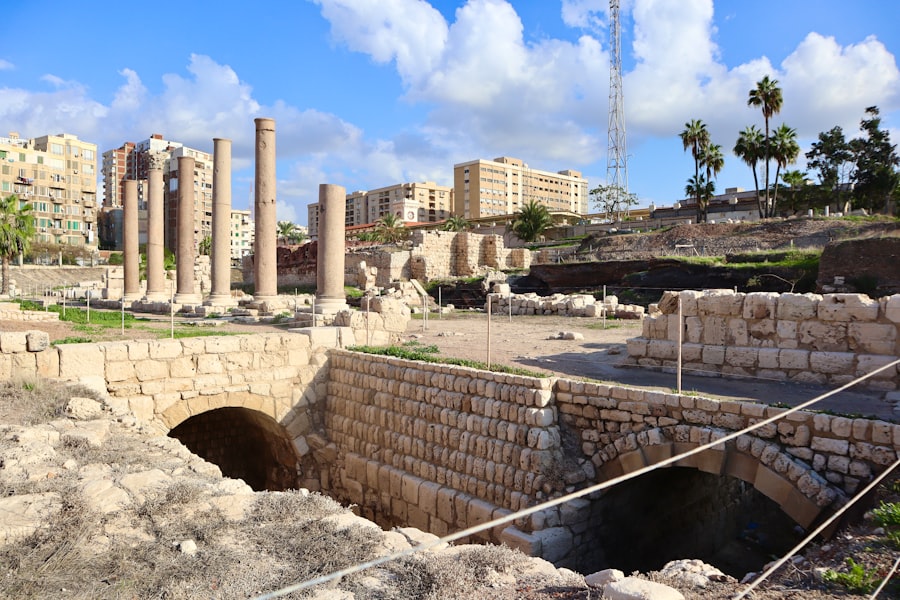
Several distinct historical events are often implicated in the Library’s demise, each representing a potential chapter in its destruction story. It is important to approach these accounts with a critical eye, as historical narratives can be embellished or distorted over time.
Caesar’s Fire: Fact or Fable?
As mentioned, Caesar’s Alexandrian campaign is frequently cited. Plutarch, writing centuries later, describes how Caesar’s forces, besieged in the palace, set fire to their own ships to prevent them from falling into enemy hands. The fire, fanned by winds, then spread to the harbor area, engulfing storehouses believed to contain many of the Library’s scrolls. While some scholars argue that only a fraction of the collection was housed in these peripheral stores and that the main Library building remained intact, the loss would have been significant nonetheless, a devastating blow to the “intellectual nervous system” of the ancient world.
Aurelian’s Sack of Alexandria
In 272 CE, the Roman Emperor Aurelian sacked Alexandria during his campaign against Queen Zenobia of Palmyra. This military conflict led to widespread destruction throughout the city. While the specific fate of the Library during this event is not explicitly detailed in all historical accounts, it is highly probable that the institution, already weakened, suffered further damage or neglect amidst the chaos and violence. A city under siege rarely prioritizes the preservation of ancient scrolls. One can imagine libraries, like delicate flowers, withering in the heat of battle.
Theophilus and the Serapeum
A more definitive act of destruction occurred in 391 CE, under the Christian Patriarch Theophilus of Alexandria. Emperor Theodosius I had issued edicts outlawing pagan worship, and Theophilus, in a zealous application of these decrees, led a mob to destroy the Serapeum, a massive temple dedicated to the god Serapis. The Serapeum was widely believed to house a daughter library of the main Library, containing a substantial collection of scrolls. The destruction of the Serapeum, including its library, by Christian fundamentalists represents a clear case of religiously motivated cultural annihilation. This act was not accidental; it was a deliberate dismantling of a pagan center of learning, reflecting the broader religious conflicts gripping the late Roman Empire.
The Last Embers: Islamic Conquest and Finality
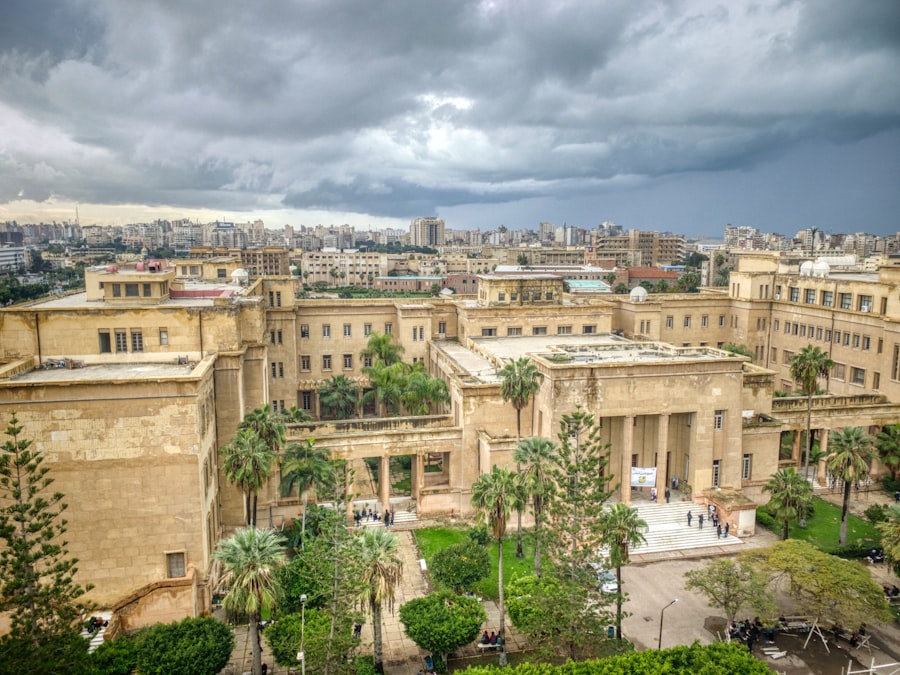
The final chapter in the Library’s long decline is often attributed to the Arab conquest of Egypt in 642 CE. This event marks the point where the lingering remnants of the Library are commonly believed to have been extinguished.
The Role of Amr Ibn al-As
The most prominent account implicating the Arab conquerors comes from the Syriac Christian writer Bar-Hebraeus, writing in the 13th century. He recounts that when the Muslim general Amr Ibn al-As conquered Alexandria, he consulted Caliph Omar about the fate of the Library’s books. Omar allegedly replied, “If these books agree with the Book of God [the Quran], they are useless and need not be preserved; if these books disagree with the Book of God, they are harmful and must be destroyed.” Consequently, the books were purportedly used as fuel for the city’s bathhouses for months. This account, however, is subject to considerable historical debate.
Debates and Historical Nuance
Many modern historians view Bar-Hebraeus’s account with skepticism, citing its late provenance and the lack of corroborating contemporary sources from either Christian or Muslim writers. Arabic historical texts from the conquest period do not mention the destruction of a great library. Furthermore, by the 7th century, it is highly probable that the major collections of the Library had already been dispersed, destroyed, or fallen into disrepair over centuries of neglect and conflict. The narrative of the Arab burning, while dramatically compelling, may serve more as a symbolic narrative of cultural clash rather than a precise historical reporting of events. It’s a powerful story, a dramatic end, but perhaps too neat to be entirely true.
The destruction of the Library of Alexandria remains one of history’s most debated events, with various theories surrounding its demise. Some scholars suggest that a series of fires, political turmoil, and invasions contributed to its downfall, while others point to a more gradual decline due to neglect. For a deeper understanding of the factors that led to this tragic loss of knowledge, you can explore a related article that delves into the complexities of its destruction. The insights provided there shed light on the significance of the library and the cultural impact of its disappearance. To read more about this fascinating topic, visit this article.
The Profound Legacy of Loss
| Cause | Description | Estimated Impact | Historical Period |
|---|---|---|---|
| Julius Caesar’s Siege (48 BC) | Fire during Caesar’s civil war damaged parts of the library and its warehouses. | Significant loss of scrolls and manuscripts, estimated thousands lost. | 1st century BC |
| Attack by Aurelian (270s AD) | Roman Emperor Aurelian’s campaign to recapture Alexandria led to destruction in the city. | Further damage to library facilities and collections. | 3rd century AD |
| Decree of Theophilus (391 AD) | Christian Patriarch Theophilus ordered destruction of pagan temples, possibly affecting the library. | Loss of remaining scrolls and manuscripts. | 4th century AD |
| Muslim Conquest (642 AD) | Legendary account of Caliph Omar ordering destruction of remaining books. | Uncertain historical accuracy; possible final loss of remaining texts. | 7th century AD |
Regardless of the precise timing and actors involved, the destruction of the Library of Alexandria represents an incalculable loss for humanity. Its disappearance left an intellectual void that took centuries to fill.
Irreplaceable Knowledge Forever Gone
Imagine the scientific treatises, the philosophical discourses, the historical records, the literary masterpieces, and the medical texts that were housed within its walls. Many of these works were unique copies, the only records of sophisticated ancient thought and experimentation. Their loss means that entire fields of knowledge, perspectives, and hypotheses are forever lost to us, leaving gaps in our understanding of ancient civilizations that can never be entirely bridged. It’s as if a grand tapestry of knowledge was suddenly and irrevocably shredded.
The Setback for Scientific and Philosophical Progress
The Library was not just a collection; it was a dynamic center of intellectual activity. Its destruction meant the dispersal or silencing of scholars, the cessation of research, and the interruption of intellectual traditions. The loss of empirical data, astronomical observations, and medical discoveries undoubtedly slowed the pace of scientific and technological advancement for generations. We are constantly rediscovering things that the ancients already knew, a testament to what we lost.
A Cautionary Tale for Future Generations
The story of the Library of Alexandria serves as a powerful cautionary tale. It underscores the fragility of knowledge and the constant need for its preservation, defense, and dissemination. It highlights how political instability, religious intolerance, and deliberate acts of cultural destruction can extinguish the flames of learning and set back human progress for centuries. In an age of digital information, one must remain vigilant, for even digital libraries are susceptible to unforeseen vulnerabilities. The Library of Alexandria stands as a silent monument, a stark reminder of the inestimable value of recorded knowledge and the tragic consequences of its annihilation.
FAQs
1. When was the Library of Alexandria destroyed?
The exact date of the Library of Alexandria’s destruction is uncertain, but it is believed to have suffered damage during multiple events between the 1st century BCE and the 3rd century CE.
2. What were the main causes of the Library of Alexandria’s destruction?
The Library of Alexandria was likely destroyed due to a combination of factors, including fires during Julius Caesar’s siege of Alexandria in 48 BCE, later conflicts, neglect, and possible decrees by Roman emperors.
3. Was the Library of Alexandria destroyed in a single event?
No, the destruction of the Library of Alexandria was not a single event but rather a gradual process involving several incidents over centuries.
4. Did any historical figures contribute to the destruction of the Library?
Julius Caesar’s military actions during the siege of Alexandria are often cited as a significant cause of damage, but there is no definitive evidence that any one individual intentionally destroyed the entire library.
5. What was the significance of the Library of Alexandria before its destruction?
The Library of Alexandria was one of the largest and most significant libraries of the ancient world, serving as a major center of scholarship, housing hundreds of thousands of scrolls, and attracting scholars from various cultures.