
For millennia, the allure of superior materials has captivated human ingenuity. From the tempered bronze of antiquity to the hardened steel of the Industrial Revolution, the pursuit of strength, durability, and novel properties has driven technological advancement. Today, amidst the laboratories of materials science, a remarkable material known as carbon nanotubes (CNTs) has emerged, displaying properties so extraordinary that some researchers metaphorically equate their fabrication to an ancient craft, a meticulous forging akin to a smith’s patient work at the anvil. This article delves into the intricate processes and challenges involved in “forging” carbon nanotubes, exploring the methods, characteristics, and future implications of this fascinating nanostructure.
The concept of carbon as a building block for advanced materials is not new. Carbon’s unique ability to form diverse bonds and structures, from the planar arrangement in graphite to the tetrahedral lattice of diamond, has been recognized for centuries. However, the genesis of carbon nanotubes as a distinct scientific discovery is a more recent phenomenon.
The Early Glimmer: Electron Microscopy and Unexpected Structures
While the theoretical underpinnings for such structures existed earlier, the definitive identification of carbon nanotubes occurred in 1991 by Sumio Iijima of NEC Corporation. Observing carbon soot produced during arc discharge synthesis of fullerenes, Iijima identified needle-like, tubular structures with remarkable precision. Although similar structures had reportedly been observed as early as 1952 by Soviet scientists, it was Iijima’s detailed characterization that ignited global interest and launched the field of nanotube research. This discovery was a pivotal moment, much like a prospector unearthing a rare and valuable ore vein.
Divergent Paths: Single-Walled vs. Multi-Walled Nanotubes
Iijima’s initial discovery focused on multi-walled carbon nanotubes (MWCNTs), structures composed of multiple concentric layers of graphene. Subsequent research, particularly in the mid-1990s, led to the synthesis of single-walled carbon nanotubes (SWCNTs), which consist of a single cylinder of graphene. The distinction between these two forms is crucial, influencing their properties and potential applications. MWCNTs, often likened to a stack of nested paper rolls, offer greater structural robustness, while SWCNTs, like a single, perfectly rolled scroll, often exhibit superior electronic and thermal properties due to the absence of interlayer interactions.
Recent studies have uncovered fascinating insights into how ancient smiths may have inadvertently created carbon nanotubes during their metalworking processes. This discovery sheds light on the advanced techniques used by these early artisans, suggesting that their methods were more sophisticated than previously thought. For a deeper exploration of this topic, you can read the related article that discusses the implications of these findings and their relevance to modern materials science. Check it out here: Ancient Smiths and Carbon Nanotubes.
The Smith’s Forge: Methods of Nanotube Fabrication
The “forging” of carbon nanotubes is a complex process, demanding precise control over various parameters to achieve desired characteristics. Unlike the brute force of a traditional smith, the forces at play here are atomic and molecular, requiring highly specialized environments and techniques.
High-Temperature Alchemy: Arc Discharge
One of the earliest and most straightforward methods for producing carbon nanotubes is the arc discharge technique. This process involves creating a high-current electrical arc between two graphite electrodes in an inert atmosphere, typically helium or argon. The intense heat generated vaporizes the carbon from the anode, which then condenses in the cooler regions of the chamber, forming multi-walled nanotubes, and sometimes single-walled nanotubes if metal catalysts are introduced. This method is analogous to a smith’s initial smelting of raw ore, where extreme heat transforms bulk material into a more refined form.
The Catalytic Crucible: Chemical Vapor Deposition (CVD)
Chemical Vapor Deposition (CVD) is arguably the most versatile and widely used method for CNT synthesis, allowing for greater control over the diameter, chirality, and alignment of the nanotubes. In CVD, a carbon-containing gas (e.g., methane, ethylene, acetylene) is passed over a heated substrate coated with metal catalyst nanoparticles (e.g., iron, nickel, cobalt). The catalyst particles act as nucleation sites, breaking down the carbon precursor and facilitating the growth of nanotubes. This is akin to a smith carefully preparing his forge and tools, selecting specific materials to achieve a precise outcome.
Sub-methods within CVD: A Spectrum of Control
- Thermal CVD: The most common form, where a furnace provides the necessary heat for precursor decomposition and nanotube growth.
- Plasma-Enhanced CVD (PECVD): Utilizes a plasma to activate the carbon precursors, allowing for lower growth temperatures and greater control over nanotube alignment. This introduces an additional layer of precision, like a smith using specialized tempering techniques.
- Aerosol CVD: Involves delivering the catalyst and carbon precursors as aerosols, enabling suspended growth and the production of continuous nanotube fibers.
Laser Ablation: A Focused Beam for Nanotubes
Laser ablation involves firing a high-power laser at a graphite target doped with metal catalysts in an inert gas atmosphere. The laser energy vaporizes the carbon and catalyst, and the resulting plume cools, leading to the formation of nanotubes that are carried away by the gas flow. This method is particularly effective for producing high-quality single-walled carbon nanotubes with a narrow diameter distribution, reminiscent of a smith using a highly focused torch to refine a delicate piece.
The Metallurgy of the Nanoscale: Properties of Forged Nanotubes

The exceptional properties of carbon nanotubes are a direct consequence of their unique atomic structure – a seamless cylinder of sp2-hybridized carbon atoms. These properties far surpass those of conventional materials, opening up a realm of possibilities.
Unprecedented Strength and Stiffness: Molecular Reinforcement
One of the most celebrated properties of carbon nanotubes is their extraordinary tensile strength, which can be up to 100 times stronger than steel at a fraction of the weight. This strength arises from the strong covalent bonds between carbon atoms and the defect-free cylindrical structure. Their Young’s modulus, a measure of stiffness, can be as high as 1 TPa, making them incredibly resistant to deformation. Imagine a smith crafting a sword that is not only lighter than aluminum but also stronger than any steel known. This resilience makes CNTs ideal candidates for nanocomposites, reinforcing materials like polymers and ceramics to create next-generation lightweight and high-strength components.
Electrical Conductivity: Superhighways for Electrons
Depending on their chirality (the “twist” of the graphene lattice), carbon nanotubes can exhibit either metallic or semiconducting behavior. Metallic CNTs can conduct electricity with virtually no resistance at room temperature, surpassing copper’s conductivity by orders of magnitude. This makes them highly attractive for advanced electronics, interconnects, and transparent conductive films. They are akin to discovering a new metal that conducts electricity with unprecedented efficiency, revolutionizing electronic design. Semiconducting CNTs, on the other hand, can be used to create transistors and other electronic components with superior performance characteristics compared to silicon.
Thermal Conductivity: Dissipating Heat with Efficiency
Carbon nanotubes also possess exceptional thermal conductivity, particularly along their length, making them excellent candidates for thermal management applications. They can efficiently dissipate heat, a critical characteristic in modern electronics to prevent overheating and enhance device longevity. This “thermal superhighway” acts like an exceptionally efficient cooling system, far superior to traditional heat sinks.
Optical Properties: Light Interaction at the Nanoscale
The interaction of carbon nanotubes with light is also a rich area of study. They can absorb and emit light in specific wavelengths, leading to potential applications in optical sensors, photodetectors, and even as active components in lasers. Their unique electronic band structure allows for tunable optical properties, opening doors for novel optoelectronic devices.
The Challenges of the Nanoscale Anvil: Limitations and Hurdles
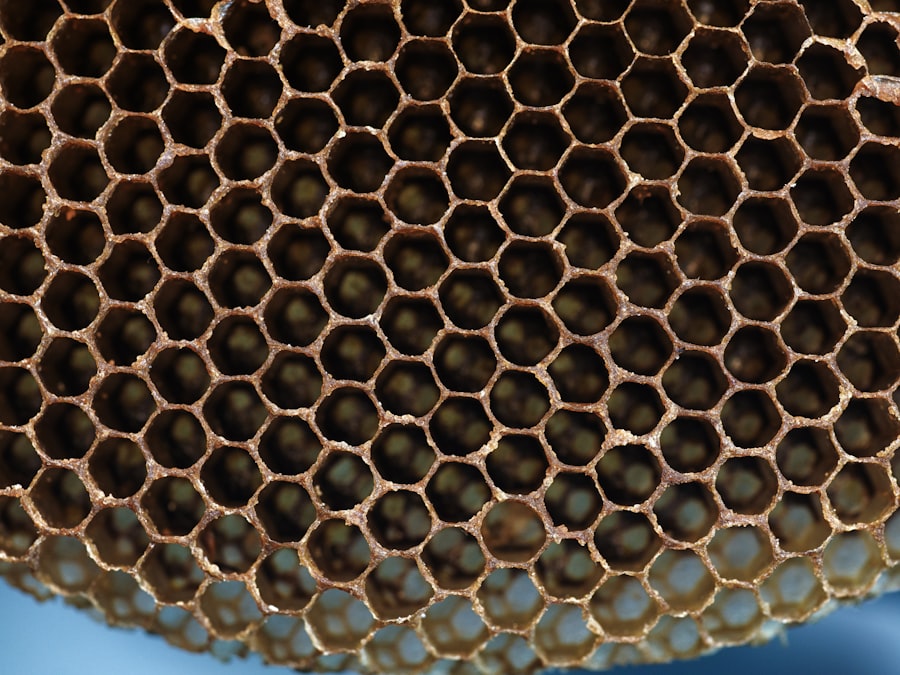
Despite the immense promise, the “forging” of carbon nanotubes from laboratory curiosity to widespread application is not without significant challenges. These hurdles are akin to the difficulties a smith faces in perfecting a new alloy or a complex design.
Scale-Up and Production Cost: From Lab to Industry
Current methods for producing high-quality carbon nanotubes are often expensive and difficult to scale up to industrial production levels. Achieving uniform quality and chirality across large batches remains a significant challenge. The cost of raw materials, energy consumption, and the intricate synthesis processes contribute to the high price per gram, hindering widespread adoption.
Purity and Separation: Isolating the Desired Structure
Synthesized CNTs often come as a heterogeneous mixture, containing various diameters, chiralities, and structural defects, along with residual catalyst particles. Separating and purifying nanotubes to obtain specific types (e.g., purely semiconducting or metallic SWCNTs with a specific chirality) is an active area of research and a major bottleneck for advanced applications. Imagine a smith trying to separate and refine tiny, specific grains of metal from a large, mixed ore.
Integration and Alignment: Building with Nanotubes
Incorporating individual nanotubes into macroscopic devices or materials in a controlled and aligned manner is crucial for realizing their full potential. Randomly oriented or aggregated nanotubes often fail to exhibit the superior properties observed in individual tubes. Developing effective methods for self-assembly, patterning, and integration into complex architectures is a critical challenge.
Toxicity and Environmental Impact: Responsible Nanotechnology
Like any novel material, the potential health and environmental impacts of carbon nanotubes require careful consideration. Research on their toxicology is ongoing, and concerns regarding their potential to cause lung inflammation or other adverse health effects, particularly for certain types and sizes, demand robust safety protocols and comprehensive environmental assessments.
Ancient smiths were known for their remarkable ability to manipulate materials, and recent studies suggest that they may have inadvertently created carbon nanotubes during their metalworking processes. This fascinating discovery sheds light on the advanced techniques used by these artisans long before modern science understood the properties of nanomaterials. For a deeper exploration of this topic, you can read more in the article found at this link, which delves into the historical context and implications of such findings.
The Future Foundry: Applications and Beyond
| Aspect | Details |
|---|---|
| Time Period | Ancient times (pre-20th century) |
| Material Used | Iron, carbon-rich ores, charcoal |
| Process | High-temperature forging and smelting in charcoal furnaces |
| Temperature Range | Approximately 800°C to 1200°C |
| Carbon Source | Charcoal and carbon deposits from smelting |
| Formation Mechanism | Carbon atoms diffusing into iron particles, forming tubular carbon structures |
| Evidence | Microscopic analysis of ancient Damascus steel showing carbon nanotube-like structures |
| Significance | Enhanced strength and flexibility of ancient blades |
Despite the challenges, the trajectory of carbon nanotube research and development points towards a future where these remarkable structures play a pivotal role in numerous industries. The “future foundry” for CNTs is vast and diverse.
Advanced Composites: Lighter, Stronger, Smarter
The reinforcement capabilities of carbon nanotubes offer transformative potential for composites in aerospace, automotive, and sporting goods industries. Imagine aircraft components that are significantly lighter and more fuel-efficient, or self-healing materials that can repair themselves. This represents a paradigm shift in material design, much like the transition from wood to steel in construction.
Next-Generation Electronics: Smaller, Faster, More Efficient
Carbon nanotubes are poised to revolutionize electronics, from high-performance transistors and flexible displays to ultra-fast interconnects and advanced sensors. Their ability to conduct electricity with minimal heat generation could lead to more energy-efficient computing devices and smaller, more powerful electronic components.
Energy Storage and Conversion: Powering the Future
CNTs are being explored for applications in batteries, supercapacitors, and fuel cells due to their high surface area, excellent conductivity, and mechanical stability. They can enhance electrode performance, leading to faster charging, higher energy density, and longer-lasting energy storage solutions.
Biomedical Innovations: The Nanoscale Healers
In the biomedical field, carbon nanotubes show promise in applications such as drug delivery systems, biosensors, and tissue engineering. Their ability to interact with biological molecules and their high surface area make them ideal candidates for targeted drug delivery, allowing for more effective treatments with fewer side effects.
Environmental Remediation: Cleaning the World
Due to their high adsorption capacity and catalytic properties, CNTs are being investigated for environmental applications, including water purification, air filtration, and carbon capture. They could play a vital role in addressing pressing global environmental challenges.
In conclusion, the “forging” of carbon nanotubes is a testament to human ingenuity and the relentless pursuit of materials with extraordinary properties. While the challenges of consistent production, cost, and safety remain, the profound implications of these nanoscale marvels in diverse fields, from aerospace to medicine, paint a compelling picture of a future where carbon nanotubes, once a discovery in a microscopic field of view, become a cornerstone of technological advancement. The meticulous work of nanotech smiths continues, shaping the very building blocks of tomorrow.
FAQs
What are carbon nanotubes?
Carbon nanotubes are cylindrical molecules made of carbon atoms arranged in a hexagonal pattern. They have exceptional strength, electrical conductivity, and thermal properties, making them valuable in various modern applications.
How did ancient smiths create carbon nanotubes?
Ancient smiths unintentionally created carbon nanotubes through high-temperature processes such as forging and smelting iron. The extreme heat and carbon-rich environments facilitated the formation of these nanostructures within metal artifacts.
What evidence supports the presence of carbon nanotubes in ancient artifacts?
Scientific analyses, including electron microscopy and spectroscopy, have detected carbon nanotubes and other nanostructures in ancient metal objects, such as Damascus steel blades, indicating that these materials were formed during traditional smithing techniques.
Why is the discovery of carbon nanotubes in ancient artifacts significant?
The discovery shows that ancient metallurgists unknowingly produced advanced nanomaterials, which may explain the superior mechanical properties of some historical weapons and tools. It also provides insights into early materials science and nanotechnology.
Can modern techniques replicate the ancient methods of creating carbon nanotubes?
While modern methods for producing carbon nanotubes are more controlled and efficient, researchers study ancient smithing processes to understand natural formation mechanisms. This knowledge can inspire new synthesis techniques and improve material properties.