The intricate relationship between gears and clocks represents a foundational chapter in the history of technology and timekeeping. For millennia, humanity has been captivated by the passage of time, and the quest to measure and represent its relentless march has driven profound innovations. Among these, the development and integration of gears stands as a pivotal achievement, transforming nascent ideas of temporal measurement into precise and reliable mechanical instruments. This article delves into the ancient origins of this connection, exploring the conceptual leaps, technological advancements, and cultural impact of gears in the evolution of clocks. By examining the historical trajectory, one can discern how a seemingly simple mechanical component became an indispensable element in the pursuit of temporal accuracy.
The human perception of time is inherently linked to natural cycles. The rhythm of day and night, the phases of the moon, and the changing seasons provided the earliest frameworks for understanding chronology. However, these natural phenomena, while reliable over long periods, lacked the precision required for daily activities, agricultural planning, or astronomical observation. Early civilizations thus sought methods to subdivide these natural cycles into smaller, more manageable units.
Sundials and Water Clocks
The earliest known instruments for measuring time were largely analog and relied on observed phenomena. Sundials, utilizing the sun’s shadow, provided a visual representation of the time of day, though their accuracy was limited by weather conditions and the sun’s position throughout the year.
- Shadow Play: The principle of the sundial is elegantly simple: a gnomon casts a shadow whose position and length change as the sun moves across the sky. While effective for daylight hours, sundials were rendered useless after sunset.
- Water’s Flow: Water clocks, or clepsydrae, offered a continuous measurement of time, independent of daylight. These devices operated on the principle of regulated water flow, either emptying from a calibrated vessel or filling one. The earliest examples date back to ancient Egypt and Babylon. While providing a more consistent measure than sundials, clepsydrae suffered from varying flow rates due to pressure changes and evaporation, limiting their precision.
The Dawn of Mechanical Innovation
The limitations of sundials and water clocks spurred innovation. Humanity yearned for a device that could mechanically embody the continuous, uniform passage of time. This aspiration laid the groundwork for the eventual integration of gears. The conceptual leap from observing natural cycles to constructing artificial mechanisms that mimicked these cycles was monumental.
The fascinating connection between ancient gears and the development of clocks is explored in detail in the article found at Real Lore and Order. This piece delves into how early mechanical devices utilized intricate gear systems, paving the way for the sophisticated timekeeping mechanisms we rely on today. By examining historical artifacts and their engineering, the article highlights the ingenuity of ancient civilizations in their quest to measure time accurately.
The Genesis of Gearing Principles
While not initially conceived for timekeeping, the fundamental principles of gearing have roots in ancient mechanics. The ability to transmit motion, change speed, and alter direction using interlocking toothed wheels was a critical step towards complex machinery.
Early Traction and Transmission
The earliest known applications of gears were not in timekeeping but in practical devices designed to harness power and facilitate work. These primitive gears were often crude, carved from wood, and served primarily to multiply force or change the axis of rotation.
- Leverage and Levers: Before gears, the lever was the primary tool for mechanical advantage. However, levers had limitations in terms of continuous motion and cumulative force transmission. Gears provided a solution to these limitations, enabling a train of forces to be sustained and amplified.
- Archimedes’ Contributions: Ancient Greek mathematicians and engineers, most notably Archimedes, are credited with some of the earliest theoretical and practical explorations of gearing. While specific clock applications are not attributed to him, his work on levers, pulleys, and the potential of interconnected mechanisms laid crucial groundwork. His mechanical devices, such as the Archimedes’ Screw, demonstrated a sophisticated understanding of mechanical advantage and motion transfer.
The Antikythera Mechanism: A Precursor to Clockwork
The Antikythera Mechanism, an astonishing artifact recovered from a shipwreck off the coast of Greece, stands as a testament to the advanced understanding of gearing in the ancient world. Dating back to the 2nd century BCE, this complex device is often hailed as the world’s first analog computer.
- Astronomical Calculation: The mechanism was designed to calculate and display astronomical positions, including the movements of the moon and sun, and likely predict eclipses. Its intricate arrangement of differential gears allowed for the sophisticated modeling of celestial mechanics.
- Precision and Complexity: The Antikythera Mechanism contained at least 30 intricately cut bronze gears, demonstrating a level of precision machining hitherto unsuspected for that era. The sheer number and arrangement of these gears point to a profound knowledge of gear ratios and their application in modeling complex, non-uniform motion. This device, while not a clock in the modern sense, embodies the spirit of mechanical time-telling and prediction. It illustrated the immense potential of gears to represent and compute temporal relationships.
The Medieval Emergence of Mechanical Clocks
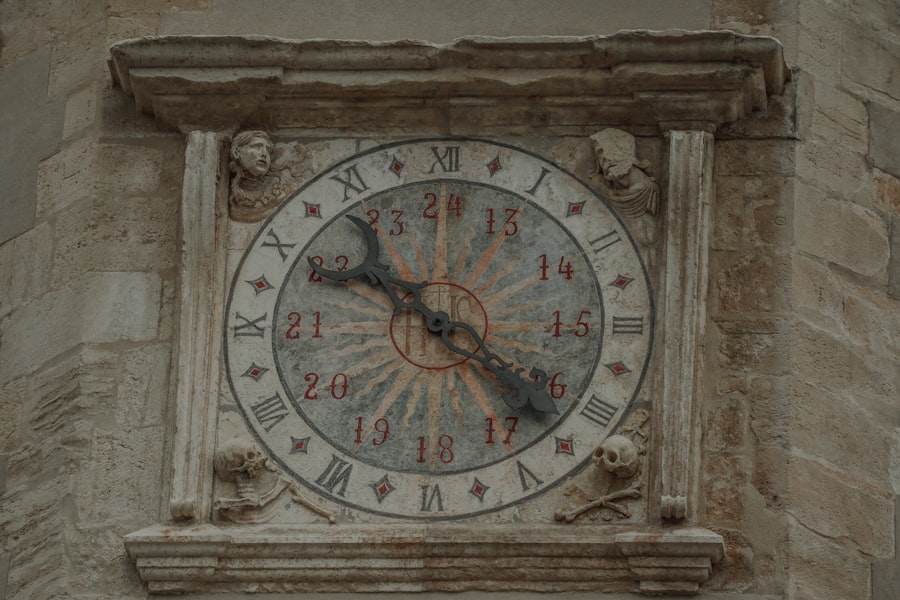
The conceptual seeds sown in antiquity began to blossom in the medieval period, particularly in Europe. The monastic orders, driven by the need for precise prayer times, played a significant role in fostering the development of mechanical clocks.
Monastic Precision and Astronomical Pursuits
The monastic horarium demanded accurate timekeeping, a need that existing methods struggled to satisfy. This practical imperative, combined with a burgeoning interest in astronomy and mechanical ingenuity, provided fertile ground for innovation.
- Early Escapements: The critical breakthrough in mechanical clock design was the invention of the escapement mechanism. This device, usually in the form of a verge and foliot, converted the continuous rotational motion of a gear train into an oscillating motion, thereby regulating the release of stored energy. This rhythmic “escape” allowed for the controlled, incremental advancement of the clock’s hands, marking discrete units of time.
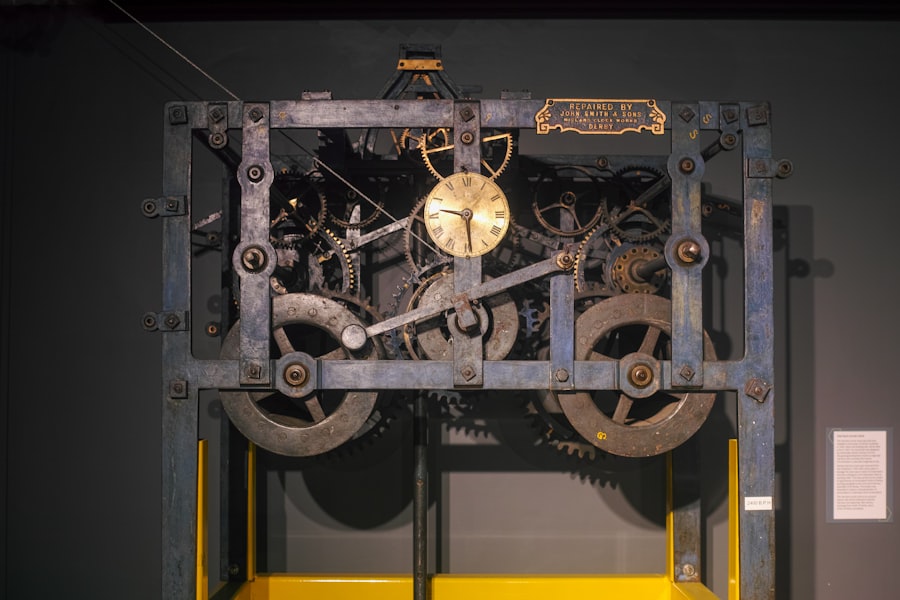
- Weight-Driven Systems: Early mechanical clocks were typically powered by falling weights. These weights, under the influence of gravity, provided a constant, albeit slowly diminishing, force to drive the gear train. The escapement’s role was to govern this gravitational pull, ensuring a uniform rate of descent and, consequently, a consistent time-keeping rhythm. The heavy weights were the clock’s heartbeat, and the gears its arteries and veins, transmitting life-giving motion throughout the system.
The Rise of Public Clocks
As mechanical clock technology matured, these devices began to move from the confines of monasteries to public spaces, adorning cathedrals and town halls. These nascent public clocks were not merely time-measuring instruments; they were statements of civic pride and technological prowess.
- Striking Mechanisms: Many early public clocks incorporated striking mechanisms, often large bells that would chime on the hour. This audible indication of time made the clock’s function accessible to a broader populace, even those without direct sight of the clock face. These striking mechanisms relied heavily on specialized gear trains to count the hours and activate the hammers at the appropriate moments.
- Astrolabe Clocks: Some of the most sophisticated medieval clocks incorporated astrolabe-like dials, displaying not only the time of day but also astronomical phenomena such as the positions of the sun, moon, and stars, and even zodiacal information. These complex displays were entirely dependent on intricate gear trains, demonstrating a magnificent synergy between mechanical engineering and astronomical understanding. The gears were the silent orchestrators of this celestial ballet, translating cosmic movements into mechanical oscillations.
Renaissance Refinement and Miniaturization
The Renaissance period witnessed a significant refinement of mechanical clock technology. The artistic and scientific fervor of the era drove improvements in precision, aesthetics, and the eventual miniaturization of clocks.
Spring Power and Portability
A major innovation of the Renaissance was the development of the mainspring, which offered an alternative power source to falling weights. This seemingly simple change had profound implications for clock design.
- Compact Design: Unlike weights, springs could be coiled within a compact casing, dramatically reducing the size of clocks. This innovation paved the way for portable clocks and, eventually, personal timepieces.
- The Fusee Mechanism: Early mainsprings delivered uneven power as they unwound. To address this, the fusee was invented – a cone-shaped pulley connected by a chain to the mainspring barrel. As the spring unwound and its power decreased, the chain would pull on a progressively larger diameter of the fusee, effectively evening out the torque transmitted to the gear train. This ingenious mechanism underscored the increasing sophistication of gear-based solutions to mechanical challenges.
The Pendulum and Isochronism
The greatest leap in accuracy during this period came with the application of the pendulum as a timekeeping element, an idea attributed to Galileo Galilei and practically realized by Christiaan Huygens.
- Galileo’s Insight: Galileo observed the isochronism of the pendulum – that its swing time remains relatively constant regardless of the amplitude of its arc, within certain limits. He recognized its potential as a time regulator.
- Huygens’ Clock: Christiaan Huygens successfully integrated the pendulum with a mechanical clock in 1656. The pendulum, with its precise and consistent oscillations, provided a far more accurate regulating element than the pre-existing verge and foliot escapement. This innovation, coupled with refined gear trains, dramatically improved the precision of clocks, reducing hourly errors from minutes to fractions of a minute. The pendulum became the conductor orchestrating the silent symphony of the gears, dictating their precise rhythm.
The fascinating relationship between ancient gears and the development of clocks highlights the ingenuity of early civilizations in their quest to measure time. Researchers have uncovered evidence that intricate gear systems, used in various ancient devices, laid the groundwork for the mechanical clocks we rely on today. For a deeper exploration of this intriguing connection, you can read more in this insightful article about the evolution of timekeeping technology. Check it out here.
The Enduring Legacy of Gears in Timekeeping
| Aspect | Ancient Gears | Clocks | Connection |
|---|---|---|---|
| Origin Period | Circa 3rd century BCE | Circa 13th century CE | Ancient gears laid the mechanical foundation for clock mechanisms |
| Primary Material | Bronze and wood | Brass and steel | Material evolution improved durability and precision |
| Function | Transmission of motion and force | Measurement and display of time | Gears enabled controlled, precise movement in clocks |
| Complexity | Simple gear trains | Complex gear trains with escapements | Escapement mechanisms evolved from basic gear interactions |
| Notable Example | Antikythera Mechanism | Medieval mechanical clocks | Antikythera Mechanism is an early example of geared timekeeping |
| Accuracy | Low precision | Improved precision with escapements | Gears allowed incremental improvements in timekeeping accuracy |
From rudimentary wooden gears in ancient agricultural machines to the microscopic precision gears in modern watches, their role in timekeeping has been continuously refined but never supplanted. The journey from the Antikythera Mechanism’s sophisticated yet power-intensive gears to the compact, efficient gear trains of contemporary timepieces reflects a remarkable trajectory of technological evolution.
Precision and Durability
Modern mechanical watches and clocks continue to rely on intricate gear trains for their operation. The emphasis has shifted towards materials science, lubrication, and manufacturing processes that yield unprecedented levels of precision and durability.
- Material Science: The transition from wooden gears to brass, and then to steel and even synthetic materials, reflects a constant pursuit of durability and low friction. The properties of these materials directly impact the longevity and accuracy of the clock mechanism.
- Computer-Aided Design (CAD): Contemporary gear design utilizes advanced computer modeling, allowing for optimization of tooth profiles, reduction of friction, and maximization of power transmission efficiency. This ensures that every rotation is as smooth and precise as possible.
The Digital Age and Mechanical Endearment
Even in an era dominated by digital timekeeping and atomic clocks, the mechanical clock, a direct descendant of those ancient geared mechanisms, holds a unique and revered place. Its continued presence is a testament to the enduring fascination with intricate mechanical artistry and the tangible representation of time’s passage.
- Horological Artistry: High-end mechanical watches are not merely instruments; they are works of art, meticulously crafted by skilled artisans. The visible movement of gears, springs, and escapements provides a captivating spectacle, a tiny world of synchronized motion.
- The Metaphor of Gearing: The very concept of “gearing up” for a task or “well-oiled gears” working together has entered the lexicon, a testament to the powerful metaphor of interconnected, purposeful motion that gears embody. They represent efficiency, collaboration, and the smooth operation of complex systems.
The story of gears and clocks is a narrative of human ingenuity, a relentless pursuit of understanding and mastering the elusive concept of time. From the first crude attempts to quantify fleeting moments to the hyper-accurate devices of today, gears have been the silent, essential architects of temporal measurement. They have transformed the abstract into the tangible, allowing humanity to not merely observe time, but to hold it, measure it, and ultimately, to orchestrate its flow within the confines of a mechanical marvel. The next time you glance at a clock, consider the ancient lineage of interconnected wheels silently working in harmony, echoing millennia of human endeavor to capture the rhythm of existence.
FAQs
What is the historical significance of ancient gears in the development of clocks?
Ancient gears were crucial in the evolution of timekeeping devices. They allowed for the precise transfer of motion and control of speed, which enabled early clockmakers to create mechanisms that could measure time more accurately than previous methods like sundials or water clocks.
How did ancient civilizations contribute to the invention of gears used in clocks?
Ancient civilizations such as the Greeks, Romans, and Chinese developed early gear systems for various machines. The Antikythera mechanism, an ancient Greek device, is one of the earliest known examples of complex gears used to track astronomical cycles, demonstrating the foundational technology that later influenced clockmaking.
What materials were commonly used to make gears in ancient clocks?
Ancient gears were typically made from materials like wood, bronze, and iron. Bronze was especially favored for its durability and resistance to corrosion, making it suitable for the intricate and precise components required in early clock mechanisms.
How do gears improve the accuracy of clocks?
Gears regulate the movement of clock hands by controlling the speed and direction of rotation. By interlocking gears with specific ratios, clockmakers can ensure that the hands move at consistent and precise intervals, which is essential for accurate time measurement.
Are modern clocks still influenced by the gear mechanisms developed in ancient times?
Yes, modern mechanical clocks and watches still rely on the fundamental principles of gear mechanisms developed in ancient times. Although materials and manufacturing techniques have advanced, the basic concept of using gears to control and measure time remains central to mechanical timekeeping devices.