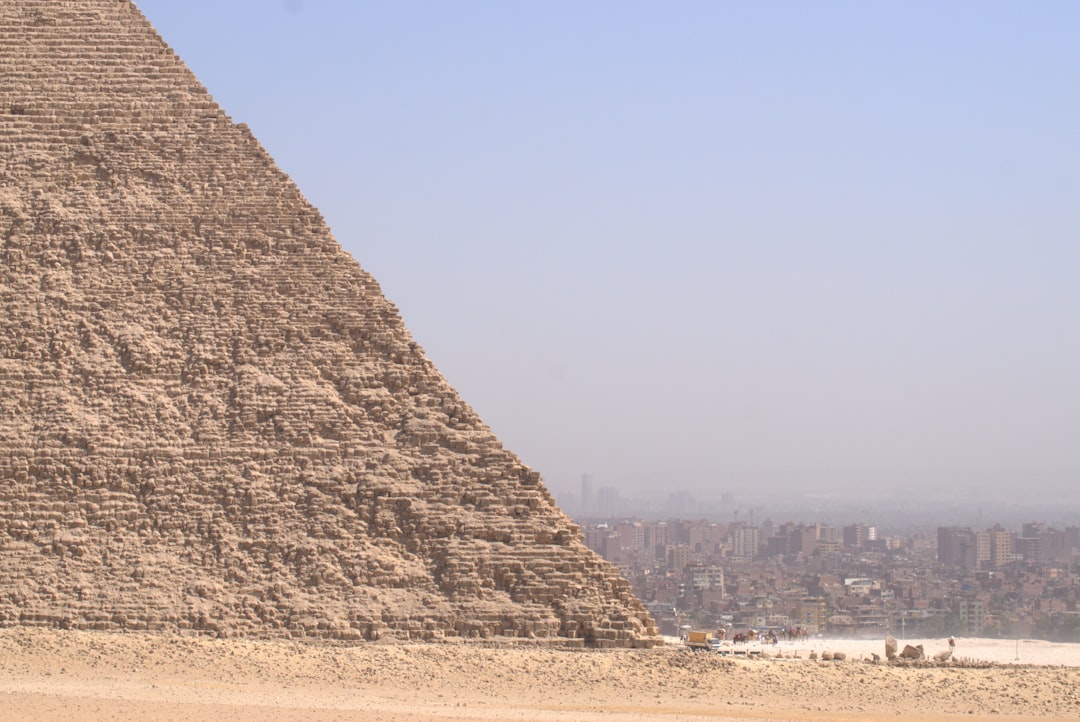
The construction of the ancient Egyptian pyramids stands as one of history’s most enduring and impressive feats of engineering. For millennia, these monumental structures have captivated the human imagination, inspiring countless theories regarding their creation. While the precise methods employed by the pyramid builders remain a subject of ongoing academic inquiry and debate, significant archaeological evidence and textual analysis have shed light on many aspects of their construction. This article delves into the various theories and established facts surrounding the erection of these colossal tombs, offering a comprehensive overview of the challenges faced and the ingenuity displayed by their ancient creators.
Before the iconic smooth-sided pyramids graced the Giza plateau, the architectural lineage of Egyptian burial structures underwent a significant evolution. Understanding these precursors is crucial for appreciating the developmental trajectory that culminated in the Great Pyramid of Giza.
Mastabas: The Genesis of Mortuary Architecture
The earliest forms of monumental tombs in ancient Egypt were known as mastabas. These rectangular, flat-topped structures with sloping sides were typically built of mud-brick or stone. They housed a subterranean burial chamber and an offering chapel above ground, signifying a nascent desire for prominent and lasting resting places for the elite. Mastabas served as the primary burial structures during the Early Dynastic Period (c. 3100–2686 BCE) and continued to be used for non-royal burials well into later periods. The internal architecture of these structures, with their network of shafts and chambers, laid the groundwork for more complex subterranean systems found in later pyramids.
Imhotep’s Innovation: The Step Pyramid of Djoser
The reign of King Djoser (c. 2670–2640 BCE) of the Third Dynasty marked a pivotal moment in pyramid construction. His vizier, Imhotep, is credited with conceptualizing and executing the world’s first large-scale stone building, the iconic Step Pyramid at Saqqara. This structure was not a sudden invention but rather a series of mastabas progressively stacked one upon another, each smaller than the one below, forming a colossal stairway to the heavens.
The Revolutionary Use of Stone
Prior to the Step Pyramid, most major architectural projects relied heavily on mud-brick. Imhotep’s decision to use cut stone on such an unprecedented scale represented a monumental leap in architectural technology. The quarrying, dressing, and transportation of thousands of tons of limestone for this complex project fundamentally altered the course of Egyptian monumental building.
Functional and Symbolic Significance
The Step Pyramid complex was far more than just a tomb. It was a sprawling necropolis encompassing temples, courts, and subsidiary tombs, all enclosed within a massive perimeter wall. Its design was intended to replicate and solidify Djoser’s spiritual journey to the afterlife, acting as a cosmic ladder for the pharaoh’s ascension. The transition from the simple mastaba to the multi-tiered step pyramid demonstrates a growing mastery of engineering principles and a profound understanding of the symbolic power of architecture.
The construction of the pyramids has long fascinated historians and archaeologists, leading to various theories about how these monumental structures were built. For an in-depth exploration of the techniques and tools that may have been used in the construction of the pyramids, you can read a related article that delves into the latest research and discoveries in this field. Check it out here: How the Pyramids Were Really Built.
The Quest for Perfection: Smooth-Sided Pyramids of the Old Kingdom
The architectural evolution initiated by Djoser’s Step Pyramid culminated in the smooth-sided, geometrically perfect pyramids of the Fourth Dynasty, particularly those at Giza. This period is often regarded as the ‘Golden Age’ of pyramid construction, characterized by unparalleled precision and scale.
The Bent Pyramid and the Meidum Pyramid: Learning Through Iteration
The path to the perfect pyramid was not without its trials and errors. King Sneferu, the father of Khufu, is credited with building several pyramids that illustrate this learning curve. The Meidum Pyramid, initially a step pyramid, was later modified to have smooth sides, a transformation that ultimately led to its partial collapse, though the exact timing and reasons for this collapse are debated.
Engineering Challenges and Design Adjustments
The Bent Pyramid at Dashur, also attributed to Sneferu, stands as a testament to the challenges faced by pyramid builders. It exhibits a distinct change in angle partway up its structure, transitioning from a steeper inclination to a shallower one. This alteration is generally believed to have been a pragmatic response to structural instability observed during construction, perhaps due to the increasing weight on a less-than-stable foundation or calculations of the angle being too steep for the chosen materials and techniques. It exemplifies the empirical approach taken by the ancient Egyptians in their monumental undertakings – learning and adapting as they built.
The Great Pyramids of Giza: Apex of Engineering Achievement
The pyramids of Khufu, Khafre, and Menkaure at Giza represent the pinnacle of ancient Egyptian pyramid construction. These structures are not merely tombs; they are enduring symbols of human ambition, organization, and sophisticated technical prowess.
Precision and Scale: A Statistical Marvel
The Great Pyramid of Khufu, standing originally at 146.6 meters (481 feet), comprises approximately 2.3 million blocks of stone, with an average weight of 2.5 tons each. Some of the larger granite blocks within the king’s chamber weigh upwards of 25 to 80 tons. The precision with which these massive blocks were cut, transported, and positioned, particularly given the tools available, continues to astound. The alignment of the pyramid to true north, with an astonishing degree of accuracy, further underscores the advanced astronomical and observational skills of the builders.
Material Sourcing and Transportation Logistics
The primary material for the bulk of the pyramids was local limestone quarried from the Giza plateau itself. However, finer quality Tura limestone for the outer casing was transported from quarries across the Nile, and massive granite blocks for the internal chambers came from Aswan, located over 800 kilometers (500 miles) to the south. The logistical challenge of moving these colossal stones, often over significant distances and up considerable inclines, was immense. This process likely involved a combination of barges on the Nile during the annual inundation, sledges pulled over lubricated tracks, and temporary ramps built against the pyramid’s sides.
Workforce and Organization: The Human Engine of Construction

The erection of the pyramids required an immense and highly organized workforce. Dispelling the myth of enslaved laborers, modern archaeological evidence suggests a more nuanced picture of the pyramid builders.
A Skilled and Dedicated Labor Force
Excavations at the “Workers’ Village” near Giza have revealed evidence of a well-provisioned and organized community of laborers. These were not enslaved people toiling under the whip, but rather skilled craftsmen, artisans, and conscripted agricultural workers who likely worked in rotating shifts during the agricultural off-season. Analysis of skeletal remains indicates that these workers received good diets, had access to medical care, and were buried with respect, suggesting a valued status within society.
Infrastructure and Support Systems
The sheer size of the workforce necessitated a sophisticated support infrastructure. This included bakeries, breweries, fishing industries, and even rudimentary medical facilities, all designed to sustain thousands of individuals. Detailed administrative records, though scarce, hint at the meticulous planning and resource allocation required to feed, house, and equip this vast labor force. The construction of the pyramids was, in essence, a national project that mobilized the resources and manpower of the entire kingdom.
Supervisory Roles and Project Management
The successful execution of such complex projects required an intricate hierarchy of command and expertise. Architects, master stonemasons, quarry supervisors, and thousands of laborers worked in concert, orchestrated by high-ranking officials of the pharaoh’s court. While specific names of many of these project managers are lost to history, the enduring monuments themselves stand as testaments to their organizational acumen. The coordination of material delivery, labor management, and the precise execution of architectural plans was a monumental task, akin to managing a modern mega-project in terms of its complexity.
The Ramp Debates: Unraveling the Lifting Mechanisms

Perhaps the most enduring mystery surrounding pyramid construction revolves around the methods used to lift and position the massive stone blocks, especially to the higher levels. While no definitive blueprint has yet been discovered, several theories involving ramps have been proposed and debated.
The Straight Ramp Theory
The simplest and perhaps oldest theory suggests the use of a single, long, straight ramp built against one face of the pyramid. As the pyramid grew, the ramp would be extended and raised. While feasible for lower levels, this theory faces significant challenges for the higher portions. A ramp reaching the top of the Great Pyramid, for example, would have to be incredibly long (estimated at over a mile) to maintain a workable gradient, requiring more material than the pyramid itself and presenting substantial structural stability issues.
Logistical Challenges of a Straight Ramp
The sheer volume of material needed for such a ramp, its continuous extension, and the logistical nightmare of hauling blocks up such a structure over its monumental length become increasingly impractical as the pyramid ascends. The space at the top of a straight ramp would also be severely restricted, making maneuvering and positioning of blocks incredibly difficult.
The Spiral Ramp Theory
Another prominent theory proposes a ramp that spiraled up the sides of the pyramid, possibly either hugging the masonry or extending outwards from it. This design would reduce the overall length of the ramp at any given point and allow for greater access to the working faces of the pyramid.
Internal Ramp Hypothesis
A more recent and compelling variation of the spiral ramp theory, based on anomalies detected within the Great Pyramid using microgravity measurements, suggests the possibility of an internal spiral ramp. This ramp would have been built within the body of the pyramid itself, perhaps exiting at corners where ramps could be temporarily externalized to turn. This theory offers several advantages, including protection from wind and weather, and a more gradual gradient for hauling blocks. However, it still presents challenges regarding the width of such a ramp for block maneuvering and the precise construction of such a complex internal structure.
The Frontal Ramps and Leveraging Systems
Some scholars suggest a combination of methods, primarily utilizing large frontal ramps for the lower and middle sections of the pyramid. For the towering upper sections, where ramp construction becomes increasingly impractical, theories involving leveraging systems, such as long wooden levers or ‘rocking machines,’ have been proposed.
Limited Archaeological Evidence
It is important to acknowledge that direct archaeological evidence for the specific type of ramp used is surprisingly scarce. The ramp structures, being temporary in nature, were likely dismantled after construction, their materials reused or lost to time. Therefore, much of the understanding regarding lifting mechanisms relies on theoretical modeling, experimental archaeology, and interpretations of limited textual and visual clues.
The construction of the pyramids has long fascinated historians and archaeologists, with numerous theories proposed about how these monumental structures were built. A compelling article that delves into this topic is available at Real Lore and Order, which explores various methods and technologies that could have been employed by the ancient Egyptians. By examining archaeological evidence and historical records, the article sheds light on the incredible ingenuity and labor that went into creating these iconic landmarks, challenging many of the traditional narratives surrounding their construction.
The Finishing Touches: Casing Stones and Internal Architecture
| Metric | Value/Estimate | Explanation |
|---|---|---|
| Number of Workers | 20,000 – 30,000 | Skilled laborers and seasonal workers involved in construction |
| Construction Time | 20 – 30 years | Estimated time to complete the Great Pyramid of Giza |
| Stone Blocks Used | Approximately 2.3 million | Limestone and granite blocks used in the Great Pyramid |
| Average Block Weight | 2.5 tons | Typical weight of limestone blocks |
| Transportation Method | Water transport and sledges | Blocks transported via Nile River and dragged on sledges |
| Ramp Types Hypothesized | Straight, Zigzag, Spiral | Various ramp designs proposed for moving blocks up the pyramid |
| Tools Used | Copper chisels, stone hammers, wooden sledges | Materials used for quarrying and shaping stones |
| Labor Organization | Teams and shifts | Workers organized into crews with specific tasks |
| Alignment Accuracy | Within 0.05 degrees | Precision of pyramid orientation to cardinal points |
Beyond the massive core structure, the pyramids were also adorned with meticulously crafted elements that contributed to their grandeur and functionality.
The Smooth Casing Stones
The Giza pyramids were originally sheathed in highly polished, precisely cut white Tura limestone casing stones. These stones gave the structures a brilliant, reflective surface that would have gleamed under the Egyptian sun, symbolizing the sun god Ra. Only a fraction of these casing stones remain today, particularly on the Pyramid of Khafre and at the base of Khufu’s pyramid. Their removal over centuries for use in other building projects has left the rougher core masonry exposed.
Precision and Aesthetics
The fitting of these casing stones was an engineering marvel in itself. They were cut with such precision that, in many instances, a razor blade could not be inserted between them. This level of accuracy not only contributed to their aesthetic appeal but also to the structural integrity of the pyramid, providing a protective outer shell.
Internal Chambers and Passageways
The internal architecture of the pyramids, particularly the Great Pyramid of Khufu, is complex and sophisticated. It includes intricate networks of passageways, grand galleries, ventilation shafts (whose precise original function is still debated), and multiple burial chambers (King’s Chamber, Queen’s Chamber, and the subterranean chamber).
Construction Challenges of Internal Spaces
Creating these internal voids within a massive solid structure posed unique construction challenges. The ceiling of the King’s Chamber, for example, is protected by five relieving chambers, designed to distribute the immense weight of the masonry above and prevent the chamber from collapsing. The precise alignment and construction of these internal features, often built before the surrounding masonry, speak volumes about the meticulous planning and advanced understanding of architectural principles possessed by the ancient builders.
In conclusion, the construction of the Egyptian pyramids represents a profound testament to ancient ingenuity, organizational prowess, and collective human effort. While certain aspects, such as the exact ramp systems, continue to fuel academic debate, the overarching picture that emerges is one of a highly skilled and dedicated workforce, guided by sophisticated planning and an evolving understanding of engineering and materials. The pyramids stand as silent monuments, echoing the voices of thousands of individuals who, through their labor and intellect, shaped the very landscape of human history and left an indelible mark on the world.

STOP: Why They Erased 50 Impossible Inventions From Your Textbooks
FAQs
1. How were the massive stones for the pyramids transported?
The massive stones used in pyramid construction were transported using a combination of sledges, rollers, and manpower. Workers likely dragged the stones on sledges over lubricated paths made slippery with water or mud to reduce friction.
2. What materials were used to build the pyramids?
The primary materials used in pyramid construction were limestone blocks for the core and casing stones, granite for certain interior chambers, and mortar to bind the stones together. The limestone was often quarried locally, while granite was transported from farther away.
3. How long did it take to build a pyramid?
Building a pyramid typically took around 20 years. This timeframe included quarrying, transporting, and assembling millions of stone blocks, as well as finishing the outer casing and internal chambers.
4. Who built the pyramids?
Contrary to popular myth, the pyramids were built by skilled laborers and craftsmen, not slaves. These workers were organized into teams and worked in rotating shifts, often during the Nile River’s flood season when farming was not possible.
5. What techniques were used to ensure the pyramids were precisely aligned?
Ancient Egyptians used advanced surveying techniques, including the use of the stars, the sun’s shadow, and simple tools like plumb bobs and leveling instruments, to align the pyramids accurately with the cardinal points and achieve precise geometric shapes.