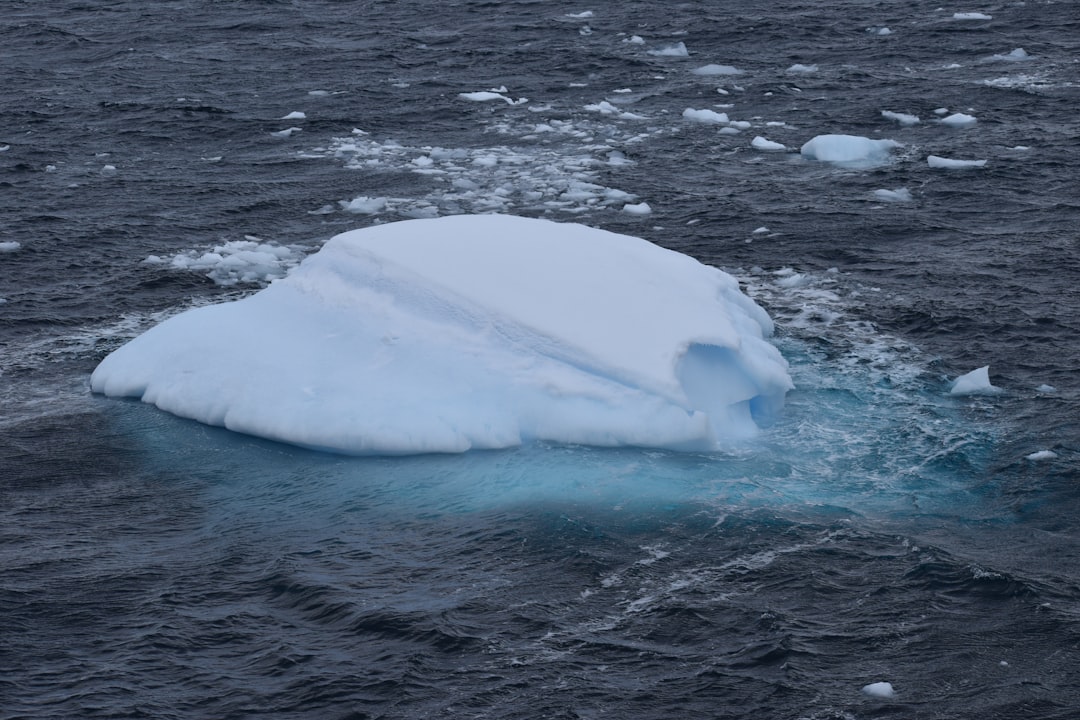
Icebergs are large masses of freshwater ice that detach from glaciers and drift in ocean waters, creating serious risks for ships and offshore facilities. Their unpredictable behavior and widespread distribution across vast ocean areas make iceberg detection an important focus for research and technology development. The primary challenges involve locating these ice formations, forecasting their movement patterns, and assessing their effects on the marine ecosystem.
Effective iceberg detection is essential for maritime safety and economic protection. Collisions with icebergs can cause severe maritime disasters, as demonstrated by the Titanic sinking in 1912.
Beyond safety risks, icebergs obstruct shipping lanes and harm commercial fishing operations. Consequently, developing accurate detection methods is vital for maintaining safe passage through polar and subpolar waters and protecting regional economies. Acoustic arrays represent one of the most effective detection technologies available, providing superior sensitivity and detection range compared to alternative methods.
The treacherous waters of the Drake Passage are known for their unpredictable weather and challenging navigation.
Key Takeaways
- Acoustic arrays play a crucial role in detecting icebergs by using sound waves to identify their presence underwater.
- They offer advantages such as real-time monitoring, high accuracy, and the ability to operate in harsh weather conditions.
- Despite their benefits, acoustic arrays face challenges like signal interference and limited range in complex marine environments.
- Recent technological advancements have enhanced the sensitivity and reliability of acoustic arrays for iceberg detection.
- Continued research, collaboration, and innovation are essential to improve iceberg detection, benefiting environmental safety and economic activities.
The Role of Acoustic Arrays in Iceberg Detection
Acoustic arrays play a pivotal role in modern iceberg detection systems. These sophisticated devices utilize sound waves to detect underwater objects, including icebergs, by analyzing the echoes that bounce back from them. The ability to operate effectively in challenging marine environments makes acoustic arrays particularly valuable for iceberg monitoring.
Unlike traditional visual or radar-based detection methods, which can be limited by weather conditions or visibility, acoustic systems can function in darkness and adverse weather, providing a more reliable means of identifying icebergs. The deployment of acoustic arrays has revolutionized the way researchers and maritime operators approach iceberg detection. By integrating these systems into existing maritime infrastructure, such as buoys or vessels, operators can continuously monitor large areas of ocean for the presence of icebergs.
This real-time data collection allows for timely warnings to be issued to ships in the vicinity, significantly enhancing navigational safety. Furthermore, acoustic arrays can contribute to scientific research by providing valuable data on iceberg behavior and movement patterns, which can inform future predictive models.
How Acoustic Arrays Work

Acoustic arrays operate on the principle of sonar technology, which involves emitting sound waves into the water and listening for their reflections.
The time it takes for the sound waves to return provides information about the distance to the object, while the characteristics of the returned signal can reveal details about its size and shape.
The design of acoustic arrays can vary significantly depending on their intended application. Some systems consist of a single hydrophone, while others may involve multiple hydrophones arranged in a specific configuration to enhance detection capabilities. By analyzing the phase differences between signals received at different hydrophones, researchers can triangulate the position of an iceberg with remarkable accuracy.
Additionally, advanced signal processing techniques allow for the filtering of background noise, improving the clarity of the data collected.
Advantages of Using Acoustic Arrays for Iceberg Detection
One of the primary advantages of using acoustic arrays for iceberg detection is their ability to operate effectively in a wide range of environmental conditions. Unlike optical systems that may struggle in foggy or dark conditions, acoustic arrays can penetrate water and provide reliable data regardless of visibility. This capability is particularly crucial in polar regions where icebergs are often shrouded in mist or darkness.
Moreover, acoustic arrays offer a high level of sensitivity, allowing them to detect even small icebergs that might otherwise go unnoticed. This sensitivity is essential for early warning systems that aim to prevent collisions with vessels. Additionally, acoustic arrays can cover vast areas of ocean with relatively few installations, making them a cost-effective solution for monitoring large maritime regions.
Their ability to provide continuous data streams also enables real-time monitoring, which is invaluable for both safety and research purposes.
Challenges and Limitations of Acoustic Arrays
| Metric | Description | Typical Value / Range | Unit | Notes |
|---|---|---|---|---|
| Detection Range | Maximum distance at which iceberg can be detected | 1,000 – 5,000 | meters | Varies with array size and environmental conditions |
| Frequency Band | Operating frequency range of acoustic sensors | 1 – 10 | kHz | Lower frequencies penetrate water better but have lower resolution |
| Array Element Count | Number of hydrophones in the acoustic array | 16 – 64 | elements | Higher count improves spatial resolution |
| Beamforming Resolution | Angular resolution of the array’s beamforming capability | 1 – 5 | degrees | Depends on array geometry and frequency |
| Signal-to-Noise Ratio (SNR) | Ratio of signal power to background noise | 20 – 40 | dB | Higher SNR improves detection reliability |
| Update Rate | Frequency of data refresh or detection updates | 1 – 10 | Hz | Higher rates allow for real-time monitoring |
| Power Consumption | Energy usage of the detection system | 50 – 200 | Watts | Depends on system size and processing requirements |
| False Alarm Rate | Frequency of incorrect iceberg detections | 0.01 – 0.1 | alarms/hour | Lower rates indicate better system accuracy |
Despite their many advantages, acoustic arrays are not without challenges and limitations. One significant issue is the potential for background noise interference from marine life, weather conditions, and human activities such as shipping traffic. These factors can complicate signal interpretation and may lead to false positives or missed detections.
Researchers must continually refine their signal processing techniques to mitigate these challenges and improve the accuracy of detections. Another limitation is related to the physical characteristics of icebergs themselves. While acoustic arrays can detect large ice masses effectively, smaller or submerged portions of icebergs may evade detection due to their size or orientation.
Additionally, variations in water temperature and salinity can affect sound propagation, leading to discrepancies in distance measurements. Addressing these limitations requires ongoing research and technological advancements to enhance the reliability and effectiveness of acoustic detection systems.
Recent Technological Advancements in Acoustic Arrays

Recent years have seen significant advancements in acoustic array technology that have improved their performance for iceberg detection. Innovations in hydrophone design have led to increased sensitivity and reduced noise levels, allowing for clearer signal reception even in challenging environments. Furthermore, developments in digital signal processing algorithms have enhanced the ability to filter out background noise and improve detection accuracy.
The integration of machine learning techniques into acoustic array systems has also shown promise in advancing iceberg detection capabilities. By training algorithms on large datasets of acoustic signals, researchers can develop models that better distinguish between icebergs and other underwater objects or noise sources. This approach not only improves detection rates but also reduces the time required for data analysis, enabling quicker responses to potential hazards.
Case Studies of Successful Iceberg Detection Using Acoustic Arrays
Several case studies illustrate the successful application of acoustic arrays in iceberg detection efforts around the world. One notable example occurred off the coast of Greenland, where researchers deployed an array of hydrophones to monitor iceberg movements in real-time. The system successfully detected multiple icebergs as they calved from glaciers and drifted into shipping lanes, providing critical data that allowed vessels to adjust their routes accordingly.
Another case study involved a collaborative project between maritime authorities and research institutions in Canada’s Arctic region. By utilizing an advanced acoustic array system, researchers were able to track iceberg movements over an extended period, gathering valuable information on their behavior and interactions with ocean currents. This data not only enhanced navigation safety but also contributed to scientific understanding of climate change impacts on glacial dynamics.
Future Developments and Applications of Acoustic Arrays in Iceberg Detection
Looking ahead, the future of acoustic arrays in iceberg detection appears promising as technology continues to evolve. Researchers are exploring new materials and designs that could further enhance sensitivity and reduce costs associated with deployment and maintenance. Additionally, advancements in autonomous underwater vehicles (AUVs) equipped with acoustic sensors may enable more flexible and comprehensive monitoring capabilities.
Beyond traditional iceberg detection applications, there is potential for acoustic arrays to contribute to broader environmental monitoring efforts. For instance, integrating these systems with other sensing technologies could provide a more holistic view of marine ecosystems affected by climate change. This interdisciplinary approach could lead to innovative solutions for managing maritime safety while simultaneously addressing environmental concerns.
Environmental and Economic Impact of Improved Iceberg Detection
The environmental and economic implications of improved iceberg detection are significant. Enhanced detection capabilities can lead to safer navigation routes for commercial shipping vessels, reducing the risk of accidents that could result in environmental disasters such as oil spills or loss of marine life. By preventing collisions with icebergs, shipping companies can also avoid costly damages and delays associated with accidents.
Moreover, improved iceberg detection contributes to scientific research on climate change and its effects on polar regions. Understanding iceberg dynamics is crucial for predicting sea-level rise and its potential impacts on coastal communities worldwide. As such, investments in advanced detection technologies not only promote maritime safety but also support broader environmental sustainability efforts.
Collaborative Efforts and Partnerships in Advancing Iceberg Detection Technology
Collaboration among various stakeholders is essential for advancing iceberg detection technology effectively. Partnerships between government agencies, research institutions, and private companies have proven beneficial in pooling resources and expertise to develop innovative solutions. For instance, joint initiatives have led to the establishment of shared databases that facilitate data exchange among researchers studying iceberg behavior.
International cooperation is also vital given that icebergs do not adhere to national boundaries; they drift across international waters where multiple countries may have interests at stake. Collaborative efforts can help standardize detection protocols and share best practices among nations facing similar challenges related to iceberg monitoring.
The Importance of Continued Research and Innovation in Iceberg Detection
In conclusion, continued research and innovation in iceberg detection technology are imperative as climate change alters glacial dynamics and increases the prevalence of icebergs in maritime routes. Acoustic arrays represent a significant advancement in this field, offering reliable detection capabilities that enhance safety for vessels navigating icy waters while contributing valuable data for scientific research. As technology evolves and new challenges emerge, it is crucial for stakeholders across sectors to invest in developing more sophisticated detection systems that can adapt to changing conditions.
By fostering collaboration among researchers, industry leaders, and policymakers, society can ensure that it remains prepared for the challenges posed by icebergs while safeguarding both human lives and marine ecosystems.
Acoustic arrays have emerged as a pivotal technology in iceberg detection systems, enhancing maritime safety and navigation. For a deeper understanding of the advancements in this field, you can explore a related article that discusses various detection methods and their applications in real-world scenarios. Check it out here: Related Article on Acoustic Arrays.
WATCH THIS! 🚢 The Red Sea is burning. Panama is drying up. And the Drake Passage
FAQs
What are acoustic arrays used for in iceberg detection?
Acoustic arrays are used to detect and monitor icebergs by capturing and analyzing sound waves reflected or emitted by the icebergs underwater. These arrays help in identifying the location, size, and movement of icebergs to ensure maritime safety.
How do acoustic iceberg detection systems work?
Acoustic iceberg detection systems use multiple underwater microphones (hydrophones) arranged in an array to detect sound signals. By measuring the time differences and characteristics of the received sounds, the system can locate and track icebergs beneath the water surface.
What are the advantages of using acoustic arrays for iceberg detection?
Acoustic arrays provide continuous, real-time monitoring regardless of weather or visibility conditions. They can detect icebergs submerged underwater, which are not visible to radar or optical sensors, improving early warning capabilities for ships and offshore installations.
Where are acoustic iceberg detection systems typically deployed?
These systems are commonly deployed in polar and subpolar regions, especially in shipping lanes, near offshore oil and gas platforms, and in areas prone to iceberg presence to enhance navigation safety and environmental monitoring.
Can acoustic arrays differentiate between icebergs and other underwater objects?
Yes, acoustic systems analyze the unique acoustic signatures and echo patterns of icebergs, which differ from marine life, vessels, or seabed features, allowing for accurate identification and classification.
What challenges are associated with acoustic iceberg detection?
Challenges include background noise from marine life and human activities, varying water conditions affecting sound propagation, and the complexity of interpreting acoustic data accurately in dynamic ocean environments.
Are acoustic iceberg detection systems integrated with other technologies?
Often, acoustic arrays are combined with radar, satellite imagery, and sonar systems to provide comprehensive iceberg monitoring, enhancing detection accuracy and situational awareness.
How does the size of an iceberg affect acoustic detection?
Larger icebergs typically produce stronger and more distinct acoustic signals, making them easier to detect. Smaller icebergs or ice fragments may require more sensitive equipment and advanced signal processing techniques.
What is the typical range of an acoustic iceberg detection system?
The detection range varies depending on the system design, environmental conditions, and frequency used but generally ranges from several hundred meters to a few kilometers underwater.
Who uses acoustic iceberg detection systems?
Users include maritime shipping companies, offshore oil and gas operators, research institutions, and governmental agencies responsible for maritime safety and environmental protection.