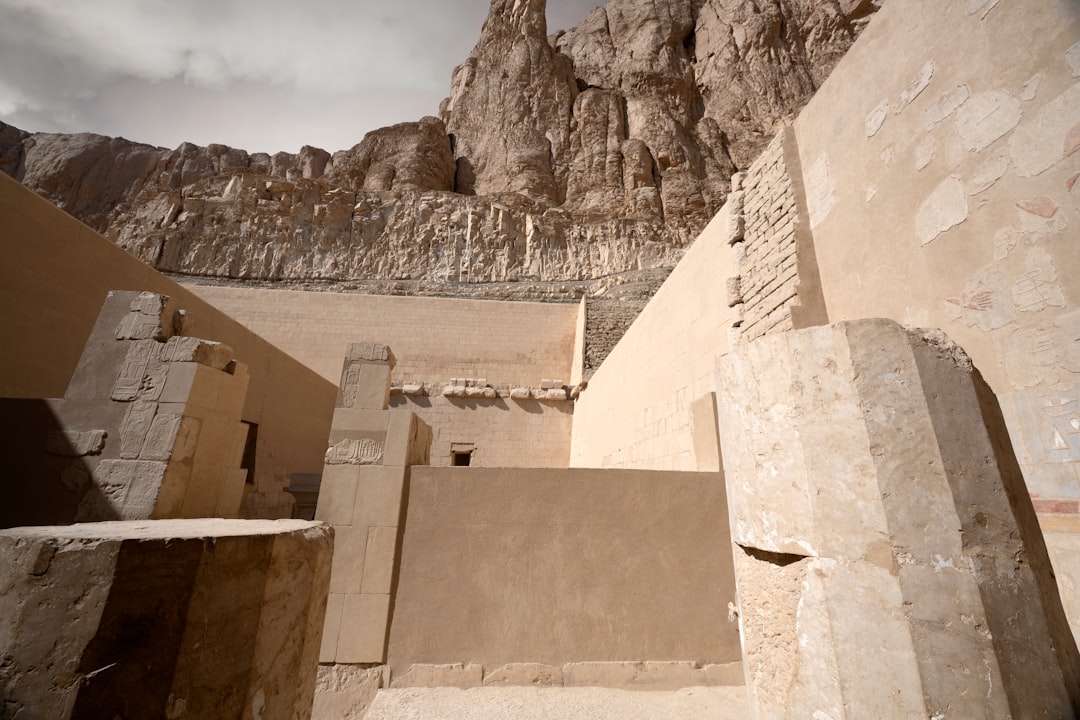
He watches as the trowel, a sliver of steel against the ochre earth, meticulously scrapes away centuries of accumulated dust. The air, thick with the scent of dry soil and the distant hum of the modern world, feels charged with an unspoken anticipation. For the archaeologist, this isn’t just digging; it’s a careful negotiation with time, each grain of sand a whisper from the past. These moments, these delicate revelations, are the bedrock of our understanding of human history, the tangible threads that weave our collective narrative. This article delves into some of the most significant archaeological breakthroughs, instances where the earth itself yielded secrets that reshaped our perception of ancient civilizations and the human journey.
The discovery of the Rosetta Stone stands as a titanic achievement in unlocking the mysteries of the ancient world. Without its pivotal role, the grand pronouncements etched into temple walls and inscribed on papyri across Egypt might have remained an indecipherable enigma, a silent testament to a forgotten language.
The Context of Discovery
In July 1799, during Napoleon Bonaparte’s Egyptian campaign, a group of French soldiers were engaged in rebuilding fortifications near the town of Rosetta (modern-day Rashid) in the Nile Delta. Amongst the rubble of an old mosque, Lieutenant Pierre-François Bouchard stumbled upon a dark, granodiorite slab bearing inscriptions. This fragmented artifact, initially recognized for its potential significance due to its tripartite script, would soon become the key to a lost civilization. The stone itself was not unique in its content but in its presentation, a crucial detail that would prove instrumental in its decipherment.
The Tripartite Inscription
The Rosetta Stone is inscribed with a decree issued at Memphis, Egypt, in 196 BC on behalf of King Ptolemy V Epiphanes. The decree is inscribed in three scripts:
- Hieroglyphic: The formal script of ancient Egypt, primarily used for religious texts and monumental inscriptions. This script, a complex system of pictorial symbols, had fallen out of use and understanding by the time of the stone’s discovery.
- Demotic: A cursive script derived from hieroglyphic, used for everyday administrative and literary purposes in later ancient Egypt. This script was also largely unknown to scholars.
- Ancient Greek: This was the script that provided the crucial bridge. By the late 18th century, ancient Greek was well understood by scholars, offering a known quantity against which the unknown scripts could be compared.
The principle underlying the stone’s significance was the assumption that all three inscriptions conveyed the same message. This repetition was inherently valuable, offering parallel texts from which to work.
The Race to Decipher
The task of deciphering the hieroglyphic and Demotic scripts was not immediate and sparked a renowned intellectual race among European scholars. Several figures contributed significantly to the eventual breakthrough:
- Thomas Young: An English polymath, Young made some of the earliest correct hypotheses regarding the decipherment. He recognized that the cartouches (oval enclosures found in hieroglyphic texts) contained royal names and correctly identified the phonetic value of some hieroglyphs within them, notably that of Ptolemy. His work laid essential groundwork.
- Jean-François Champollion: A French scholar, Champollion built upon Young’s foundation with unparalleled dedication and linguistic genius. Champollion, who had studied ancient languages from a young age, possessed an intimate knowledge of Coptic, the liturgical language of Egyptian Christians, which is a late descendant of ancient Egyptian. He reasoned that Coptic could provide vital clues to the pronunciation and grammar of the ancient language. His breakthrough came in 1822 when he definitively announced his discovery, demonstrating that hieroglyphic script was not purely symbolic but a complex system incorporating phonetic, ideographic, and determinative elements.
Champollion’s meticulous comparison of the Greek and hieroglyphic texts, particularly the names within the cartouches, allowed him to assign phonetic values to individual hieroglyphs. He then applied this knowledge to other inscriptions, gradually building a comprehensive understanding of the script’s grammar and vocabulary. The Rosetta Stone, therefore, served as the Rosetta Stone, quite literally, for comprehending a vast and rich civilization that had been silent for over a millennium.
Recent ancient archaeological breakthroughs have shed light on previously unknown civilizations and their practices, significantly enhancing our understanding of human history. One such breakthrough is detailed in the article “Unearthing the Past: New Discoveries in Ancient Civilizations,” which explores the latest findings from excavations around the world. These discoveries not only provide insights into the daily lives of ancient peoples but also challenge long-held beliefs about their societal structures. For more information on these fascinating developments, you can read the full article here: Unearthing the Past: New Discoveries in Ancient Civilizations.
The Tomb of Tutankhamun: A Glimpse into Royal Opulence
The discovery of Tutankhamun’s nearly intact tomb in Egypt’s Valley of the Kings by Howard Carter in 1922 was not merely an archaeological find; it was a cultural phenomenon. It offered an unprecedented window into the burial practices, religious beliefs, and material wealth of a pharaoh whose reign was relatively minor in historical scope, yet whose eternal dwelling became a global sensation.
The Years of Searching
Howard Carter, an English Egyptologist, had spent years meticulously excavating in the Valley of the Kings, driven by the belief that an undiscovered royal tomb lay hidden. His patron, Lord Carnarvon, a wealthy aristocrat captivated by ancient Egypt, provided the financial backing for this ambitious undertaking. Their persistence in a landscape already heavily excavated was remarkable, akin to a fisherman casting his net into a well-fished sea, hoping for a prize that had eluded others.
The Moment of Revelation
After a prolonged and arduous search, Carter’s team made a crucial discovery on November 4, 1922. They found a step cut into the bedrock leading to a sealed doorway. Over the following weeks, the doorway was cleared to reveal a passage filled with rubble, evidence of ancient tomb robbers. This preliminary clearance led to another sealed door. It was behind this second door that Carter famously peered through a small hole, holding a candle, and uttered the immortal words: “Yes, wonderful things.”
The Treasures Within
The tomb, designated KV62, was remarkably intact, having escaped major looting in antiquity. It contained an astonishing array of artifacts, over 5,000 objects, meticulously placed to accompany the young pharaoh into the afterlife. These included:
- The Sarcophagus and Inner Coffins: The most iconic discovery was the nested sarcophagus, housing three anthropoid coffins. The innermost coffin, weighing over 110 kilograms, was made of solid gold and contained the mummy of Tutankhamun, adorned with a magnificent gold death mask.
- Funerary Furnishings: The antechamber and burial chamber were filled with furniture, chariots, weapons, clothing, jewelry, ritual objects, and even food and drink. These items provided invaluable insights into the daily lives and royal paraphernalia of the period.
- The Golden Mask: The death mask of Tutankhamun, crafted from beaten gold and inlaid with semi-precious stones and glass, is an enduring symbol of ancient Egyptian artistry and royal power. Its intricate detail and serene expression have captivated the world for a century.
- Wall Paintings: The walls of the burial chamber were adorned with vibrant paintings depicting scenes from Tutankhamun’s life and funerary rituals, offering religious and symbolic narratives.
The sheer volume and exquisite craftsmanship of the artifacts, preserved for over three millennia, provided an unparalleled snapshot of New Kingdom Egypt. The tomb’s discovery not only generated immense public fascination with Egyptology but also illuminated the religious beliefs, artistic conventions, and the opulent lifestyle of Egyptian royalty, making the boy king a figure of global renown.
The Terracotta Army: The Silent Guardians of an Emperor
The discovery of the Terracotta Army near the mausoleum of Qin Shi Huang, the first emperor of unified China, is one of the most significant archaeological finds of the 20th century. This vast collection of life-sized terracotta warriors, horses, and chariots stands as a testament to the immense power, organizational capacity, and spiritual beliefs of the Qin Dynasty.
An Accidental Unearthing
The Terracotta Army was discovered by accident in March 1974 by a group of farmers digging a well in Lintong County, Xi’an, Shaanxi Province. Their spades struck fragments of the clay soldiers, leading to further investigation by local authorities and eventually a full-scale archaeological excavation. The site’s discovery was akin to a farmer plowing his field and unearthing an entire forgotten city beneath the surface.
The Scale and Construction
The Qin Terracotta Army is colossal, estimated to comprise over 8,000 soldiers, 130 chariots, and 670 horses. The figures are life-sized and incredibly detailed, each exhibiting unique facial features, hairstyles, and individual clothing styles, suggesting they were based on real soldiers. The sheer scale of the undertaking implies a monumental mobilization of labor and resources, reflecting the emperor’s desire for an eternal guarding force.
- Individualization: The deliberate variation in the figures, from their facial expressions to the specific designs of their armor, suggests that each was intended to represent a distinct individual, a remarkable feat of mass production and artistic execution.
- Construction Techniques: The warriors were constructed using a combination of molding and hand-sculpting techniques. The bodies were mass-produced using molds, while the heads, limbs, and details were added by hand, contributing to their individuality. They were then fired in kilns.
- Original Painting: It is now understood that the figures were originally brightly painted, with vibrant colors adorning their armor, clothing, and weapons. However, many of these colors have faded dramatically upon exposure to the air after excavation, a poignant reminder of the fragility of preserved artifacts.
The Purpose and Significance
The Terracotta Army was buried alongside the mausoleum of Qin Shi Huang, who died in 210 BC. The prevailing theory is that the army was created to guard the emperor in the afterlife, a reflection of his belief in an eternal continuation of his earthly power and influence.
- Imperial Ambition: The army conveys the immense power and ambition of Qin Shi Huang, who unified China in 221 BC and initiated ambitious construction projects like the early Great Wall.
- Military Organization: The arrangement of the warriors in formation, with infantry, cavalry, and chariots, reflects the actual military organization of the Qin army, providing valuable insights into ancient Chinese warfare.
- Artistic and Technological Prowess: The creation of the Terracotta Army demonstrates the advanced artistic and technological capabilities of the Qin Dynasty artisans and engineers, pushing the boundaries of what was thought possible in ancient China.
The discovery of the Terracotta Army has fundamentally altered our understanding of the Qin Dynasty, providing tangible evidence of its military strength, organizational skills, and the complex belief systems of its first emperor. It stands as a monumental testament to human ingenuity and the quest for immortality.
The Vindolanda Tablets: Voices from the Roman Frontier
The Vindolanda tablets, discovered at the site of a Roman fort in northern England, offer an intimate and remarkably human perspective on life at the edge of the Roman Empire. Unlike grand imperial pronouncements or formal historical accounts, these thin wooden writing tablets, often referred to as the “oldest handwritten documents in Britain,” provide a window into the everyday lives, concerns, and administrative minutiae of Roman soldiers and their families stationed on the northern frontier.
Excavations at Vindolanda
The Roman fort of Vindolanda, located near Hadrian’s Wall, has been the subject of extensive archaeological excavations since the 1930s. The site’s waterlogged conditions in certain areas, particularly the anaerobic environment of former anaerobic pits, have proven to be exceptionally conducive to the preservation of organic materials, including wood. This exceptional preservation is the bedrock upon which the significance of the Vindolanda tablets rests.
The Nature of the Tablets
The Vindolanda tablets are thin slices of wood, primarily birch and oak, inscribed with ink. The writing itself is primarily in Latin, executed in a cursive script that was common for everyday correspondence and record-keeping during the Roman period. The remarkable preservation means that the ink, though faded in places, remains legible, allowing scholars to reconstruct their messages.
- Materiality and Writing: The use of wooden tablets for writing was common across the Roman world for temporary records, letters, and accounts. However, the survival of such a large corpus of these delicate artifacts is exceedingly rare.
- Linguistic Insights: The Latin used in the tablets is often informal, employing colloquialisms and grammatical variations that offer valuable insights into the spoken language of the period, distinct from the more polished prose found in formal literature.
Revelations from the Frontier
The content of the Vindolanda tablets covers a wide range of topics, painting a vivid picture of life on a remote Roman outpost:
- Military Administration: Many tablets detail military supplies, requisitions, and administrative orders, providing a granular understanding of the logistical challenges of maintaining a Roman presence in a hostile territory. This includes records of food, clothing, and armaments. For example, one famous tablet details a request for more beer for the garrison.
- Personal Correspondence: A significant portion of the tablets are personal letters exchanged between soldiers, officers, and their families. These letters reveal everyday concerns, such as requests for socks, discussions about family matters, and even anxieties about impending military campaigns. A particularly poignant example is a letter from a woman named Claudia Severa to her sister, inviting her to her birthday celebration.
- Social and Economic Life: The tablets also hint at the social dynamics within the fort, including interactions with local Britons, the presence of women and children, and the economic activities that supported the garrison. They give us a sense of a community functioning far from the heart of the empire.
The Vindolanda tablets provide an unparalleled glimpse into the personal lives and administrative realities of those stationed at the farthest reaches of the Roman Empire. They humanize the Roman military machine, transforming abstract historical figures into relatable individuals with hopes, fears, and everyday concerns, reminding us that history is not just made by legions, but also by the everyday lives of the people who populate it.
Recent discoveries in ancient archaeology have shed new light on the lives of early civilizations, revealing intricate details about their cultures and practices. For those interested in exploring these breakthroughs further, a related article discusses the implications of these findings on our understanding of human history. You can read more about it in this insightful piece on ancient archaeological breakthroughs revealed here. These revelations not only enhance our knowledge but also spark curiosity about the mysteries that still lie buried beneath the earth.
The Göbekli Tepe Discoveries: Rewriting the Dawn of Civilization
| Breakthrough | Location | Year Discovered | Significance | Estimated Age |
|---|---|---|---|---|
| Terracotta Army | Xi’an, China | 1974 | Revealed the burial complex of Emperor Qin Shi Huang and insights into ancient Chinese military and artistry | ~2,200 years |
| Rosetta Stone | Rashid (Rosetta), Egypt | 1799 | Key to deciphering Egyptian hieroglyphs and understanding ancient Egyptian language and culture | ~2,200 years |
| Gobekli Tepe | Southeastern Turkey | 1994 | Oldest known megalithic temple complex, changing views on the origins of civilization | ~11,600 years |
| Dead Sea Scrolls | Qumran Caves, West Bank | 1947 | Provided critical texts for understanding early Judaism and the origins of Christianity | ~2,000 years |
| King Tutankhamun’s Tomb | Valley of the Kings, Egypt | 1922 | One of the most intact royal tombs, offering vast knowledge of Egyptian burial practices and artifacts | ~3,300 years |
The archaeological site of Göbekli Tepe in southeastern Turkey has fundamentally challenged long-held assumptions about the development of human civilization. Dating back to the Pre-Pottery Neolithic period, approximately 9600–8200 BC, it predates the invention of pottery, agriculture, and settled village life, suggesting that complex monumental construction and social organization may have emerged before these societal cornerstones.
The Enigmatic Mound
Göbekli Tepe, meaning “Potbelly Hill” in Turkish, is an artificial mound that had long been a local curiosity. However, systematic archaeological investigations, initiated by German archaeologist Klaus Schmidt and his team from the German Archaeological Institute and Istanbul University, began in the mid-1990s. The sheer scale and nature of the discoveries soon indicated that this was no ordinary site, but one that would necessitate a radical re-evaluation of existing theories.
Monumental Structures and Symbolism
The most striking features of Göbekli Tepe are its numerous circular and oval enclosures, containing massive T-shaped limestone pillars. These pillars, some reaching up to 5.5 meters in height and weighing several tons, are intricately carved with depictions of animals, abstract symbols, and human-like figures.
- The T-Shaped Pillars: These megaliths are believed to represent stylized human figures, with the arms hanging down the sides of the T. Their placement within the enclosures suggests a cosmological or ritualistic purpose.
- Pristine Artistry: The carvings on the pillars are remarkably sophisticated for their age. They include depictions of lions, wild boars, foxes, snakes, insects, and birds, as well as more abstract geometric patterns. The absence of human figures as the primary focus, and the prevalence of animal imagery, is a significant aspect of the site’s iconography.
- Ritualistic Landscape: The enclosures are not residential; they appear to have served a communal purpose, likely for ceremonies, rituals, or feasting. The presence of stone troughs and evidence of animal bone deposits suggest organized, large-scale food processing and consumption.
Challenging Conventional Narratives
The discoveries at Göbekli Tepe force a significant revision of the timeline for the development of complex societies. Traditional archaeological models posited that agriculture and settled life were prerequisites for the construction of monumental architecture and the development of organized religion. Göbekli Tepe flips this narrative:
- “Hunter-Gatherers Built It”: The site’s inhabitants were primarily hunter-gatherers, yet they were capable of organizing labor, quarrying and transporting massive stones, and carving intricate reliefs. This suggests a level of social complexity and cooperation previously thought to be impossible for such societies.
- The Primacy of Ritual: The findings imply that the driving forces behind the monumental construction may have been religious or spiritual rather than purely practical or economic. The need to gather for shared rituals and beliefs might have been the impetus for developing the sophisticated social structures necessary for such projects.
- Rewriting the Neolithic Revolution: Göbekli Tepe suggests that the “Neolithic Revolution” might not have been a singular, linear progression, but instead a more complex interplay of social, religious, and technological developments, with ritualistic gatherings potentially preceding widespread agricultural adoption.
Göbekli Tepe stands as a profound testament to the ingenuity and spiritual depth of our early ancestors. It whispers that the foundations of civilization were laid not solely in the cultivation of fields, but perhaps equally in the shared awe of the cosmos and the collective endeavor of creation, a profound rewriting of humanity’s earliest chapters.
The Voynich Manuscript: A Cipher Wrapped in Enigma
While not an archaeological “discovery” in the traditional sense of unearthing physical artifacts from the earth, the Voynich Manuscript is an object of immense historical and scholarly interest that presents challenges akin to deciphering an ancient civilization. This meticulously illustrated codex, penned in an unknown script and language, has defied all attempts at translation for centuries, making it one of history’s most enduring intellectual puzzles.
The Manuscript’s Appearance and Content
The Voynich Manuscript, named after Wilfrid Voynich, a Polish book dealer who acquired it in 1912, is a vellum codex of around 240 pages. Its pages are filled with elaborate, often fantastical illustrations accompanied by text written in a unique, flowing script that bears no resemblance to any known alphabet or writing system. The illustrations can be broadly categorized into several sections:
- Botanical Section: Depicting numerous plants, many of which are unidentifiable or appear to be fantastical composites of known species.
- Astronomical/Astrological Section: Featuring circular diagrams with celestial bodies, suns, moons, and zodiacal symbols, often accompanied by elaborate text.
- Biological Section: Containing more abstract, often nude female figures, many of whom are depicted submerged in green liquid within a complex network of interconnected tubes and vessels.
- Cosmological Section: Featuring more complex, map-like diagrams that are difficult to interpret.
- Pharmaceutical Section: Showcasing what appear to be apothecary jars and recipes, alongside more stylized plant structures.
- Recipes Section: Short passages of text, often preceded by star-like symbols, which scholars believe might represent instructions or recipes.
The Cryptographic Challenge
The Voynich Manuscript has been subjected to intense scrutiny by linguists, cryptographers, historians, and amateur enthusiasts for over a century. Despite numerous proposed theories and partial “decipherments,” no consensus has been reached on its origin, meaning, or language.
- Statistical Anomalies: Linguistic analysis of the manuscript’s text reveals statistical patterns that are consistent with natural language, such as word frequency distributions and character repetitions. However, these patterns do not align with any known language, ancient or modern.
- Proposed Theories: Theories regarding the manuscript’s origin range from the plausible to the fantastical. Some suggest it is a coded message from a medieval scholar, a lost language, an elaborate hoax, an artificial language, or even the work of an alien civilization.
- The Role of Carbon Dating: Radiocarbon dating of the vellum has placed its creation in the early 15th century (1404-1438 AD), narrowing down the temporal possibilities but not the linguistic or authorial ones.
The Enduring Allure
The Voynich Manuscript’s allure lies in its profound mystery. It represents a blank slate against which countless theories can be projected, a testament to the human drive to understand the unknown. While not unearthed from the earth, its “discovery” by the modern world has opened a Pandora’s Box of questions about communication, knowledge, and the boundaries of human understanding. It remains a tantalizing enigma, a historical echo that continues to resonate, waiting for the right key to unlock its silent secrets.
These breakthroughs, from the decipherment of ancient scripts to the unearthing of forgotten cities and cryptic manuscripts, serve as powerful reminders of the vast, untold stories that lie beneath our feet and within the records of our past. Each discovery is a carefully excavated word in the grand lexicon of human history, adding depth, nuance, and a profound sense of wonder to our understanding of who we are and how we came to be.
FAQs
What are some of the most significant ancient archaeological breakthroughs recently revealed?
Recent breakthroughs include the discovery of well-preserved ancient cities, advanced tools and artifacts, new insights into early human migration, and previously unknown burial sites that shed light on ancient cultures and civilizations.
How do archaeologists date ancient artifacts and sites?
Archaeologists use various dating methods such as radiocarbon dating, dendrochronology (tree-ring dating), thermoluminescence, and stratigraphy to determine the age of artifacts and archaeological sites accurately.
What technologies have aided recent archaeological discoveries?
Technologies like ground-penetrating radar, LiDAR (Light Detection and Ranging), satellite imagery, 3D scanning, and DNA analysis have significantly enhanced the ability to locate, analyze, and understand ancient sites and artifacts.
Why are ancient burial sites important to archaeology?
Ancient burial sites provide valuable information about past cultures, including social structures, religious beliefs, health, diet, and genetic relationships, helping researchers reconstruct historical human life and customs.
How do archaeological breakthroughs impact our understanding of history?
These breakthroughs can challenge or confirm existing historical narratives, reveal unknown civilizations or cultural practices, and provide a more comprehensive and accurate picture of human development and interaction over time.