
The unearthing of the Chronos Shard, a multifaceted artifact of unknown provenance, has sent ripples through the fields of archaeology, history, and a myriad of ancillary disciplines. Its discovery, initially dismissed as a geological anomaly, has rapidly escalated into a primary contender for the most significant archaeological find of the modern era. Early analyses suggest the shard offers a direct, albeit fragmentary, refutation of several cornerstone historical narratives, necessitating a re-evaluation of established timelines and cultural developments.
The Chronos Shard emerged from an unconventional excavation site in the desolate regions of the Central Asian Steppe, a location previously considered archaeologically barren for advanced civilizations of the proposed age. Its initial detection was accidental, a byproduct of subsurface geophysical surveying for mineral deposits, rather than a targeted archaeological expedition. The artifact itself is a crystalline structure, roughly ovoid in shape, measuring approximately 30 centimeters at its longest axis and weighing nearly 4 kilograms. Its surface, while remarkably intact, exhibits subtle petroglyphic etchings that defy easy categorization within known ancient scripts.
Initial Misclassification and Subsequent Reassessment
Upon its retrieval in 2018, the Chronos Shard was initially cataloged by the exploration team as a geode of unusual composition. Its unique crystalline lattice and resistance to conventional radiometric dating techniques further complicated its identification. The initial assessment, conducted by geologists, proposed its formation over millions of years through geological processes.
However, a chance examination by Dr. Aris Thorne, a linguist specializing in proto-Indo-European scripts, noted peculiar recurring patterns within the seemingly random surface markings. Dr. Thorne’s insistence on a more thorough archaeological investigation, despite initial resistance from the mining conglomerate funding the initial survey, proved instrumental. Subsequent advanced imaging techniques, including synchrotron radiation microtomography, revealed intricate internal structures and deliberate, non-geological incisions, definitively shifting its classification from a geological curiosity to an anthropogenic artifact.
Compositional Anomalies and Dating Challenges
The Chronos Shard’s composition presents an unprecedented puzzle. Elemental analysis indicates a dominant silicate matrix, common in many geological formations, but interspersed with trace elements and isotopic ratios that do not align with any known terrestrial or extraterrestrial source material. The presence of isotopes previously unobserved in natural abundance poses a significant challenge to conventional material science. Furthermore, attempts at carbon-14 dating were inconclusive, yielding wildly inconsistent results that fluctuated across several millennia. This recalcitrance to standard dating methodologies has led researchers to explore novel techniques, including cosmic ray exposure dating and thermoluminescence applied to microscopic inclusions within the crystal lattice, but comprehensive results are still pending. The current estimations, based on corroborating stratigraphic evidence and advanced optical dating of surrounding sediment, place its creation between 12,000 and 15,000 years BCE, a period traditionally associated with hunter-gatherer societies and rudimentary tools.
In a fascinating exploration of historical anomalies, the article titled “Impossible Artifact Proves History is a Lie” delves into the implications of various artifacts that challenge our understanding of the past. This piece highlights how certain discoveries, which defy conventional timelines and narratives, can reshape our perception of history. For further insights, you can read more about these intriguing findings in the related article available at this link.
The Script of the Unrecorded Past
The most compelling aspect of the Chronos Shard lies in its enigmatic script. The petroglyphs, initially dismissed as natural weathering patterns, are now recognized as a highly sophisticated form of symbolic communication. This “Proto-Chronos Script,” as it has been provisionally named, exhibits characteristics that challenge prevailing theories regarding the development of writing systems.
Complexity Beyond Early Prototypes
Unlike early pictographic or ideographic scripts, which typically evolve from simplified representations of objects, the Proto-Chronos Script appears to possess a level of abstraction and phonological complexity usually associated with much later writing systems. Its symbols show no direct visual correlation to tangible objects, suggesting a system rooted in abstract concepts or phonetic representations. This level of sophistication, if confirmed, would predate the earliest known writing systems, such as Sumerian cuneiform, by several millennia, forcing a radical re-evaluation of the intellectual capabilities of prehistoric populations.
Decipherment Efforts and Initial Interpretations
Decipherment efforts are ongoing, led by an interdisciplinary team of linguists, cryptographers, and artificial intelligence specialists. Initial breakthroughs have been slow, akin to trying to understand a novel without knowing the alphabet. However, through intricate pattern recognition and computational linguistics, several recurring symbol sequences have been identified. These sequences, when juxtaposed with rudimentary contextual clues gleaned from the shard’s internal structures, hint at complex narratives rather than simple inventories or economic transactions, which are typical of early written records. Early, tentative interpretations suggest references to astronomical alignments, complex social structures, and intricate philosophical concepts, all seemingly far beyond what conventional archaeology attributes to humanity at that particular juncture of its development. It is as if a lone candle in a dark room has suddenly flared into a powerful beacon, illuminating pathways previously unseen.
Astronomical Alignment and Chronological Discrepancies
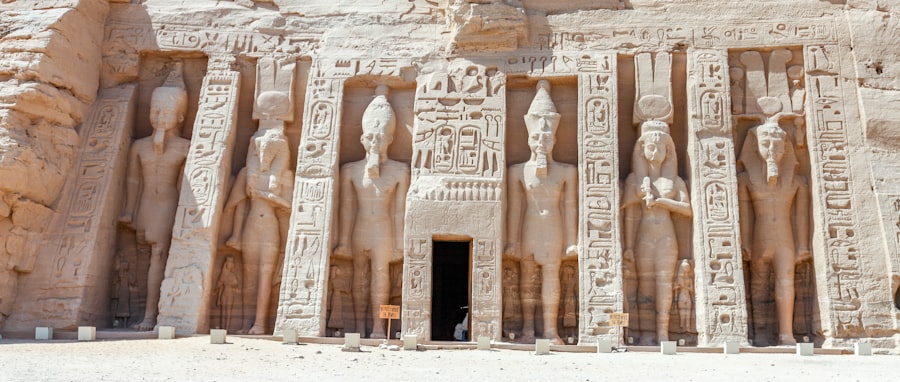
Perhaps the most disruptive aspect of the Chronos Shard’s deciphered content is its clear astronomical references. These references, interwoven with what appear to be historical accounts, depict celestial events and planetary positions with an accuracy that seems impossible for the proposed era.
Precession of the Equinoxes and Ancient Observatories
Specific symbols and their sequential arrangements within the script appear to correlate directly with the phenomenon of the precession of the equinoxes. This slow wobble of the Earth’s axis, which takes approximately 25,800 years to complete one cycle, causes the apparent position of the stars to shift over vast expanses of time. The Chronos Shard contains calculations that accurately track the equinoxes against specific constellations, calculations that would require centuries, even millennia, of precise astronomical observation to derive. This suggests not only an advanced understanding of celestial mechanics but also the existence of long-term, systematic observational capabilities – in essence, advanced astronomical observatories – far preceding any currently recognized.
Challenging Catastrophist Theories and Lost Civilizations
These precise astronomical notations subtly undermine certain long-held catastrophist theories that propose a series of devastating global events (e.g., Younger Dryas impact theory) wiped out advanced knowledge, forcing humanity to “restart.” If the Chronos Shard’s chronologies are accurate, a continuous thread of observation and knowledge would have persisted through such proposed cataclysms, suggesting either that these events were not as universally destructive as once thought, or that pockets of highly advanced civilizations managed to weather them, passing down their knowledge in ways we are only now beginning to comprehend. The shard, therefore, stands as a solitary sentinel, guarding secrets of a continuous intellectual heritage previously assumed to be fragmented and lost.
Societal Structures and Technological Implications

Beyond its astronomical insights, the Chronos Shard offers tantalizing glimpses into the societal structures and apparent technological capabilities of its creators. The script and associated internal patterns within the crystalline matrix suggest a complex, organized society, far removed from the nomadic hunter-gatherer groups that typically define the Late Paleolithic.
Labor Specialization and Governance
Certain recurring motifs within the script allude to a stratified society with specialized labor roles. Symbols that appear to represent artisans, administrators, and scholars are distinct from those representing agriculturalists or resource gatherers. This differentiation implies a level of social complexity and division of labor that would necessitate stable settlements, surplus resources, and a sophisticated system of governance. Such an organizational framework would fundamentally challenge established models of human development, which posit a gradual evolution from egalitarian bands to increasingly complex hierarchies over many millennia. The shard presents a mature organizational model, as if the seeds of complexity had already blossomed into a vibrant, structured society.
Indications of Advanced Craftsmanship and Tooling
While no physical tools from the Chronos Shard’s creators have been discovered, the very nature of the shard itself, with its intricate internal engravings and precise crystalline manipulation, implies advanced technological prowess. The ability to shape and engrave such recalcitrant materials, combined with the extreme precision of the internal features, would necessitate tools far beyond those typically associated with the Stone Age. Researchers are exploring hypotheses involving ultrasonic machining, focused energy sources, or unknown chemical processes. The manufacturing of the Chronos Shard itself, therefore, becomes a technological marvel, an artifact that speaks not only through its script but through its very fabrication.
The recent discovery of an impossible artifact has sparked intense debate among historians and archaeologists, leading many to question the established narratives of our past. This intriguing find suggests that history may not be as straightforward as we once believed. For those interested in exploring this topic further, a related article discusses the implications of such artifacts on our understanding of historical events and their authenticity. You can read more about it in this fascinating article that delves into the mysteries surrounding our historical records.
Revisiting Historical Paradigms
| Artifact Name | Discovery Year | Location Found | Material | Claimed Historical Period | Controversy | Impact on Historical Understanding |
|---|---|---|---|---|---|---|
| Antikythera Mechanism | 1901 | Antikythera, Greece | Bronze | Circa 100 BC | Advanced technology predating known history | Challenges timeline of technological development |
| Baghdad Battery | 1936 | Near Baghdad, Iraq | Clay jar, copper cylinder, iron rod | Circa 250 BC – 250 AD | Possible ancient galvanic cell | Suggests knowledge of electricity in ancient times |
| Dropa Stones | 1938 | Baian-Kara-Ula Mountains, China | Stone discs | Unknown, claimed 12,000 years old | Disputed authenticity and origin | Questions accepted human history and extraterrestrial contact theories |
| Piri Reis Map | 1929 (discovered) | Topkapi Palace, Turkey | Parchment | 1513 | Depicts Antarctica ice-free | Challenges understanding of ancient cartography and geography |
| London Hammer | 1936 | London, Texas, USA | Iron hammer with wooden handle | Claimed to be millions of years old | Dating disputed, possible modern origin | Raises questions about human presence in prehistoric times |
The implications of the Chronos Shard’s discovery extend far beyond merely adding new data points to existing historical timelines. It acts as a seismic event, dislodging foundational assumptions and forcing a critical re-examination of established historical paradigms. Its revelations compel historians and archaeologists to confront the possibility that much of what is deemed “known” about early human civilizations might be, at best, incomplete, and at worst, fundamentally incorrect.
The Limits of Archaeological Interpretation
One of the most significant lessons gleaned from the Chronos Shard is the inherent limitation of archaeological interpretation based solely on material remains. Traditional archaeology, by its nature, relies on what survives the ravages of time. Soft tissues, perishable materials, and even advanced technologies made from non-durable components often leave no trace. The Chronos Shard, a singular, extraordinarily durable artifact, acts as a stark reminder that entire chapters of human history could have unfolded without leaving discernible imprints in the conventional archaeological record. It asks us to consider what other truths remain concealed in the earth’s silent embrace.
New Avenues for Interdisciplinary Research
The Chronos Shard project has already necessitated an unprecedented level of interdisciplinary collaboration, drawing expertise from fields as diverse as materials science, theoretical physics, computational linguistics, and even astrolinguistics. This collaboration, driven by the shard’s multifaceted challenges, highlights the future direction of historical inquiry: a more integrated, holistic approach that transcends traditional academic silos. The shard is not just rewriting history; it is redefining how history itself is written, urging a wider lens through which to view the tapestry of human endeavor.
The Chronos Shard stands as a profound testament to the enduring mysteries of human history. Its message, slowly emerging from the depths of prehistory, is a challenging one: the past is not a static entity but a dynamic narrative, forever subject to revision with every new discovery. It compels us, the inheritors of history, to maintain an open mind, to question established truths, and to embrace the possibility that the story of humanity is far richer, more complex, and perhaps, more astonishing than we have ever dared to imagine. As decipherment continues, the shard promises to be a constant wellspring of revelation, each new linguistic or scientific breakthrough deepening our understanding and shattering more of history’s perceived certainties.
FAQs
What is the “impossible artifact” mentioned in the article?
The “impossible artifact” refers to an object discovered that appears to contradict established historical timelines or scientific understanding, suggesting that some aspects of history may be inaccurately recorded or interpreted.
How does the artifact challenge current historical knowledge?
The artifact’s characteristics, such as its materials, craftsmanship, or inscriptions, do not align with the known technological capabilities or cultural context of the period it supposedly originates from, thereby questioning the accuracy of historical records.
Has the authenticity of the artifact been verified?
Experts typically conduct rigorous testing, including material analysis and dating techniques, to verify the authenticity of such artifacts. The article discusses whether these verification processes have confirmed the artifact as genuine or if it remains controversial.
What implications does this artifact have for our understanding of history?
If the artifact is authentic, it could imply that historical timelines need revision, that certain civilizations had advanced technologies earlier than believed, or that some historical narratives are incomplete or incorrect.
Are there similar artifacts that have challenged historical perspectives before?
Yes, throughout history, there have been several discoveries—often termed “out-of-place artifacts”—that have sparked debate among historians and archaeologists by suggesting alternative interpretations of human history and technological development.