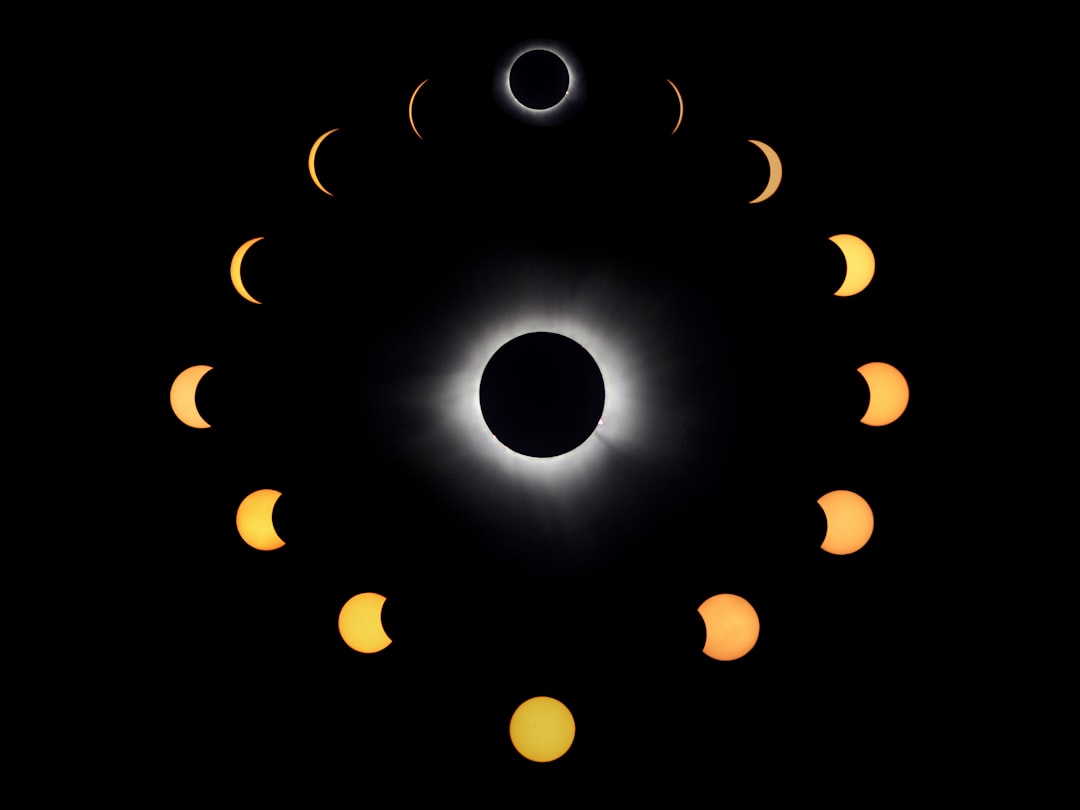
Ancient Greek civilization made pioneering contributions to the systematic observation and prediction of celestial phenomena, particularly solar and lunar eclipses. Greek astronomers developed sophisticated methods for tracking celestial movements that represented significant advances in mathematical astronomy. Their work established foundational principles that influenced astronomical science for centuries.
Eclipse prediction in ancient Greece served multiple purposes beyond pure scientific inquiry. These celestial events held profound cultural and religious significance, often interpreted as divine communications or portents of future events. The ability to accurately forecast eclipses demonstrated the Greeks’ advanced mathematical capabilities and their systematic approach to understanding celestial mechanics.
Greek astronomers employed careful observational techniques and mathematical calculations to track the periodic nature of eclipses. They recognized patterns in eclipse cycles and developed methods to predict future occurrences with increasing accuracy. This work required sophisticated understanding of lunar and solar orbital mechanics, as well as geometric principles for calculating celestial positions.
The Greek approach to eclipse prediction combined empirical observation with theoretical frameworks. Astronomers like Hipparchus and Ptolemy created detailed models of planetary motion that enabled more precise predictions. Their mathematical methods, including the use of geometric models and trigonometric calculations, represented significant technological achievements for their time.
These early astronomical investigations established methodological approaches that became fundamental to scientific inquiry. Greek contributions to eclipse prediction demonstrate how ancient civilizations developed systematic approaches to understanding natural phenomena through observation, mathematical analysis, and theoretical modeling.
Key Takeaways
- Ancient Greeks combined observations, mythology, and philosophy to understand and predict eclipses.
- They developed early mathematical models and used technology like the Antikythera mechanism for eclipse prediction.
- Eclipses held significant cultural and religious meaning in ancient Greek society.
- Despite challenges and limitations, Greek methods influenced later astronomical science.
- Greek eclipse prediction legacy continues to impact modern astronomy and scientific thought.
Early Greek Observations of Solar and Lunar Eclipses
The early Greeks made remarkable strides in observing solar and lunar eclipses, often recording these events with meticulous detail. They recognized that eclipses were not random occurrences but rather predictable phenomena governed by the movements of celestial bodies. Thales of Miletus, one of the earliest Greek philosophers, is credited with predicting a solar eclipse in 585 BCE, which marked a significant milestone in the history of astronomy.
His prediction was based on careful observation and an understanding of the cyclical nature of celestial events. Following Thales, other Greek thinkers continued to refine their observational techniques. Anaxagoras, for instance, provided explanations for lunar eclipses by suggesting that the Earth casts a shadow on the moon during such events.
This marked a shift from mythological interpretations to more scientific reasoning. The Greeks began to develop a framework for understanding eclipses that combined empirical observation with theoretical models, setting the stage for future advancements in astronomy.
The Role of Greek Mythology in Understanding Eclipses

Greek mythology played a pivotal role in shaping the early interpretations of eclipses. Many ancient Greeks viewed these celestial events as manifestations of divine will or as signs of impending doom. For instance, a solar eclipse might be interpreted as a sign of anger from the gods, while a lunar eclipse could signify a change in fortune or fate.
These interpretations were often steeped in cultural narratives that explained the relationship between humans and the divine. The mythological stories surrounding eclipses often involved gods and heroes, reflecting the values and beliefs of Greek society. For example, the story of Apollo, the sun god, was frequently invoked during solar eclipses.
The Greeks believed that when Apollo’s chariot was obscured by darkness, it signified a moment of great importance. Such narratives not only provided explanations for these celestial phenomena but also reinforced social cohesion by linking astronomical events to shared cultural beliefs.
The Influence of Ancient Greek Philosophers on Eclipse Prediction
Ancient Greek philosophers significantly influenced the understanding and prediction of eclipses through their inquiries into the nature of the universe. Figures such as Pythagoras and Plato contributed to the development of mathematical models that described celestial movements. Pythagoras is often credited with introducing the idea that celestial bodies move in circular orbits, a concept that would later be refined by astronomers like Aristotle and Hipparchus.
Aristotle’s work on natural philosophy included discussions on celestial phenomena, including eclipses. He posited that lunar eclipses occurred when the Earth passed between the sun and the moon, casting a shadow on the latter. This understanding was crucial for predicting lunar eclipses accurately.
The philosophical inquiries of these early thinkers laid the groundwork for a more systematic approach to astronomy, emphasizing observation and rational thought over mythological explanations.
The Development of Mathematical Models for Eclipse Prediction
| Metric | Value | Description |
|---|---|---|
| Earliest Recorded Eclipse Prediction | circa 585 BCE | Thales of Miletus predicted a solar eclipse that ended a battle between the Medes and Lydians |
| Prediction Accuracy | Approximate | Ancient Greeks used cycles like the Saros to estimate eclipses but lacked precise timing |
| Key Astronomer | Hipparchus (2nd century BCE) | Developed methods to predict lunar eclipses using lunar cycles and observations |
| Prediction Method | Saros Cycle | A period of approximately 18 years 11 days used to predict eclipses |
| Limitations | No precise longitude/latitude data | Predictions could not specify exact location or duration of eclipses |
| Impact on Society | High | Eclipses were often seen as omens and influenced political and military decisions |
The Greeks’ pursuit of mathematical precision led to significant advancements in eclipse prediction. Hipparchus, one of the most influential astronomers of antiquity, developed a comprehensive model for predicting eclipses based on his extensive observations.
Hipparchus’s work was built upon earlier contributions from Babylonian astronomers who had developed their own methods for predicting eclipses. However, it was the Greeks who refined these techniques through rigorous mathematical analysis. They introduced concepts such as the Saros cycle—a period of approximately 18 years after which eclipses repeat—demonstrating an understanding of cyclical patterns in celestial events.
This mathematical approach not only enhanced eclipse prediction but also laid the foundation for future astronomical models.
The Use of Ancient Greek Technology in Observing Eclipses

The technological advancements of ancient Greece played a crucial role in their ability to observe and predict eclipses effectively. Instruments such as gnomons (vertical sticks used to cast shadows) and astrolabes (devices for measuring angles) allowed astronomers to track celestial movements with greater accuracy. These tools facilitated precise measurements of time and angles, essential for understanding the positions of celestial bodies during eclipses.
Moreover, the Greeks constructed observatories on elevated sites to enhance their observational capabilities. These locations provided clearer views of the sky, enabling astronomers to document eclipses more effectively. The combination of innovative technology and keen observational skills allowed ancient Greek astronomers to make significant strides in their understanding of celestial phenomena, including eclipses.
The Cultural and Religious Significance of Eclipses in Ancient Greece
In ancient Greece, eclipses held profound cultural and religious significance beyond their scientific implications. They were often viewed as omens that could influence political decisions or signal changes in leadership. For instance, a solar eclipse might be interpreted as a warning to rulers about impending disaster or misfortune.
As such, these celestial events were closely monitored by both scholars and political leaders alike. Religious rituals often accompanied significant eclipses, as people sought to appease the gods or interpret their will through these phenomena. Temples would be filled with prayers and offerings during an eclipse, reflecting a deep-seated belief that celestial events were intertwined with human affairs.
This cultural reverence for eclipses underscored their importance in shaping societal norms and values within ancient Greek civilization.
The Legacy of Ancient Greek Eclipse Prediction in Modern Astronomy
The legacy of ancient Greek eclipse prediction is evident in modern astronomy’s foundations. The methodologies developed by Greek astronomers laid the groundwork for subsequent generations of scientists who continued to refine eclipse prediction techniques. The mathematical models established by figures like Hipparchus remain relevant today, as contemporary astronomers still rely on similar principles to forecast eclipses accurately.
Furthermore, the Greeks’ emphasis on observation and rational thought has profoundly influenced scientific inquiry across disciplines. Their approach to understanding celestial phenomena paved the way for future advancements in astronomy and mathematics, ultimately leading to breakthroughs during the Renaissance and beyond. The ancient Greeks’ contributions continue to resonate within modern scientific practices, highlighting their enduring impact on our understanding of the universe.
Challenges and Limitations of Ancient Greek Eclipse Prediction
Despite their remarkable achievements, ancient Greek astronomers faced significant challenges and limitations in eclipse prediction. One major obstacle was their reliance on observational data without access to advanced technology or telescopes that could enhance accuracy. While they made impressive strides with rudimentary instruments, their predictions were sometimes marred by inaccuracies due to observational errors or miscalculations.
Additionally, their understanding of celestial mechanics was limited compared to modern standards. The geocentric model prevalent during much of ancient Greek history constrained their ability to fully grasp the complexities of planetary movements. As a result, while they could predict some eclipses with reasonable accuracy, others remained elusive or misinterpreted due to these inherent limitations.
Comparing Ancient Greek Eclipse Prediction with Other Ancient Civilizations
When comparing ancient Greek eclipse prediction with other civilizations such as the Babylonians or Mayans, distinct differences emerge in methodology and interpretation.
They meticulously recorded celestial events over centuries but lacked the philosophical frameworks that characterized Greek thought.
In contrast, Mayan civilization also demonstrated advanced astronomical knowledge but integrated it into their calendar systems and religious practices differently than the Greeks did. While both cultures recognized the significance of eclipses, their interpretations were shaped by unique cosmologies that influenced how they approached these phenomena. This comparative analysis highlights how different civilizations contributed to humanity’s understanding of celestial events while reflecting their cultural contexts.
The Impact of Ancient Greek Eclipse Prediction on Science and Society
The impact of ancient Greek eclipse prediction extends far beyond mere scientific achievement; it reflects a profound intersection between knowledge, culture, and society. Through their observations and interpretations, ancient Greeks not only advanced astronomical science but also shaped societal beliefs about fate, divinity, and human agency. Their legacy continues to influence modern astronomy while reminding contemporary society of humanity’s enduring quest for understanding within an ever-expanding universe.
In conclusion, ancient Greek eclipse prediction serves as a testament to human curiosity and ingenuity in deciphering the mysteries of the cosmos. By blending empirical observation with philosophical inquiry and cultural narratives, they laid foundational principles that resonate through time—an enduring reminder that our quest for knowledge is both a scientific endeavor and a deeply human pursuit intertwined with our beliefs and values.
The ancient Greeks were remarkable in their ability to predict eclipses, utilizing their understanding of celestial movements and mathematical calculations. Their methods laid the groundwork for future astronomical studies. For a deeper exploration of how ancient civilizations, including the Greeks, approached the mysteries of the cosmos, you can read more in this related article: Ancient Astronomical Predictions.
WATCH THIS! 🚨 Divers Found THIS at the Bottom of the Sea—Scientists Still Can’t Explain It
FAQs
What methods did the ancient Greeks use to predict eclipses?
The ancient Greeks used careful astronomical observations and mathematical models to predict eclipses. They studied the cycles of the Moon and the Sun, particularly the Saros cycle, which is approximately 18 years long and helps forecast when eclipses will occur.
Who were some notable ancient Greek astronomers involved in eclipse prediction?
Notable ancient Greek astronomers include Thales of Miletus, who is credited with predicting a solar eclipse around 585 BCE, and Hipparchus, who made significant contributions to understanding lunar and solar cycles. Ptolemy also compiled extensive astronomical data in his work, the Almagest.
How accurate were the eclipse predictions made by the ancient Greeks?
While not as precise as modern predictions, ancient Greek eclipse forecasts were surprisingly accurate for their time. By recognizing patterns like the Saros cycle, they could predict eclipses within a reasonable timeframe, though exact timing and location were less precise.
What significance did eclipse predictions have in ancient Greek culture?
Eclipse predictions held both scientific and cultural importance. They were used to demonstrate the power of astronomy and mathematics, and eclipses themselves were often seen as omens or significant events in mythology and religion.
Did the ancient Greeks understand the causes of eclipses?
Yes, by the classical period, Greek astronomers understood that solar eclipses occur when the Moon passes between the Earth and the Sun, and lunar eclipses happen when the Earth is between the Sun and the Moon, casting a shadow on the Moon.
What tools did the ancient Greeks use to observe and predict eclipses?
The Greeks used instruments such as the gnomon (a type of sundial), armillary spheres, and astrolabes to observe celestial bodies and track their movements, aiding in eclipse prediction.
How did the knowledge of eclipse prediction influence later civilizations?
Greek eclipse prediction methods and astronomical knowledge were transmitted to Roman, Islamic, and medieval European scholars, forming a foundation for the development of astronomy in these cultures.