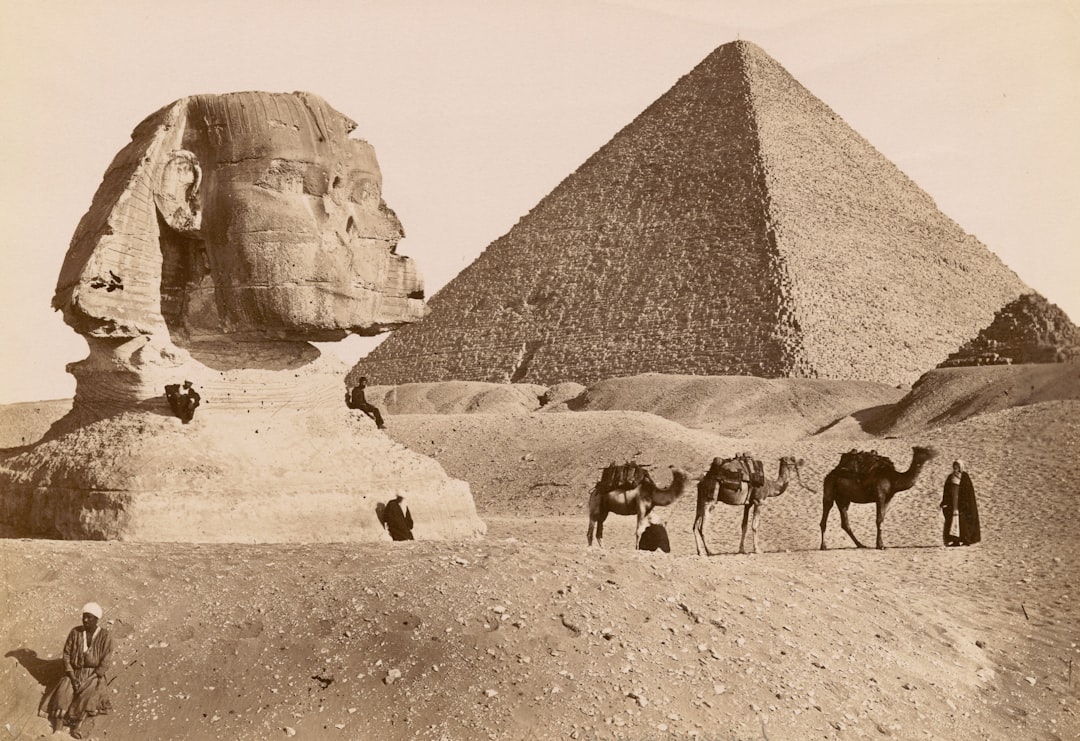
The concept of an “ancient history reset” posits that human civilization, or at least its advanced forms, has experienced catastrophic events in the distant past that obliterated evidence of previous high cultures, forcing a restart or significant regression. This theory stands in contrast to the dominant linear model of development, which traces a continuous, albeit sometimes punctuated, progression from early hominids to present-day societies. While often dismissed as pseudoscientific, proponents of the ancient history reset theory point to a constellation of anomalies and unresolved questions within the archaeological and geological records, which, they argue, cannot be adequately explained by conventional historical narratives.
One of the cornerstones of the ancient history reset theory lies in the existence of “out-of-place artifacts” (OOPArt) and archaeological discoveries that challenge established timelines. These objects, by their complexity, material, or technological sophistication, appear to belong to periods long after their supposed creation.
The Antikythera Mechanism: A Glimpse of Lost Engineering?
Discovered in 1901 off the coast of the Greek island Antikythera, this intricate device, dating back to approximately 200–100 BCE, has been described as the world’s first analog computer. Its complex gearing system was capable of predicting astronomical positions and eclipses with remarkable accuracy, a level of sophistication not seen again in clockwork mechanisms until the 14th century CE. The existence of such a device in the Hellenistic period raises questions about the presumed technological limitations and the potential loss of advanced knowledge. Was the Antikythera Mechanism an isolated genius creation, or a fragment of a more widespread, yet subsequently lost, technological tradition?
The Piri Reis Map: Cartographic Enigma
The Piri Reis Map, compiled in 1513 by the Ottoman admiral and cartographer Piri Reis, is a fragment of a larger world map primarily depicting the western coast of Africa, the eastern coast of South America, and Antarctica. The depiction of Antarctica is particularly intriguing, as it appears to show the continent’s coastline without its ice cap, a state that would have existed thousands of years ago. Furthermore, the map’s remarkable accuracy for its time, especially regarding coastlines not fully explored by Europeans until centuries later, has led to speculation about its sources. Some propose that Piri Reis copied from much older maps, perhaps predating documented global exploration, suggesting a lost era of advanced cartography.
Gobekli Tepe: Redefining the Dawn of Civilization
Located in southeastern Turkey, Gobekli Tepe is an archaeological site dating back to the pre-pottery Neolithic period (circa 9600–8200 BCE). It consists of massive carved stone pillars, weighing up to 20 tons each, arranged in circular enclosures. The site predates Stonehenge by approximately 6,000 years and the invention of pottery, writing, and the wheel. Its construction demands a sophisticated level of social organization, planning, and engineering capabilities that challenge the conventional understanding of hunter-gatherer societies. The prevailing narrative states that complex societal structures arose with agriculture; Gobekli Tepe suggests the reverse, or at least a parallel emergence of complex ritualistic and organizational capabilities prior to widespread agriculture.
The ancient history reset theory suggests that human civilization has experienced significant resets throughout its history, leading to the loss of knowledge and culture. A related article that delves deeper into this intriguing concept can be found at this link, where various pieces of evidence and interpretations are explored, shedding light on the possibility of advanced civilizations existing long before recorded history. This theory raises questions about the cyclical nature of human progress and the potential for rediscovery of lost wisdom.
Cataclysmic Events and Geological Evidence
The ancient history reset theory often postulates a global cataclysm or series of events that wiped out or severely impacted advanced civilizations. Geological evidence, while open to conventional interpretations, can also be woven into this alternative narrative.
The Younger Dryas Impact Hypothesis
The Younger Dryas period, a sudden return to glacial conditions about 12,900 to 11,700 years ago, is a well-established paleoclimatic event. However, a controversial hypothesis suggests that this abrupt cooling was triggered by a cosmic impact event, such as a comet or asteroid strike. Evidence cited includes a “black mat” layer containing materials like nanodiamonds, platinum, and impact spherules found at numerous Younger Dryas boundary sites across North America and Europe. If corroborated, a global cataclysm of this magnitude would have had profound effects on any existing human societies, potentially leading to widespread destruction, depopulation, and the loss of accumulated knowledge, fitting the reset narrative like a glove.
Megalithic Structures and Tsunami Markers
The presence of massive megalithic structures like Baalbek in Lebanon, with its enormous carved stones (some weighing over 1,000 tons), and the precision-cut, tightly fitting stone blocks of Sacsayhuaman in Peru, continues to baffle archaeologists. The engineering required to quarry, transport, and place these stones with such accuracy, often without the use of mortar, remains a subject of intense debate. Proponents of the reset theory argue that such structures point to a lost technology or an advanced civilization that was capable of feats beyond our current understanding of the ancient world.
Furthermore, evidence of ancient mega-tsunamis, such as those potentially caused by submarine landslides or cosmic impacts, is found globally. The discovery of deposits of marine sediments at high elevations far inland in various coastal regions, dating back thousands of years, suggests events of immense power. Could such events have been the “reset button” for advanced coastal civilizations, simply washing away their physical evidence and leaving only scattered remnants and oral traditions?
Oral Traditions and Mythological Echoes

Across diverse cultures and continents, ancient myths and oral traditions recount stories of great floods, cosmic disasters, and the rise and fall of pre-diluvian civilizations. These narratives, often dismissed as mere mythology, are seen by reset theorists as collective cultural memories, distorted reflections of actual cataclysmic events.
The Universal Flood Myth
Perhaps the most pervasive of these narratives is the global flood myth. From the Sumerian Epic of Gilgamesh to the biblical account of Noah’s Ark, the Hindu Puranas, and numerous Indigenous American legends, stories of a great deluge that reshaped the world are found almost universally. While conventional explanations attribute these to localized flooding events, the sheer consistency and global distribution of the motif lead some to ponder a common, cataclysmic origin, an event so profound that it embedded itself in the collective unconscious of humanity.
Ages of Humanity and Cycles of Destruction
Many ancient traditions speak of cyclical ages or “yugas,” each culminating in a period of destruction or decline, followed by a new beginning. The Hindu concept of four yugas, with each successive age marking a decline in dharma, knowledge, and human longevity, culminating in a destructive pralaya (dissolution) before a new cycle begins, offers a compelling parallel to the reset concept. Similarly, the Mesoamerican concept of “suns” or epochs, with each preceding sun ending in catastrophe (flood, wind, fire, etc.) before the creation of the next, resonates with the idea of repeated civilizational resets. These cyclical worldviews stand in stark contrast to the linear progression of history often taught in Western education systems.
Unexplained Technological Rises and Declines

The history of technological advancement is generally viewed as a continuous upward trajectory, albeit with plateaus and bursts of innovation. However, a closer examination reveals periods of technological sophistication that seemingly emerge abruptly, only to decline or vanish for centuries, resembling sparks in the dark, quickly extinguished.
Roman Concrete and Lost Formulas
Roman concrete, particularly the marine concrete used in harbors, possessed extraordinary durability and self-healing properties, far surpassing modern Portland cement in resistance to seawater. The precise formulation and production methods for this superior material were largely lost with the decline of the Roman Empire, and it is only in recent decades that researchers have begun to unravel its secrets. This represents a clear example of a technological peak followed by a significant decline and loss of knowledge, requiring a “reinvention” centuries later.
Advanced Metallurgy in Antiquity
Evidence suggests periods of sophisticated metallurgical techniques well before their generally accepted timelines. For instance, the Baghdad Battery (or Parthian Battery), if interpreted as a functional galvanic cell, would indicate a knowledge of electroplating or primitive battery technology in the Parthian Empire (250 BCE–224 CE). While its exact function remains debated, its existence challenges the notion of a purely linear progression of electrical knowledge. Similarly, the meticulous goldwork of ancient Egyptian and pre-Columbian cultures demonstrates an advanced understanding of precious metals, alloys, and intricate fabrication techniques that were often not matched for millennia in other parts of the world.
The ancient history reset theory suggests that civilizations may have experienced significant resets throughout history, leading to the loss of knowledge and cultural continuity. A fascinating exploration of this concept can be found in a related article that delves into various pieces of evidence supporting this theory. For those interested in understanding the implications of such resets on our perception of history, you can read more about it in this insightful piece on the topic. Check it out here: related article.
The Problem of Missing Evidence and “Invisible” Civilizations
| Evidence Type | Description | Example | Significance to Ancient History Reset Theory |
|---|---|---|---|
| Archaeological Anomalies | Artifacts or structures that do not fit the known historical timeline | Out-of-place artifacts (OOPArts) like the Antikythera mechanism | Suggests advanced civilizations existed before recorded history, implying a reset |
| Geological Evidence | Signs of sudden catastrophic events affecting human civilization | Layer of global ash deposits or sudden climate shifts | Indicates possible global disasters that could have reset civilizations |
| Mythological Records | Ancient myths describing floods, destructions, or lost ages | Stories of a great flood in Mesopotamian and other cultures | May be cultural memories of real events causing societal collapse |
| Genetic Studies | Population bottlenecks or sudden changes in human genetics | Evidence of a bottleneck around 12,000 years ago | Supports theory of a near-extinction event resetting human populations |
| Ancient Textual Records | Historical documents referencing lost civilizations or resets | Records from Sumerian tablets mentioning antediluvian kings | Suggests knowledge of previous civilizations wiped out by catastrophe |
Perhaps the most challenging aspect for conventional historians is the paucity of evidence for “lost” advanced civilizations if such a reset occurred. The argument often used against the reset theory is “where is the evidence?” However, proponents counter that precisely the nature of the reset – a catastrophic event – would explain the lack of readily available, overwhelming evidence.
Submerged Structures and Coastal Erosion
It is estimated that sea levels have risen by approximately 120 meters since the last glacial maximum, around 20,000 years ago. This means vast coastlines, where early human settlements would likely have flourished due to access to resources, are now submerged. The discovery of underwater ruins, such as the enigmatic Yonaguni Monument off the coast of Japan, or submerged ancient cities like Dwarka in India, fuel speculation that countless other ancient settlements, potentially including advanced ones, now lie beneath the waves, inaccessible to conventional archaeological methods. The ocean, a formidable barrier, acts as a vast, silent archive, holding secrets we are only beginning to glimpse.
Transitory Materials and Cycles of Destruction
Most early human settlements were built with perishable materials such as wood, thatch, and unfired brick. Even stone structures are vulnerable to earthquakes, volcanic eruptions, and, crucially, deliberate destruction or recycling of materials by subsequent cultures. If an advanced civilization existed thousands of years ago, and experienced a catastrophic reset, the surviving evidence would be minimal, scattered, and often misinterpreted. Imagine a librarian carefully cataloging books. If a flood washes away the library, leaving only a few soggy pages hundreds of miles apart, how complete and accurate can the reconstruction of that library’s collection be? This metaphor highlights the difficulty in reconstructing history from fragmented and often-destroyed evidence. Furthermore, the very acts of nature — erosion, sedimentation, tectonic shifts — are constantly at work, burying and destroying the fragile remnants of the past.
The ancient history reset theory, while speculative, serves as a compelling intellectual exercise. It obliges us to critically re-examine established historical paradigms, to consider alternative interpretations of archaeological and geological data, and to acknowledge the inherent limitations of our current understanding of humanity’s deep past. It is a reminder that history is not a completed painting, but a mural still being uncovered, with many sections obscured, faded, or perhaps even painted over, inviting us to look beyond the obvious brushstrokes to discern a potentially grander, more complex narrative. The jury remains out, but the questions raised by this theory resonate deeply with humanity’s persistent fascination with its origins and its potential for both greatness and oblivion.

SHOCKING: 50 Artifacts That Prove History Was Erased
FAQs
What is the Ancient History Reset Theory?
The Ancient History Reset Theory suggests that recorded history may have experienced one or more significant disruptions or “resets,” causing a loss or alteration of historical records and knowledge. Proponents argue that this could explain inconsistencies or gaps in ancient historical timelines.
What types of evidence are cited in support of the Ancient History Reset Theory?
Supporters often point to archaeological anomalies, unexplained technological advancements in ancient civilizations, discrepancies in historical records, and myths or legends about cataclysmic events as potential evidence for a reset in ancient history.
How do mainstream historians view the Ancient History Reset Theory?
Most mainstream historians and archaeologists remain skeptical of the theory, emphasizing that current historical and archaeological evidence supports a continuous and well-documented progression of human history without major resets.
Are there any known historical events that could resemble a “reset” in ancient history?
Certain catastrophic events, such as volcanic eruptions (e.g., the eruption of Thera), large-scale wars, or natural disasters, have caused significant disruptions in specific regions, but these are generally seen as localized rather than global resets of history.
Can gaps or inconsistencies in ancient historical records be explained without invoking a reset theory?
Yes, gaps and inconsistencies can often be attributed to the loss or destruction of records over time, biases in historical documentation, translation errors, or the limited archaeological evidence available, rather than a complete reset of history.