
The Hidden City Revealed: Lidar Unearths Angkor’s Urban Tapestry
For centuries, Angkor Wat has stood as a silent testament to the grandeur of the Khmer Empire. Its towering spires and intricate bas-reliefs have captivated imaginations, drawing millions of visitors to the Cambodian jungle. Yet, for all its visible splendor, the true extent of the civilization that built this magnificent complex remained largely obscured, hidden beneath a verdant blanket of trees. Now, a revolution in archaeological mapping has begun to peel back these layers of time, revealing a sprawling urban landscape that far eclipses what was previously understood. This is the story of how Lidar technology, like a spectral X-ray, has illuminated the lost infrastructure of Angkor, reshaping our understanding of its scale, organization, and the lives of its inhabitants.
For those who have stood within the hallowed grounds of Angkor Wat, the experience is undoubtedly profound. The sheer scale of the temple complex is breathtaking, a feat of engineering and artistry that speaks volumes about the ingenuity of its creators. However, this outward focus on the monumental often overshadowed the very fabric of the society that supported such an undertaking. The urban centers that pulsed with life, the intricate network of canals and reservoirs that sustained them, and the detailed planning that characterized their expansion were, for the most part, buried from view, veiled by the relentless advance of nature. The jungle, in its persistent embrace, had become both a guardian and a concealer of Angkor’s secrets.
The exploration of Angkor has a long and distinguished history, marked by the dedicated efforts of generations of archaeologists and explorers. Early accounts, such as those by French colonial scholars, meticulously documented the temple structures, but their understanding of the broader urban context was limited by the prevailing technologies and methodologies. They were like cartographers sketching the outlines of a mountain range, aware of its majesty but unable to fully comprehend the intricate valleys and hidden settlements nestled within. The dense vegetation presented a formidable barrier, hindering comprehensive ground surveys and obscuring any subtle topographical features that might betray the presence of buried structures. Even with extensive excavations, the sheer subterranean extent of the civilization remained a tantalizing, yet elusive, piece of the puzzle.
The advent of Lidar (Light Detection and Ranging) has provided a powerful new lens through which to view this lost world. This remote sensing technology works by firing laser pulses from an aircraft and measuring the time it takes for them to return after reflecting off the ground. By processing vast quantities of these measurements, Lidar can create highly detailed topographic maps that penetrate the dense jungle canopy. Imagine shining a powerful flashlight through a fog; while the fog itself obscures vision, the flashlight’s beam can still illuminate the objects behind it, revealing their forms and contours. Lidar performs a similar feat with vegetation, enabling archaeologists to “see” the underlying landscape as if the trees were not there. This technological breakthrough has been instrumental in uncovering the true spatial dimensions of Angkor.
Before the advent of Lidar, archaeological understanding of the Angkorian urban landscape was largely pieced together through a combination of surface surveys, aerial photography (which had limited success in penetrating the dense canopy), and historical texts. While these methods provided valuable insights into the monumental architecture and the general placement of major centers, they left significant gaps in our knowledge of the city’s full extent and its intricate infrastructure.
Early Explorations and their Limitations
- Pioneering Scholars: The initial decades of archaeological work at Angkor were characterized by groundbreaking efforts to document and preserve the temples. Figures like Henri Mouhot, in the mid-19th century, brought Angkor to the attention of the Western world, describing the “astonishing” and “magnificent” temples. His observations, while crucial, were primarily focused on the visible stone structures.
- Challenges of a Vegetated Environment: The sheer density of the Cambodian rainforest presented a formidable obstacle. The thick canopy obscured any subtle topographical features that might indicate human settlements or infrastructure. Ground surveys were labor-intensive and often limited in their scope and accuracy due to the difficult terrain and the vastness of the area.
- Aerial Photography’s Struggle: While aerial photography offered a broader perspective, it struggled to penetrate the dense vegetation, rendering many hidden features invisible. It was akin to looking down from a great height during a dense fog; you might discern broad shapes, but the finer details remained indistinct.
Inferring Urbanism from Temple Complexes
- Temple-Centric Understanding: The early understanding of Angkorian civilization was largely centered on its impressive temple complexes, such as Angkor Wat, Angkor Thom, and Bayon. These structures were viewed as the heart of the civilization, and the surrounding areas were understood in relation to them.
- Limited Knowledge of Domestic Architecture: The residential areas, where the vast majority of the population lived, were poorly understood. Evidence of domestic structures, which were typically made of perishable materials, was scarce and difficult to locate and excavate beneath centuries of jungle growth.
- The Scale of the Empire: While the grandeur of the temples suggested a powerful and populous empire, the precise urban organization and the extent of its population remained a subject of speculation, relying heavily on interpretations of historical inscriptions and the scale of the visible monuments.
The recent discovery of an extensive urban grid surrounding Angkor Wat through advanced lidar technology has shed new light on the sophisticated planning and infrastructure of the ancient Khmer Empire. This groundbreaking finding parallels insights shared in a related article that explores the implications of such archaeological advancements on our understanding of historical urbanization. For more information, you can read the article here: Related Article.
The Lidar Revolution: Unveiling the Subterranean City
The application of Lidar technology to the Angkor region marked a paradigm shift in archaeological investigation. It provided an unprecedented ability to “see” through the dense jungle canopy, revealing a hidden urban infrastructure that fundamentally altered our perception of the Khmer Empire’s scale and complexity.
How Lidar Works: A Technological Leap
- Laser Pulses and Topographic Mapping: Lidar functions by emitting millions of laser pulses per second from an aircraft. These pulses travel to the ground, bounce off surfaces, and return to the sensor. The precise measurement of the time it takes for each pulse to return allows for the creation of a highly detailed three-dimensional digital elevation model (DEM) of the terrain, effectively stripping away the vegetation.
- Penetrating the Canopy: Unlike traditional aerial photography, Lidar’s laser beams can penetrate the gaps in the forest canopy, reaching the ground and capturing its true topography. This allows for the identification of subtle earthworks, canals, reservoirs, and mounds that might otherwise remain invisible. It’s like being able to x-ray the earth’s surface, revealing what lies beneath the skin of the jungle.
- Data Processing and Interpretation: The raw Lidar data is processed to remove vegetation returns and create a bare-earth model. This model is then analyzed by archaeologists to identify patterns of human settlement, infrastructure, and land management.
The Discoveries: A Lost Metropolis Emerges
- Unprecedented Urban Scale: Lidar surveys revealed that the Angkorian urban complex was far larger and more complex than previously thought. It extended far beyond the immediate vicinity of the famous temple sites, encompassing a vast network of interconnected settlements and infrastructure stretching for kilometers.
- The Hydraulic System Revealed: One of the most significant discoveries was the intricate and extensive nature of the Angkorian hydraulic system. Lidar mapped thousands of kilometers of canals, dikes, and reservoirs that formed a sophisticated network for water management, distribution, and irrigation. This system was crucial for supporting the dense urban population and the agricultural output required to sustain it. These canals acted as the circulatory system of the ancient city, transporting lifeblood in the form of water.
- Identifying Settlements and Infrastructure: The Lidar data revealed the outlines of numerous previously unknown settlements, including residential mounds, pathways, and agricultural fields. This provided concrete evidence of the widespread and dispersed nature of Angkorian population centers, demonstrating that the empire was not just defined by its monumental temples but by a dynamic and extensive urban sprawl.
Reconstructing the Angkorian Urban Grid
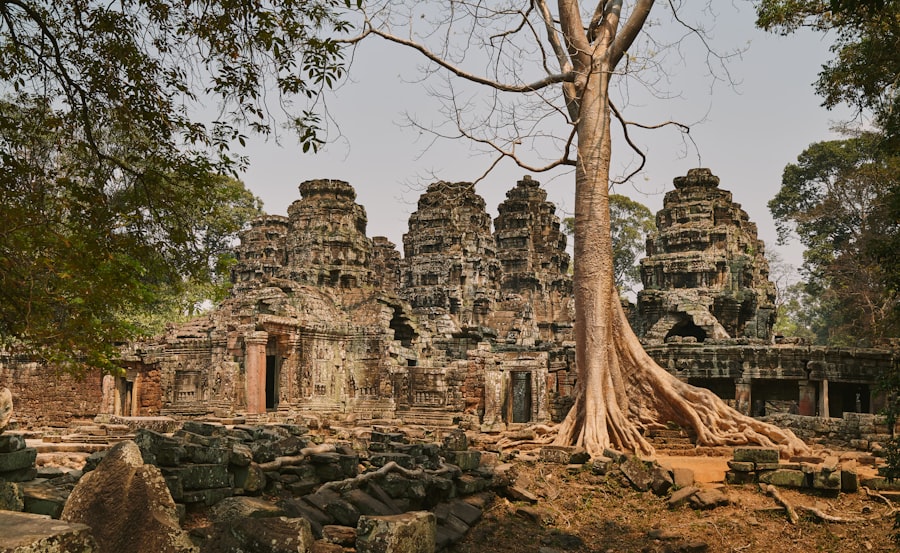
The detailed topographic maps generated by Lidar have allowed archaeologists to begin reconstructing the intricate urban grid of Angkor. This has provided crucial insights into the planning, organization, and daily life of the Khmer civilization.
The Role of Water in Urban Design
- A Sophisticated Hydraulic Network: The Angkorian civilization was a master of water management. Lidar has meticulously mapped an elaborate system of canals, reservoirs (barays), and dikes that served multiple purposes: irrigation for agriculture, water supply for urban populations, flood control, and even as a means of transportation. This interconnected network speaks to a highly organized and centralized authority capable of undertaking massive public works.
- Water as a Unifying Force: These waterworks were not merely functional but also played a central role in the socio-political organization of the empire. The construction and maintenance of such a vast hydraulic system likely required immense labor mobilization and sophisticated planning, reinforcing the power of the ruling elites and fostering a sense of collective endeavor among the populace. Imagine a city built around the arteries of rivers and lakes, where every drop of water was meticulously channeled and managed.
- Supporting a Megacity: The ability to regulate water was fundamental to supporting the immense population of the Angkorian urban complex. The fertile land, irrigated by this sophisticated system, could sustain vast quantities of rice cultivation, providing the food security necessary for a large and concentrated urban population.
The Spatial Organization of Settlements
- Dispersed Urbanism: Lidar data has revealed that Angkor was not a nucleated city in the modern sense but rather a vast, dispersed urban landscape. Numerous settlements, connected by pathways and canals, spread out over hundreds of square kilometers. This differed significantly from the typical concentric urban models of other ancient civilizations.
- Hierarchical Structure: While dispersed, the urban layout appears to have been hierarchical. Major temple complexes served as focal points or administrative centers, with smaller settlements and agricultural areas radiating outwards. Pathways and canals acted as the connective tissue, linking these various components into a functional whole.
- Evidence of Residential Areas: The identification of numerous mounds and embankments suggests the presence of extensive residential areas. These structures, often built on slightly elevated ground to avoid flooding, would have housed the majority of the Angkorian population, from farmers and artisans to merchants and administrators.
The Functional Layout of the City
- Strategic Placement of Infrastructure: Lidar has helped to understand the strategic placement of major temples within the broader urban landscape. These monumental structures were not isolated, but carefully integrated into the existing network of canals, roads, and settlements, suggesting a deliberate and holistic approach to urban planning.
- Trade and Transportation Routes: The identified pathways and canals likely served as crucial trade and transportation routes, facilitating the movement of goods and people throughout the empire. This connectivity was essential for the economic vitality and administrative control of such a vast urban agglomeration.
- Military Considerations: The layout and infrastructure may also have had military implications, with canals potentially serving defensive purposes and the dispersed nature of settlements offering resilience.
New Perspectives on Angkorian Society and Governance

The revelations from Lidar have forced a significant re-evaluation of our understanding of Angkorian society and its governance, painting a picture of a much larger, more complex, and more densely populated civilization than previously imagined.
Rethinking Population Estimates
- Beyond Temple Visitors: Previously, population estimates were often based on the perceived capacity of the temple precincts. The Lidar data, revealing extensive residential areas and urban sprawl, has dramatically increased these estimates, suggesting a population that could have numbered in the millions at its peak. This would place Angkor among the largest cities of the pre-industrial world.
- The Human Engine of the Empire: This newfound understanding of population scale underscores the immense human labor and organizational capacity required to construct and maintain the monumental architecture and the vast hydraulic systems. It highlights the sheer human engine that powered the Khmer Empire.
- Complexity of Urban Life: A population of this magnitude implies a highly complex society with intricate social structures, specialized labor, and extensive trade networks to support its needs.
The Nature of Khmer Governance
- Centralized Authority and Infrastructure: The intricate and widespread nature of the hydraulic system and the organized urban grid point to a powerful and highly centralized form of governance. The ability to mobilize labor, coordinate large-scale engineering projects, and manage vast resources across such a wide geographical area suggests a sophisticated administrative apparatus.
- The Role of Religion and Power: The close integration of monumental religious structures within the urban fabric reinforces the intertwined nature of religion and political power in the Khmer Empire. Temples were not just spiritual centers but also symbols of royal authority and focal points of urban life.
- Evidence of a Resilient System: The dispersed urbanism and the sophisticated water management system may have contributed to the empire’s resilience, allowing it to withstand challenges and adapt to changing environmental conditions.
Challenging Previous Assumptions
- Beyond a “Temple State”: Lidar data moves Angkor beyond the definition of a mere “temple state.” It reveals a fully realized urban civilization with vast residential populations, intricate infrastructure, and a complex socio-economic system.
- A Shift in Archaeological Focus: The discoveries have shifted archaeological focus from primarily monumental architecture to the study of the broader urban landscape, domestic life, and the environmental interactions of the Angkorian people.
- Ongoing Research and Interpretation: These are not static discoveries but ongoing areas of research. As more Lidar data is collected and analyzed, and as ground-truthing continues, our understanding of Angkorian society will undoubtedly continue to evolve.
The recent discovery of an urban grid beneath Angkor Wat using lidar technology has shed new light on the sophisticated planning of this ancient civilization. This groundbreaking research not only highlights the architectural prowess of the Khmer Empire but also opens up new avenues for understanding urban development in historical contexts. For those interested in exploring more about ancient civilizations and their innovations, a related article can be found at Real Lore and Order, which delves into the implications of such discoveries on our understanding of past societies.
Future Directions and the Enduring Legacy
| Metric | Value | Description |
|---|---|---|
| Area Covered | 600 km² | Extent of LiDAR survey around Angkor Wat and surrounding urban grid |
| Number of Structures Identified | 1,200+ | Ancient buildings, temples, and urban features revealed by LiDAR |
| Urban Grid Pattern | Rectilinear | Layout of roads and canals forming a grid-like urban plan |
| LiDAR Resolution | 20 cm | Spatial resolution of the LiDAR data used for mapping |
| Discovery Year | 2013 | Year when LiDAR technology revealed the hidden urban grid |
| Estimated Population | 1 million+ | Population supported by the urban infrastructure during peak Angkor period |
| Water Management Features | Extensive | Canals, reservoirs, and moats identified through LiDAR mapping |
The Lidar revelations at Angkor are not an endpoint but a powerful new beginning for archaeological research. They open up a wealth of new questions and avenues for exploration, promising to deepen our understanding of this remarkable civilization for years to come.
Continued Lidar Surveys and Analysis
- Expanding the Lidar Coverage: While significant areas of Angkor have been surveyed by Lidar, there are still vast regions that await similar investigation. Expanding these surveys will provide an even more comprehensive picture of the entire Angkorian domain.
- Refining Data Interpretation: The ongoing analysis of existing Lidar data is crucial. Archaeologists are continuously developing new techniques and methodologies to extract finer details and more nuanced interpretations from the collected information.
- Integrating Lidar with Traditional Methods: Lidar is a powerful tool, but it is most effective when integrated with traditional archaeological methods. Ground-truthing of Lidar-identified features through excavation and surface survey remains essential for confirming interpretations and uncovering artifactual evidence.
Exploring the “Lost” Populations
- Investigating Residential Areas: The identification of numerous residential mounds by Lidar creates a roadmap for future excavation focused on understanding domestic life. This will involve detailed studies of housing structures, artifacts, and human remains to shed light on the daily routines, social hierarchies, and health of the Angkorian populace.
- Understanding Rural Settlements: The Lidar data likely extends beyond the core urban areas. Further analysis will focus on identifying and understanding the nature of rural settlements and their connection to the larger urban centers, revealing more about the agricultural base that sustained the empire.
- Demographic Studies: With more detailed population mapping, scholars can embark on more robust demographic studies, attempting to understand population density, distribution, and how these factors may have changed over time.
The Enduring Impact on Historical Understanding
- A New Chapter in Khmer History: The Lidar discoveries have effectively written a new chapter in the history of the Khmer Empire, transforming it from a civilization known primarily for its magnificent temples to one recognized as the architect of a massive, sophisticated, and densely populated urban landscape.
- Comparative Urbanism: Angkor’s unique dispersed urbanism and complex hydraulic system offer invaluable case studies for comparative urbanism, allowing us to better understand the diverse pathways of urban development across different cultures and environments.
- Preservation and Management Challenges: The newfound understanding of the scale of Angkor also brings significant challenges for its preservation and management. Protecting such a vast and intricate archaeological landscape from modern pressures requires a comprehensive and integrated approach. The legacy of Angkor, now more fully revealed, underscores the imperative of careful stewardship for future generations.
FAQs
What is Angkor Wat and why is it significant?
Angkor Wat is a large temple complex in Cambodia and one of the most important archaeological sites in Southeast Asia. It was originally constructed in the early 12th century as a Hindu temple dedicated to Vishnu and later transformed into a Buddhist temple. It is renowned for its grand scale, intricate bas-reliefs, and architectural sophistication.
What is LIDAR technology and how was it used in the Angkor Wat discovery?
LIDAR (Light Detection and Ranging) is a remote sensing technology that uses laser pulses to create detailed 3D maps of the ground surface, even through dense vegetation. In the Angkor Wat discovery, LIDAR was used to scan the jungle canopy, revealing previously hidden urban grid patterns and structures beneath the forest floor.
What did the LIDAR scans reveal about the urban grid around Angkor Wat?
The LIDAR scans uncovered a complex and extensive urban grid surrounding Angkor Wat, including roads, canals, and building foundations. This discovery showed that the area was part of a highly organized and densely populated city, challenging previous assumptions about the scale and layout of the ancient Khmer civilization.
How does the discovery of the urban grid impact our understanding of the Khmer Empire?
The discovery provides new insights into the sophistication of the Khmer Empire’s urban planning and infrastructure. It suggests that the civilization had advanced engineering skills and a highly organized society capable of managing large-scale water systems and urban development, which contributed to its prosperity and longevity.
What are the future implications of using LIDAR in archaeological research at Angkor Wat?
The successful use of LIDAR at Angkor Wat demonstrates its potential to uncover hidden archaeological features in other dense forested areas. It allows researchers to map and study ancient sites with minimal disturbance, leading to more discoveries and a better understanding of historical civilizations worldwide.