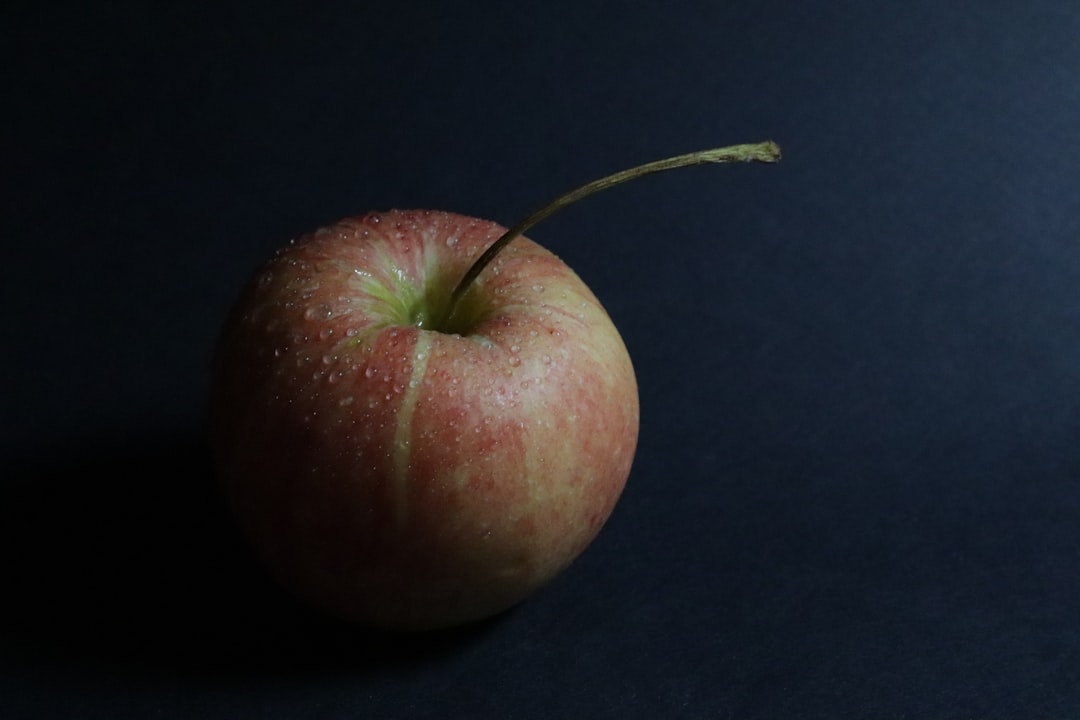
The tale of Isaac Newton and the falling apple is one of the most enduring anecdotes in the history of science. It is a story that has transcended time, often recounted as a simple yet profound illustration of how a moment of inspiration can lead to groundbreaking discoveries. According to popular lore, Newton was sitting under an apple tree when he observed an apple fall to the ground, prompting him to ponder why objects fall straight down rather than sideways or even upward.
This moment of contemplation is said to have sparked his revolutionary ideas about gravity, ultimately leading to the formulation of his laws of motion and universal gravitation. While the story has become a staple in educational settings and popular culture, it is essential to delve deeper into its origins and implications. The apple narrative serves not only as a charming anecdote but also as a gateway into understanding the scientific revolution that Newton helped to catalyze.
By examining the myth, the historical context, and the broader implications of Newton’s work, one can appreciate how this seemingly simple story encapsulates the essence of scientific inquiry and discovery.
Key Takeaways
- The story of Isaac Newton and the falling apple is a well-known myth that has become synonymous with his discovery of gravity.
- Newton’s theory of gravitation revolutionized the way we understand the natural world and laid the foundation for modern physics.
- The historical context of the apple story provides insight into the scientific and intellectual climate of Newton’s time.
- Newton’s own account of the apple story differs from the popular myth, leading to criticisms and debunking of the story.
- Despite the controversy surrounding the apple story, Newton’s other contributions to science solidify his legacy as one of the greatest scientists of all time.
The Myth of the Falling Apple
The myth of the falling apple has taken on a life of its own, often embellished and romanticized over the years. Many people envision a serene scene: a young Isaac Newton lounging beneath a tree, lost in thought, when suddenly an apple drops from its branch, striking him with an epiphany about gravity. This picturesque image has been perpetuated through literature, art, and educational materials, making it difficult to separate fact from fiction.
The simplicity of the story appeals to the human desire for relatable narratives that illustrate complex ideas in an accessible manner. However, the reality of how Newton arrived at his groundbreaking theories is far more intricate than this charming tale suggests. While it is true that Newton did contemplate the nature of gravity and motion, the process was not as instantaneous or straightforward as the apple story implies.
The development of his theories was a culmination of years of rigorous study, experimentation, and intellectual discourse with other scientists of his time. Thus, while the apple may serve as a symbol of inspiration, it oversimplifies the depth and complexity of Newton’s scientific journey.
Newton’s Theory of Gravitation

Isaac Newton’s theory of gravitation fundamentally changed humanity’s understanding of the physical world. His seminal work, “Philosophiæ Naturalis Principia Mathematica,” published in 1687, laid out the laws of motion and universal gravitation that would dominate scientific thought for centuries. Newton proposed that every mass attracts every other mass in the universe with a force that is directly proportional to the product of their masses and inversely proportional to the square of the distance between their centers.
This elegant formulation not only explained why objects fall to Earth but also provided a framework for understanding celestial mechanics. The implications of Newton’s theory were profound. It offered a unified explanation for both terrestrial and celestial phenomena, bridging the gap between earthly experiences and astronomical observations.
For instance, it elucidated why planets orbit the sun in elliptical paths and why tides occur due to the gravitational pull of the moon. Newton’s work laid the groundwork for future scientists, including Albert Einstein, who would later expand upon and refine these concepts. The universality of gravity became a cornerstone of physics, influencing countless fields from engineering to astronomy.
Historical Context of the Apple Story
| Year | Event |
|---|---|
| 1976 | Apple Computer, Inc. is founded by Steve Jobs, Steve Wozniak, and Ronald Wayne. |
| 1984 | Apple launches the Macintosh, the first personal computer with a graphical user interface. |
| 1997 | Steve Jobs returns to Apple as CEO after being ousted in 1985. |
| 2001 | Apple introduces the iPod, revolutionizing the music industry. |
| 2007 | Apple launches the iPhone, changing the smartphone market. |
| 2010 | Apple introduces the iPad, creating a new market for tablet computers. |
To fully appreciate the significance of Newton’s apple story, one must consider the historical context in which it emerged. The late 17th century was a period marked by significant scientific upheaval known as the Scientific Revolution. During this time, traditional views rooted in Aristotelian philosophy were being challenged by new empirical methods and discoveries.
Figures such as Galileo Galilei and Johannes Kepler had already begun to question established norms, paving the way for Newton’s contributions. In this environment of intellectual curiosity and exploration, Newton’s work represented a synthesis of previous ideas and new insights. His theories were not developed in isolation; they were influenced by the works of his predecessors and contemporaries.
The apple story can be seen as emblematic of this era—a moment where observation led to profound understanding amidst a backdrop of scientific transformation.
Newton’s Own Account of the Apple Story
Interestingly, Isaac Newton himself did not extensively document the famous apple incident in his writings. The earliest known account comes from a biography written by William Stukeley in 1752, long after Newton’s death. In this account, Stukeley recounts a conversation with Newton in which he described how he was inspired by an apple falling from a tree while contemplating gravity.
However, there is no definitive evidence that this event occurred exactly as described or that it was as pivotal as later interpretations suggest. Newton’s own writings focus more on mathematical principles and scientific observations rather than personal anecdotes. He was known for his meticulous approach to research and experimentation, often prioritizing empirical evidence over storytelling.
This lack of direct documentation raises questions about the authenticity and accuracy of the apple narrative. While it may serve as an illustrative metaphor for inspiration and discovery, it is essential to recognize that it may not reflect a singular moment in time but rather a broader process of intellectual development.
Criticisms and Debunking of the Apple Story
As charming as the apple story may be, it has faced its share of skepticism and criticism over the years. Many historians argue that it oversimplifies Newton’s intellectual journey and misrepresents how scientific discoveries are made. The notion that a single event could lead to such monumental insights undermines the collaborative nature of scientific progress, which often involves years of research, debate, and refinement.
Moreover, some critics point out that attributing Newton’s understanding of gravity solely to an apple falling from a tree diminishes the contributions of other scientists who laid the groundwork for his theories. Figures like Galileo and Kepler had already made significant strides in understanding motion and celestial mechanics before Newton’s time. By focusing on a singular anecdote, one risks overlooking the rich tapestry of ideas that contributed to Newton’s eventual breakthroughs.
Newton’s Other Contributions to Science
Beyond his famous theories on gravity, Isaac Newton made numerous other contributions that have had lasting impacts on various fields of science. He is credited with developing calculus independently around the same time as Gottfried Wilhelm Leibniz, although their approaches differed significantly. This mathematical framework has become essential for understanding change and motion in both physics and engineering.
Additionally, Newton conducted groundbreaking work in optics, where he studied light and color through experiments involving prisms. His findings led to the understanding that white light is composed of various colors, fundamentally altering perceptions about light and vision. These contributions demonstrate that Newton’s influence extends far beyond gravity; he was a polymath whose work laid foundational principles across multiple disciplines.
The Impact of the Apple Story on Newton’s Legacy
The apple story has played a significant role in shaping Isaac Newton’s legacy within both scientific communities and popular culture. It serves as an accessible entry point for individuals unfamiliar with complex scientific concepts, allowing them to engage with ideas about gravity and motion through a relatable narrative. This simplicity has helped cement Newton’s status as one of history’s great thinkers.
However, while the apple story enhances public interest in science, it also risks creating misconceptions about how scientific knowledge is developed. By focusing on a singular moment rather than acknowledging the collaborative nature of scientific inquiry, it may inadvertently promote an oversimplified view of how breakthroughs occur. Thus, while it contributes positively to Newton’s legacy by making science more approachable, it also presents challenges in accurately conveying the complexities involved in scientific discovery.
Popular Culture and the Apple Story
The tale of Isaac Newton and the falling apple has permeated popular culture in various forms, from literature to film and even advertising.
The image of an apple falling from a tree has become synonymous with moments of insight or revelation—an archetype that resonates across disciplines.
In addition to educational contexts, this narrative has also found its way into artistic representations and media portrayals. From cartoons depicting Newton under an apple tree to more serious adaptations exploring his life and work, these interpretations continue to shape public perceptions of both Newton himself and the nature of scientific discovery. The apple story serves as a cultural touchstone that highlights humanity’s fascination with moments of inspiration.
The Symbolism of the Apple in Science
The apple has taken on symbolic significance within science beyond its association with Newton alone. It represents knowledge, discovery, and enlightenment—concepts deeply intertwined with humanity’s quest for understanding the natural world. This symbolism can be traced back through history; apples have appeared in various mythologies and religious texts as symbols of wisdom or temptation.
In modern contexts, apples are often used metaphorically to represent ideas or breakthroughs in science and technology. The phrase “the apple doesn’t fall far from the tree” suggests that knowledge or traits are passed down through generations—an idea that resonates with scientific progress as well. Thus, while rooted in a specific anecdote involving Newton, the symbolism surrounding apples extends far beyond one individual or moment in time.
Revisiting the Legacy of Isaac Newton
In revisiting Isaac Newton’s legacy through the lens of the apple story, one gains insight into both his monumental contributions to science and the cultural narratives that have emerged around them. While the tale may be steeped in mythologizing simplicity, it serves as an important reminder of how inspiration can arise from everyday observations—an idea central to scientific inquiry. Ultimately, while it is essential to appreciate stories like that of Newton and his apple for their ability to engage audiences with science, it is equally important to recognize their limitations.
The complexities inherent in scientific discovery cannot be distilled into singular moments; rather, they are shaped by collaboration, experimentation, and rigorous intellectual pursuit over time. As society continues to explore new frontiers in science and technology, revisiting figures like Isaac Newton—and understanding both their achievements and their narratives—remains crucial for fostering curiosity and innovation in future generations.
In recent years, the classic tale of Isaac Newton and the falling apple has been scrutinized and, in some cases, debunked as a simplified version of a more complex story. While the image of Newton sitting under an apple tree and suddenly formulating the law of universal gravitation is iconic, historians suggest that the reality was more nuanced, involving years of study and contemplation. For those interested in exploring the myths and truths behind famous historical anecdotes, a related article on this topic can be found on Real Lore and Order’s website. You can read more about the debunking of popular historical myths by visiting this article.
WATCH THIS! 50 Historical Lies You Believe Because of Movies
FAQs
What is the story of Isaac Newton and the apple?
The story goes that Isaac Newton was sitting under an apple tree when an apple fell on his head, leading him to discover the concept of gravity.
Is the story of Isaac Newton and the apple true?
There is no direct evidence to support the claim that an apple fell on Newton’s head, inspiring his discovery of gravity. The story is likely a myth or legend.
How did Isaac Newton actually discover gravity?
Isaac Newton formulated the law of universal gravitation after observing the fall of an apple and contemplating the nature of gravity. However, there is no evidence to suggest that the apple falling directly led to his discovery.
What is the significance of the apple story in popular culture?
The story of the apple falling on Isaac Newton’s head has become a popular anecdote to illustrate the process of scientific discovery and the concept of gravity. However, it should be understood as a symbolic representation rather than a literal event.