
Advanced ancient civilizations have long captivated the imagination of historians, archaeologists, and the general public alike. These societies, which flourished thousands of years ago, exhibited remarkable achievements in various fields, including architecture, governance, trade, and culture. From the majestic pyramids of Egypt to the intricate city planning of the Indus Valley, these civilizations laid the groundwork for many aspects of modern society.
Their innovations and societal structures continue to be a source of fascination and study, revealing insights into human ingenuity and resilience. The term “advanced” in this context refers not only to technological prowess but also to the complexity of social organization and cultural expression. Civilizations such as Mesopotamia, Ancient Egypt, the Maya, and the Indus Valley Civilization demonstrated sophisticated systems of writing, mathematics, and governance.
These societies were characterized by their ability to adapt to their environments, manage resources effectively, and create lasting legacies that would influence future generations. Understanding these advanced civilizations provides a window into the evolution of human society and the interconnectedness of cultures throughout history.
Key Takeaways
- Advanced ancient civilizations were highly sophisticated and developed, with advanced technologies and engineering.
- Archaeological excavations have unearthed evidence of advanced trade, commerce, and cultural achievements in ancient civilizations.
- The governance and political systems of advanced ancient civilizations were complex and varied, influencing modern society.
- Religious and spiritual practices played a significant role in the daily life and social structure of advanced ancient civilizations.
- Ongoing research and future discoveries continue to shed light on the challenges and controversies in studying advanced ancient civilizations.
Unearthing Evidence through Archaeological Excavations
Archaeological excavations serve as the primary means through which evidence of advanced ancient civilizations is unearthed. These systematic digs allow researchers to uncover artifacts, structures, and other remnants that provide invaluable insights into the lives of people who lived centuries or even millennia ago. Each excavation site tells a unique story, revealing the daily activities, social hierarchies, and cultural practices of ancient societies.
The meticulous work of archaeologists often leads to groundbreaking discoveries that challenge previous understandings of history. For instance, the excavation of the ancient city of Pompeii has provided a remarkable snapshot of Roman life frozen in time by volcanic ash. The preservation of buildings, frescoes, and everyday objects has allowed historians to reconstruct the social dynamics and cultural practices of this vibrant city.
Similarly, excavations in Mesopotamia have uncovered cuneiform tablets that shed light on early forms of writing and administration. These findings not only enrich our knowledge of specific civilizations but also contribute to a broader understanding of human development across different regions and eras.
Advanced Technologies and Engineering of Ancient Civilizations
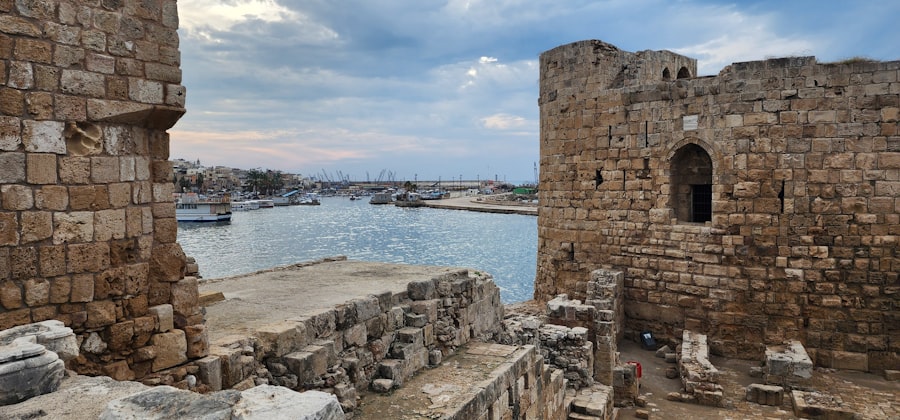
The engineering feats achieved by advanced ancient civilizations are nothing short of extraordinary. These societies demonstrated an impressive understanding of materials, construction techniques, and urban planning that allowed them to create monumental structures that have withstood the test of time. The Great Pyramid of Giza, for example, stands as a testament to the Egyptians’ architectural prowess and their ability to mobilize labor and resources on an unprecedented scale.
The precision with which these structures were built reflects a deep knowledge of mathematics and astronomy. In addition to monumental architecture, ancient civilizations also developed advanced technologies that facilitated their daily lives. The invention of the wheel in Mesopotamia revolutionized transportation and trade, while the development of irrigation systems allowed for more efficient agriculture in arid regions.
The use of metallurgy enabled societies to create tools and weapons that enhanced their capabilities in various domains. These technological advancements not only improved living conditions but also fostered economic growth and cultural exchange among different civilizations.
Trade and Commerce in Advanced Ancient Civilizations
| Civilization | Main Trade Goods | Trade Routes | Commerce System |
|---|---|---|---|
| Egypt | Papyrus, linen, grain, gold | Nile River, Red Sea, Mediterranean Sea | Barter system, use of currency |
| Indus Valley Civilization | Cotton, spices, precious stones | Indus River, Arabian Sea | Advanced urban trade centers, standardized weights and measures |
| Mesopotamia | Textiles, pottery, copper, timber | Euphrates River, Tigris River | Trade through city-states, use of silver as currency |
| China | Silk, tea, porcelain, spices | Silk Road, Yellow River, Yangtze River | Use of coins, government-regulated trade |
Trade played a crucial role in the development and sustainability of advanced ancient civilizations. The exchange of goods, ideas, and technologies facilitated interactions between diverse cultures, leading to economic prosperity and cultural enrichment. Major trade routes, such as the Silk Road and the Incense Route, connected distant regions and allowed for the flow of commodities like silk, spices, precious metals, and textiles.
These interactions not only boosted local economies but also contributed to the spread of innovations and cultural practices. The establishment of marketplaces and trade networks was indicative of a civilization’s complexity. In ancient Mesopotamia, for instance, bustling bazaars served as centers for commerce where merchants exchanged goods from various regions.
The use of standardized weights and measures facilitated trade transactions, while the development of currency simplified exchanges. Such economic systems laid the foundation for modern commerce and continue to influence global trade practices today.
Cultural and Artistic Achievements of Advanced Ancient Civilizations
The cultural and artistic achievements of advanced ancient civilizations reflect their values, beliefs, and societal structures. Art served as a means of expression that transcended time and continues to resonate with contemporary audiences. From the intricate carvings on Mayan temples to the delicate pottery of ancient Greece, these artistic endeavors reveal not only aesthetic sensibilities but also insights into religious beliefs and social hierarchies.
Literature also flourished in many advanced civilizations, with epic poems like “The Epic of Gilgamesh” from Mesopotamia providing a glimpse into the human experience as understood by ancient peoples. The preservation of written works has allowed modern scholars to explore themes such as heroism, morality, and the relationship between humans and the divine. These cultural artifacts serve as a bridge connecting past societies with present-day values and artistic expressions.
Governance and Political Systems of Advanced Ancient Civilizations

The governance structures established by advanced ancient civilizations were often complex and multifaceted. Many societies developed systems that included centralized authority figures such as kings or pharaohs who wielded significant power over their subjects. These leaders were often seen as divine or semi-divine figures whose authority was legitimized through religious beliefs or military prowess.
The political organization within these civilizations was crucial for maintaining order, implementing laws, and managing resources. In addition to monarchy-based systems, some advanced civilizations experimented with forms of governance that included councils or assemblies representing various social classes. For example, ancient Athens is renowned for its early form of democracy where citizens participated in decision-making processes.
Such political innovations laid the groundwork for contemporary governance models and continue to influence political thought around the world.
Religious and Spiritual Practices in Advanced Ancient Civilizations
Religion played a central role in shaping the identities and worldviews of advanced ancient civilizations. Spiritual beliefs often dictated daily life, influencing everything from agricultural practices to artistic expression. Many societies worshipped a pantheon of gods and goddesses who were believed to control natural forces and human fate.
Temples dedicated to these deities served as both religious centers and architectural marvels that reflected the civilization’s values. Rituals and ceremonies were integral to religious practices, often involving offerings or sacrifices intended to appease the gods. The Maya civilization is known for its elaborate rituals tied to agriculture and astronomy, while ancient Egyptians engaged in complex burial practices aimed at ensuring a successful afterlife.
These spiritual traditions not only provided comfort to individuals but also reinforced social cohesion within communities.
Daily Life and Social Structure of Advanced Ancient Civilizations
The daily lives of individuals within advanced ancient civilizations were shaped by their social structures, which often included distinct classes or hierarchies. In many cases, society was divided into categories such as nobility, artisans, farmers, and laborers. This stratification influenced access to resources, education, and political power.
For instance, in ancient Egypt, pharaohs ruled at the top of the hierarchy while skilled artisans created intricate works for both religious purposes and royal patronage. Daily life varied significantly based on one’s social standing. Nobles enjoyed luxuries such as fine clothing and elaborate meals, while laborers worked tirelessly in fields or workshops under challenging conditions.
Despite these disparities, communal activities such as festivals or market days provided opportunities for social interaction across different classes. Understanding these dynamics offers valuable insights into how ancient societies functioned on both individual and collective levels.
Legacy and Influence of Advanced Ancient Civilizations on Modern Society
The legacies left by advanced ancient civilizations continue to shape modern society in profound ways. Many foundational aspects of contemporary culture—such as legal systems, architectural styles, artistic expressions, and even scientific principles—can be traced back to these early societies. The concept of democracy from ancient Greece has influenced political systems worldwide, while Roman engineering techniques have informed modern infrastructure development.
Moreover, advancements in mathematics from civilizations like Mesopotamia laid the groundwork for contemporary scientific inquiry. The preservation of ancient texts has allowed scholars to build upon earlier knowledge in fields ranging from philosophy to medicine. As modern society grapples with complex challenges, revisiting the achievements and lessons learned from advanced ancient civilizations can provide valuable perspectives on resilience, innovation, and cultural exchange.
Challenges and Controversies in Studying Advanced Ancient Civilizations
Despite significant advancements in archaeological methods and historical research, studying advanced ancient civilizations is fraught with challenges and controversies. One major issue is the interpretation of artifacts; different scholars may draw varying conclusions based on the same evidence due to cultural biases or differing theoretical frameworks. This can lead to debates over historical narratives that shape public understanding.
Additionally, ethical considerations arise when excavating sites that may hold sacred significance for descendant communities. The repatriation of artifacts taken during colonial periods remains a contentious topic among museums and indigenous groups worldwide. Balancing academic inquiry with respect for cultural heritage is an ongoing challenge that requires sensitivity and collaboration among stakeholders.
Future Discoveries and Research in Advanced Ancient Civilizations
The field of archaeology is continually evolving as new technologies emerge that enhance research capabilities. Innovations such as ground-penetrating radar, satellite imagery, and 3D modeling are revolutionizing how archaeologists approach excavation sites. These tools allow researchers to identify potential sites without disturbing them physically, leading to more efficient exploration of ancient landscapes.
As interest in advanced ancient civilizations grows globally, interdisciplinary collaboration among historians, archaeologists, anthropologists, and scientists will likely yield exciting discoveries in the future. Ongoing research promises to deepen understanding not only of specific civilizations but also their interconnectedness across time and space. As new findings emerge from excavations around the world, they will undoubtedly continue to reshape narratives about humanity’s past while inspiring future generations to explore their own cultural heritage.
Recent discoveries continue to fuel the debate about the existence of advanced ancient civilizations, with new evidence suggesting that our ancestors may have been more sophisticated than previously thought.
For a deeper exploration of these fascinating insights, you can read the full article by visiting Real Lore and Order.
WATCH THIS! 👀 History Is Hiding 50 Impossible Inventions
FAQs
What is considered evidence of advanced ancient civilizations?
Evidence of advanced ancient civilizations can include advanced architectural structures, sophisticated engineering techniques, advanced knowledge of mathematics and astronomy, advanced art and pottery, and evidence of long-distance trade and communication networks.
What are some examples of advanced ancient civilizations?
Some examples of advanced ancient civilizations include the ancient Egyptians, the Mesopotamians, the Indus Valley civilization, the ancient Greeks, the Romans, the Mayans, the Incas, and the ancient Chinese civilization.
How do archaeologists and historians determine if a civilization was advanced?
Archaeologists and historians determine if a civilization was advanced by examining the architectural remains, technological advancements, artistic achievements, written records, and evidence of complex social and political structures.
What are some controversial theories about advanced ancient civilizations?
Some controversial theories about advanced ancient civilizations include the idea that they had contact with extraterrestrial beings, possessed advanced technology that has been lost to history, or that they were more advanced than previously believed.
Why is the study of advanced ancient civilizations important?
The study of advanced ancient civilizations is important because it helps us understand the development of human societies, technological advancements, cultural achievements, and the interconnectedness of ancient civilizations through trade and communication networks. It also challenges our understanding of human history and the capabilities of ancient peoples.