The Seven Wonders of the Ancient World represent a remarkable collection of human ingenuity and artistic expression that has captivated imaginations for centuries. These extraordinary constructions, which were celebrated by ancient historians, showcase the pinnacle of architectural and artistic achievement in the classical world. Each wonder not only reflects the cultural values and technological advancements of its time but also serves as a testament to the aspirations and dreams of the civilizations that created them.
From monumental structures to breathtaking gardens, these wonders have left an indelible mark on history, inspiring countless generations to marvel at their grandeur. The Seven Wonders were originally listed by ancient Greek scholars, who sought to catalog the most impressive feats of human creativity. While only one of these wonders—the Great Pyramid of Giza—still stands today, the stories and legacies of the others continue to resonate.
They symbolize the heights of human achievement and the enduring quest for beauty and meaning in the world. As one delves into the history and significance of each wonder, it becomes clear that they are not merely relics of the past but rather enduring symbols of human aspiration and resilience.
Key Takeaways
- The Seven Wonders of the Ancient World are a collection of remarkable architectural and artistic achievements from ancient civilizations.
- The Great Pyramid of Giza is a testament to the engineering and architectural prowess of the ancient Egyptians, built as a tomb for Pharaoh Khufu.
- The Hanging Gardens of Babylon are celebrated for their innovative horticultural design, creating a lush oasis in the desert city of Babylon.
- The Statue of Zeus at Olympia showcases the artistry of ancient Greek sculptors and was considered one of the greatest works of art in the ancient world.
- The Temple of Artemis at Ephesus and the Mausoleum at Halicarnassus are examples of the architectural and artistic achievements of ancient Greek and Roman civilizations.
- The Colossus of Rhodes and the Lighthouse of Alexandria are marvels of ancient engineering and sculpture, representing the ingenuity of ancient civilizations.
- The legacy of the Seven Wonders of the Ancient World continues to inspire awe and fascination, serving as a reminder of the incredible achievements of ancient civilizations.
- Modern discoveries and interpretations of the Seven Wonders provide new insights into the construction and significance of these ancient marvels.
- Visiting the Seven Wonders of the Ancient World today offers a unique opportunity to witness the enduring legacy of these remarkable achievements and to appreciate their historical and cultural significance.
The Great Pyramid of Giza: A Marvel of Engineering and Architecture
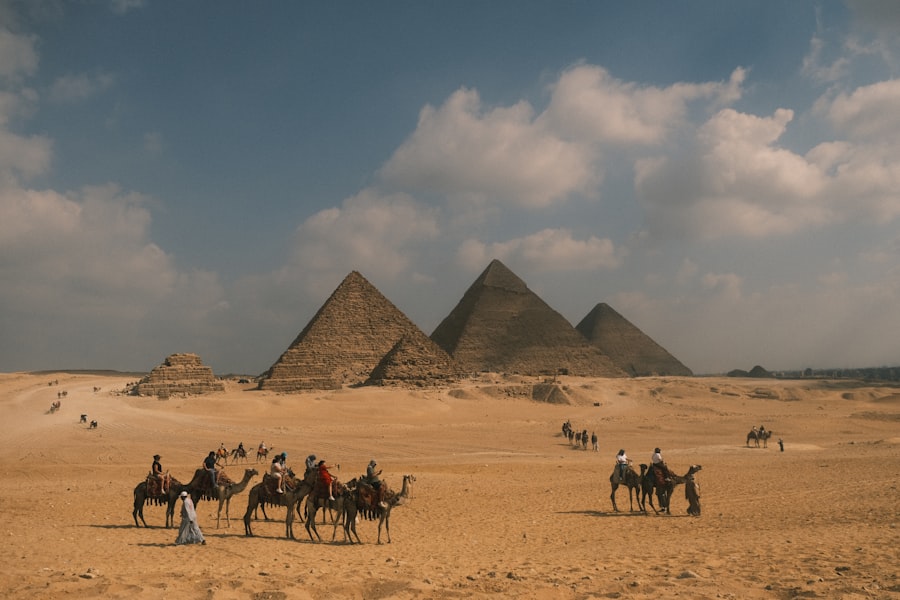
The Great Pyramid of Giza, the oldest and only surviving wonder of the original seven, stands as a monumental testament to ancient Egyptian engineering prowess. Constructed around 2580–2560 BCE during the reign of Pharaoh Khufu, this pyramid was originally built as a tomb, designed to ensure the pharaoh’s safe passage into the afterlife. Its sheer scale is awe-inspiring; originally standing at 146.6 meters (481 feet), it was the tallest man-made structure in the world for over 3,800 years.
The precision with which it was constructed is equally remarkable, with its base covering an area of approximately 13 acres and its stones weighing an average of 2.5 tons each. The construction techniques employed in building the Great Pyramid remain a subject of fascination and debate among historians and archaeologists. Theories abound regarding how such massive stones were transported and assembled with such precision without modern machinery.
Some suggest that a series of ramps were used to move the stones into place, while others propose that a combination of levers and manpower played a crucial role.
The Hanging Gardens of Babylon: A Feat of Horticultural Innovation
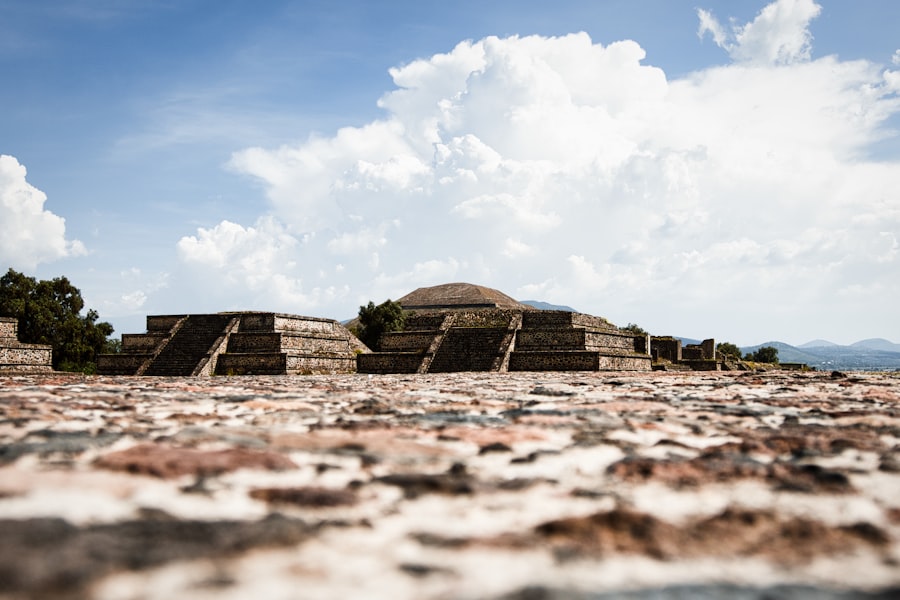
The Hanging Gardens of Babylon are often described as one of the most enchanting wonders of the ancient world, though their existence remains shrouded in mystery. According to ancient texts, these terraced gardens were said to have been built in the city-state of Babylon, near present-day Hillah in Iraq, during the reign of King Nebuchadnezzar II around 600 BCE. The gardens were reputedly constructed to please his wife, Amytis, who longed for the green hills and valleys of her homeland.
This tale paints a picture of a lush paradise that defied the arid landscape surrounding it. While no definitive archaeological evidence has been found to confirm their existence, descriptions from ancient historians suggest that the gardens featured a series of tiered terraces filled with a variety of trees, shrubs, and vines. Ingenious irrigation systems would have been necessary to sustain such a verdant oasis in a desert environment.
The allure of the Hanging Gardens lies not only in their supposed beauty but also in their representation of human creativity in overcoming natural challenges. They embody an idealized vision of harmony between nature and architecture, inspiring countless interpretations in art and literature throughout history.
The Statue of Zeus at Olympia: A Symbol of Ancient Greek Artistry
| Aspect | Details |
|---|---|
| Location | Olympia, Greece |
| Height | Around 12 meters (39 feet) |
| Material | Ivory and gold-plated bronze |
| Creator | Phidias |
| Year of Creation | Around 435 BC |
| Significance | One of the Seven Wonders of the Ancient World |
The Statue of Zeus at Olympia was a monumental representation of the king of the Greek gods, crafted by the renowned sculptor Phidias around 435 BCE. This colossal statue stood approximately 12 meters (39 feet) tall and was made from ivory and gold-plated bronze, showcasing the exceptional artistry and craftsmanship that characterized ancient Greek sculpture. Positioned within the Temple of Zeus in Olympia, it served not only as a religious icon but also as a symbol of Greek cultural identity during a time when city-states competed for dominance.
The statue’s grandeur was matched by its intricate details; Zeus was depicted seated on a magnificent throne adorned with precious stones and intricate carvings. The statue’s expression conveyed both power and serenity, embodying the ideals of strength and wisdom associated with the deity. The Statue of Zeus was not merely an artistic achievement; it represented the spiritual and cultural values of ancient Greece, emphasizing the importance of religion in public life.
Although it was destroyed in antiquity, its legacy endures as a symbol of artistic excellence and religious devotion.
The Temple of Artemis at Ephesus: A Testament to Ancient Greek and Roman Architecture
The Temple of Artemis at Ephesus was one of the largest temples ever constructed in the ancient world, dedicated to the goddess Artemis, who represented fertility and hunting. Built around 550 BCE in what is now Turkey, this temple was renowned for its grandeur and architectural innovation. It measured approximately 115 meters (377 feet) in length and 55 meters (180 feet) in width, featuring 127 columns that soared to a height of 18 meters (60 feet).
Each column was intricately carved and adorned with elaborate sculptures, showcasing the artistic talents of its creators. The temple served not only as a place of worship but also as a center for commerce and community gatherings. Its significance extended beyond religious practices; it was a symbol of Ephesus’s wealth and cultural identity.
The Temple of Artemis was rebuilt multiple times after being destroyed by various invaders, each reconstruction reflecting advancements in architectural techniques and styles. Ultimately, it became a focal point for pilgrims from across the ancient world, drawing visitors who sought to pay homage to Artemis while marveling at one of humanity’s most impressive architectural achievements.
The Mausoleum at Halicarnassus: A Monument to Ancient Funerary Art
The Mausoleum at Halicarnassus was an extraordinary tomb built for Mausolus, a satrap of the Persian Empire, around 350 BCE. This monumental structure stood approximately 45 meters (148 feet) high and was adorned with intricate sculptures that depicted various scenes from mythology and history. The term “mausoleum” itself is derived from Mausolus’s name, reflecting the lasting impact this structure had on funerary architecture throughout history.
Designed by architects Pythius and Satyrus, the Mausoleum combined elements from Greek, Egyptian, and Lycian architectural styles, creating a unique fusion that exemplified cultural exchange in the ancient world. Its elaborate design included a stepped pyramid topped with a chariot-driven statue of Mausolus himself. The Mausoleum served not only as a final resting place but also as a symbol of power and prestige for Mausolus’s dynasty.
Although it was eventually destroyed by earthquakes, its influence can be seen in later monumental tombs across various cultures.
The Colossus of Rhodes: A Marvel of Ancient Bronze Sculpture
The Colossus of Rhodes was an awe-inspiring statue that stood at the entrance to the harbor of Rhodes, celebrating the sun god Helios. Completed around 280 BCE by sculptor Chares of Lindos, this colossal figure measured approximately 33 meters (108 feet) tall, making it one of the tallest statues of the ancient world. Crafted from bronze plates over an iron framework, it symbolized both triumph and resilience following Rhodes’s victory over Cyprus.
The statue’s design was emblematic of Hellenistic art’s emphasis on grandeur and dramatic expression. It depicted Helios standing proudly with one foot on either side of the harbor entrance, welcoming ships into port while serving as a reminder of Rhodes’s strength and prosperity. Unfortunately, after standing for just 56 years, the Colossus was toppled by an earthquake in 226 BCE.
Despite its destruction, it left an enduring legacy as an icon of artistic achievement and engineering prowess.
The Lighthouse of Alexandria: A Beacon of Ancient Engineering and Navigation
The Lighthouse of Alexandria, also known as the Pharos of Alexandria, was an architectural marvel that guided sailors safely into one of the ancient world’s busiest harbors. Constructed on the small island of Pharos around 280 BCE during the reign of Ptolemy II Philadelphus, this lighthouse stood approximately 100 meters (330 feet) tall—making it one of the tallest structures in antiquity. Its design featured three distinct tiers: a square base, a cylindrical middle section, and a circular top adorned with a statue.
The lighthouse served not only as a navigational aid but also as a symbol of Alexandria’s wealth and cultural significance during its golden age. Its light source was said to be fueled by an open flame that could be seen from miles away, while mirrors were used to amplify its brightness. The Lighthouse of Alexandria became an enduring symbol of innovation in engineering and architecture; its design influenced subsequent lighthouses throughout history.
Although it succumbed to earthquakes over time, its legacy continues to inspire modern engineering feats.
The Legacy of the Seven Wonders of the Ancient World
The Seven Wonders have left an indelible mark on human history, shaping cultural narratives and inspiring generations across various fields such as art, literature, architecture, and philosophy. They serve as reminders not only of what humanity can achieve but also of our shared aspirations for beauty and greatness. Each wonder encapsulates unique stories that reflect societal values and technological advancements during their respective eras.
Moreover, these wonders have become symbols in contemporary culture—representing ideals such as creativity, resilience, and ambition. They have inspired countless artists throughout history who sought to capture their essence through various mediums—from paintings to literature—ensuring that their legacies endure long after their physical forms have vanished.
Modern Discoveries and Interpretations of the Seven Wonders
In recent years, archaeological discoveries have shed new light on some aspects surrounding these ancient wonders while also raising questions about their historical accuracy or existence altogether. For instance, ongoing excavations at sites like Babylon have led researchers to uncover evidence that may support claims regarding features associated with the Hanging Gardens—though definitive proof remains elusive. Additionally, modern technology has allowed historians to create virtual reconstructions based on historical texts or archaeological findings—offering new interpretations that help visualize how these wonders might have appeared during their prime.
Such advancements not only enhance understanding but also spark renewed interest among scholars eager to explore these iconic structures’ mysteries further.
Visiting the Seven Wonders of the Ancient World Today
While only one wonder—the Great Pyramid—remains intact today, many sites associated with these ancient marvels continue to attract millions worldwide each year. Visitors flock to Egypt’s Giza Plateau to witness firsthand this architectural masterpiece that has stood for millennia amidst shifting sands. Other locations offer opportunities for exploration through ruins or reconstructions that evoke memories from antiquity—such as Ephesus’ Temple ruins or archaeological sites near Halicarnassus where remnants hint at past grandeur.
These experiences allow travelers not only to appreciate historical significance but also engage with stories woven into humanity’s collective narrative—a journey through time that connects past achievements with present aspirations. In conclusion, while time may have eroded many physical manifestations associated with these wonders—their legacies endure through stories passed down across generations—reminding us all about our capacity for creativity amidst challenges faced throughout history’s tapestry woven together by dreams realized against all odds.
If you’re fascinated by the mysteries of the ancient world and the wonders that have captivated historians and travelers alike, you might find the article on ancient world wonders explained particularly intriguing.