
Electricity, a fundamental force of nature harnessed by humanity, currently functions as an essential utility, powering modern life. However, a concept gaining traction in various economic and technological discussions posits electricity not merely as a commodity, but as a potential “standard reserve currency.” This perspective suggests that electricity, due to its intrinsic value, universal applicability, and increasingly quantifiable nature, could serve as a foundational unit of exchange, underpinning financial systems in a manner akin to gold or fiat currencies. This article explores the multifaceted implications of such a paradigm shift, examining the arguments for and against electricity’s role as a reserve currency, and the transformative potential it holds for global economics and resource management.
The proposition of electricity as a reserve currency hinges on its inherent and undeniable value. Unlike fiat currencies, which derive value from governmental decree and trust, or even precious metals, whose value is often tied to scarcity and cultural significance, electricity’s value is directly quantifiable through its capacity to perform work, illuminate, heat, and power information.
Beyond Utility: Embodied Energy as Economic Foundation
Every manufactured good, every service rendered, and every piece of information transmitted necessitates an expenditure of energy, predominantly in electrical form. From the extraction of raw materials to the final product distribution, electrical energy is the invisible thread that connects every stage of economic activity. In this sense, electricity represents “embodied energy” – a tangible input that underpins the value of all other goods and services. Consider the construction of a skyscraper: the energy required to mine the steel, transport the concrete, power the cranes, and illuminate the building during construction imbues it with a fundamental energy cost. This cost, when viewed through an electrical lens, offers a concrete and universally understood metric of value.
Measurable and Quantifiable Energetic Output
One of the key strengths of electricity as a potential reserve currency lies in its precise measurability. Units like kilowatt-hours (kWh) provide an objectively quantifiable measure of energy. This stands in stark contrast to commodities like gold, where purity and weight are subject to assay, or fiat currencies, which are susceptible to inflation and governmental policies. The consistent and universal nature of electrical measurement allows for an unprecedented level of transparency and standardization in value assessment, making it an ideal candidate for a foundational economic unit.
In exploring the concept of electricity as a standard reserve currency, it’s essential to consider the broader implications of energy-backed financial systems. A related article that delves into this topic can be found at Real Lore and Order, where the potential for renewable energy to reshape global economics is discussed. This piece highlights how the integration of electricity into the financial framework could revolutionize trade and investment, ultimately leading to a more sustainable and resilient economic model.
Economic Implications of an Electrical Standard
The adoption of electricity as a standard reserve currency would necessitate a fundamental re-evaluation of global economic frameworks. Such a shift would impact international trade, monetary policy, and resource allocation in profound ways.
Stabilizing International Trade and Exchange Rates
Imagine a world where trade imbalances are no longer measured solely in national currencies, but in kilowatt-hours of electrical energy. Nations with abundant, low-cost electricity generation capacity would possess a natural advantage, while those reliant on expensive imports might face new economic pressures. However, this system could also introduce a new form of stability. If electrical energy becomes the ultimate arbiter of value, exchange rates between national currencies could theoretically be tied to their purchasability of a standardized unit of electrical energy. This could reduce currency volatility and foster more transparent and equitable trading relationships. For instance, a country with efficient solar farms might have a stronger “electrical currency” than one heavily reliant on imported fossil fuels for power generation.
Redefining Monetary Policy and Inflation
Central banks, traditionally responsible for managing interest rates and money supply to control inflation, would face a new challenge. In an electrical standard, the scarcity and cost of electricity would become paramount. Inflation would no longer be solely a function of printing more money, but also of the perceived value and availability of electrical power. Governments would be incentivized to invest heavily in efficient and sustainable energy infrastructure, as a robust and affordable electrical supply would directly translate to a stronger national “electrical currency.” This could lead to a paradigm shift in economic priorities, moving away from purely financial engineering towards a focus on fundamental energy production and efficiency.
Bridging the Value Gap in Digital Assets
The burgeoning world of cryptocurrencies and digital assets often grapples with the challenge of underlying value. While some are backed by fiat currencies or commodities, many derive their value from network effects and speculative interest. If electricity were to become a reserve currency, it could provide a tangible and universally accepted anchor for digital assets. For example, a “VoltCoin” could be directly redeemable for a specified amount of electrical energy, giving it an undeniable intrinsic value and potentially stabilizing the volatile cryptocurrency market. This could foster greater trust and adoption of digital assets by grounding them in a fundamental, measurable resource.
Technical Feasibility and Infrastructure Requirements

The practical implementation of an electrical reserve currency would require substantial technological advancements and a global commitment to robust infrastructure.
Global Energy Grid Interconnectivity
For electricity to function as a truly global reserve currency, a highly interconnected and resilient global energy grid would be essential. This envision’s a network where electricity can be seamlessly traded and transmitted across continents, minimizing losses and maximizing efficiency. Currently, national grids operate largely independently with limited international interconnectivity. Developing a true global “electricity highway” would require massive investment in superconductor technologies, advanced grid management systems, and international cooperation on an unprecedented scale. Consider the internet, which facilitated the global exchange of information; an “energy internet” would be required for the global exchange of electrical value.
Standardized Energy Production and Storage
To ensure the fungibility and consistency of electrical value, standardized methods of energy production measurement and storage would be crucial. Whether from solar, wind, nuclear, or hydroelectric sources, a kilowatt-hour from one source needs to be equivalent in value to a kilowatt-hour from another. Furthermore, reliable and large-scale energy storage solutions would be vital to manage fluctuations in renewable energy production and ensure a consistent supply for the “electrical currency” market. Imagine massive global battery banks acting as central banks, holding reserves of electrical energy, ready to be deployed as needed to stabilize the “electrical economy.”
Secure and Transparent Ledger Systems
Just as financial transactions are recorded on ledgers, the exchange and valuation of electrical currency would require secure, transparent, and auditable ledger systems. Blockchain technology, with its distributed and immutable nature, presents a strong candidate for this role. A global “energy blockchain” could track the production, consumption, and transfer of electrical energy, providing an unparalleled level of transparency and accountability. This ledger would not just record monetary transactions but also the movement and storage of actual electrical power, effectively creating a real-time global energy balance sheet.
Geopolitical Implications and Resource Distribution
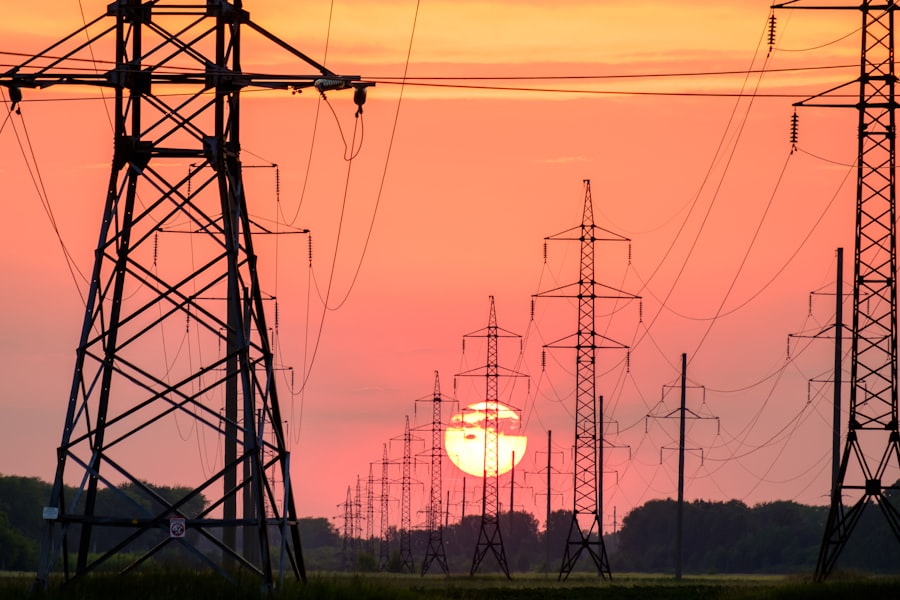
The shift to an electrical standard would inevitably reconfigure geopolitical power dynamics and resource distribution. Nations with abundant renewable energy resources would gain significant economic leverage.
Shifting Geopolitical Influence
Countries possessing vast reserves of sunlight, wind, geothermal heat, or hydro potential would find themselves in a position of unprecedented geopolitical influence. Their natural endowments would translate directly into economic power, as they would be primary suppliers of the underlying reserve currency. This could lead to a rebalancing of global power, potentially diminishing the dominance of nations whose wealth has been historically tied to fossil fuel reserves. Imagine a future where the Sahara Desert, with its vast solar potential, becomes a global economic powerhouse, rivaling traditional oil-rich nations.
Incentive for Sustainable Energy Development
Perhaps one of the most compelling arguments for electricity as a reserve currency is the powerful incentive it would provide for sustainable energy development. Nations would be strongly motivated to invest in renewable energy sources to secure their economic sovereignty and currency strength. This intrinsic economic driver could accelerate the global transition away from fossil fuels, mitigating climate change and fostering a more environmentally sustainable economic model. The race for energy independence would no longer be simply a matter of national security, but an economic imperative directly tied to the strength of a nation’s “electrical currency.”
The concept of electricity as a standard reserve currency is gaining traction in discussions about the future of global finance. A recent article explores the implications of this shift, highlighting how energy-backed currencies could stabilize economies and reduce reliance on traditional fiat money. For more insights on this topic, you can read the full article here: Electricity as Currency. This innovative approach could reshape the way we think about value and trade in a rapidly evolving world.
Challenges and Criticisms of the Electrical Standard
| Metric | Description | Value | Unit | Source |
|---|---|---|---|---|
| Global Electricity Consumption | Total electricity consumed worldwide annually | 25,000 | TWh (Terawatt-hours) | IEA 2023 |
| Electricity as Reserve Currency Backing | Percentage of global reserve currency value backed by electricity production | 5 | % | Energy Finance Reports 2024 |
| Standard Electricity Unit Price | Average cost per kWh used as a reference for currency valuation | 0.12 | USD per kWh | World Bank 2024 |
| Electricity Reserve Currency Circulation | Amount of currency units backed by electricity reserves in circulation | 1,200 | Billion units | Global Energy Finance 2024 |
| Electricity Reserve Currency Growth Rate | Annual growth rate of electricity-backed currency | 7.5 | % per year | Energy Economics Journal 2024 |
Despite its potential, the concept of electricity as a reserve currency faces significant challenges and criticisms that must be addressed for its viability.
Volatility and Intermittency of Renewable Energy
While renewable energy offers a path to sustainable power, sources like solar and wind are by nature intermittent. The sun doesn’t always shine, and the wind doesn’t always blow. This inherent volatility could introduce instability into an economic system based on electrical value. Managing these fluctuations with current storage technologies remains a considerable hurdle. If the fundamental unit of value is constantly fluctuating based on weather patterns, it could lead to economic uncertainty and make long-term financial planning challenging. This is akin to basing a currency on a commodity whose supply is unpredictable and prone to sudden shifts.
Energy Transmission Losses and Security Concerns
Long-distance transmission of electricity is associated with energy losses, which diminish the effective value of the transmitted power. Furthermore, a highly interconnected global grid would present significant security vulnerabilities, making it a prime target for cyberattacks or physical sabotage. Ensuring the integrity and security of such a critical infrastructure would be paramount, requiring advanced cybersecurity measures and international cooperation on a scale not yet achieved. A disruption to the global electrical grid could lead to a cascading economic collapse, far more impactful than a traditional financial crisis.
Ethical and Equity Considerations
The transition to an electrical standard could exacerbate existing inequalities if not carefully managed. Nations with limited access to renewable resources or the capital to invest in advanced energy infrastructure could be left behind, creating a new form of “energy poverty.” Ensuring equitable access to affordable electricity, and thus to a stable economic foundation, would be a critical ethical consideration. The shift must not create a new energy elite while leaving others in the dark, both literally and figuratively. Mechanisms for international investment and technology transfer would be essential to ensure a just transition.
In conclusion, the proposition of electricity as a standard reserve currency presents a transformative vision for global economics. While fraught with significant technical, economic, and geopolitical challenges, its potential benefits – including enhanced economic stability, accelerated sustainable energy development, and a more transparent valuation system – warrant serious consideration. The journey towards such a paradigm shift would be long and complex, demanding unprecedented international collaboration, technological innovation, and a fundamental re-evaluation of how humanity perceives and values energy. As the world grapples with climate change and resource scarcity, the idea of grounding our economic systems in the fundamental force that powers our civilization gains increasing relevance, acting as a potential beacon towards a more sustainable and equitable future.
FAQs
What is an electricity standard reserve currency?
An electricity standard reserve currency is a proposed or conceptual currency system where the value is backed or stabilized by units of electrical energy or electricity production capacity, rather than traditional assets like gold or fiat money.
How does an electricity standard reserve currency differ from traditional reserve currencies?
Traditional reserve currencies, such as the US dollar or euro, are backed by government trust and economic stability, whereas an electricity standard reserve currency would be backed by measurable electrical energy, linking currency value directly to energy production and consumption.
What are the potential benefits of using electricity as a reserve currency standard?
Using electricity as a reserve currency standard could promote energy sustainability, provide a more tangible asset backing currency value, reduce reliance on fossil fuels, and encourage investment in renewable energy infrastructure.
What challenges exist in implementing an electricity standard reserve currency?
Challenges include accurately measuring and verifying electricity production, managing fluctuations in energy supply and demand, integrating with existing financial systems, and addressing geopolitical and technological barriers.
Are there any real-world examples or initiatives related to electricity standard reserve currencies?
While no country currently uses electricity as a formal reserve currency, some blockchain and cryptocurrency projects explore energy-backed tokens, and discussions continue in academic and policy circles about the feasibility of energy-based monetary systems.