
Ancient measurement standards served as the backbone of early societies, providing a framework for quantifying and comparing various aspects of life. These standards were crucial for agriculture, construction, trade, and even governance. Without a common understanding of measurements, the complexities of daily life would have been significantly more challenging.
For instance, farmers relied on standardized measurements to determine land area for planting crops, ensuring that they could maximize their yields. Similarly, builders needed consistent measurements to create structures that were not only functional but also safe and aesthetically pleasing. Moreover, the establishment of measurement standards fostered a sense of unity and cooperation among communities.
When different regions adopted similar systems of measurement, it facilitated communication and collaboration. This was particularly important in trade, where merchants needed to agree on quantities and values to conduct transactions effectively. The importance of these standards cannot be overstated; they laid the groundwork for the sophisticated systems of measurement that would evolve over time, ultimately influencing modern practices.
Key Takeaways
- Ancient measurement standards were crucial for trade, construction, and societal organization.
- Metrology evolved significantly across civilizations, influencing accuracy and consistency in measurements.
- Standardized measurements facilitated commerce and economic development in ancient societies.
- Many modern measurement systems have roots in ancient standards and practices.
- Ancient tools and astronomical observations played a key role in developing precise measurement techniques.
The Evolution of Metrology in Ancient Civilizations
The evolution of metrology can be traced back to some of the earliest civilizations, such as the Egyptians, Mesopotamians, and Indus Valley inhabitants. Each of these cultures developed their own systems of measurement based on practical needs and environmental factors. For example, the Egyptians utilized a system based on the human body, with units like the cubit derived from the length of the forearm.
This body-based measurement was not only intuitive but also accessible to the general populace, allowing for widespread adoption. As civilizations advanced, so too did their measurement systems. The Mesopotamians introduced a more complex system that included units for time, weight, and volume.
They were among the first to use a base-60 system, which is still evident today in our measurement of time and angles. The Indus Valley civilization also contributed significantly to metrology with their standardized weights and measures found in archaeological sites. These early innovations laid the foundation for more sophisticated systems that would emerge in later centuries.
The Role of Measurement Standards in Trade and Commerce

Measurement standards played a pivotal role in the development of trade and commerce in ancient societies. As communities began to engage in trade with one another, the need for a common understanding of quantities became paramount. Merchants required reliable measurements to ensure fair exchanges, which in turn fostered trust between trading partners.
The establishment of standardized weights and measures allowed for smoother transactions and reduced disputes over quantities. In addition to facilitating trade between neighboring communities, measurement standards also enabled long-distance commerce. As trade routes expanded, merchants encountered diverse cultures with their own systems of measurement.
The adoption of common standards helped bridge these differences, allowing for more extensive trade networks. This interconnectedness not only boosted local economies but also contributed to cultural exchanges that enriched societies across regions.
The Influence of Ancient Measurement Standards on Modern Metrology
The influence of ancient measurement standards on modern metrology is profound and far-reaching. Many contemporary units of measurement can trace their origins back to ancient practices. For instance, the metric system, which is widely used today, was developed during the Enlightenment but drew inspiration from earlier systems that emphasized simplicity and universality.
The desire for a coherent and standardized approach to measurement can be seen as a direct response to the challenges faced by ancient civilizations. Furthermore, the principles established by ancient metrologists continue to inform modern practices in various fields. The emphasis on precision and consistency remains central to contemporary science and engineering.
As technology has advanced, so too have the tools and methods used for measurement; however, the foundational concepts laid down by ancient cultures still resonate today. This continuity highlights the enduring legacy of ancient measurement standards in shaping our understanding of the world.
The Use of Measurement Standards in Architecture and Engineering
| Ancient Civilization | Measurement Standard | Unit Description | Approximate Modern Equivalent | Use/Context |
|---|---|---|---|---|
| Ancient Egypt | Cubit | Length from elbow to fingertip | Approximately 52.3 cm (20.6 inches) | Construction, land measurement |
| Mesopotamia | Shekel | Unit of weight | Approximately 8.3 grams | Trade, commerce |
| Indus Valley | Standardized weights | Small stone weights in binary and decimal series | Varied from 0.05 g to 100 g | Trade and economic transactions |
| Ancient Greece | Stadion (stadium) | Length of a typical sports stadium | Approximately 185 meters | Distance measurement in athletics and land |
| Ancient Rome | Roman foot (pes) | Length of a Roman foot | Approximately 29.6 cm (11.65 inches) | Building, engineering, land measurement |
| China (Han Dynasty) | Chi (Chinese foot) | Length unit based on human body | Approximately 23.1 cm | Construction, land measurement |
| Ancient India | Hasta | Length from elbow to tip of middle finger | Approximately 45 cm | Architecture, land measurement |
In architecture and engineering, ancient measurement standards were indispensable for creating structures that were both functional and enduring. Builders relied on standardized measurements to ensure that their designs could be executed accurately. For instance, the construction of monumental structures like the pyramids in Egypt required precise measurements to achieve their iconic shapes and stability.
The use of consistent units allowed architects to communicate their designs effectively with laborers and craftsmen. Moreover, these standards facilitated innovation in architectural design. As builders became more adept at using measurements, they could experiment with new forms and materials while maintaining structural integrity.
The principles established by ancient architects laid the groundwork for future advancements in engineering practices. Today’s architects continue to draw inspiration from these ancient techniques while incorporating modern technology to push the boundaries of design.
Comparing Different Measurement Standards Across Ancient Civilizations
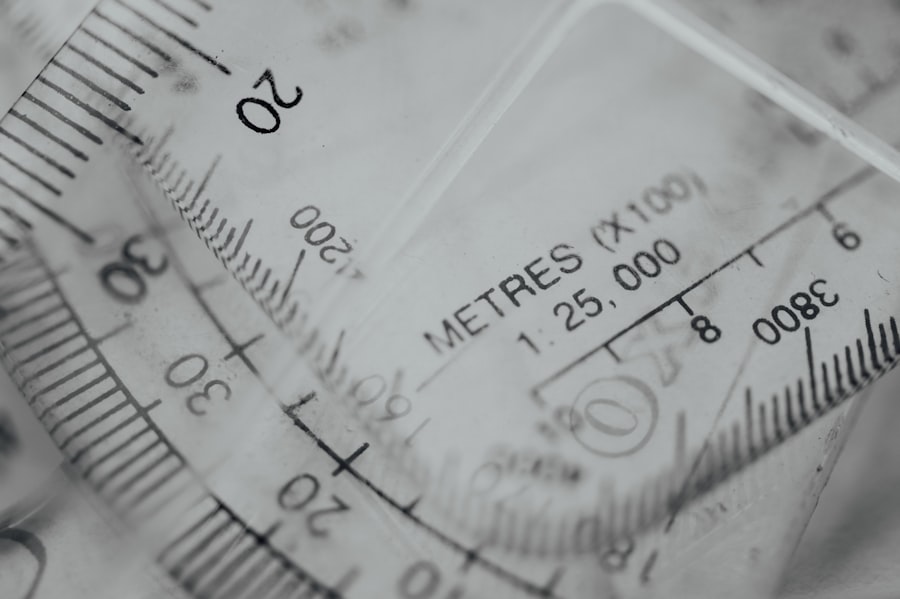
A fascinating aspect of ancient metrology is the diversity of measurement standards across different civilizations. While some cultures developed similar units based on practical needs—such as length derived from body parts—others created entirely unique systems influenced by their environment and societal structures. For example, the Roman system of measurement was heavily influenced by their military needs, leading to units like the mile based on the distance a Roman soldier could march in a thousand paces.
In contrast, the Chinese developed a system that emphasized harmony with nature, incorporating units based on agricultural practices and natural phenomena. This diversity reflects not only practical considerations but also cultural values and priorities within each society. By comparing these different systems, one can gain insights into how various civilizations approached the challenges of measurement and how these approaches shaped their development.
The Cultural and Societal Implications of Ancient Measurement Standards
The establishment of measurement standards had significant cultural and societal implications in ancient civilizations. These standards often reflected broader societal values and priorities, influencing everything from governance to religious practices. For instance, in many cultures, specific measurements were tied to sacred rituals or agricultural cycles, underscoring the connection between measurement and daily life.
Additionally, the adoption of standardized measurements often served as a tool for social cohesion. By creating a common framework for understanding quantities, societies could foster a sense of unity among their members. This was particularly important in larger empires where diverse populations coexisted.
The ability to communicate effectively through shared measurements helped mitigate conflicts and promote cooperation among different groups.
The Challenges of Preserving and Interpreting Ancient Measurement Standards
Despite their significance, preserving and interpreting ancient measurement standards presents numerous challenges for historians and archaeologists. Many ancient texts that contained information about measurement systems have been lost or damaged over time, making it difficult to reconstruct their exact meanings and applications. Additionally, variations in local practices can complicate efforts to establish a coherent understanding of how measurements were used across different regions.
Archaeological findings can provide valuable insights into ancient metrology; however, interpreting these artifacts requires careful analysis and contextualization. Scholars must consider factors such as cultural influences, technological advancements, and environmental conditions when attempting to understand how measurement standards evolved over time. This complexity underscores the importance of interdisciplinary collaboration among historians, archaeologists, and scientists in unraveling the mysteries of ancient metrology.
Exploring the Tools and Instruments Used in Ancient Metrology
The tools and instruments used in ancient metrology were as diverse as the civilizations that created them. From simple measuring sticks to sophisticated devices like astrolabes, these instruments played a crucial role in ensuring accuracy in measurements. For example, ancient Egyptians utilized wooden rods marked with specific lengths for measuring land areas during agricultural planning.
In addition to basic tools, some civilizations developed more advanced instruments for specialized purposes. The Greeks are known for their contributions to geometry and astronomy; they created tools like the gnomon for measuring shadows and determining time based on solar positions. These innovations not only enhanced practical applications but also laid the groundwork for future developments in science and mathematics.
The Connection Between Ancient Measurement Standards and Astronomy
Ancient measurement standards were closely linked to astronomical observations, reflecting humanity’s desire to understand celestial phenomena. Many early civilizations relied on astronomical events to establish calendars and agricultural cycles; thus, precise measurements were essential for tracking celestial movements accurately. For instance, the Mayans developed an intricate calendar system based on their observations of celestial bodies, which required sophisticated mathematical calculations.
The connection between measurement standards and astronomy also influenced architectural design in many cultures. Structures such as Stonehenge or ancient temples were often aligned with celestial events like solstices or equinoxes, demonstrating how measurements were used not only for practical purposes but also for spiritual significance. This interplay between metrology and astronomy highlights humanity’s enduring quest for knowledge about the universe.
The Continued Relevance of Ancient Measurement Standards in Today’s World
In today’s world, ancient measurement standards continue to hold relevance across various fields. While modern technology has introduced new methods for measuring quantities with unprecedented precision, many foundational concepts remain rooted in ancient practices. For example, units like feet and inches still reflect historical origins tied to human dimensions.
Moreover, as globalization increases interactions among diverse cultures, there is a renewed interest in understanding historical measurement systems as a means of fostering cross-cultural communication. By appreciating the complexities of ancient metrology, contemporary societies can gain insights into their own practices while promoting collaboration across borders. In conclusion, ancient measurement standards played an essential role in shaping early civilizations by providing frameworks for trade, architecture, agriculture, and scientific inquiry.
Their legacy continues to influence modern practices while offering valuable lessons about cooperation and cultural exchange that remain relevant today.
Ancient measurement standards and metrology have played a crucial role in the development of civilizations, influencing trade, architecture, and science. For a deeper understanding of how these early systems of measurement were established and their impact on society, you can read more in this related article on the topic. Check it out here: Ancient Measurement Standards.
WATCH THIS! The Impossible Technology They Erased From History
FAQs
What is metrology?
Metrology is the science of measurement. It involves the study, development, and application of measurement standards to ensure accuracy and consistency across various fields.
What were ancient measurement standards?
Ancient measurement standards were systems and units used by early civilizations to quantify length, weight, volume, and time. These standards were often based on natural references such as body parts, grains, or celestial events.
Why were ancient measurement standards important?
They were crucial for trade, construction, agriculture, and governance. Consistent measurements allowed societies to build structures, trade goods fairly, and maintain records effectively.
Which civilizations contributed to ancient metrology?
Notable civilizations include the Egyptians, Mesopotamians, Indus Valley people, Greeks, and Romans. Each developed unique measurement systems suited to their cultural and practical needs.
How were units of measurement defined in ancient times?
Units were often based on human body parts (e.g., cubit, foot), natural objects (e.g., seeds, grains), or astronomical observations (e.g., lunar cycles).
What is the cubit?
The cubit is an ancient unit of length based on the distance from the elbow to the tip of the middle finger. It was widely used in Egypt and Mesopotamia for construction and land measurement.
How did ancient societies ensure measurement consistency?
They created physical standards, such as rods or weights, stored in temples or government buildings, which served as references for local measurements.
Did ancient measurement systems influence modern units?
Yes, many modern units have origins in ancient systems. For example, the foot and inch trace back to human body-based measurements used thousands of years ago.
What challenges existed with ancient measurement standards?
Variability between regions, lack of universal standards, and reliance on physical artifacts that could be lost or damaged made consistency difficult.
How has metrology evolved since ancient times?
Metrology has advanced from local, physical standards to internationally agreed-upon units defined by fundamental constants, enabling precise and universal measurements worldwide.