
The Giza Pyramids, a monumental testament to ancient Egyptian engineering and societal organization, continue to captivate the modern world. Often described as being “built 5000 years ahead of schedule,” this statement, while an evocative metaphor for their advanced construction, requires critical examination. The pyramids represent the apex of Old Kingdom architectural prowess, a period of unprecedented stability and prosperity. Their creation was not an anomaly but the culmination of centuries of experimentation and evolving techniques, demonstrating a sophisticated understanding of mathematics, astronomy, and resource management.
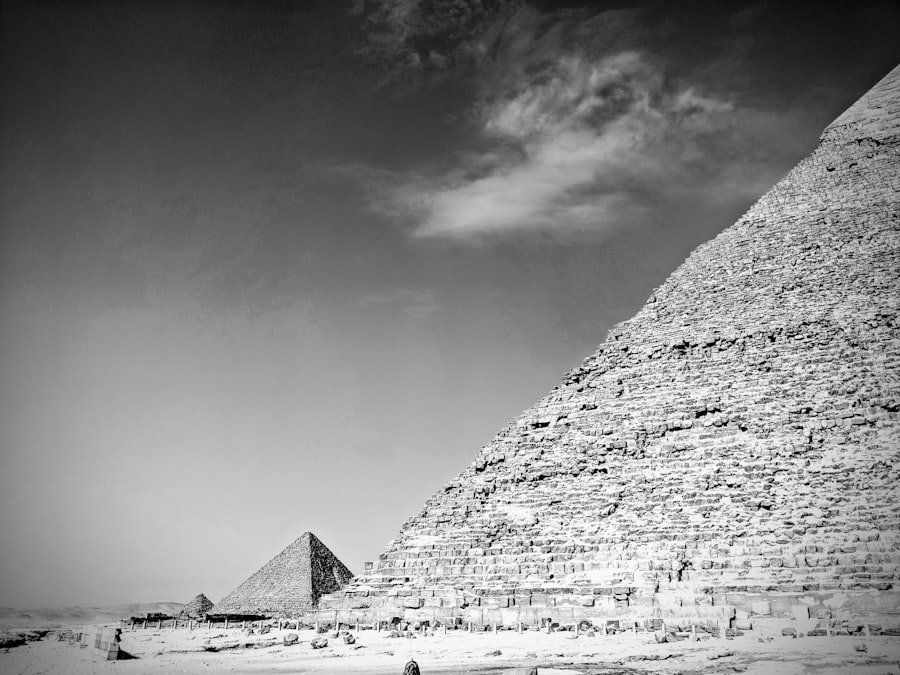
The construction of the Giza Pyramids, particularly the Great Pyramid of Khufu, Sneferu’s Bent Pyramid, and the Pyramid of Menkaure, marks a significant zenith in ancient Egyptian history. These structures were not merely tombs but highly symbolic representations of the pharaoh’s divinity and his journey to the afterlife. Each pyramid, with its associated temple complexes, causeways, and satellite pyramids, formed an elaborate funerary landscape designed to endure for eternity.
Monumental Scale and Precision
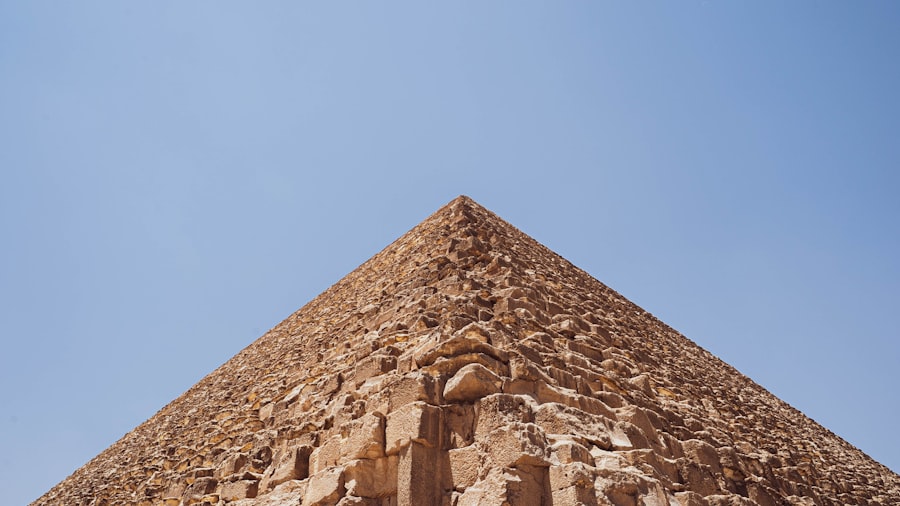
The sheer scale of the Giza pyramids is difficult to comprehend. The Great Pyramid, for instance, originally stood at 146.6 meters (481 feet) and contained an estimated 2.3 million blocks of stone, each weighing an average of 2.5 tons. Some of the granite blocks used in the internal chambers weighed upwards of 50 tons. The precision with which these massive blocks were cut, transported, and laid is remarkable, exhibiting tolerances that would challenge modern construction techniques.
Astounding Alignment
The pyramids of Giza are renowned for their accurate astronomical alignment. The Great Pyramid, in particular, is aligned almost perfectly with true north, with an error of less than one-tenth of a degree. This precise orientation suggests a sophisticated understanding of celestial movements and the ability to apply this knowledge to practical construction. The alignment with other celestial bodies, such as the Orion constellation, has also been posited as a deliberate design element, intertwining their earthly monuments with the cosmic order.
Recent discoveries have suggested that the Giza pyramids may have been constructed 5,000 years earlier than previously believed, challenging long-held historical timelines. This revelation has sparked significant interest in the archaeological community, prompting researchers to reevaluate the methods and technologies used by ancient civilizations. For more insights into this fascinating topic, you can read the related article at Real Lore and Order.
Engineering Marvels Without Modern Tools
The prevalent understanding of ancient Egyptian technology suggests that the pyramids were built using relatively simple tools and an immense amount of coordinated human effort. The “ahead of schedule” notion often springs from the challenge of reconciling their sophistication with the perceived limitations of their technology. However, it is precisely this ingenuity in harnessing available resources that defines their engineering prowess.
Stone Quarrying and Transport
The primary material for the pyramids was local limestone, quarried from the Giza plateau itself or nearby Tura for the finer casing stones. Granite, used for internal chambers and sarcophagi, was transported from quarries near Aswan, over 800 kilometers (500 miles) to the south. This transportation involved extensive logistics, utilizing barges on the Nile during the annual inundation and then hauling the colossal blocks over specially prepared ramps and sledges. The evidence points to a highly organized system of labor, supervised by skilled engineers and architects.
Ramp Theories and Construction Techniques
The method by which the colossal blocks were lifted to such heights remains a subject of ongoing debate. Various ramp theories have been proposed, including straight ramps, spiral ramps, and internal ramps. Archaeological evidence at quarry sites and unfinished structures provides insights into their stone-cutting techniques, which involved chisels, mallets, and abrasive sands. The consensus among Egyptologists is that a combination of ramps, levers, and immense manpower was employed, reflecting a methodical and iterative approach to problem-solving.
The Role of Skilled Labor and Organization
The construction of the pyramids was not the sole endeavor of slave labor, as often depicted in popular culture. Evidence from worker’s villages, such as those discovered near the Giza plateau, indicates a well-fed, organized workforce comprising skilled artisans, masons, overseers, and laborers. These workers were likely organized into highly disciplined teams, each with specific tasks, reflecting a sophisticated societal structure capable of mobilizing and sustaining a large-scale project over decades.
Astronomical and Mathematical Foundations
Beyond their architectural grandeur, the Giza Pyramids embody a profound understanding of mathematics and astronomy. These disciplines were not abstract academic pursuits but integral to their religious beliefs and the very essence of their cosmic worldview. The “ahead of schedule” impression is partly due to the perception that such advanced knowledge should only be attributable to much later civilizations.
The Golden Ratio and Pi
While direct evidence of the ancient Egyptians’ explicit knowledge of concepts like the Golden Ratio (Phi) or Pi as mathematical constants is debated, their monuments often exhibit proportions that closely approximate these values. For example, the ratio of the perimeter of the Great Pyramid to twice its height is remarkably close to Pi. Similarly, ratios that approach the Golden Ratio can be observed in various architectural elements. This suggests either an intuitive understanding derived from observation and iterative design or a deliberate application of geometric principles that produced these aesthetically pleasing and structurally sound proportions.
Stellar Alignments and Sacred Geography
The orientation of the pyramids to specific stars and constellations, particularly the circumpolar stars (like those in Ursa Minor and Ursa Major) and Orion, held immense religious significance. The pharaoh’s journey to the afterlife was intimately linked with these celestial bodies, and the pyramid served as a portal to this cosmic realm. The meticulous alignment reflects not only astronomical observation but also a profound integration of their scientific understanding with their spiritual beliefs. The very landscape of Giza became a sacred map, reflecting the heavens on earth.
Economic and Social Implications of Pyramid Building
The construction of the Giza Pyramids was not merely a feat of engineering; it was a societal undertaking of unparalleled magnitude. The resources, labor, and organizational capacity required had profound economic and social implications, shaping the Old Kingdom’s structure and identity.
Resource Mobilization and Centralized Authority
The ability to command and coordinate vast resources—materials, labor, food, and tools—for projects spanning decades speaks to a highly centralized and effective pharaonic administration. This level of organization indicates a powerful state apparatus capable of levying taxes, controlling trade routes, and managing a substantial bureaucracy. The pharaoh’s authority was absolute, and the pyramid served as the ultimate tangible expression of his power and his divine mandate.
Unifying National Project
The pyramid projects likely served as a powerful unifying force for the nascent Egyptian state. Engaging a significant portion of the population in a common, long-term goal would have fostered a sense of national identity and collective purpose. The shared labor, the provision of sustenance by the state, and the common objective of ensuring the pharaoh’s successful transition to the afterlife would have solidified societal bonds and reinforced the hierarchical structure of the Old Kingdom. These monumental structures were not just for the pharaoh; they were symbols of the entire kingdom’s prowess and piety.
Economic Impact and Infrastructure Development
The sheer scale of the pyramid projects undoubtedly stimulated economic activity. Quarrying, transportation, tool manufacturing, and the provisioning of a large workforce would have driven demand across various sectors. Furthermore, the development of infrastructure, such as improved transportation routes and organized settlements for workers, would have had lasting benefits beyond the immediate construction phase. The pyramids were, in essence, a massive public works project that fueled the Old Kingdom economy.
Recent discoveries have suggested that the Giza pyramids may have been constructed 5,000 years earlier than previously thought, challenging long-held beliefs about ancient Egyptian civilization. This revelation has sparked interest among historians and archaeologists, prompting them to reevaluate the timeline of monumental architecture in the region. For more insights on this fascinating topic, you can read a related article that delves deeper into the implications of these findings by following this link.
Legacy and Enduring Mystery
| Metric | Traditional Date | Revised Date (5000 years earlier) | Notes |
|---|---|---|---|
| Estimated Construction Year | c. 2580–2560 BCE | c. 7580–7560 BCE | Revised date suggests pyramids built during Neolithic period |
| Estimated Age | ~4500 years | ~7500 years | Age increased by 5000 years |
| Historical Context | Old Kingdom Egypt | Prehistoric Neolithic Era | Significant shift in understanding of civilization timeline |
| Construction Techniques | Stone blocks, ramps, manual labor | Unknown or advanced prehistoric methods | Raises questions about technological capabilities |
| Archaeological Evidence | Hieroglyphs, tombs, artifacts | Limited or no direct evidence | Requires re-examination of dating methods |
The Giza Pyramids stand as enduring symbols of ancient Egyptian ingenuity and an enduring source of fascination. While the notion of them being “built 5000 years ahead of schedule” is an understandable human response to their majesty, a more accurate interpretation acknowledges them as the pinnacle of their contemporary technological and organizational capabilities.
Persistent Enigma
Despite centuries of archaeological investigation and scholarly analysis, certain aspects of pyramid construction continue to elude definitive explanation. The precise methods of lifting the heaviest stones, the exact mechanisms of aligning the structures with such precision, and the full extent of their astronomical and mathematical knowledge remain subjects of ongoing research and debate. It is this lingering sense of mystery that continues to propel exploration and inspire awe.
Influence on Subsequent Civilizations
The Giza Pyramids profoundly influenced subsequent architectural and engineering endeavors, both within Egypt and beyond. Their scale, design principles, and symbolic power resonated throughout antiquity. Even in the modern era, they serve as a benchmark for ambitious construction projects and a testament to the enduring human desire to create something magnificent and eternal. They are a timeless reminder of human ambition, collaboration, and the remarkable achievements possible even with foundational technologies.
A Window into Ancient Thought
Ultimately, the Giza Pyramids are more than just stone structures; they are a vast archive of ancient Egyptian thought, a physical manifestation of their beliefs about life, death, and the cosmos. They offer an unparalleled window into their religious practices, their social organization, their scientific understanding, and their artistic sensibilities. The phrase “built 5000 years ahead of schedule,” while dramatic, correctly emphasizes that the ancient Egyptians possessed a level of sophistication that continually surprises and challenges contemporary assumptions about early civilizations. They were, in essence, pushing the boundaries of what was conceivable and achievable for their time, leaving behind a legacy that continues to resonate across millennia.
FAQs
When were the Giza pyramids originally believed to have been built?
The Giza pyramids were traditionally believed to have been built around 4,500 years ago, during Egypt’s Fourth Dynasty, approximately 2580–2560 BCE.
What new evidence suggests the Giza pyramids might be 5,000 years older?
Recent studies involving geological and radiocarbon dating techniques have suggested that some of the structures and surrounding materials could date back as far as 7,000 years ago, indicating the pyramids might be older than previously thought.
How reliable is the new dating evidence for the Giza pyramids?
While the new evidence is intriguing, it remains controversial among Egyptologists and archaeologists. More research and peer-reviewed studies are needed to confirm the revised timeline conclusively.
What methods are used to date the Giza pyramids?
Dating methods include radiocarbon dating of organic materials found in the mortar, geological analysis of erosion patterns, and archaeological context from nearby artifacts and structures.
What implications would an earlier construction date have on our understanding of ancient Egypt?
If the Giza pyramids were built 5,000 years earlier than previously believed, it would significantly alter the timeline of ancient Egyptian civilization, suggesting advanced architectural skills and societal organization existed much earlier than currently accepted.