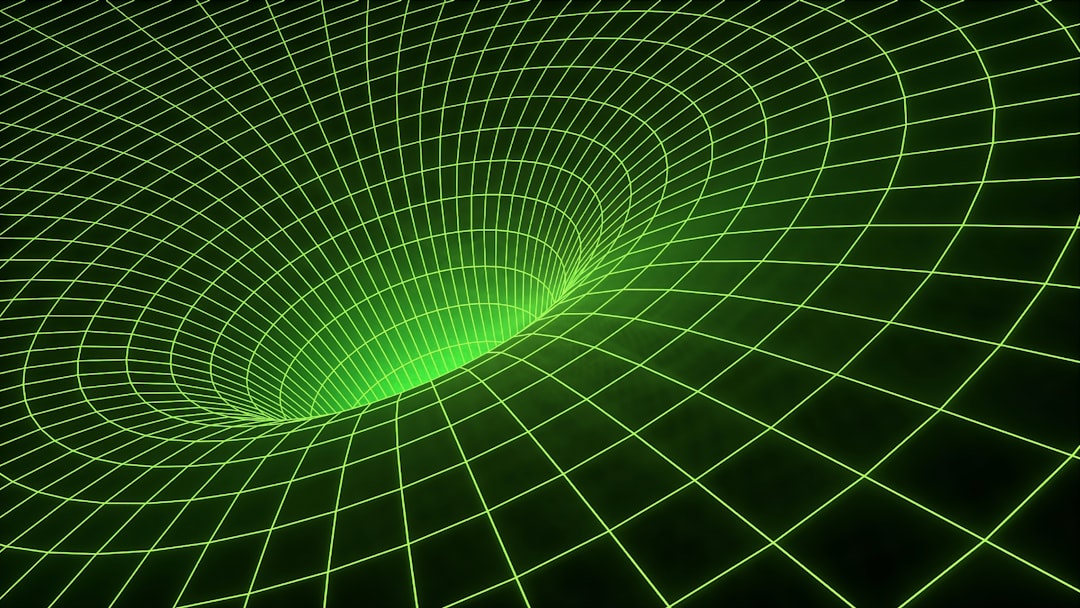
Gravitational waves are ripples in the fabric of spacetime, generated by some of the universe’s most violent and energetic processes. These phenomena occur during events such as black hole mergers and neutron star collisions, though their significance extends far beyond these dramatic occurrences.
The Laser Interferometer Gravitational-Wave Observatory (LIGO) achieved the first direct detection of gravitational waves in 2015, confirming Einstein’s century-old prediction and establishing a new field of observational astronomy. Gravitational waves carry information about their origins and the fundamental nature of gravity. Unlike electromagnetic waves, which can be absorbed or scattered by matter, gravitational waves pass through objects with minimal interaction.
This property enables the observation of cosmic events that remain hidden from traditional electromagnetic observations, providing access to data from the most extreme environments in the universe. The study of gravitational waves contributes significantly to understanding fundamental physics and the evolution of the universe.
Key Takeaways
- Gravitational waves travel at the speed of light, confirming key predictions of general relativity.
- Measuring the speed of gravitational waves helps improve our understanding of the universe’s expansion and cosmology.
- Observations of black hole mergers provide critical data on gravitational wave speed and spacetime dynamics.
- Advances in detection technology are enhancing the precision of gravitational wave speed measurements.
- Studying gravitational wave speed offers insights into fundamental physics and the nature of spacetime.
Understanding the Speed of Gravitational Waves
One of the most intriguing aspects of gravitational waves is their speed. According to Einstein’s theory, gravitational waves travel at the speed of light in a vacuum, approximately 299,792 kilometers per second (or about 186,282 miles per second). This means that when a cataclysmic event occurs in a distant galaxy, the gravitational waves generated by that event will reach you almost simultaneously with any light emitted from it.
This characteristic allows you to study cosmic phenomena in a multi-messenger approach, combining information from both gravitational and electromagnetic signals. The speed of gravitational waves has significant implications for your understanding of causality and the structure of spacetime. If gravitational waves were to travel faster than light, it would challenge the very foundations of modern physics, potentially allowing for time travel or other paradoxical scenarios.
However, current observations support Einstein’s predictions, reinforcing the idea that nothing can exceed the speed of light. This consistency not only strengthens your confidence in General Relativity but also shapes your understanding of how information and influence propagate through the universe.
Theoretical Predictions and Observational Evidence
The theoretical framework surrounding gravitational waves has evolved significantly since Einstein’s initial predictions. You may find it fascinating that various models have been developed to describe how these waves are generated and how they propagate through spacetime. For instance, when two massive objects like black holes spiral towards each other and eventually merge, they create powerful gravitational waves that can be detected billions of light-years away.
The mathematical descriptions of these events have been refined over decades, leading to more accurate predictions about the characteristics of the waves produced. The observational evidence for gravitational waves has been compelling since LIGO’s first detection in 2015. You might recall that this landmark event was followed by several more detections, each providing new insights into the nature of black holes and neutron stars.
The data collected from these events have not only confirmed theoretical predictions but have also revealed unexpected phenomena, such as the existence of black holes larger than previously thought possible. As you explore this field further, you’ll see how each detection adds a new layer to our understanding of the universe and its most enigmatic objects.
The Impact of Gravitational Wave Speed on Cosmology
The speed at which gravitational waves travel has profound implications for cosmology—the study of the universe’s origin, evolution, and eventual fate. When you consider that gravitational waves can provide information about events occurring billions of years ago, they serve as a powerful tool for probing the early universe. By analyzing these waves, you can gain insights into the conditions that existed shortly after the Big Bang and how structures like galaxies formed over time.
As you learn more about this field, you’ll discover that discrepancies between different methods of measuring cosmic expansion have led to debates among astronomers. Gravitational wave observations can provide an independent means to measure distances in the universe, potentially resolving these tensions and offering a clearer picture of cosmic evolution.
This interplay between gravitational wave speed and cosmology underscores their importance in shaping your understanding of the universe’s history.
Gravitational Wave Speed and the Fabric of Spacetime
| Metric | Value | Unit | Description |
|---|---|---|---|
| Speed of Gravitational Waves | 299,792,458 | m/s | Speed of gravitational waves in vacuum, equal to the speed of light |
| Measurement Uncertainty | ± 1 x 10-15 | m/s | Precision of speed measurement from LIGO and Virgo observations |
| Propagation Medium | Vacuum | N/A | Gravitational waves travel through vacuum without attenuation |
| Frequency Range Detected | 10 – 1000 | Hz | Typical frequency range of gravitational waves detected by ground-based detectors |
| Time Delay Between Gravitational and Electromagnetic Waves | Less than 1.7 | seconds | Observed delay in arrival times from neutron star merger event GW170817 |
The relationship between gravitational wave speed and the fabric of spacetime is a captivating area of study. As you explore this topic, you’ll find that gravitational waves are not merely disturbances; they are manifestations of how mass and energy interact with spacetime itself. When massive objects accelerate or collide, they create ripples that propagate outward, altering the geometry of spacetime along their path.
This interaction raises intriguing questions about the nature of spacetime itself. You may ponder whether spacetime is a static backdrop or a dynamic entity that responds to mass and energy. The speed at which gravitational waves travel offers clues to this fundamental question.
If spacetime is indeed flexible and responsive, then understanding how gravitational waves propagate could lead to new insights into its underlying structure and behavior. This exploration invites you to consider not just what gravitational waves are but also what they reveal about the very nature of reality.
The Role of Gravitational Wave Speed in Astrophysics

In astrophysics, gravitational wave speed plays a crucial role in understanding various cosmic phenomena. As you delve into this field, you’ll encounter scenarios where gravitational waves provide unique insights into stellar evolution and catastrophic events. For instance, when massive stars exhaust their nuclear fuel and collapse into black holes or neutron stars, they emit gravitational waves that carry information about their mass, spin, and other properties.
These observations allow you to piece together a more comprehensive picture of stellar life cycles and the dynamics involved in extreme astrophysical events. By studying the speed and characteristics of gravitational waves emitted during such occurrences, you can infer details about their progenitor stars and the processes leading up to their demise. This connection between gravitational wave speed and astrophysical phenomena enriches your understanding of how stars evolve and interact within galaxies.
Gravitational Wave Speed and Black Hole Mergers
Black hole mergers are among the most dramatic events in the universe, producing some of the strongest gravitational waves detectable on Earth. When two black holes spiral towards each other and eventually collide, they release an immense amount of energy in the form of gravitational radiation. As you explore this phenomenon further, you’ll find that the speed at which these waves travel is critical for understanding the dynamics involved in such mergers.
The detection of gravitational waves from black hole mergers has provided unprecedented insights into their properties and populations. You may be intrigued to learn that these observations have revealed a surprising diversity in black hole masses and spins, challenging previous assumptions about their formation and evolution. The speed at which these waves propagate allows you to study not only individual mergers but also trends across multiple events, leading to a deeper understanding of black hole demographics in our universe.
Detecting Gravitational Waves and Measuring Speed
Detecting gravitational waves is no small feat; it requires incredibly sensitive instruments capable of measuring minuscule changes in distance caused by passing waves. LIGO employs laser interferometry to detect these changes with remarkable precision. As you learn about this technology, you’ll appreciate how it enables scientists to measure not only the presence of gravitational waves but also their speed as they traverse Earth.
The ability to measure gravitational wave speed is essential for confirming theoretical predictions and understanding their origins. By analyzing the time delay between signals received at different detectors—such as LIGO’s twin facilities in Washington and Louisiana—you can determine how fast these waves are traveling across vast distances. This measurement process is a testament to human ingenuity and technological advancement, allowing you to explore phenomena that were once thought to be beyond reach.
The Future of Gravitational Wave Research
As you look ahead to the future of gravitational wave research, you’ll find that this field is poised for exciting developments. Upcoming observatories like LIGO’s advanced upgrades and future missions such as the European Space Agency’s LISA (Laser Interferometer Space Antenna) will expand our ability to detect gravitational waves across a broader range of frequencies and sources. This expansion will enable you to explore previously inaccessible regions of astrophysics and cosmology.
Moreover, advancements in data analysis techniques will enhance your ability to extract meaningful information from complex signals. Machine learning algorithms are increasingly being employed to sift through vast amounts of data generated by detectors, allowing for more efficient identification and characterization of gravitational wave events. As you engage with these advancements, you’ll witness how they contribute to a deeper understanding of fundamental physics and our place in the cosmos.
Implications for Fundamental Physics
The study of gravitational wave speed has far-reaching implications for fundamental physics beyond astrophysics and cosmology. As you contemplate these implications, consider how gravitational waves challenge our understanding of gravity itself. They provide a unique testing ground for General Relativity under extreme conditions, allowing physicists to probe its limits and explore potential modifications or alternatives.
Additionally, gravitational wave research intersects with other areas of physics, such as quantum mechanics and high-energy particle physics. You may find it fascinating that some theories propose connections between gravity and quantum phenomena, suggesting that understanding gravitational waves could lead to breakthroughs in unifying these fundamental forces. This interplay between different branches of physics highlights how studying gravitational wave speed can illuminate some of the most profound questions about our universe.
The Cosmic Significance of Gravitational Wave Speed
In conclusion, the speed of gravitational waves is not merely a technical detail; it holds profound significance for your understanding of the universe. From confirming Einstein’s theories to reshaping our knowledge of black holes and cosmology, gravitational wave speed serves as a key that unlocks new realms of inquiry in fundamental physics. As you continue your exploration into this captivating field, you’ll find that each discovery brings you closer to unraveling the mysteries of spacetime and our place within it.
The journey into gravitational wave research is just beginning, with new technologies and methodologies poised to expand our horizons even further. As you engage with this evolving landscape, remember that every ripple detected carries with it stories from across time and space—stories that deepen your connection to the cosmos and illuminate the intricate tapestry woven by gravity itself. Embrace this adventure as you seek to understand not just what lies beyond but also what lies within our very understanding of reality itself.
Recent discussions in the field of astrophysics have raised intriguing questions about the speed of gravitational waves, particularly in relation to the fundamental principles of physics. For a deeper understanding of this topic, you can explore the article on gravitational waves and their implications in the universe at this link. This article delves into the latest research findings and theoretical frameworks that shape our understanding of gravitational wave propagation.
FAQs
What is the speed of gravitational waves?
Gravitational waves travel at the speed of light, which is approximately 299,792 kilometers per second (about 186,282 miles per second) in a vacuum.
How was the speed of gravitational waves measured?
The speed of gravitational waves was measured by observing signals from events such as merging black holes and neutron stars using detectors like LIGO and Virgo. The simultaneous detection of gravitational waves and electromagnetic signals from the same event confirmed that gravitational waves travel at the speed of light.
Why is the speed of gravitational waves important?
Knowing the speed of gravitational waves is crucial for testing Einstein’s theory of general relativity and understanding the fundamental properties of gravity. It also helps in accurately locating cosmic events and studying the universe’s structure.
Do gravitational waves always travel at the speed of light?
According to current scientific understanding and observations, gravitational waves always travel at the speed of light in a vacuum. Any deviation from this speed would suggest new physics beyond general relativity.
Can gravitational waves travel through matter?
Yes, gravitational waves can pass through matter almost unimpeded because they interact very weakly with matter. This allows them to carry information from distant cosmic events directly to Earth.
How do gravitational wave detectors measure the speed of these waves?
Detectors like LIGO and Virgo measure the arrival times of gravitational waves at different locations. By comparing these times and the known distances between detectors, scientists calculate the speed of the waves.
What was the significance of the neutron star merger event GW170817 in measuring gravitational wave speed?
The event GW170817 was the first observed merger of neutron stars detected both in gravitational waves and electromagnetic signals. The near-simultaneous arrival of these signals confirmed that gravitational waves travel at the speed of light to a very high degree of precision.
Could gravitational waves travel faster or slower than light under any circumstances?
Current experimental evidence and general relativity predict that gravitational waves cannot travel faster or slower than light. Any observed difference would challenge existing physics theories and require new explanations.