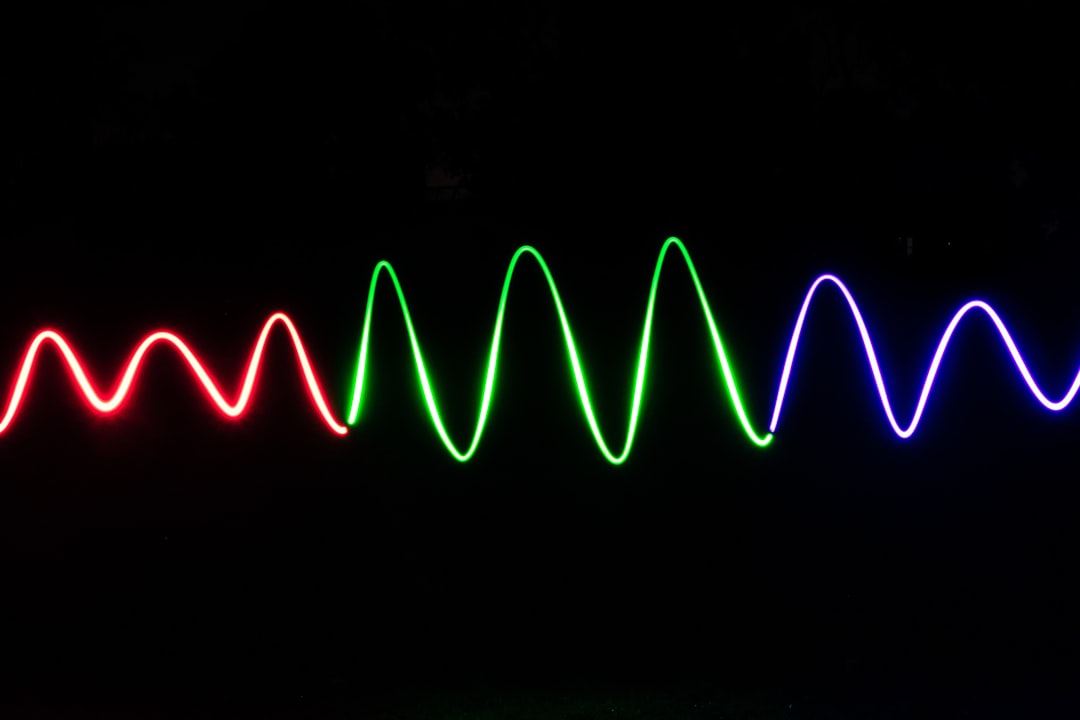
Resonant frequency is a fundamental concept in physics that describes the natural frequency at which a system oscillates when disturbed. This phenomenon occurs in various systems, from mechanical structures to electrical circuits, and is characterized by the amplification of oscillations at specific frequencies. When an external force is applied to a system at its resonant frequency, the system can experience significant increases in amplitude, leading to efficient energy transfer.
This principle is not only crucial in understanding the behavior of physical systems but also plays a pivotal role in various technological applications. In practical terms, resonant frequency can be observed in everyday life. For instance, when a musician plays a note that matches the natural frequency of a wine glass, the glass may vibrate and even shatter due to the resonance effect.
Similarly, in engineering, bridges and buildings must be designed with an understanding of their resonant frequencies to prevent catastrophic failures during events like earthquakes or high winds. Thus, grasping the concept of resonant frequency is essential for both theoretical exploration and practical applications across multiple disciplines.
Key Takeaways
- Resonant frequency is a natural vibration rate that can be harnessed to improve power generation efficiency.
- Utilizing resonant frequency in renewable energy technologies offers promising advantages like reduced energy loss and enhanced output.
- Challenges include technical limitations and the need for advanced materials to optimize resonant frequency systems.
- Innovations are driving new applications and improving the feasibility of resonant frequency-based power generation.
- Successful case studies demonstrate the environmental benefits and future potential of resonant frequency in sustainable energy solutions.
The Science Behind Resonant Frequency
The science of resonant frequency is rooted in the principles of wave mechanics and harmonic motion. When a system is subjected to periodic forces, it can respond in a variety of ways depending on its natural frequency. The relationship between mass, stiffness, and damping determines the resonant frequency of a system.
For example, in a simple mass-spring system, the resonant frequency can be calculated using the formula \( f = \frac{1}{2\pi} \sqrt{\frac{k}{m}} \), where \( k \) represents the spring constant and \( m \) denotes the mass attached to the spring. In electrical systems, resonant frequency is equally significant. In an LC circuit, which consists of an inductor (L) and a capacitor (C), resonance occurs when the inductive reactance equals the capacitive reactance.
This condition allows for maximum energy transfer between the inductor and capacitor, leading to oscillations at the circuit’s resonant frequency. Understanding these underlying principles enables scientists and engineers to manipulate resonant frequencies for various applications, including power generation.
Applications of Resonant Frequency in Power Generation
Resonant frequency has found numerous applications in power generation technologies, particularly in enhancing efficiency and optimizing energy transfer. One notable application is in piezoelectric generators, which convert mechanical vibrations into electrical energy. These generators often operate at their resonant frequency to maximize output, making them suitable for harvesting energy from ambient vibrations in environments such as bridges or roadways.
Another significant application lies in resonant converters used in power electronics. These converters utilize resonant circuits to achieve high efficiency during energy conversion processes. By operating at or near their resonant frequency, these systems minimize energy losses associated with switching and conduction, making them ideal for applications in renewable energy systems such as solar inverters and wind turbine controllers.
The ability to harness resonant frequency effectively can lead to more sustainable and efficient power generation solutions.
Harnessing Resonant Frequency for Renewable Energy
The integration of resonant frequency into renewable energy technologies presents exciting opportunities for enhancing energy capture and conversion. For instance, researchers are exploring the use of resonant frequency in wave energy converters that harness ocean waves’ kinetic energy. By tuning these devices to resonate with specific wave frequencies, they can significantly increase energy extraction efficiency, transforming ocean energy into usable electricity.
Moreover, wind energy systems are also benefiting from advancements in resonant frequency technology. By designing turbine blades that resonate with wind patterns, engineers can optimize their performance and increase energy output. This approach not only improves efficiency but also reduces wear and tear on mechanical components, extending the lifespan of wind turbines.
As renewable energy sources continue to gain prominence, harnessing resonant frequency will play a crucial role in maximizing their potential.
Advantages of Using Resonant Frequency for Power Generation
| Parameter | Typical Range | Unit | Description |
|---|---|---|---|
| Resonant Frequency | 10 – 1000 | Hz | Frequency at which the system naturally oscillates with maximum amplitude |
| Power Output | 0.1 – 10 | Watts | Electrical power generated at resonant frequency |
| Quality Factor (Q) | 50 – 500 | Dimensionless | Measure of the sharpness of the resonance peak |
| Displacement Amplitude | 0.1 – 5 | mm | Maximum mechanical displacement at resonance |
| Voltage Output | 1 – 50 | Volts | Voltage generated by the power generation device at resonance |
| Load Resistance | 100 – 10,000 | Ohms | Electrical load resistance optimized for maximum power transfer |
| Conversion Efficiency | 20 – 80 | Percent (%) | Ratio of electrical power output to mechanical input power |
Utilizing resonant frequency for power generation offers several advantages that contribute to more efficient and sustainable energy systems. One of the primary benefits is enhanced energy conversion efficiency. By operating at or near their resonant frequencies, systems can minimize energy losses associated with non-resonant operation, leading to higher overall performance.
This efficiency is particularly valuable in applications where maximizing output is critical. Additionally, systems designed around resonant frequency often exhibit improved reliability and longevity. By reducing mechanical stress and wear through optimized designs that align with natural frequencies, these systems can operate more smoothly over extended periods.
This reliability translates into lower maintenance costs and increased operational uptime, making them attractive options for both commercial and residential applications.
Challenges and Limitations of Resonant Frequency Power Generation
Despite its advantages, harnessing resonant frequency for power generation is not without challenges and limitations. One significant hurdle is the need for precise tuning of systems to achieve optimal resonance. Variations in environmental conditions or system parameters can shift resonant frequencies, potentially leading to decreased efficiency or even failure if not properly managed.
Engineers must develop adaptive control mechanisms to ensure that systems remain tuned to their optimal frequencies under varying conditions. Another limitation lies in the scalability of resonant frequency technologies.
Researchers are actively exploring innovative solutions to address these issues, but further advancements are necessary before widespread adoption can occur.
Innovations in Resonant Frequency Power Generation Technology
Recent innovations in resonant frequency power generation technology have opened new avenues for research and development. One notable advancement is the integration of smart materials that can dynamically adjust their properties based on environmental conditions. These materials can change their stiffness or mass in response to external stimuli, allowing systems to maintain resonance even as conditions fluctuate.
Additionally, advancements in computational modeling and simulation techniques have enabled engineers to design more sophisticated resonant systems with greater precision. By utilizing advanced algorithms and machine learning approaches, researchers can predict how systems will behave under various conditions and optimize designs accordingly. These innovations are paving the way for more efficient and adaptable power generation technologies that leverage the principles of resonant frequency.
Future Potential of Resonant Frequency Power Generation
The future potential of resonant frequency power generation is vast and promising. As global energy demands continue to rise and the need for sustainable solutions becomes increasingly urgent, harnessing this phenomenon could play a pivotal role in addressing these challenges. Researchers are exploring new materials and designs that could enhance the efficiency of existing technologies while also developing entirely new systems that leverage resonance for energy capture.
Moreover, as interdisciplinary collaboration between physicists, engineers, and environmental scientists grows stronger, innovative applications of resonant frequency are likely to emerge across various sectors. From urban infrastructure designed to harvest vibrational energy from traffic to advanced renewable energy systems capable of adapting to changing environmental conditions, the possibilities are limited only by human creativity and ingenuity.
Environmental Impact of Resonant Frequency Power Generation
The environmental impact of harnessing resonant frequency for power generation is generally positive when compared to traditional fossil fuel-based methods. By utilizing renewable sources such as wind, waves, or vibrations from human activity, these technologies contribute to reducing greenhouse gas emissions and reliance on non-renewable resources. Furthermore, many resonant frequency applications are designed with minimal ecological disruption in mind, making them suitable for deployment in sensitive environments.
However, it is essential to consider potential ecological impacts associated with large-scale implementations of these technologies. For instance, wave energy converters must be carefully designed to avoid disrupting marine ecosystems or altering coastal dynamics. Similarly, piezoelectric generators installed on roadways should be evaluated for their effects on local wildlife and habitats.
A comprehensive understanding of these impacts will be crucial as researchers continue to develop resonant frequency technologies for sustainable power generation.
Case Studies of Successful Resonant Frequency Power Generation Projects
Several successful case studies illustrate the potential of resonant frequency power generation technologies in real-world applications. One notable example is the deployment of piezoelectric generators on bridges that capture vibrational energy from passing vehicles. These installations have demonstrated significant energy output while providing valuable data on structural health monitoring through continuous vibration analysis.
These devices have shown promise in generating consistent electricity while minimizing environmental impact through careful design considerations. Such projects highlight the practical benefits of harnessing resonant frequency for sustainable power generation and serve as models for future developments.
The Role of Resonant Frequency in the Future of Power Generation
In conclusion, resonant frequency represents a powerful tool in the quest for efficient and sustainable power generation solutions. Its underlying principles offer opportunities for innovation across various sectors, from renewable energy technologies to smart materials that adapt to changing conditions. As researchers continue to explore new applications and refine existing technologies, the potential for harnessing resonant frequency will only grow.
The challenges associated with tuning systems and scaling technologies must be addressed through ongoing research and collaboration among scientists and engineers. However, with its numerous advantages—such as enhanced efficiency and reduced environmental impact—resonant frequency stands poised to play a crucial role in shaping the future landscape of power generation. As society moves toward more sustainable practices, embracing this phenomenon could lead to transformative advancements that benefit both humanity and the planet.
Resonant frequency power generation is an innovative approach that harnesses the natural frequencies of materials to optimize energy production. For a deeper understanding of this concept and its applications, you can explore a related article that discusses various methods and technologies in this field. Check it out here: Resonant Frequency Power Generation.
FAQs
What is resonant frequency power generation?
Resonant frequency power generation is a method of producing electrical energy by exploiting the natural frequency at which a system oscillates. When a system is driven at its resonant frequency, it can achieve maximum energy transfer and efficiency.
How does resonant frequency improve power generation efficiency?
At resonant frequency, the system’s impedance is minimized, allowing for maximum energy transfer with minimal losses. This leads to higher efficiency in converting mechanical or vibrational energy into electrical power.
What types of systems use resonant frequency for power generation?
Common systems include piezoelectric devices, electromagnetic generators, and mechanical oscillators that harness vibrations or mechanical movements at their resonant frequencies to generate electricity.
What are the typical applications of resonant frequency power generation?
Applications include energy harvesting from ambient vibrations, powering small electronic devices, renewable energy systems like wind or wave energy converters, and wireless power transfer technologies.
What materials are commonly used in resonant frequency power generators?
Materials such as piezoelectric ceramics, magnets, coils, and elastic materials are often used due to their ability to efficiently convert mechanical vibrations into electrical energy at resonant frequencies.
Are there any limitations to resonant frequency power generation?
Yes, limitations include sensitivity to changes in operating conditions, narrow bandwidth of resonance, and potential mechanical wear. Maintaining resonance requires precise tuning and stable environmental conditions.
How is the resonant frequency determined in a power generation system?
The resonant frequency is determined by the physical properties of the system, such as mass, stiffness, and damping. It can be calculated using mathematical models or measured experimentally through frequency response analysis.
Can resonant frequency power generation be scaled for large power outputs?
While resonant frequency power generation is highly efficient for small to medium-scale applications, scaling up to large power outputs can be challenging due to mechanical and material constraints.
Is resonant frequency power generation environmentally friendly?
Yes, it is generally considered environmentally friendly because it often utilizes ambient energy sources like vibrations or waves, reducing reliance on fossil fuels and minimizing emissions.
What maintenance is required for resonant frequency power generation systems?
Maintenance typically involves monitoring system components for wear, ensuring the system remains tuned to its resonant frequency, and replacing parts as needed to maintain optimal performance.