
Hellenistic engineering emerged during a transformative period in ancient history, roughly spanning from the death of Alexander the Great in 323 BCE to the rise of the Roman Empire around 31 BCE. This era was characterized by a fusion of Greek, Egyptian, Persian, and Indian cultures, leading to significant advancements in various fields, including science, mathematics, and technology. The engineers of this time were not merely builders; they were innovators who applied theoretical knowledge to practical problems, creating solutions that would influence generations to come.
Their work laid the groundwork for many modern engineering principles and practices, showcasing a remarkable blend of creativity and scientific inquiry. The Hellenistic period was marked by a spirit of inquiry and exploration, with engineers and inventors pushing the boundaries of what was possible. Figures such as Archimedes, Hero of Alexandria, and Philo of Byzantium exemplified this innovative spirit.
They developed machines and devices that not only served practical purposes but also demonstrated a deep understanding of physics and mathematics. The legacy of Hellenistic engineering is evident in the way it integrated various disciplines, leading to advancements that would resonate through the ages. As the world transitioned into the Roman era, the foundations laid by Hellenistic engineers would continue to influence architectural design, military technology, urban planning, and more.
Key Takeaways
- Hellenistic engineering had a significant impact on modern technology, influencing various fields such as architecture, warfare, urban planning, water management, transportation, astronomy, mathematics, art, sculpture, medicine, and healthcare.
- Hellenistic engineers achieved remarkable architectural feats, including the construction of grand structures such as the Lighthouse of Alexandria and the Colossus of Rhodes, showcasing their advanced engineering skills and innovative techniques.
- The development of Hellenistic engineering in warfare led to the creation of sophisticated siege engines, catapults, and war machines, revolutionizing military tactics and strategies during ancient times.
- Hellenistic engineering played a crucial role in urban planning, with engineers designing and constructing well-planned cities, efficient road networks, and advanced water supply and sewage systems to support growing populations.
- The impact of Hellenistic engineering on water management was profound, with engineers devising innovative methods for irrigation, water storage, and aqueduct systems, enabling the flourishing of agriculture and urban centers.
The Influence of Hellenistic Engineering on Modern Technology
The contributions of Hellenistic engineers have had a profound impact on modern technology, shaping the way contemporary society approaches engineering challenges. Many principles established during this period remain relevant today, particularly in fields such as mechanics and hydraulics. For instance, Archimedes’ principles of buoyancy and leverage are foundational concepts still taught in engineering courses worldwide.
Moreover, the Hellenistic emphasis on empirical observation and experimentation laid the groundwork for the scientific method that underpins modern technological advancements. Engineers today often rely on data-driven approaches to solve complex problems, a practice that can be traced back to the methodologies employed by Hellenistic thinkers.
The integration of mathematics with engineering during this period also paved the way for developments in computer science and information technology, as algorithms and computational models draw heavily from mathematical principles established by ancient scholars.
The Architectural Achievements of Hellenistic Engineers

Hellenistic engineers made remarkable strides in architecture, creating structures that not only served functional purposes but also embodied aesthetic beauty.
One of the most notable achievements was the design of the Lighthouse of Alexandria, also known as the Pharos of Alexandria.
This monumental structure stood over 100 meters tall and utilized innovative techniques such as a three-tiered design and a mirror system to reflect sunlight during the day and firelight at night, guiding sailors safely into the harbor. In addition to monumental structures, Hellenistic engineers excelled in urban planning. Cities were designed with a focus on functionality and accessibility, incorporating grid layouts that facilitated movement and trade.
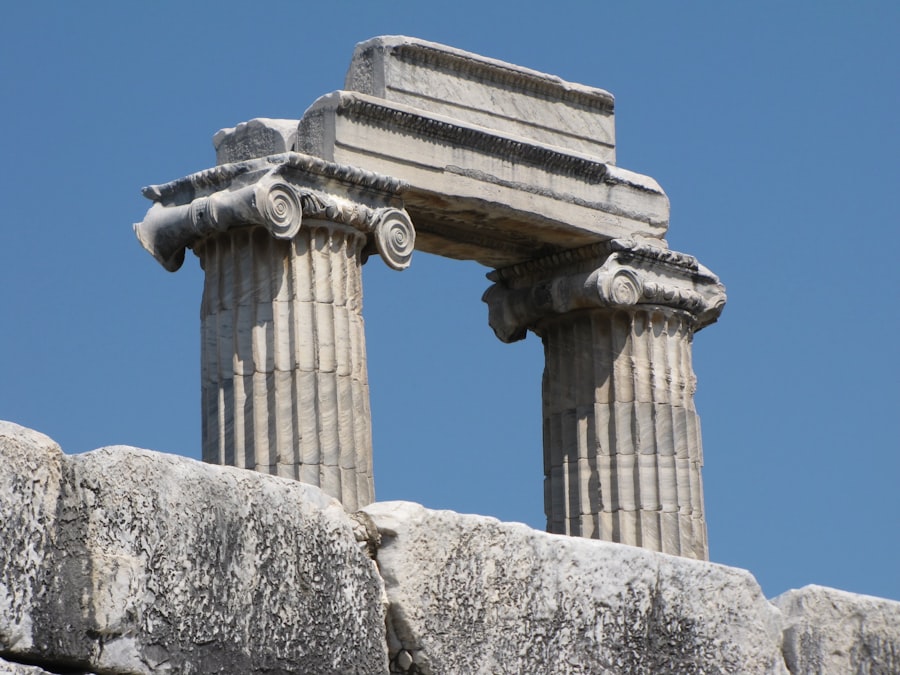
The use of columns and arches became prevalent, allowing for larger open spaces within buildings while maintaining structural integrity. The influence of Hellenistic architecture can still be seen in modern city planning and building design, where aesthetics and functionality continue to be paramount considerations.
The Development of Hellenistic Engineering in Warfare
| Aspect | Details |
|---|---|
| Weapons | Development of torsion catapults, ballistae, and siege engines |
| Fortifications | Advancements in city walls, towers, and defensive structures |
| Engineering | Innovations in siege warfare, including battering rams and siege towers |
| Naval Technology | Improvements in ship design, including larger warships and advanced naval tactics |
| Armor and Weapons | Development of new armor types and advanced weaponry for soldiers |
The advancements in Hellenistic engineering significantly transformed warfare during this period. Engineers developed sophisticated siege engines that revolutionized military tactics. The use of catapults, ballistae, and other artillery allowed armies to breach fortified cities with unprecedented efficiency.
These innovations not only changed the dynamics of battle but also influenced the design of fortifications, as cities had to adapt to counter these new threats. One notable figure in this realm was Philo of Byzantium, who documented various military machines and their applications in warfare. His work provided insights into the mechanics behind these devices, allowing future generations to build upon his knowledge.
The principles of leverage and projectile motion explored by Hellenistic engineers laid the groundwork for modern artillery design and military engineering practices. The legacy of their innovations can be seen in contemporary military technology, where engineering continues to play a crucial role in defense strategies.
Hellenistic Engineering and Urban Planning
Urban planning during the Hellenistic period was characterized by a systematic approach that prioritized organization and functionality. Engineers played a pivotal role in designing cities that catered to both residential needs and commercial activities. The grid layout became a hallmark of Hellenistic urban design, facilitating efficient movement and trade within cities.
Streets were often lined with public buildings, markets, and temples, creating vibrant centers of activity. The integration of public spaces into urban planning was another significant achievement of Hellenistic engineers. They recognized the importance of communal areas for social interaction and civic engagement.
The construction of theaters, gymnasiums, and agorae (public squares) fostered a sense of community among residents. This emphasis on public spaces has influenced modern urban planning practices, where creating livable environments that promote social interaction remains a key objective.
The Impact of Hellenistic Engineering on Water Management
Water management was a critical concern for Hellenistic engineers, particularly in arid regions where access to fresh water was limited. They developed sophisticated systems for irrigation and water supply that significantly improved agricultural productivity and urban living conditions. One notable innovation was the aqueduct system, which allowed cities to transport water over long distances using gravity-fed channels.
This engineering feat not only ensured a reliable water supply but also contributed to public health by providing clean drinking water. Additionally, Hellenistic engineers devised various methods for managing stormwater and preventing flooding. They constructed drainage systems that effectively channeled excess water away from urban areas, reducing the risk of damage during heavy rains.
These early water management techniques laid the foundation for modern hydraulic engineering practices, where effective water resource management remains a critical aspect of urban planning and environmental sustainability.
Hellenistic Engineering and the Advancements in Transportation
Transportation during the Hellenistic period underwent significant advancements due to innovative engineering solutions. The development of roads and bridges facilitated trade and communication across vast distances, connecting cities and regions like never before. Engineers designed durable roadways that could withstand heavy traffic while ensuring safe passage for travelers and merchants alike.
The construction of bridges using arches was another remarkable achievement that showcased Hellenistic engineering prowess. These structures not only provided essential crossings over rivers but also demonstrated an understanding of load distribution and structural integrity. The principles behind these early bridges continue to inform modern civil engineering practices, where safety and efficiency remain paramount considerations in transportation infrastructure development.
The Role of Hellenistic Engineering in Astronomy and Mathematics
Hellenistic engineers made significant contributions to astronomy and mathematics, fields that were deeply intertwined with their engineering endeavors. The period saw advancements in observational techniques and instruments that allowed astronomers to study celestial bodies with greater accuracy. Figures such as Hipparchus developed methods for calculating celestial positions and predicting astronomical events, laying the groundwork for future astronomical studies.
Mathematics played a crucial role in engineering during this time, as engineers relied on geometric principles to design structures and solve practical problems. The work of mathematicians like Euclid influenced engineering practices by providing foundational concepts related to geometry and measurement. This integration of mathematics into engineering not only enhanced construction techniques but also fostered a culture of inquiry that would shape scientific thought for centuries to come.
The Legacy of Hellenistic Engineering in Art and Sculpture
The artistic achievements of the Hellenistic period were closely linked to advancements in engineering techniques. Sculptors utilized innovative methods to create lifelike representations that captured human emotion and movement with remarkable realism. The use of contrapposto—a technique that involves positioning a figure’s weight on one leg—was perfected during this time, resulting in dynamic poses that conveyed a sense of vitality.
Moreover, engineers played a vital role in constructing monumental sculptures and public artworks that adorned cities throughout the Hellenistic world. The Colossus of Rhodes is one such example; this massive statue stood as both an artistic triumph and an engineering marvel. Its construction required advanced knowledge of materials and structural stability, showcasing how art and engineering intersected during this period.
The Contributions of Hellenistic Engineers to Medicine and Healthcare
Hellenistic engineers also made notable contributions to medicine and healthcare through their innovative designs for medical instruments and facilities. They developed surgical tools that improved precision during procedures, enhancing patient outcomes significantly. The establishment of medical schools in cities like Alexandria further facilitated the exchange of knowledge between engineers, physicians, and scholars.
Additionally, engineers contributed to public health initiatives by designing hospitals and sanitation systems that promoted hygiene within urban environments. Their understanding of water management played a crucial role in preventing disease outbreaks by ensuring access to clean water and proper waste disposal systems. These early contributions laid the groundwork for modern healthcare practices, where engineering continues to play an essential role in medical technology development.
The Enduring Impact of Hellenistic Engineering
The legacy of Hellenistic engineering is profound and enduring, influencing countless aspects of modern life from architecture to healthcare. The innovative spirit that characterized this period continues to inspire contemporary engineers as they tackle complex challenges across various fields. By integrating theoretical knowledge with practical applications, Hellenistic engineers set a precedent for future generations to follow.
As society progresses into an increasingly complex technological landscape, the principles established by Hellenistic engineers remain relevant today. Their contributions serve as a reminder of the importance of creativity, collaboration, and scientific inquiry in driving progress forward. Ultimately, the impact of Hellenistic engineering is not merely historical; it is woven into the very fabric of modern civilization, shaping how people live, work, and interact with their environment.
The Hellenistic period was marked by remarkable engineering achievements that laid the groundwork for future innovations. One notable article that delves into these advancements is available at this link. It explores the intricate designs and technologies developed during this era, highlighting the contributions of figures such as Archimedes and the construction of monumental structures that showcased the ingenuity of Hellenistic engineers.
WATCH THIS! Why 99% of History Is Wrong (The Ooparts That Prove It)
FAQs
What were some of the engineering achievements of the Hellenistic period?
Some of the engineering achievements of the Hellenistic period include the construction of the famous lighthouse of Alexandria, the development of advanced siege warfare techniques, and the creation of innovative water management systems such as aqueducts and irrigation systems.
How did Hellenistic engineers contribute to architecture and construction?
Hellenistic engineers made significant contributions to architecture and construction by developing new building techniques, such as the use of arches and domes, and by creating grand structures like the Colossus of Rhodes and the Mausoleum at Halicarnassus.
What advancements were made in the field of military engineering during the Hellenistic period?
During the Hellenistic period, engineers made advancements in military engineering by designing more sophisticated siege engines, such as catapults and ballistae, and by developing new defensive structures like city walls and fortifications.
How did Hellenistic engineers contribute to the field of water management?
Hellenistic engineers made significant contributions to water management by designing and constructing aqueducts to transport water over long distances, as well as developing advanced irrigation systems to improve agricultural productivity.
What impact did Hellenistic engineering achievements have on future civilizations?
The engineering achievements of the Hellenistic period had a lasting impact on future civilizations by influencing architectural styles, construction techniques, and military engineering practices. The innovations and advancements made by Hellenistic engineers laid the foundation for many developments in engineering and technology that followed.