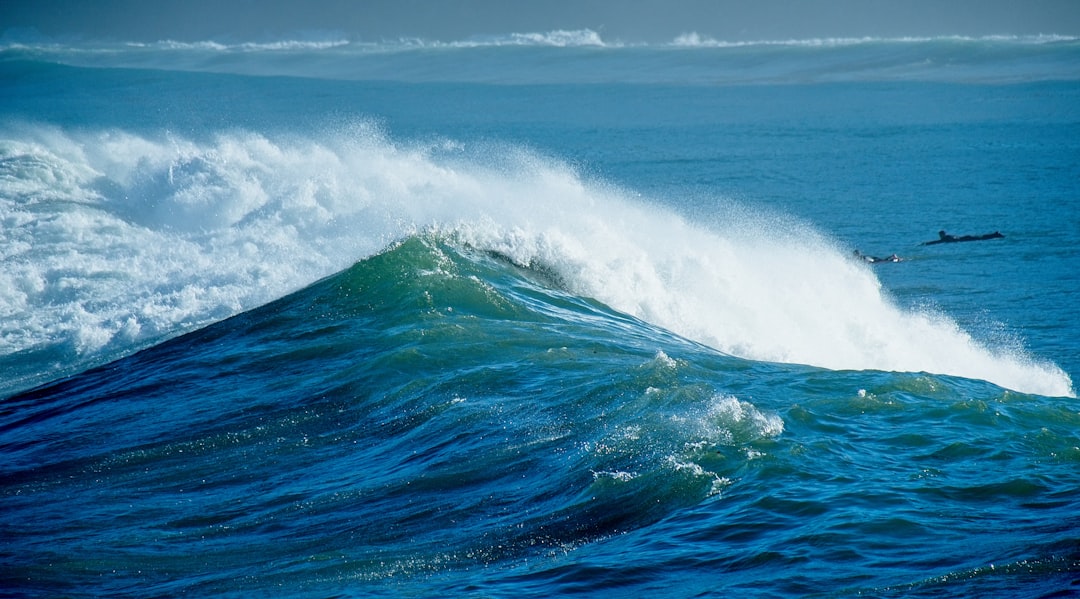
Internal waves, though often hidden from the sun-drenched surface, can exert a potent and often disruptive influence on the marine environment, particularly at berthed vessels. Their unseen power, like a subterranean river carving its path beneath the ocean’s skin, can translate into significant forces that impact the stability and safety of ships moored in harbors and alongside piers. Understanding the mechanisms and consequences of internal wave-induced swell at berths is crucial for maritime operations, port management, and the overall integrity of marine infrastructure.
Defining Internal Waves
Internal waves are a phenomenon that occurs within the ocean’s interior, distinct from the surface waves that are readily visible. They are generated at the interface between layers of water possessing different densities. These density differences are typically caused by variations in temperature (thermocline) or salinity (halocline). Imagine two distinct fluids layered one upon the other, like oil and vinegar. If you agitate this layered system, waves will form at the interface between them, and this is analogous to internal wave formation within the ocean. Unlike surface waves, which are constrained by the air-sea interface, internal waves can travel vast distances within the ocean’s water column.
Generation Mechanisms
The genesis of internal waves is attributed to several natural processes. Tidal forces are a primary driver, as the ebb and flow of tides push and pull stratified water masses, causing them to undulate. Imagine the Moon’s gravitational pull acting like a giant hand stirring a layered cake; this stirring creates internal waves. Other contributing factors include:
- Wind Stress: While wind primarily drives surface waves, it can also indirectly influence internal waves. Wind-driven currents can interact with density gradients, initiating or amplifying internal wave activity.
- Topography: Underwater features, such as seamounts, ridges, and continental slopes, play a significant role in trapping and reinforcing internal waves. These underwater mountains act like dams, creating areas where internal waves can build in amplitude.
- Atmospheric Pressure Changes: Fluctuations in atmospheric pressure can cause sea-level changes, which in turn can drive internal wave motions, especially in confined bodies of water.
- Geostrophic Currents: Large-scale ocean currents, driven by Earth’s rotation and density differences, can also interact with density interfaces to generate and propagate internal waves.
Characteristics of Internal Waves
Internal waves exhibit a range of characteristics, including their amplitude, wavelength, and frequency.
- Amplitude: The vertical displacement of the isopycnal (surface of constant density) can be considerable, sometimes reaching tens to hundreds of meters. This significant vertical movement is a key factor in their impact.
- Wavelength: Internal waves can have very long wavelengths, often spanning kilometers, allowing them to persist and travel for extended periods.
- Frequency: Their frequencies are typically lower than those of surface waves and are often related to tidal cycles.
- Steepness and Breaking: Under certain conditions, internal waves can become steep and “break” within the water column, dissipating energy and creating turbulence. This breaking can be likened to a breaking surface wave, but occurring entirely beneath the surface.
Internal wave-induced swell at the berth can significantly impact maritime operations, leading to potential disruptions and safety concerns. A related article that explores the implications of environmental factors on property and maritime activities is available at this link: Governments’ Seizure of Private Property in Crisis. This article delves into how external pressures, including environmental changes, can influence governmental decisions regarding property rights and maritime regulations.
The Translation of Internal Waves to Swell at Berths
The Interface Effect
The crucial link between internal waves and the forces experienced at a berth lies in their interaction with the ocean’s layered structure. As an internal wave propagates, it causes significant vertical displacement of water parcels at the thermocline or halocline. When this interface is relatively close to the surface, particularly in shallower coastal waters or harbors, the internal wave’s undulations can directly influence the overlying water column. This influence is not a direct mimicry of surface waves but rather a more subtle, yet potent, forcing. Imagine a large, submerged blanket being pulled up and down; the ripples on the surface of the blanket, though not the primary motion, are a consequence of the submerged action.
Wave Transformation and Amplification
Several factors can lead to the transformation and amplification of internal wave energy as it approaches a berthed vessel.
- Shoaling: As internal waves travel into shallower water, their amplitude tends to increase, much like surface waves. This shoaling effect concentrates the energy into a smaller volume of water, enhancing the forces they can exert.
- Reflection and Refraction: Underwater topography can cause internal waves to reflect off barriers or refract (bend) as they encounter changes in water depth and density gradients, potentially focusing their energy onto specific locations, including berths.
- Interaction with Surface Waves: While distinct, internal and surface waves can interact. In some instances, internal wave activity can modulate the amplitude or period of surface waves, leading to a combined effect that can be more disruptive than either phenomenon alone. This is akin to two musicians playing different notes, but the resulting sound is a more complex chord.
The “Swell” at Berth
The term “swell” is conventionally associated with long-period surface waves generated by distant weather systems. However, in the context of internal waves at a berth, the term refers to the resulting oscillatory motion and forces experienced by the vessel. This “internal wave swell” manifests as a rhythmic heaving, pitching, and surging of the vessel, driven by the subsurface density variations. It’s a subtler, more persistent form of motion than the sharp, choppy movements of typical surface waves, and its long period can be particularly problematic for mooring systems.
Impact on Berthed Vessels

The forces generated by internal wave-induced swell can have a range of detrimental effects on vessels moored at berths. These impacts can range from minor inconveniences to significant safety hazards.
Mooring Line Dynamics
The oscillatory motion induced by internal waves places considerable stress on mooring lines.
- Increased Tension Fluctuations: The rhythmic surge and heave cause the mooring lines to repeatedly slacken and tighten, leading to dynamic fatigue and potential failure. Imagine a rope being continuously pulled and released; eventually, it will wear and break.
- Chafing and Wear: The constant movement can cause mooring lines to chafe against mooring bits, bollards, and the vessel’s hull, accelerating wear and increasing the risk of breakage.
- Over-tensioning: In some cases, the combined forces of internal waves and tides can lead to excessive tension in mooring lines, potentially exceeding their safe working load.
Vessel Motion and Stability
The vertical and horizontal movements induced by internal waves can compromise the vessel’s stability and cause discomfort to the crew.
- Heave, Pitch, and Surge: The dominant motions are typically heave (vertical movement), pitch (rotation around the transverse axis), and surge (horizontal movement fore and aft). These motions can be amplified if they resonate with the vessel’s natural period of oscillation.
- Risk of Grounding or Collision: In extreme cases, particularly in shallow berths, significant heaving or surging could lead to the vessel’s keel coming into contact with the seabed or its side striking the quay or adjacent vessels.
- Crew Discomfort and Operational Challenges: The persistent motion can lead to seasickness, hinder cargo operations, and increase the risk of accidents involving personnel working on deck.
Damage to Hull and Berthing Structures
The constant buffeting and dynamic forces can inflict damage on both the vessel and the berthing infrastructure.
- Hull Fenders and Coatings: The friction and impact from repeated contact with the quay or fenders can cause damage to the vessel’s hull, its protective coatings, and the fenders themselves.
- Quay Walls and Dolphins: Berthed vessels experiencing significant internal wave-induced motion can exert considerable forces on quay walls, mooring dolphins, and other berthing structures, potentially leading to structural damage over time. The relentless pressure, even if seemingly small at any given moment, can erode the strength of even robust structures.
- Pipelines and Submerged Infrastructure: In harbors with extensive submerged pipelines or other infrastructure, the movement of vessels or the disturbance of the seabed caused by amplified internal waves can pose a risk of damage.
Detection and Prediction of Internal Wave-Induced Swell
Accurate detection and prediction of internal wave phenomena are crucial for mitigating their impact at berths.
Monitoring Techniques
Various methods are employed to monitor internal wave activity and its potential influence.
- Acoustic Doppler Current Profilers (ADCPs): These instruments can measure water velocity at different depths, allowing for the detection of internal wave signatures and their associated currents.
- Oceanographic Buoys: Equipped with sensors for temperature, salinity, and current, buoys can provide real-time data on stratification and internal wave activity in specific locations.
- Satellite Remote Sensing: Certain satellite sensors can detect surface manifestations of internal waves, such as slicks or patterns in sea surface temperature, particularly when internal wave amplitudes are significant. However, this method relies on surface clues and may not always capture all subsurface phenomena.
- Submersible Gliders and Autonomous Underwater Vehicles (AUVs): These platforms can survey larger areas and collect detailed data on water column properties, providing valuable insights into internal wave propagation and intensity.
Predictive Modeling
Mathematical models play a vital role in forecasting the likelihood and impact of internal waves.
- Hydrodynamic Models: These models simulate ocean currents, tides, and density variations to predict the generation, propagation, and potential amplification of internal waves. They act as sophisticated weather forecasts for the ocean’s depths.
- Tidal Models: Given the significant role of tides in generating internal waves, accurate tidal models are a fundamental component of any predictive system.
- Coupled Models: Integrating atmospheric, oceanic, and wave models can provide a more comprehensive understanding of the complex interactions that lead to impactful internal wave events.
- Data Assimilation: Incorporating real-time observational data into predictive models enhances their accuracy and ability to forecast specific events.
Real-time Alert Systems
The development of real-time alert systems is essential for providing timely warnings to port authorities and vessel operators.
- Threshold-based Alerts: Systems can be programmed to issue alerts when predicted internal wave parameters exceed predefined safety thresholds.
- Vessel-specific Advisories: Tailoring warnings based on the specific vessel type, its mooring configuration, and the prevailing environmental conditions can provide more actionable information.
- Communication Networks: Establishing robust communication channels between monitoring agencies, port authorities, and vessel operators is crucial for disseminating alerts effectively.
Internal wave induced swell at the berth can significantly impact maritime operations, leading to challenges in loading and unloading cargo. Understanding these phenomena is crucial for port authorities and shipping companies alike. For further insights into the importance of safeguarding valuable assets, you might find this article on protecting your gold particularly relevant, as it discusses various strategies to secure investments against unforeseen circumstances. You can read more about it here.
Mitigation Strategies and Best Practices
| Parameter | Unit | Typical Range | Description |
|---|---|---|---|
| Wave Height | meters | 0.1 – 0.5 | Amplitude of internal wave induced swell at berth |
| Wave Period | seconds | 30 – 300 | Time between successive wave crests |
| Wave Frequency | Hz | 0.003 – 0.033 | Frequency of internal wave oscillations |
| Wave Length | meters | 100 – 1000 | Distance between wave crests |
| Current Velocity | m/s | 0.05 – 0.3 | Velocity of water movement induced by internal waves |
| Water Depth | meters | 10 – 50 | Depth at berth location |
| Temperature Gradient | °C/m | 0.1 – 1.0 | Vertical temperature difference driving internal waves |
| Density Gradient | kg/m³/m | 0.1 – 2.0 | Vertical density difference influencing wave formation |
Effective mitigation strategies are paramount to minimizing the risks associated with internal wave-induced swell at berths.
Mooring System Optimization
The design and maintenance of mooring systems are critical for withstanding the dynamic forces.
- Mooring Load Analysis: Conducting thorough analyses to determine the maximum expected mooring loads, considering potential internal wave events, is a primary step.
- Appropriate Mooring Equipment: Selecting mooring lines, chains, and shackles with adequate strength, elasticity, and resistance to wear and tear is essential. Using elastic mooring components can act as shock absorbers, dissipating some of the energy.
- Mooring Configuration: Optimizing the number, length, and arrangement of mooring lines can help distribute the load and reduce the impact of surges and heaves.
- Regular Inspections and Maintenance: Implementing a rigorous schedule for inspecting mooring lines, terminals, and associated hardware for signs of wear, damage, or corrosion is vital.
Berth Design and Management
The physical design of berths and their operational management can significantly influence their susceptibility to internal wave impacts.
- Depth Considerations: Understanding the bathymetry and the proximity of the thermocline or halocline to the seabed is crucial when selecting berth locations.
- Wave Attenuation Structures: In areas prone to significant internal wave activity, the potential use of submerged breakwaters or other structures designed to attenuate wave energy could be considered.
- Dynamic Mooring Systems: Exploring the use of dynamic mooring systems that can actively adjust mooring line tension in response to changing environmental conditions could offer enhanced protection. While complex, these systems represent the cutting edge of maritime engineering.
- Vessel Scheduling and Routing: Adjusting vessel schedules to avoid periods of predicted intense internal wave activity can be a proactive measure.
Operational Procedures
Establishing clear operational procedures for dealing with internal wave events is vital for safety and efficiency.
- Pre-arrival Briefings: Providing vessel masters with information on potential internal wave conditions prior to their arrival at the berth.
- Enhanced Monitoring During High-Risk Periods: Increasing the monitoring of vessel motion and mooring line tensions during periods of known or predicted internal wave activity.
- Emergency Response Plans: Developing and practicing emergency response plans to address scenarios such as mooring line failure or unsafe vessel motion.
- Crew Training: Ensuring that crew members are adequately trained to recognize the signs of internal wave-induced stress and to follow established safety protocols.
In conclusion, internal waves are a pervasive yet often overlooked aspect of the marine environment. Their ability to generate significant subsurface forces that translate to disruptive swell at berths presents a persistent challenge for maritime operations. By deepening our understanding of their generation, propagation, and impact, and by diligently implementing robust monitoring, prediction, and mitigation strategies, the risks associated with internal wave-induced swell can be effectively managed, ensuring the safety and efficiency of our ports and waterways.
FAQs
What is internal wave induced swell at the berth?
Internal wave induced swell at the berth refers to the oscillations or wave motions in the water caused by internal waves beneath the surface, which can affect the calmness and stability of water near docking areas or berths.
How do internal waves generate swell at a berth?
Internal waves travel along density gradients within the water column, and when these waves interact with the seabed or coastal structures near a berth, they can cause surface water movements or swell, leading to noticeable wave activity even in sheltered areas.
Why is internal wave induced swell a concern for berthing operations?
Such swell can impact the safety and efficiency of docking and mooring operations by causing unexpected vessel movements, increasing the risk of damage to ships and port infrastructure, and complicating loading and unloading procedures.
What factors influence the intensity of internal wave induced swell at a berth?
The intensity depends on factors such as the strength and frequency of internal waves, water column stratification, seabed topography near the berth, tidal conditions, and the design of the berth or harbor.
How can ports mitigate the effects of internal wave induced swell?
Ports can mitigate these effects by designing berths with appropriate breakwaters, using mooring systems that accommodate vessel movement, monitoring internal wave activity, and scheduling operations during periods of minimal internal wave activity.