
The Khazar Khaganate, a prominent political entity that flourished between the 7th and 10th centuries, occupied a strategic position in the vast expanse of Eurasia. Situated at the crossroads of Europe and Asia, this formidable state emerged as a significant power, controlling key trade routes that connected the Byzantine Empire, the Islamic Caliphates, and the emerging states of Eastern Europe. The Khazars, a semi-nomadic Turkic people, established their dominance over a diverse population that included Slavs, Jews, and various other ethnic groups.
This multicultural tapestry not only enriched the Khazar society but also played a crucial role in shaping its policies and diplomatic strategies. The Khazar Khaganate is often remembered for its unique approach to governance and diplomacy, particularly its commitment to maintaining neutrality amidst the turbulent geopolitical landscape of the time. Unlike many of its contemporaries, who were often embroiled in conflicts over territory and influence, the Khazars adeptly navigated the complexities of international relations.
Their ability to remain neutral allowed them to thrive economically and culturally, making them a significant player in the region. This article delves into the multifaceted aspects of the Khazar Khaganate’s neutrality, exploring its strategic importance, diplomatic relationships, military tactics, economic benefits, and cultural tolerance.
Key Takeaways
- The Khazar Khaganate maintained strategic neutrality to balance power among neighboring empires.
- Diplomatic relationships and military alliances were key to preserving their neutral stance.
- Economic prosperity was driven by trade and commerce facilitated through their neutral position.
- Cultural and religious tolerance reinforced internal stability and external diplomatic success.
- The Khazar legacy offers valuable lessons on neutrality and conflict mediation in international relations.
The strategic importance of neutrality in the Khazar Khaganate
Neutrality served as a cornerstone of the Khazar Khaganate’s foreign policy, providing a buffer against the encroaching powers that surrounded it. By adopting a stance of non-alignment, the Khazars were able to avoid direct confrontation with both the Byzantine Empire to the west and the Islamic Caliphates to the south. This strategic positioning not only safeguarded their territory but also allowed them to act as intermediaries between these two great powers.
The Khazars recognized that their geographical location could be both a blessing and a curse; thus, they chose to leverage it to their advantage by fostering an environment of peace and stability.
The Khazar Khaganate became a vital hub for trade, attracting merchants from various regions who sought safe passage through its lands.
By maintaining neutrality, the Khazars ensured that their territory remained open for commerce, allowing them to collect taxes and tariffs from traders passing through. This economic model not only enriched the Khazar elite but also contributed to the overall development of their society. The strategic importance of neutrality was thus twofold: it provided security against external threats while simultaneously fostering economic growth.
The Khazar Khaganate’s diplomatic relationships with neighboring empires
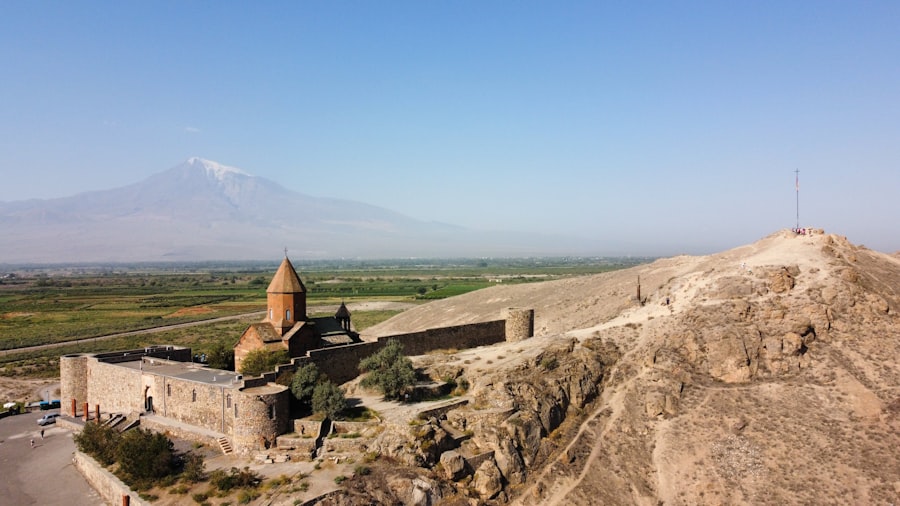
The diplomatic acumen of the Khazar Khaganate was evident in its relationships with neighboring empires. The Khazars skillfully balanced their interactions with both the Byzantine Empire and the Islamic Caliphates, often playing one against the other to maintain their independence. This delicate dance of diplomacy allowed them to extract concessions and benefits from both sides without committing to any one alliance.
The Khazars were adept negotiators, often using marriage alliances and tribute agreements as tools to solidify their position and ensure their sovereignty. Moreover, the Khazar Khaganate’s diplomatic relationships extended beyond mere power politics; they were characterized by a remarkable degree of cultural exchange. The Khazars welcomed diverse influences from both empires, adopting elements of Byzantine art and architecture while also engaging with Islamic scholarship and science.
This cultural syncretism not only enriched Khazar society but also reinforced their position as a neutral ground where different cultures could coexist. The ability to navigate these complex relationships was a testament to the Khazars’ diplomatic skill and their commitment to maintaining a neutral stance in an era marked by conflict.
Military tactics and alliances in maintaining neutrality
While diplomacy played a crucial role in maintaining neutrality, military tactics were equally important for the Khazar Khaganate. The Khazars developed a formidable military force that was capable of defending their territory against potential aggressors. Their army was composed of both professional soldiers and local militias, allowing for flexibility in response to threats.
The Khazars also employed innovative tactics, such as rapid cavalry maneuvers and ambush strategies, which enabled them to outmaneuver larger forces when necessary. In addition to their military prowess, the Khazars formed strategic alliances with various tribes and groups in the region. These alliances were often temporary and based on mutual interests rather than long-term commitments.
By fostering relationships with neighboring tribes, the Khazars created a network of support that could be mobilized in times of crisis. This approach not only enhanced their military capabilities but also reinforced their position as a neutral power that could provide security without becoming embroiled in conflicts.
The economic benefits of neutrality for the Khazar Khaganate
| Aspect | Description | Impact on Khazar Khaganate | Historical Period |
|---|---|---|---|
| Diplomatic Relations | Maintained neutrality by balancing relations between Byzantine Empire, Umayyad/Abbasid Caliphates, and other regional powers | Ensured survival and political stability by avoiding direct conflicts | 7th to 10th centuries |
| Trade Strategy | Acted as a commercial hub and intermediary in Silk Road trade routes | Economic prosperity and influence without military expansion | 7th to 10th centuries |
| Military Posture | Maintained a strong defensive military but avoided offensive campaigns | Deterrence against invasions while preserving neutrality | 7th to 10th centuries |
| Religious Policy | Adopted religious tolerance, including Judaism as state religion, to unify diverse populations | Reduced internal conflicts and fostered alliances with different groups | 8th to 10th centuries |
| Geopolitical Position | Located between major empires, used geography to leverage neutrality | Acted as a buffer state, preventing direct confrontations between larger powers | 7th to 10th centuries |
The economic landscape of the Khazar Khaganate was significantly shaped by its policy of neutrality. By remaining unaligned in regional conflicts, the Khazars were able to cultivate an environment conducive to trade and commerce. Their territory became a vital conduit for merchants traveling between Europe and Asia, facilitating the exchange of goods such as silk, spices, and precious metals.
The influx of trade not only enriched the Khazar elite but also contributed to the overall prosperity of their society. Furthermore, neutrality allowed the Khazars to establish a robust taxation system that capitalized on trade revenues. Merchants passing through Khazar lands were required to pay tolls and tariffs, generating substantial income for the state.
This economic model provided the resources necessary for maintaining a strong military and supporting public infrastructure projects. The economic benefits derived from neutrality thus reinforced the Khazar Khaganate’s position as a powerful entity in Eurasia while ensuring its continued independence.
The role of trade and commerce in the Khazar Khaganate’s neutrality
Trade and commerce were not merely economic activities for the Khazar Khaganate; they were integral components of its identity as a neutral power. The bustling markets within Khazar cities served as melting pots where diverse cultures converged, fostering an atmosphere of tolerance and cooperation. Merchants from various backgrounds interacted freely, exchanging not only goods but also ideas and cultural practices.
This vibrant commercial environment was a testament to the success of the Khazar policy of neutrality. The strategic location of the Khazar Khaganate along key trade routes further enhanced its role as a commercial hub. The Silk Road traversed its territory, connecting it with distant lands such as China and Persia.
By facilitating trade between these regions, the Khazars positioned themselves as essential players in international commerce. Their ability to maintain peace along these routes ensured that merchants felt safe conducting business within their borders, further solidifying their reputation as a neutral power committed to fostering economic prosperity.
Cultural and religious tolerance in the Khazar Khaganate
Cultural and religious tolerance was another hallmark of the Khazar Khaganate’s governance. The diverse population within its borders included various ethnic groups practicing different faiths, including Judaism, Christianity, Islam, and traditional pagan beliefs. Rather than imposing a singular religious or cultural identity, the Khazars embraced this diversity as a source of strength.
This approach not only fostered social cohesion but also attracted scholars, artists, and traders from various backgrounds who sought refuge or opportunity within the khaganate. The most notable example of this tolerance was the conversion of the ruling elite to Judaism in the 8th or 9th century. This decision was emblematic of the Khazars’ commitment to religious pluralism; they did not seek to convert their subjects but rather allowed them to practice their faith freely.
This unique religious landscape contributed to a sense of unity among disparate groups while reinforcing the khaganate’s image as a neutral power that respected individual beliefs.
The Khazar Khaganate’s role in mediating conflicts between neighboring empires
The strategic neutrality of the Khazar Khaganate positioned it as an important mediator in conflicts between neighboring empires. Both the Byzantine Empire and Islamic Caliphates recognized the value of having a neutral party that could facilitate dialogue and negotiations during times of tension. The Khazars often acted as intermediaries in disputes over territory or trade rights, leveraging their unique position to broker peace agreements that benefited all parties involved.
This role as mediator not only enhanced the khaganate’s diplomatic standing but also reinforced its commitment to maintaining stability in the region. By fostering peaceful resolutions to conflicts, the Khazars demonstrated that neutrality could be an effective strategy for promoting cooperation among rival powers. Their ability to navigate complex political landscapes while remaining impartial solidified their reputation as skilled diplomats and peacemakers.
The Khazar Khaganate’s legacy of neutrality in international relations
The legacy of the Khazar Khaganate’s neutrality continues to resonate in contemporary discussions about international relations. Their approach serves as an early example of how states can navigate complex geopolitical landscapes without succumbing to external pressures or conflicts. The khaganate’s ability to maintain independence while fostering economic prosperity through trade is particularly relevant today as nations grapple with issues related to globalization and interdependence.
Moreover, the cultural tolerance exhibited by the Khazars offers valuable lessons for modern societies facing challenges related to diversity and inclusion. Their commitment to respecting different beliefs and practices created an environment where coexistence thrived—a principle that remains essential in today’s increasingly interconnected world. The legacy of the Khazar Khaganate thus serves as a reminder that neutrality can be a powerful tool for promoting peace and stability in international relations.
Challenges and threats to the Khazar Khaganate’s neutrality
Despite its successes, maintaining neutrality was not without challenges for the Khazar Khaganate. External pressures from neighboring empires often threatened its independence; both Byzantium and Islamic powers sought to exert influence over this strategically located state. Additionally, internal divisions among various ethnic groups posed risks to social cohesion, potentially undermining the khaganate’s ability to present a united front against external threats.
The rise of new powers in Eastern Europe also presented challenges to Khazar neutrality. As emerging states sought territorial expansion or influence over trade routes, they often viewed the khaganate as an obstacle to their ambitions. These dynamics necessitated constant vigilance on the part of the Khazars as they navigated shifting alliances and rivalries while striving to maintain their neutral stance.
Lessons from the Khazar Khaganate’s strategic approach to neutrality
The strategic approach taken by the Khazar Khaganate offers valuable lessons for contemporary states navigating complex international landscapes. Their commitment to neutrality allowed them not only to survive but also to thrive amidst competing powers—a principle that remains relevant today as nations grapple with issues related to sovereignty and influence. Furthermore, the emphasis on cultural tolerance within the khaganate serves as an important reminder of the value of diversity in fostering social cohesion and stability.
In an increasingly polarized world, embracing different perspectives can lead to greater understanding and cooperation among nations. Ultimately, studying the history of the Khazar Khaganate provides insights into how states can effectively manage their relationships with others while prioritizing peace and prosperity—a timeless lesson that continues to resonate across centuries.
The Khazar Khaganate’s neutrality strategy during the tumultuous period of the early medieval era is a fascinating topic that highlights the complexities of regional politics. For a deeper understanding of the geopolitical dynamics at play, you can explore a related article that discusses the broader implications of neutrality in historical contexts. Check it out here: Neutrality in Historical Contexts.
WATCH THIS! 🏛️ Empires Didn’t Collapse—They Got Erased: The Pattern Nobody Sees
FAQs
What was the Khazar Khaganate?
The Khazar Khaganate was a semi-nomadic Turkic state that existed from approximately the 7th to the 10th century in the region around the Caspian Sea, including parts of modern-day southern Russia, Ukraine, and Kazakhstan.
What does the neutrality strategy of the Khazar Khaganate refer to?
The neutrality strategy refers to the Khazar Khaganate’s diplomatic and military approach of maintaining a balanced position between major powers of the time, such as the Byzantine Empire, the Islamic Caliphates, and various steppe nomads, to avoid direct conflict and preserve their sovereignty.
Why did the Khazar Khaganate adopt a neutrality strategy?
The Khazars adopted neutrality to protect their trade interests, maintain political stability, and avoid being drawn into costly wars between larger empires. This strategy helped them act as intermediaries and control important trade routes.
How did the Khazar Khaganate maintain neutrality between competing powers?
They engaged in diplomatic relations with multiple powers, formed strategic alliances when beneficial, and sometimes acted as mediators. Their military strength also deterred invasions, allowing them to negotiate from a position of strength.
What role did religion play in the Khazar Khaganate’s neutrality?
The Khazar elite famously converted to Judaism, which helped distinguish them culturally and politically from their Christian and Muslim neighbors, potentially aiding their neutral stance by not aligning religiously with either side.
Did the neutrality strategy of the Khazar Khaganate last throughout its existence?
While the Khazars maintained neutrality for much of their history, changing political dynamics and pressures from emerging powers eventually challenged their position, contributing to the decline of the Khaganate by the late 10th century.
What impact did the Khazar Khaganate’s neutrality have on regional trade?
Their neutrality allowed the Khazars to control and facilitate trade between the East and West, including the Silk Road routes, which brought economic prosperity and made their capital, Atil, a major commercial hub.
Are there historical sources that discuss the Khazar Khaganate’s neutrality strategy?
Yes, various Byzantine, Arab, and Jewish historical texts reference the Khazars and their diplomatic policies, providing insight into their strategy of neutrality and balancing relations among powerful neighbors.