
Ancient empires were large-scale political organizations that controlled extensive territories and populations across different regions of the world throughout history. These entities developed complex administrative systems, cultural institutions, and technological innovations that significantly influenced human development. Notable examples include the Roman Empire, which at its peak controlled territories spanning from Britain to North Africa and the Middle East, and the Maya civilization, which established sophisticated city-states across Mesoamerica between approximately 2000 BCE and 1500 CE.
These empires typically featured hierarchical social structures, centralized governments, and economic systems that facilitated trade and resource distribution across vast distances. They developed legal codes, military organizations, and bureaucratic institutions to maintain control over diverse populations and territories. Many also made significant advances in engineering, mathematics, astronomy, and other fields of knowledge.
Research into ancient empires helps scholars understand patterns of political organization, economic development, and cultural exchange in human societies. Analysis of their formation, expansion, and eventual decline reveals factors such as military capability, administrative efficiency, economic stability, and environmental conditions that influenced their longevity. Archaeological evidence and historical records from these civilizations provide data about ancient technologies, social practices, and belief systems that contributed to the development of subsequent societies and continue to influence modern institutions and cultural practices.
Key Takeaways
- Ancient empires created remarkable architectural and cultural artifacts that continue to influence modern society.
- Preservation and restoration efforts are crucial for maintaining these historical treasures for future generations.
- Cultural artifacts provide valuable insights into the social, political, and religious aspects of ancient societies.
- The legacy of ancient empires is evident in world heritage sites and contemporary cultural practices.
- Ongoing study and conservation are essential to understanding and honoring the enduring impact of ancient civilizations.
Architectural Marvels of Ancient Empires
The architectural achievements of ancient empires stand as testaments to human ingenuity and creativity. Structures such as the Pyramids of Giza, the Parthenon in Athens, and the Great Wall of China exemplify the extraordinary capabilities of ancient builders. These monumental constructions were not only functional but also served as symbols of power and cultural identity.
The Pyramids, for instance, were designed as grand tombs for pharaohs, reflecting the Egyptians’ beliefs in the afterlife and their reverence for their rulers. In addition to their aesthetic appeal, these architectural marvels often incorporated advanced engineering techniques that were ahead of their time. The Romans, for example, perfected the use of arches and concrete, allowing them to construct vast aqueducts and amphitheaters that could accommodate thousands of spectators.
The Colosseum in Rome remains a prime example of this architectural prowess, showcasing not only the Romans’ engineering skills but also their understanding of public entertainment and social dynamics. Such structures were integral to the identity of their respective empires, serving as focal points for civic life and cultural expression.
Cultural Artifacts of Ancient Empires
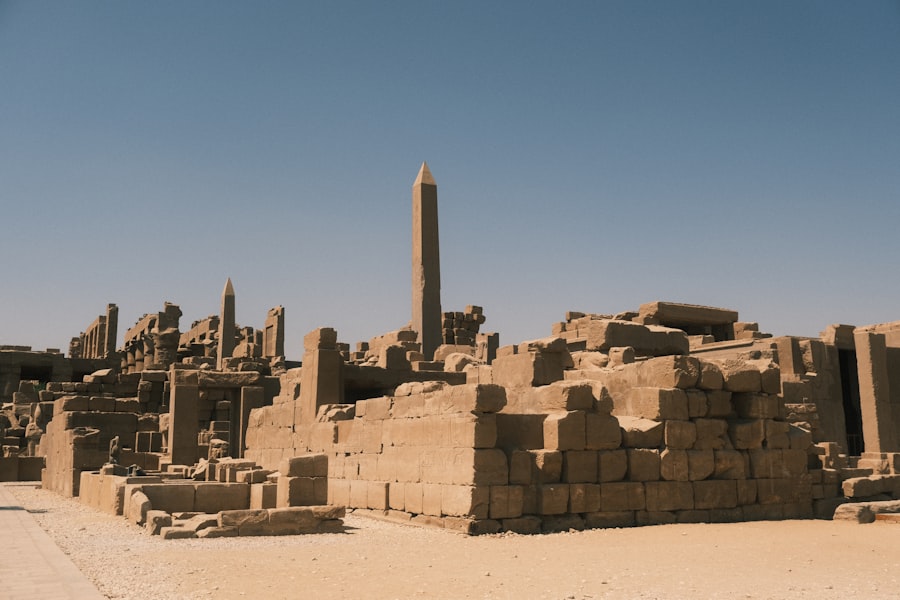
Cultural artifacts from ancient empires provide a tangible connection to the past, offering glimpses into the daily lives, beliefs, and practices of people long gone. These artifacts range from pottery and tools to intricate jewelry and religious icons, each telling a unique story about the society that created it. For instance, the terracotta warriors of Xi’an not only demonstrate the artistic skills of ancient Chinese craftsmen but also reflect the military might and spiritual beliefs of the Qin Dynasty.
Moreover, artifacts often serve as key indicators of trade and cultural exchange between different civilizations. The discovery of Egyptian scarabs in Mesopotamia or Greek pottery in North Africa highlights the interconnectedness of ancient societies.
By studying these artifacts, historians can piece together narratives that reveal how ancient empires interacted with one another and adapted to changing circumstances.
The Influence of Ancient Empires on Modern Architecture
The architectural legacies of ancient empires continue to shape modern design principles and urban planning. Many contemporary architects draw inspiration from classical styles, incorporating elements such as columns, domes, and symmetry into their work. The neoclassical movement in the 18th and 19th centuries is a prime example of this influence, as architects sought to revive the grandeur of ancient Greek and Roman architecture in public buildings and monuments.
Furthermore, modern cities often reflect the organizational principles established by ancient empires. The grid layout seen in many urban centers can be traced back to Roman city planning, which emphasized order and functionality. Additionally, the use of public spaces for civic engagement—such as plazas and forums—has its roots in ancient practices where citizens gathered to discuss matters of importance.
This enduring influence underscores how ancient architectural concepts continue to resonate in contemporary society.
Preservation and Restoration of Ancient Architectural Marvels
| Ancient Empire | Region | Key Contributions | Architectural Remains | Written Records | Technological Innovations |
|---|---|---|---|---|---|
| Roman Empire | Europe, North Africa, Middle East | Law, engineering, governance | Colosseum, aqueducts, roads | Latin literature, legal codes | Concrete, road networks, aqueducts |
| Ancient Egypt | Northeast Africa | Hieroglyphics, medicine, architecture | Pyramids, temples, tombs | Hieroglyphic inscriptions, papyrus scrolls | Calendar, irrigation, mummification |
| Mesopotamian Empire | Modern Iraq | Writing system, law codes, astronomy | Ziggurats, city ruins | Cuneiform tablets | Wheel, plow, irrigation |
| Inca Empire | South America (Andes) | Road systems, agriculture, administration | Machu Picchu, terraces | Quipu (knot records) | Terracing, suspension bridges |
| Han Dynasty | China | Paper invention, silk production, bureaucracy | Great Wall sections, tombs | Historical texts, Confucian classics | Paper, seismograph, iron casting |
The preservation and restoration of ancient architectural marvels are crucial for maintaining cultural heritage and historical continuity. As time progresses, many structures face threats from natural decay, environmental factors, and human activity. Efforts to conserve these sites often involve a delicate balance between maintaining authenticity and ensuring structural integrity.
Organizations such as UNESCO play a vital role in identifying and protecting World Heritage Sites that embody significant cultural value. Restoration projects can be contentious, as differing opinions arise regarding how much intervention is appropriate. Some argue for a hands-off approach that allows structures to age naturally, while others advocate for extensive restoration to preserve them for future generations.
Regardless of the approach taken, it is essential that these efforts are guided by a deep respect for the original craftsmanship and cultural significance of the structures involved. Through careful preservation practices, societies can ensure that these architectural marvels continue to inspire awe and educate future generations.
The Role of Cultural Artifacts in Understanding Ancient Societies

Cultural artifacts serve as vital keys to unlocking the mysteries of ancient societies. They provide context for understanding social hierarchies, economic systems, and religious beliefs that shaped daily life in these civilizations. For example, the discovery of tools used for agriculture can reveal insights into food production methods and trade practices within a society.
Similarly, religious artifacts can shed light on spiritual beliefs and rituals that were central to community life. Moreover, artifacts often reflect the values and priorities of a society at a given time. The presence of luxury items in burial sites may indicate social stratification or highlight the importance placed on status and wealth.
By analyzing these objects within their archaeological context, researchers can reconstruct narratives about how people lived, interacted with one another, and responded to challenges within their environments. This understanding enriches our appreciation for the complexities of human history.
The Impact of Ancient Empires on Contemporary Culture
The influence of ancient empires extends far beyond architecture and artifacts; it permeates contemporary culture in myriad ways. Language is one significant area where this impact is evident. Many modern languages have roots in ancient tongues; for instance, Latin has profoundly influenced Romance languages such as Spanish, French, and Italian.
Additionally, numerous English words derive from Latin or Greek origins, showcasing how ancient languages continue to shape communication today. Cultural practices also bear traces of ancient traditions. Festivals celebrating agricultural cycles or religious observances often have origins in ancient rituals that have been adapted over time.
The Olympic Games, rooted in ancient Greece, exemplify how historical events can evolve into modern celebrations that promote unity and athleticism across nations. Such continuities highlight the enduring relevance of ancient empires in shaping contemporary cultural identities.
Ancient Empires and Their Legacy in World Heritage Sites
World Heritage Sites serve as a testament to humanity’s shared history and cultural diversity, with many sites originating from ancient empires. These locations are recognized for their outstanding universal value and are protected under international treaties to ensure their preservation for future generations. Examples include Machu Picchu in Peru, which reflects Incan ingenuity; Petra in Jordan, known for its rock-cut architecture; and Angkor Wat in Cambodia, a symbol of Khmer civilization.
The designation as a World Heritage Site not only helps safeguard these treasures but also promotes awareness and appreciation among global audiences. Tourism generated by these sites can provide economic benefits while fostering cross-cultural understanding.
Striking a balance between accessibility and conservation is essential to ensure that these legacies endure.
The Significance of Ancient Empires in Global History
The significance of ancient empires in global history cannot be overstated; they laid foundational frameworks for governance, trade networks, and cultural exchange that continue to influence modern societies. The Silk Road is a prime example of how ancient trade routes facilitated not only commerce but also the exchange of ideas between East and West. This interconnectedness fostered advancements in science, philosophy, art, and technology that shaped civilizations across continents.
Moreover, the rise and fall of these empires offer valuable lessons about power dynamics, resilience, and adaptation in response to changing circumstances. The study of their histories provides insights into human behavior—how societies organize themselves, respond to challenges, and innovate over time. Understanding these patterns can inform contemporary discussions about governance, social justice, and global cooperation.
The Future of Preserving and Studying Ancient Architectural Marvels and Cultural Artifacts
As technology advances, new methods for preserving and studying ancient architectural marvels and cultural artifacts are emerging. Innovations such as 3D scanning and digital modeling allow researchers to create detailed representations of structures without physical intervention. This technology not only aids in documentation but also facilitates virtual tours that make these sites accessible to a broader audience.
However, challenges remain in balancing technological advancements with ethical considerations surrounding preservation practices. As interest in ancient sites grows globally, it is crucial to prioritize sustainable tourism practices that protect these treasures while promoting education and appreciation among visitors. Collaborative efforts between governments, local communities, archaeologists, and conservationists will be essential in ensuring that future generations can continue to learn from these remarkable legacies.
The Enduring Legacy of Ancient Empires
The enduring legacy of ancient empires is woven into the very fabric of modern civilization. Their architectural marvels inspire awe; their cultural artifacts provide insight into past lives; their influence shapes contemporary culture; and their histories offer lessons that resonate today. As societies navigate an increasingly complex world, reflecting on the achievements and challenges faced by these ancient civilizations can foster a deeper understanding of humanity’s shared journey.
Preserving this legacy requires collective commitment—an acknowledgment that these treasures are not merely relics but vital components of our global heritage. By valuing the contributions of ancient empires and investing in their preservation for future generations, humanity can ensure that these remarkable stories continue to inspire curiosity and wonder long into the future.
Ancient empires have left behind a rich tapestry of cultural, architectural, and historical legacies that continue to influence modern society. For a deeper understanding of the remnants of these civilizations, you can explore the article on the impact of ancient empires on contemporary culture. This insightful piece delves into how the achievements and innovations of past societies shape our world today. To read more, visit