
Nabta Playa, a remarkable archaeological site located in the southern Egyptian desert, is home to one of the earliest known stone circles in the world. This ancient site, dating back to around 5000 BCE, is a testament to the ingenuity and creativity of prehistoric societies. The stone circle, along with other structures found in the area, provides invaluable insights into the lives of the people who inhabited this region thousands of years ago.
As researchers continue to study Nabta Playa, it becomes increasingly clear that this site was not merely a settlement but a significant center for social, cultural, and astronomical activities. The stone circle at Nabta Playa is particularly intriguing due to its unique construction and alignment. Composed of large sandstone blocks arranged in a circular formation, the site is believed to have served various purposes, including ceremonial and astronomical functions.
The significance of Nabta Playa extends beyond its physical structures; it represents a pivotal moment in human history when early societies began to engage with their environment in complex ways. As scholars delve deeper into the mysteries of this ancient site, they uncover layers of meaning that reflect the beliefs and practices of its creators.
Key Takeaways
- Nabta Playa Stone Circle is an ancient astronomical site located in the Nubian Desert of southern Egypt.
- The site was discovered in the 1970s and is believed to date back to the 5th millennium BCE, making it one of the oldest known astronomical complexes in the world.
- The stone circle is significant for its role in tracking the movement of celestial bodies and its potential use in agricultural and religious practices.
- The stones were carefully arranged to align with the solstices, equinoxes, and other celestial events, showcasing advanced knowledge of astronomy and mathematics.
- The site holds cultural and spiritual importance for the indigenous people of the region and has been compared to other ancient astronomical sites such as Stonehenge.
Discovery and History of Nabta Playa
The discovery of Nabta Playa can be traced back to the late 20th century when a team of archaeologists led by Dr. Fred Wendorf began excavating the area in the 1970s. Initially, the site was thought to be a mere collection of artifacts scattered across the desert landscape.
However, as excavations progressed, it became evident that Nabta Playa was far more significant than previously imagined. The team uncovered a wealth of artifacts, including pottery, tools, and animal remains, which provided crucial evidence of the site’s long history of human occupation. Further investigations revealed that Nabta Playa had been a vibrant hub for prehistoric communities.
The presence of the stone circle and other structures indicated that this location was not only a place for daily living but also a center for social gatherings and rituals. The findings at Nabta Playa have since reshaped our understanding of early human societies in the region, highlighting their sophisticated social structures and their ability to manipulate their environment for various purposes.
Significance of the Stone Circle
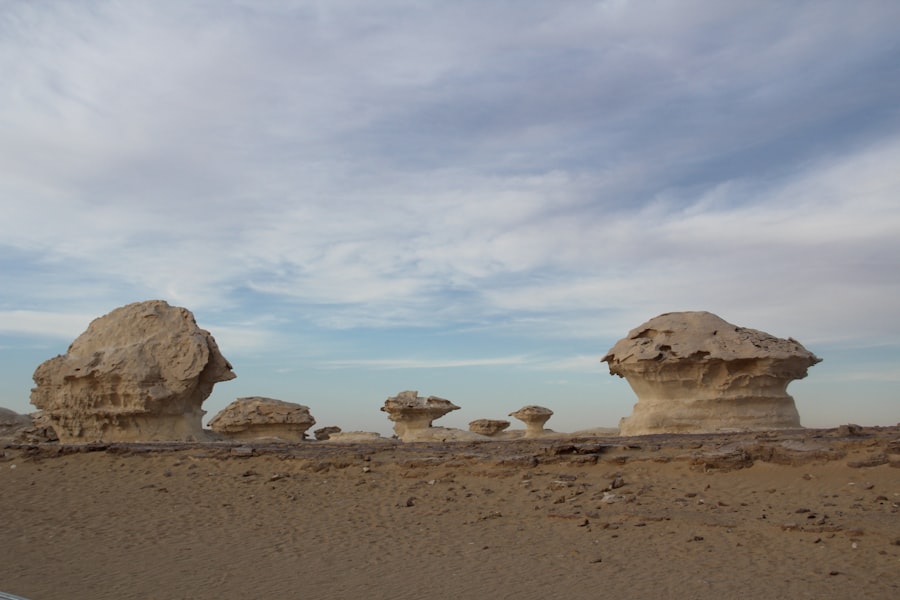
The stone circle at Nabta Playa holds immense significance as one of the earliest known examples of monumental architecture in human history. Its construction reflects the advanced skills and knowledge possessed by the people who built it. The circle is not merely an aesthetic creation; it serves as a physical manifestation of the community’s social and spiritual beliefs.
The arrangement of stones suggests that they were deliberately placed with intention, possibly to mark important celestial events or to serve as a gathering place for rituals. Moreover, the stone circle’s significance extends beyond its immediate context. It provides valuable insights into the development of early astronomical knowledge among prehistoric societies.
The alignment of the stones with celestial bodies indicates that these ancient people were keen observers of the night sky, using their observations to inform agricultural practices and social organization. The stone circle at Nabta Playa thus stands as a symbol of humanity’s enduring quest for understanding and connection with the cosmos.
Construction and Alignment of the Stones
| Aspect | Metric |
|---|---|
| Construction Time | Years |
| Alignment Accuracy | Degrees |
| Stone Weight | Tons |
| Distance Moved | Meters |
The construction of the stone circle at Nabta Playa is a remarkable feat that showcases the engineering capabilities of its creators. The stones used in the circle are primarily sandstone, sourced from nearby quarries. Each stone was carefully selected and transported to the site, indicating a high level of organization and cooperation among community members.
The precise arrangement of these stones suggests that the builders possessed advanced knowledge of geometry and spatial relationships. The alignment of the stones within the circle is particularly noteworthy. Researchers have identified that certain stones are positioned in such a way that they align with significant astronomical events, such as solstices and equinoxes.
This alignment suggests that the builders had a sophisticated understanding of celestial movements and their implications for agricultural cycles and seasonal changes. The construction techniques employed at Nabta Playa not only reflect the practical skills of its builders but also their deep connection to the natural world around them.
Astronomical Observations and Alignments
The astronomical significance of Nabta Playa cannot be overstated. The stone circle is believed to have served as an observatory for early humans who sought to understand the patterns of the stars and planets. The alignment of certain stones with celestial bodies indicates that these ancient people were not only aware of astronomical phenomena but actively engaged in observing and interpreting them.
This knowledge likely played a crucial role in their agricultural practices, helping them determine optimal planting and harvesting times. In addition to its role as an observatory, Nabta Playa may have also functioned as a calendar system for its inhabitants. The positioning of stones within the circle could have allowed for tracking seasonal changes, thereby aiding in planning for food production and other communal activities.
This connection between astronomy and daily life underscores the importance of celestial observations in shaping early human societies and their understanding of time.
Cultural and Spiritual Importance

The cultural and spiritual significance of Nabta Playa extends beyond its physical structures and astronomical functions. The stone circle likely served as a focal point for communal gatherings, rituals, and ceremonies that reinforced social bonds among its inhabitants. The act of coming together at this sacred site would have fostered a sense of identity and belonging within the community, allowing individuals to connect with one another and with their shared beliefs.
Furthermore, the spiritual dimensions of Nabta Playa are reflected in its architecture and layout. The careful placement of stones may have held symbolic meanings related to cosmology or mythology, serving as a bridge between the earthly realm and the divine. As such, Nabta Playa represents not only a physical space but also a conceptual framework through which early humans understood their place in the universe.
This intertwining of culture, spirituality, and astronomy highlights the complexity of human thought during this period.
Comparison to Other Ancient Astronomical Sites
When examining Nabta Playa, it is essential to consider its place within a broader context of ancient astronomical sites around the world. Similar structures can be found in various cultures, each reflecting unique interpretations of celestial phenomena. For instance, Stonehenge in England shares similarities with Nabta Playa in terms of its monumental architecture and astronomical alignments.
Both sites demonstrate how ancient societies sought to connect with the cosmos through physical structures. However, while there are parallels between these sites, each possesses distinct characteristics shaped by its cultural context. For example, while Stonehenge is primarily associated with ritualistic practices linked to death and burial, Nabta Playa appears to have served more as an observatory and communal gathering space.
This comparison underscores the diversity of human expression in relation to astronomy across different cultures and time periods.
Preservation and Conservation Efforts
As an invaluable archaeological site, Nabta Playa faces numerous challenges related to preservation and conservation. The harsh desert environment poses threats such as erosion and weathering, which can gradually degrade the stone structures over time. Additionally, increased tourism can lead to further wear on these ancient monuments if not managed properly.
Recognizing these challenges, various organizations have initiated efforts to protect and preserve Nabta Playa for future generations.
Archaeologists work diligently to monitor conditions at the site while implementing measures to mitigate damage from natural elements and human activity.
Furthermore, engaging local communities in preservation efforts fosters a sense of stewardship over this cultural heritage site, ensuring that its history is respected and maintained.
Theories and Interpretations of the Site
Theories surrounding Nabta Playa continue to evolve as new discoveries are made and existing evidence is reinterpreted. Scholars have proposed various hypotheses regarding the purpose and function of the stone circle, ranging from astronomical observatory to ceremonial center or even a combination of both roles. These interpretations reflect broader questions about how early humans interacted with their environment and understood their place within it.
One prominent theory suggests that Nabta Playa served as a pilgrimage site for various groups seeking spiritual connection through astronomical observation. This idea posits that individuals traveled from distant regions to participate in communal rituals centered around celestial events, reinforcing social ties among diverse communities. Such interpretations highlight not only the significance of astronomy in early human societies but also their capacity for shared beliefs that transcended geographical boundaries.
Modern-Day Relevance and Interest
In contemporary times, Nabta Playa continues to captivate researchers, historians, and tourists alike. Its status as one of the earliest known astronomical sites has sparked interest in understanding humanity’s relationship with astronomy throughout history. As modern society grapples with questions about sustainability and our connection to nature, lessons from ancient sites like Nabta Playa become increasingly relevant.
Moreover, Nabta Playa serves as a reminder of humanity’s enduring quest for knowledge about the cosmos. As scientists explore new frontiers in astronomy today, they can draw inspiration from ancient civilizations that sought to understand celestial phenomena long before modern technology existed. This connection between past and present underscores the importance of preserving sites like Nabta Playa as we continue our journey toward understanding our place in the universe.
Visiting Nabta Playa: Practical Information
For those interested in experiencing Nabta Playa firsthand, practical information is essential for planning a visit to this remarkable archaeological site. Located approximately 100 kilometers west of Aswan, reaching Nabta Playa typically involves traveling by car or joining guided tours that offer insights into its history and significance. Visitors should be prepared for desert conditions; appropriate clothing, sun protection, and ample water are crucial for comfort during exploration.
While visiting Nabta Playa offers an opportunity to connect with ancient history, it is vital for tourists to respect the site’s cultural heritage by adhering to guidelines set forth by local authorities. Engaging with knowledgeable guides can enhance understanding while ensuring responsible tourism practices are followed. By appreciating both its historical context and natural beauty, visitors can contribute positively to preserving this extraordinary site for future generations to explore and learn from.
Nabta Playa, an ancient stone circle located in the Nubian Desert of southern Egypt, is a fascinating archaeological site that predates Stonehenge by over a thousand years. This prehistoric monument is believed to have been used for astronomical observations and ceremonial purposes by the early inhabitants of the region. For those interested in exploring more about ancient stone structures and their cultural significance, you might find the article on Real Lore and Order particularly insightful. It delves into the mysteries and historical contexts of similar ancient sites, offering a broader understanding of how these structures have shaped human history.
WATCH THIS 🤯Ancient Tech That Should Not Exist
FAQs
What is Nabta Playa Stone Circle?
Nabta Playa Stone Circle is a prehistoric archaeological site located in the Nubian Desert of southern Egypt. It consists of a series of stone structures and megaliths that are believed to have been constructed around 7,000 to 6,000 years ago.
What is the significance of Nabta Playa Stone Circle?
The site is significant because it is one of the earliest known examples of a complex astronomical and ceremonial site in the world. It is believed to have been used for astronomical observations, religious rituals, and as a gathering place for ancient nomadic communities.
What are the features of Nabta Playa Stone Circle?
The site includes a series of stone alignments, megaliths, and circular stone structures that are thought to have been used for tracking the movement of celestial bodies, such as the sun, moon, and stars. There are also evidence of ancient human activity, including pottery fragments and animal bones.
Who built Nabta Playa Stone Circle?
The builders of Nabta Playa Stone Circle were likely early pastoralists and hunter-gatherers who inhabited the region during the Neolithic period. They are believed to have had a sophisticated understanding of astronomy and a complex social and religious structure.
How was Nabta Playa Stone Circle discovered?
The site was first discovered in the 1970s by a team of archaeologists led by Fred Wendorf. Subsequent excavations and research have revealed the significance of the site in understanding the development of early human societies and their relationship with the cosmos.