
The Age of Exploration, spanning from the late 15th century to the early 17th century, marked a pivotal period in human history characterized by unprecedented maritime expeditions. This era was driven by a confluence of factors, including the quest for new trade routes, the desire for territorial expansion, and the thirst for knowledge about the world beyond familiar horizons. European powers, particularly Spain and Portugal, spearheaded these explorations, propelled by advancements in navigation and shipbuilding technology.
The discovery of the New World by Christopher Columbus in 1492 is often heralded as a defining moment of this age, igniting a wave of exploration that would reshape global dynamics. As explorers ventured into uncharted waters, they encountered diverse cultures and landscapes, leading to significant exchanges of goods, ideas, and technologies. The Age of Exploration not only expanded geographical knowledge but also laid the groundwork for the modern world.
It was a time when maps were redrawn, empires were established, and the interconnectedness of distant lands began to take shape. The consequences of these explorations were profound, influencing trade patterns, cultural interactions, and even the course of history itself.
Key Takeaways
- The Age of Exploration led to significant discoveries and cultural exchanges between different parts of the world.
- Early cartographers used tools and techniques such as compasses, astrolabes, and portolan charts to map the known world.
- The first explorers, such as Christopher Columbus and Vasco da Gama, pioneered navigation and opened up new trade routes.
- Indigenous knowledge played a crucial role in mapping the world, as explorers learned from local inhabitants about geography and navigation.
- Navigating the unknown posed numerous challenges and dangers, including unpredictable weather, hostile encounters, and the risk of getting lost at sea.
Early Cartography: Tools and Techniques
The art and science of cartography during the Age of Exploration were essential for successful navigation and exploration. Early cartographers relied on a variety of tools and techniques to create maps that would guide explorers through treacherous waters. One of the most significant advancements was the development of the astrolabe, an instrument used to measure the altitude of celestial bodies.
This device allowed navigators to determine their latitude at sea, providing a crucial reference point for their journeys. In addition to the astrolabe, early cartographers utilized compasses, which helped sailors maintain their bearings even in the absence of visible landmarks. The combination of these tools with detailed observations from previous explorers enabled cartographers to produce increasingly accurate maps.
However, it is important to note that early maps often contained inaccuracies and were influenced by myths and legends. For instance, many maps depicted fantastical creatures or exaggerated landmasses based on hearsay rather than empirical evidence. Despite these limitations, early cartography laid the foundation for future advancements in mapping techniques.
The Pioneers of Navigation: The First Explorers
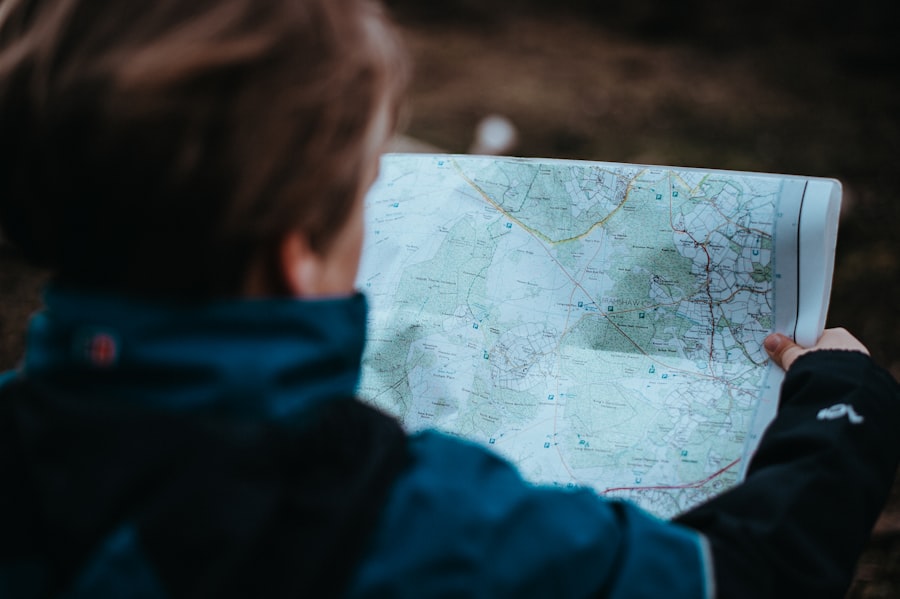
The Age of Exploration was marked by a series of remarkable individuals who pushed the boundaries of human knowledge and navigational prowess. Figures such as Vasco da Gama, Ferdinand Magellan, and John Cabot emerged as pioneers in this era, each contributing to the understanding of global geography in unique ways. Vasco da Gama’s successful voyage to India around the Cape of Good Hope opened up new trade routes for Europe, establishing a direct maritime link between Europe and Asia that would have lasting economic implications.
Ferdinand Magellan’s expedition is particularly noteworthy as it became the first to circumnavigate the globe. Although Magellan himself did not survive the entire journey, his crew’s successful return demonstrated the vastness of the Earth and provided invaluable insights into global navigation. John Cabot’s exploration of North America under the English flag also played a crucial role in establishing England’s presence in the New World.
These early explorers not only charted new territories but also set the stage for future generations to continue their quest for discovery.
The Role of Indigenous Knowledge in Mapping the World
| Metrics | Data |
|---|---|
| Number of Indigenous communities involved in mapping | 50 |
| Percentage of traditional knowledge incorporated into maps | 75% |
| Impact on conservation efforts | Increased by 30% |
| Number of traditional place names preserved | Over 1000 |
While European explorers are often credited with mapping new territories, it is essential to recognize the invaluable contributions of Indigenous peoples in this process. Many Indigenous communities possessed extensive knowledge of their lands, including intricate details about geography, climate, and resources. This knowledge was often passed down through generations and was crucial for survival in diverse environments.
As European explorers encountered Indigenous populations, they frequently relied on local knowledge to navigate unfamiliar territories. Indigenous guides played a vital role in helping explorers understand the landscape and its challenges. For instance, during his expeditions in North America, Lewis and Clark benefited significantly from the insights provided by Native American tribes regarding routes, food sources, and potential dangers.
This collaboration between Indigenous knowledge and European exploration not only enriched mapping efforts but also highlighted the importance of cultural exchange in shaping historical narratives.
Challenges and Dangers of Navigating the Unknown
Navigating uncharted waters during the Age of Exploration was fraught with challenges and dangers that tested the mettle of even the most seasoned sailors. One of the primary hazards was unpredictable weather conditions, which could turn calm seas into treacherous storms within moments. Explorers faced not only rough seas but also navigational errors that could lead them far off course or into perilous situations.
Moreover, encounters with hostile Indigenous populations posed significant risks for many explorers. Misunderstandings or conflicts could arise from cultural differences, leading to violent confrontations that jeopardized entire expeditions. Additionally, diseases such as scurvy plagued sailors on long voyages due to a lack of fresh produce, resulting in high mortality rates among crews.
These challenges underscored the bravery required to embark on such journeys into the unknown and highlighted the resilience of those who dared to explore.
The Impact of Discoveries on Global Trade and Commerce
The discoveries made during the Age of Exploration had far-reaching implications for global trade and commerce. As new lands were charted and resources identified, European powers sought to capitalize on these opportunities by establishing trade routes that connected distant markets. The influx of precious metals from the Americas, particularly gold and silver, transformed European economies and fueled a surge in trade activity.
The establishment of trade networks facilitated not only the exchange of goods but also cultural interactions between different civilizations. The Columbian Exchange exemplified this phenomenon, as it involved the transfer of crops, livestock, and technologies between the Old World and the New World. This exchange had profound effects on agriculture and diets worldwide, leading to increased food production and population growth in various regions.
However, it also brought about significant challenges, including the spread of diseases that devastated Indigenous populations.
Uncovering New Lands: The Search for New Trade Routes
The relentless pursuit of new trade routes was a driving force behind many explorations during this era. European nations sought alternative paths to access valuable commodities such as spices, silk, and precious metals without relying solely on overland routes controlled by rival powers. This quest led to remarkable discoveries that reshaped global trade dynamics.
The search for a northwest passage to Asia exemplified this ambition. Explorers like Martin Waldseemüller and Henry Hudson embarked on voyages aimed at finding a shortcut through North America to reach Asia’s lucrative markets.
The Influence of Religion and Politics on Exploration
Religion played a significant role in shaping exploration during this period, as European powers sought to spread Christianity alongside their territorial ambitions. The Catholic Church endorsed many expeditions as part of its mission to convert Indigenous populations to Christianity. This religious motivation often intertwined with political objectives, as nations sought to expand their influence through both spiritual and territorial means.
The Treaty of Tordesillas in 1494 exemplifies how religion and politics intersected during this era. This agreement between Spain and Portugal divided newly discovered lands outside Europe along a meridian line, granting each nation exclusive rights to colonize specific territories. Such political maneuvering underscored how exploration was not merely an endeavor driven by curiosity but also a strategic pursuit influenced by religious beliefs and national interests.
The Legacy of Early Explorers: Cultural Exchange and Consequences
The legacy left by early explorers is complex and multifaceted, encompassing both positive cultural exchanges and negative consequences for Indigenous populations. While exploration facilitated the sharing of knowledge, technologies, and goods between different cultures, it also led to significant disruptions in Indigenous societies. The arrival of Europeans often resulted in colonization efforts that displaced native populations and altered traditional ways of life.
Cultural exchange during this period was not limited to material goods; it also encompassed ideas, languages, and customs that shaped societies on both sides of the Atlantic. However, this exchange was frequently imbalanced, with European powers imposing their values while disregarding Indigenous traditions. The consequences of these interactions continue to resonate today as societies grapple with issues related to cultural identity, heritage preservation, and historical injustices.
The Evolution of Cartography: From Ptolemy to Modern Mapping
The evolution of cartography from ancient times through the Age of Exploration reflects humanity’s growing understanding of geography and navigation. Early maps created by figures like Ptolemy laid foundational principles for cartography but were limited by contemporary knowledge and technology. As explorers ventured into new territories during the Age of Exploration, cartographers began incorporating empirical observations into their maps.
The transition from hand-drawn maps to more systematic approaches marked a significant advancement in cartography. Innovations such as triangulation allowed for greater accuracy in depicting landforms and distances. By the time modern mapping techniques emerged in the 19th century with advancements in surveying technology and aerial photography, cartography had transformed into a precise science capable of representing complex geographical information with remarkable accuracy.
Navigating the Unknown Today: Exploring the Uncharted Territories of the 21st Century
In today’s world, exploration continues to thrive as humanity seeks to navigate uncharted territories both on Earth and beyond. Advances in technology have revolutionized exploration methods; satellite imagery, drones, and remote sensing have made it possible to map previously inaccessible regions with unprecedented detail. Scientists are now able to explore deep ocean trenches or remote polar regions that were once considered unreachable.
Moreover, space exploration has opened up entirely new frontiers for discovery as humanity looks beyond our planet for potential resources or signs of life elsewhere in the universe. Missions to Mars or explorations of distant moons reflect humanity’s enduring curiosity about what lies beyond our immediate surroundings. As explorers continue to push boundaries in both terrestrial and extraterrestrial realms, they carry forward a legacy rooted in centuries of discovery while facing new challenges that require innovative solutions for navigating an ever-changing world.
In exploring the fascinating topic of “Mapping the World Before Discovery,” one might find it intriguing to delve into related discussions that expand on the historical context and methodologies of ancient cartography. A particularly insightful article that complements this subject can be found on Real Lore and Order’s website. This article provides a broader understanding of how early civilizations perceived and represented the world around them, offering a rich tapestry of insights into the evolution of map-making. For those interested in further exploring these themes, I recommend reading the related article available at Real Lore and Order.
WATCH THIS 🧊The US Military Confirmed It: What’s REALLY Under the Antarctic Ice?
FAQs
What is the significance of mapping the world before discovery?
Mapping the world before discovery helps us understand the historical and cultural significance of different regions, as well as the evolution of cartography and navigation techniques.
How did early explorers map the world before modern technology?
Early explorers used a combination of celestial navigation, landmarks, and rudimentary mapping techniques to create maps of the world before the advent of modern technology.
What were some of the challenges faced by early cartographers?
Early cartographers faced challenges such as limited knowledge of distant lands, lack of accurate measurement tools, and the difficulty of accurately representing the curvature of the Earth on a flat map.
What are some famous examples of maps created before discovery?
Famous examples of maps created before discovery include the Ptolemaic maps, the medieval Mappa Mundi, and the early Chinese and Arab maps of the world.
How did mapping the world before discovery contribute to the Age of Exploration?
Mapping the world before discovery provided explorers with valuable information about the known world, which in turn fueled the Age of Exploration and the search for new trade routes and territories.