Prehistoric societies, long before the advent of modern astronomy, demonstrated a profound and sophisticated understanding of celestial phenomena. Their monumental constructions, scattered across the globe, serve as enduring testament to this knowledge, often aligning precisely with significant astronomical events. These ancient structures, far from being mere piles of rock, represent elaborate observatories and calendars, meticulously crafted to track the movements of the sun, moon, and stars.
The study of archaeoastronomy, a multidisciplinary field, bridges archaeology and astronomy to investigate how past cultures understood and utilized celestial phenomena. It delves into the astronomical knowledge embedded within ancient architecture, iconography, and artifacts. This field, though relatively young, has revolutionized our understanding of prehistoric intellectual capabilities, revealing that early humans were not solely concerned with survival, but also with charting the cosmos.
Early Discoveries and Interpretations
The initial recognition of astronomical alignments in prehistoric monuments was often met with skepticism. Early archaeologists, focused primarily on material culture, sometimes dismissed these patterns as coincidental. However, persistent research, particularly by pioneers like Alexander Thom, began to uncover statistically significant correlations between site orientations and celestial events. Thom’s meticulous surveys of British megalithic sites, for instance, revealed consistent alignments to solstices, equinoxes, and major lunar standstills.
Methodological Advances
Modern archaeoastronomy employs a diverse array of methodologies. Satellite imagery and LiDAR scans allow for precise mapping of ancient sites, even those partially overgrown or obscured. Astronomical software can accurately reconstruct celestial events for specific geographical locations and past epochs, enabling researchers to test hypotheses about alignments. Furthermore, integrated studies incorporating ethnographic data from extant indigenous cultures, which often retain ancestral astronomical knowledge, provide valuable insights into the potential motivations and interpretations of prehistoric celestial observations.
Prehistoric monuments have long fascinated researchers and enthusiasts alike, particularly due to their intriguing alignments with celestial bodies. A related article that delves into this captivating topic is available at Real Lore and Order, where you can explore how ancient civilizations constructed these structures with astronomical precision, reflecting their deep understanding of the cosmos. This connection between the monuments and the stars not only highlights the ingenuity of our ancestors but also offers insights into their cultural and spiritual beliefs.
Megalithic Observatories of Europe
Europe boasts some of the most iconic examples of archaeoastronomical sites, particularly those from the Neolithic and Bronze Age periods. These massive stone structures, often built by communities without metal tools or written language, stand as impressive feats of engineering and astronomical precision.
Stonehenge: A Cosmic Calendar
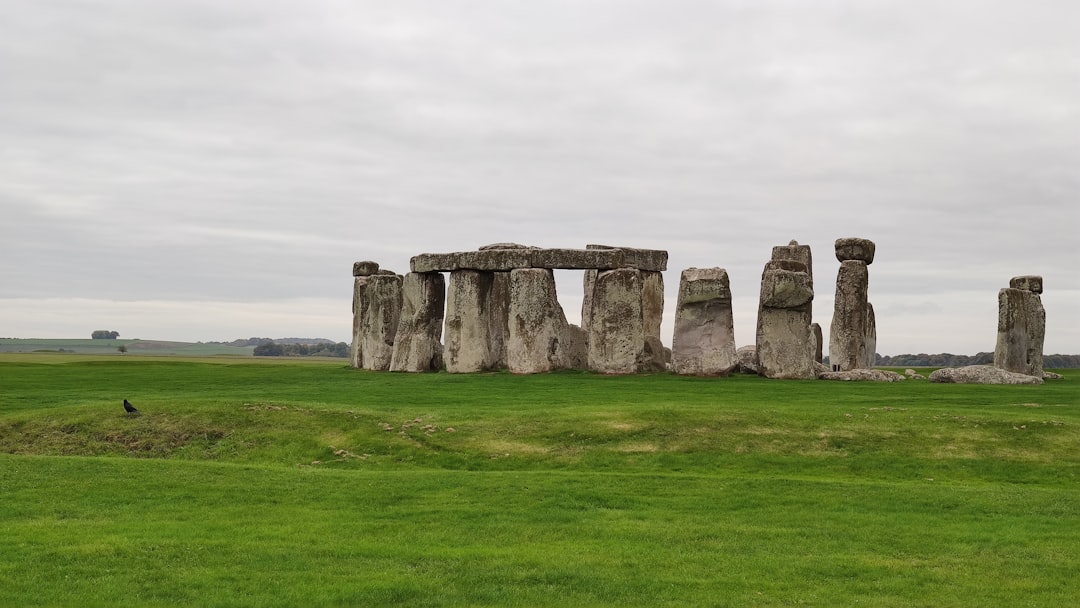
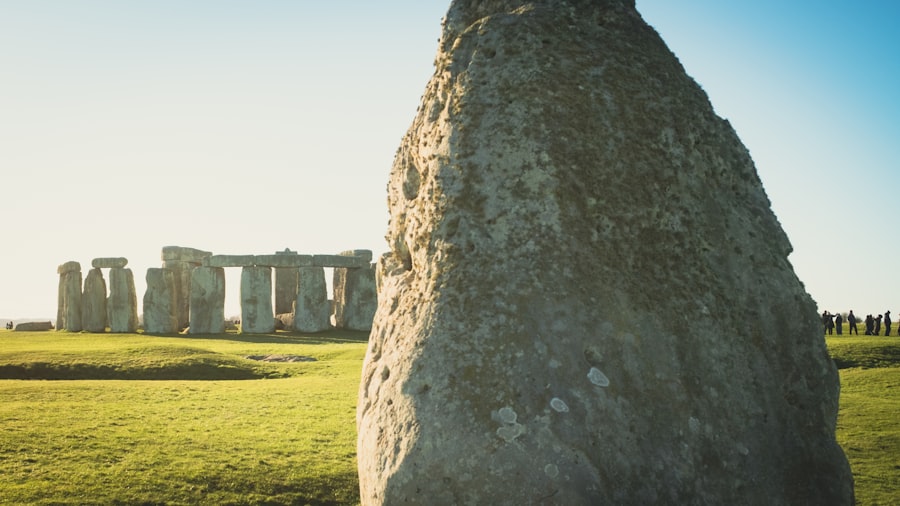
Stonehenge, located in Wiltshire, England, is perhaps the most famous prehistoric monument with astronomical connections. Its primary axis aligns with the summer solstice sunrise and the winter solstice sunset. The monument’s “Station Stones” form a rectangle whose diagonals point towards these solstices. Beyond these prominent solar alignments, researchers have proposed more complex lunar alignments, particularly with the 18.6-year lunar standstill cycle, which governs the moon’s extreme northerly and southerly rising and setting points.
Newgrange: Solar Illumination
In County Meath, Ireland, the passage tomb of Newgrange showcases a remarkable feat of ancient engineering. During the winter solstice sunrise, a narrow beam of sunlight penetrates an opening above the entrance, known as the “roofbox,” illuminating the main chamber for approximately 17 minutes. This precise alignment required not only an understanding of the sun’s annual trajectory but also sophisticated architectural planning to ensure the light reaches its intended target. The event serves as a powerful reminder of the deep reverence for the sun in these ancient societies.
Carnac: Lunar and Solar Complexes
The megalithic alignments of Carnac in Brittany, France, comprise thousands of standing stones arranged in various patterns. While their exact purpose remains a subject of debate, many researchers suggest they served as complex astronomical observatories. Some alignments point to solstices, while others have been interpreted as marking lunar cycles, demonstrating a holistic approach to celestial tracking. The sheer scale of these alignments, stretching for kilometers, speaks to the immense communal effort and astronomical knowledge dedicated to their construction.
Celestial Precision in the Americas
Across the Atlantic, indigenous civilizations of the Americas also exhibited remarkable astronomical sophistication, integrating celestial observations into their societal structures, rituals, and architecture.
Chaco Canyon: Sun Daggers and Lunar Markers
The Ancestral Puebloans of Chaco Canyon in New Mexico, circa 850–1250 CE, built elaborate multi-story great houses. One of the most striking astronomical features is the “Sun Dagger” at Fajada Butte. Here, spiraling petroglyphs are precisely intersected by shafts of light on solstices and equinoxes, cast by strategically placed rock slabs. Furthermore, other structures at Chaco Canyon, such as Casa Rinconada, exhibit alignments with lunar standstills, indicating a profound understanding of both solar and lunar cycles.
Maya Observatories: Venus and the Calendar
The Maya civilization of Mesoamerica developed one of the most sophisticated calendrical systems in the ancient world, intricately linked to their astronomical observations. Their cities, such as Chichen Itza and El Caracol, feature buildings explicitly designed as observatories. El Caracol, with its numerous windows and alignments, is particularly noted for its observations of Venus. The Maya tracked the 584-day synodic cycle of Venus with extraordinary accuracy, integrating it into their complex long count calendar and religious beliefs, as Venus was associated with warfare and rebirth.
Nazca Lines: Ground-Based Astronomical Charts?
The enigmatic Nazca Lines in Peru, vast geoglyphs etched into the desert floor, continue to fascinate researchers. While many theories exist regarding their purpose, some archaeoastronomers propose that certain lines and figures correspond to astronomical alignments, particularly with solstices and constellations. The sheer scale and precision of these earthworks suggest a ceremonial or calendrical function, potentially serving as gigantic ground-based astronomical charts for observing celestial phenomena from a distant vantage point.
Africa and Asia: Global Reach of Stargazing
The pursuit of celestial knowledge was not confined to Europe and the Americas. Evidence of archaeoastronomical practices can be found across Africa and Asia, reflecting a universal human fascination with the cosmos.
Nabta Playa: The Oldest Astronomical Calendar?
In the Sahara Desert of southern Egypt, Nabta Playa represents one of the earliest known astronomical sites, predating Stonehenge by several millennia. Around 7,000 to 6,000 BCE, nomadic pastoralists constructed stone circles and alignments that appear to mark the summer solstice sunrise. These megaliths, oriented to track the sun’s annual path, suggest a profound understanding of cyclical celestial movements at a very early stage of human civilization, potentially as a means to predict the timing of the annual monsoon rains crucial for their survival.
Goseck Circle: Solar Alignments in Germany
The Goseck Circle in Germany, a Neolithic enclosure dating back to around 4900 BCE, features two gaps in its outer ring that align precisely with the sunrise and sunset on the winter and summer solstices. An additional set of gaps aligns with the sunrise and sunset around the spring and autumn equinoxes. This site, reconstructed based on archaeological evidence, provides clear proof of a sophisticated solar calendar used by early agricultural communities in Central Europe, likely for planning agricultural activities and ceremonial purposes.
China’s Ancient Observatories
Ancient Chinese astronomers were renowned for their meticulous celestial observations and detailed star charts. While many of their instruments were made of more perishable materials, archaeological evidence and historical texts reveal a rich tradition of astronomical practices. For instance, the Gaocheng Astronomical Observatory, though built much later (Yuan Dynasty), stands on a site with a long history of astronomical observation. Earlier Neolithic sites also hint at basic solar and lunar alignments in settlement planning, emphasizing the enduring importance of celestial knowledge in Chinese culture.
Recent studies have shed light on the fascinating connections between prehistoric monuments and their alignment with celestial bodies, revealing how ancient civilizations may have used these structures for astronomical observations. For a deeper understanding of this intriguing topic, you can explore an insightful article that discusses various examples and their significance in the context of early human societies. To read more about these remarkable alignments, visit this article which delves into the mysteries of our ancestors’ relationship with the stars.
The Enduring Legacy of Celestial Observation
| Monument | Location | Estimated Age (Years) | Aligned Star or Celestial Event | Purpose of Alignment | Notable Features |
|---|---|---|---|---|---|
| Stonehenge | Wiltshire, England | ~4500 | Summer Solstice Sunrise | Marking solstices, calendar function | Massive sarsen stones, circular layout |
| Newgrange | County Meath, Ireland | ~5200 | Winter Solstice Sunrise | Religious and ceremonial, solar alignment | Passage tomb with roof box |
| Goseck Circle | Saxony-Anhalt, Germany | ~7500 | Winter and Summer Solstice Sunrise/Sunset | Solar calendar and ritual site | Wooden palisade with gates aligned to solstices |
| Chaco Canyon | New Mexico, USA | ~1000 | Sunrise and Moonrise alignments | Astronomical observatory and ceremonial center | Great houses and kivas with solar alignments |
| Maeshowe | Orkney Islands, Scotland | ~4800 | Winter Solstice Sunset | Funerary and solar alignment | Passage grave with precise solar alignment |
Prehistoric monuments, aligned with the stars, stand as silent witnesses to humanity’s enduring quest to comprehend the universe. They reveal that our ancestors, far from being primitive, were astute observers of the cosmos, capable of complex mathematical and architectural feats driven by their understanding of celestial mechanics.
Decoding Ancient Minds
By studying these alignments, we gain invaluable insights into the cognitive landscapes of prehistoric peoples. Their motivations might have been multifaceted: practical (tracking seasons for agriculture or hunting), religious (deifying celestial bodies and their movements), or simply a profound intellectual curiosity to map the temporal and spatial rhythms of their world. These monuments serve as a Rosetta Stone, helping us decode their worldview and their place within the cosmos.
Lessons from the Past
The precision and ingenuity embedded within these ancient structures offer a powerful reminder of human potential for observation, deduction, and creative problem-solving. In an age dominated by artificial light and digital screens, where the night sky often goes unnoticed, these monuments serve as a poignant call to reconnect with the celestial tapestry above. They urge us, the inheritors of this ancient legacy, to look up and marvel at the same celestial ballet that captivated our forerunners for millennia, fostering a sense of continuity and shared human experience across the vast expanse of time. The very stones whisper tales of ancient astronomers, patiently charting the heavens, their monumental efforts a testament to their deep reverence for the cosmos.
STOP: Why They Erased 50 Impossible Inventions From Your Textbooks
FAQs
What are prehistoric monuments aligned with stars?
Prehistoric monuments aligned with stars are ancient structures built by early civilizations that are positioned in relation to specific celestial bodies or events, such as solstices, equinoxes, or the rising and setting of particular stars.
Why did ancient people align monuments with stars?
Ancient people aligned monuments with stars for various reasons, including religious or spiritual purposes, to mark important agricultural dates, to serve as calendars, or to demonstrate their understanding of astronomy and the cosmos.
Can you name some famous prehistoric monuments aligned with stars?
Famous prehistoric monuments aligned with stars include Stonehenge in England, the Great Pyramids of Giza in Egypt, and the Nabta Playa stone circle in Egypt. These sites show alignments with solstices, specific stars, or other celestial events.
How do researchers determine the astronomical alignments of prehistoric monuments?
Researchers use a combination of archaeological evidence, astronomical software, and field observations to study the orientation of monuments. They analyze the position of celestial bodies at the time the monuments were built to identify possible alignments.
Do all prehistoric monuments have astronomical alignments?
No, not all prehistoric monuments have astronomical alignments. While many do show evidence of celestial orientation, others were built for different purposes such as burial, territorial markers, or social gatherings without any known astronomical significance.