Pyramid rituals developed across multiple ancient civilizations, most notably in Egypt and Mesoamerica, where these monumental structures functioned as centers for religious and ceremonial activities. Archaeological evidence indicates that the earliest pyramids, including the Step Pyramid of Djoser, were constructed during Egypt’s Third Dynasty around 2670 BCE. This period represents a crucial development in both architectural techniques and religious practices, as pyramids became symbols representing the relationship between pharaohs and deities.
The rituals performed at these sites formed essential components of the religious systems that structured ancient Egyptian society. Mesoamerican civilizations developed distinct pyramid ritual traditions that shared common elements of spiritual significance and religious observance. Maya and Aztec pyramids functioned as elevated platforms for conducting religious ceremonies, ritual sacrifices, and astronomical observations.
The Pyramid of the Sun at Teotihuacan exemplifies this dual purpose, serving both as an architectural achievement and a ceremonial site where rituals corresponded with astronomical phenomena. These ritual practices played important roles in maintaining social structures and cultural identity, as participation was typically restricted to ruling elites and religious officials.
Key Takeaways
- Pyramid rituals have deep historical roots tied to ancient civilizations and their spiritual beliefs.
- These rituals served both symbolic and practical functions within their cultural contexts.
- Archaeological findings provide evidence but also spark debates about the authenticity of certain pyramid rituals.
- Modern interpretations often blend traditional meanings with contemporary cultural significance.
- The future of pyramid rituals involves balancing preservation of heritage with potential adaptation to modern contexts.
The Purpose of Pyramid Rituals
The purpose of pyramid rituals extended beyond mere observance; they were deeply embedded in the socio-political and spiritual fabric of ancient societies. In Egypt, these rituals were primarily aimed at ensuring the safe passage of the deceased pharaoh into the afterlife. The elaborate ceremonies conducted within the confines of the pyramids were believed to facilitate this journey, invoking the favor of gods such as Osiris and Ra.
The rituals often included offerings, prayers, and recitations from sacred texts, all designed to honor the dead and secure their immortality. Conversely, in Mesoamerican cultures, pyramid rituals served multiple purposes, including agricultural fertility, community cohesion, and divine appeasement. The cyclical nature of these rituals reflected the agricultural calendar, with ceremonies timed to coincide with planting and harvest seasons.
This connection to agriculture underscored the belief that human actions could influence natural forces, thereby ensuring prosperity for the community. Thus, pyramid rituals functioned as a bridge between the earthly realm and the divine, reinforcing the idea that human existence was intertwined with cosmic cycles. Discover the secrets behind the pyramid mystery ancient egypt in this fascinating video.
The Role of Pyramid Rituals in Ancient Civilizations
Pyramid rituals played a pivotal role in shaping the social and political landscapes of ancient civilizations. In Egypt, these rituals were closely tied to the concept of kingship. The pharaoh was not only a political leader but also a divine figure whose authority was legitimized through religious practices.
The construction of pyramids was a monumental undertaking that required vast resources and labor, reflecting the centralized power of the state. Rituals performed at these sites reinforced the pharaoh’s status as an intermediary between the gods and the people, solidifying his role as a divine ruler. In Mesoamerica, pyramid rituals also served to reinforce social hierarchies but did so through a different lens.
The priestly class held significant power, conducting rituals that were essential for maintaining cosmic order. These ceremonies often involved public displays of power, such as human sacrifices, which were believed to appease deities and ensure societal stability. The pyramids themselves became symbols of this power dynamic, representing not only religious devotion but also the political might of those who controlled them.
Thus, pyramid rituals were instrumental in maintaining order and cohesion within these ancient societies.
The Connection Between Pyramid Rituals and Spiritual Beliefs
The connection between pyramid rituals and spiritual beliefs is profound and multifaceted. In ancient Egypt, spirituality was intricately linked to concepts of life after death. The pyramids served as gateways to the afterlife, where rituals aimed to ensure that the deceased would be reborn among the gods.
This belief system was encapsulated in texts such as the Pyramid Texts, which provided instructions for navigating the challenges of the afterlife. The rituals performed within these sacred spaces were not merely symbolic; they were believed to have tangible effects on the spiritual journey of the deceased. Similarly, in Mesoamerican cultures, spirituality was deeply intertwined with nature and cosmology.
The pyramids were often aligned with celestial bodies, reflecting a sophisticated understanding of astronomy that informed their religious practices. Rituals conducted at these sites were designed to honor gods associated with agriculture, rain, and fertility, emphasizing the belief that human actions could influence divine favor. This connection between ritual practice and spiritual belief underscores how pyramid rituals served as conduits for communicating with the divine, reinforcing cultural values and communal identity.
The Practical Functions of Pyramid Rituals
| Aspect | Pyramid Ritual | Pyramid Function |
|---|---|---|
| Primary Purpose | Religious ceremonies and offerings to gods or ancestors | Serving as tombs or burial sites for pharaohs and elites |
| Symbolism | Represents spiritual ascent and connection to the divine | Represents power, stability, and eternal life |
| Location | Often near temples or sacred sites for ritual activities | Located in necropolises or designated burial grounds |
| Architectural Features | Includes altars, offering tables, and ritual chambers | Includes burial chambers, passageways, and protective structures |
| Time Period | Used during specific religious festivals or ceremonies | Constructed during the lifetime of the deceased for eternal use |
| Participants | Priests, worshippers, and ritual specialists | Builders, architects, and laborers |
| Examples | Ritual platforms or smaller pyramidal structures for ceremonies | Great Pyramid of Giza, Pyramid of Djoser |
Beyond their spiritual significance, pyramid rituals also served practical functions within ancient societies. In Egypt, these rituals often involved elaborate feasts and offerings that not only honored the deceased but also reinforced social bonds among the living. Such gatherings provided opportunities for communal participation and collective memory, allowing families and communities to come together in remembrance of their ancestors.
This aspect of pyramid rituals highlights their role in fostering social cohesion and continuity across generations. In Mesoamerica, practical functions were equally important. Pyramid rituals often coincided with agricultural cycles, serving as communal events that brought people together for shared purposes.
These gatherings facilitated trade, social interaction, and cultural exchange among different groups. Additionally, they provided a platform for leaders to assert their authority and legitimacy through public displays of wealth and power during ceremonies. Thus, pyramid rituals functioned not only as religious observances but also as vital components of daily life that contributed to societal stability.
The Symbolism of Pyramid Rituals
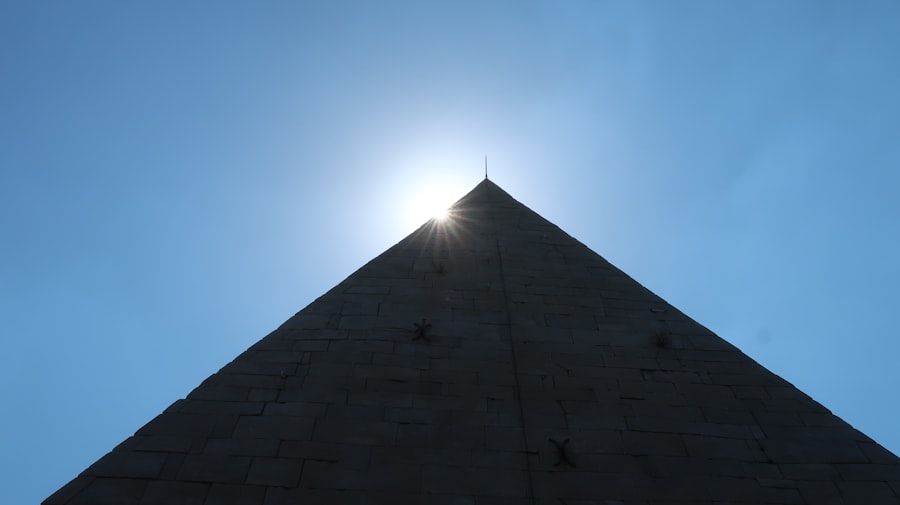
The symbolism inherent in pyramid rituals is rich and varied, reflecting the complex belief systems of ancient civilizations. In Egypt, pyramids symbolized resurrection and eternal life. Their triangular shape was thought to represent rays of sunlight descending from the heavens, linking the earth with the divine realm.
Rituals performed at these sites often included symbolic acts such as lighting fires or offering food, which were believed to nourish both the deceased and the gods. This interplay between symbolism and ritual practice underscored a profound understanding of life’s cyclical nature. In Mesoamerica, pyramids embodied concepts of duality and balance within their cosmology.
The construction of these structures often mirrored natural landscapes or celestial bodies, reinforcing their connection to both earth and sky. Rituals conducted at these sites frequently involved themes of sacrifice and renewal, symbolizing humanity’s relationship with nature and the divine. The act of offering oneself or valuable resources during these ceremonies was seen as a means to restore balance within the universe.
Thus, pyramid rituals served as powerful symbols that encapsulated cultural values and beliefs.
The Archaeological Evidence of Pyramid Rituals
Archaeological evidence provides invaluable insights into pyramid rituals across various ancient civilizations. Excavations at sites like Giza have uncovered artifacts such as pottery, tools, and offerings that illuminate the practices associated with pyramid construction and use. Hieroglyphics found within burial chambers reveal detailed accounts of rituals performed for pharaohs, showcasing their significance in ensuring a successful afterlife journey.
In Mesoamerica, archaeological discoveries at sites like Teotihuacan and Chichen Itza have unveiled evidence of ritualistic activities linked to pyramid structures.
Additionally, murals depicting scenes of ritual activities provide visual narratives that enrich interpretations of these practices. Such archaeological evidence underscores how pyramid rituals were integral to cultural identity and community life in ancient societies.
The Debate Over the Authenticity of Pyramid Rituals
The authenticity of pyramid rituals has been a subject of scholarly debate for decades. Some researchers argue that interpretations of these practices have been influenced by modern biases or misconceptions about ancient cultures. For instance, sensationalized accounts of human sacrifice in Mesoamerican societies have led to oversimplified narratives that overlook the complexity of their spiritual beliefs and practices.
Critics contend that such portrayals can distort historical understanding and perpetuate stereotypes about indigenous cultures. Conversely, proponents argue for a more nuanced appreciation of pyramid rituals based on archaeological evidence and historical texts. They emphasize that while some practices may seem extreme by contemporary standards, they were deeply rooted in cultural contexts that valued sacrifice as a means of maintaining cosmic order or honoring deities.
This ongoing debate highlights the importance of critical examination when interpreting ancient practices while acknowledging that our understanding is continually evolving as new evidence emerges.
The Modern Interpretation of Pyramid Rituals
Modern interpretations of pyramid rituals have evolved significantly over time, influenced by advancements in archaeology and shifts in cultural perspectives. Contemporary scholars increasingly recognize the need to approach these practices with sensitivity to their historical contexts rather than imposing modern values onto ancient societies. This shift has led to a more holistic understanding that appreciates both spiritual significance and practical functions within these rituals.
Furthermore, modern interpretations often draw parallels between ancient practices and contemporary spiritual beliefs or cultural expressions. For instance, some individuals today seek inspiration from ancient Egyptian or Mesoamerican spirituality in their personal practices or artistic endeavors. This revival reflects a broader trend toward exploring ancestral wisdom while acknowledging its relevance in contemporary society.
Thus, modern interpretations serve not only as academic inquiries but also as avenues for personal exploration and cultural appreciation.
The Cultural Significance of Pyramid Rituals
The cultural significance of pyramid rituals extends far beyond their immediate religious implications; they are emblematic of broader societal values and identities within ancient civilizations. In Egypt, pyramid construction represented not only architectural prowess but also collective effort toward a common goal—honoring a ruler who embodied divine authority. These rituals fostered a sense of belonging among participants while reinforcing social hierarchies that defined Egyptian society.
In Mesoamerica, pyramid rituals played a crucial role in shaping communal identity through shared beliefs and practices centered around agriculture and cosmology. They served as platforms for expressing cultural narratives that emphasized interconnectedness with nature and reverence for deities governing life’s cycles. As such, these rituals contributed significantly to cultural continuity across generations while adapting to changing societal dynamics over time.
The Future of Pyramid Rituals: Preservation or Adaptation?
As society progresses into an increasingly globalized world, questions arise regarding the future of pyramid rituals—should they be preserved in their traditional forms or adapted to contemporary contexts? Preservation efforts are essential for safeguarding archaeological sites and ensuring that future generations can appreciate their historical significance. Many organizations work tirelessly to protect these sites from environmental degradation or commercial exploitation while promoting educational initiatives that raise awareness about their cultural heritage.
On the other hand, adaptation may offer opportunities for revitalizing interest in ancient practices by integrating them into modern spiritual frameworks or artistic expressions. This approach allows individuals to connect with ancestral wisdom while reinterpreting it through contemporary lenses—creating spaces where tradition meets innovation. Ultimately, finding a balance between preservation and adaptation will be crucial in honoring the legacy of pyramid rituals while ensuring their relevance in an ever-changing world.
In conclusion, pyramid rituals represent a rich tapestry woven into the fabric of ancient civilizations’ spiritual beliefs and cultural identities. Their historical significance continues to resonate today as scholars explore their multifaceted roles within society while navigating debates surrounding authenticity and interpretation. As we look toward the future—whether through preservation efforts or adaptive practices—pyramid rituals will undoubtedly remain vital touchstones connecting humanity across time and space.
The debate surrounding the purpose of pyramids in ancient civilizations often centers on whether they served as ritualistic sites or functional structures. A related article that delves deeper into this topic can be found at this link, where various perspectives on the significance of pyramids are explored, shedding light on their multifaceted roles in society.
WATCH THIS! 🔺 THEY LIED ABOUT THE PYRAMIDS — Here’s The Real Truth 🤯
FAQs
What is the primary purpose of pyramids in ancient civilizations?
Pyramids were primarily built as monumental structures serving as tombs for pharaohs and important leaders, especially in ancient Egypt. They were designed to honor the deceased and facilitate their journey to the afterlife.
What does the term “pyramid ritual” refer to?
“Pyramid ritual” refers to the religious and ceremonial practices associated with the construction, use, and symbolism of pyramids. These rituals often involved offerings, prayers, and ceremonies intended to ensure the deceased’s safe passage to the afterlife and maintain cosmic order.
How does the function of pyramids differ from their ritual significance?
The function of pyramids is primarily architectural and practical, serving as tombs or burial sites. Their ritual significance, however, relates to the spiritual and religious beliefs of the culture, symbolizing divine power, resurrection, and the connection between the earth and the heavens.
Were pyramids used for purposes other than burial?
While the main function of pyramids was as tombs, some theories suggest they may have had additional roles, such as astronomical observatories, symbols of political power, or centers for religious ceremonies. However, the burial function remains the most widely accepted.
Did all ancient pyramids serve the same function?
No, the function of pyramids varied across different cultures and time periods. For example, Egyptian pyramids were primarily tombs, while Mesoamerican pyramids often served as temples for rituals and sacrifices.
How did pyramid rituals influence the design of pyramids?
Pyramid rituals influenced the design by incorporating symbolic elements such as alignment with celestial bodies, internal chambers for burial and offerings, and architectural features that reflected religious beliefs about the afterlife and the cosmos.
Are there any modern interpretations of pyramid rituals?
Modern interpretations of pyramid rituals are based on archaeological findings, ancient texts, and cultural studies. Scholars continue to explore how rituals were performed and their significance, but some aspects remain speculative due to limited historical records.
What role did priests or religious figures play in pyramid rituals?
Priests and religious figures conducted ceremonies, offerings, and prayers at pyramids to honor the deceased and invoke divine protection. They played a crucial role in maintaining the spiritual functions associated with the pyramid.
Can the study of pyramid rituals help us understand ancient cultures better?
Yes, studying pyramid rituals provides insights into the religious beliefs, social structures, and cultural values of ancient civilizations, helping us understand their worldview and practices related to death and the afterlife.
Is there a difference between the ritual use and the everyday function of pyramids?
Yes, the ritual use of pyramids involved specific ceremonies and spiritual activities, while their everyday function was as a physical structure housing the remains of the deceased and serving as a lasting monument.