Selim I, known as Selim the Grim, was born in 1470 in Amasya, a city in the Ottoman Empire. He was the son of Sultan Bayezid II and his mother, Gülbahar Hatun. Growing up in a royal household, Selim was exposed to the intricacies of governance and military strategy from an early age.
His education was comprehensive, encompassing not only the arts of war but also the principles of administration and statecraft. This upbringing would later serve him well as he navigated the treacherous waters of Ottoman politics. Selim’s rise to power was marked by a series of familial conflicts and political maneuvering.
After the death of his father in 1512, Selim ascended to the throne, but not without challenges.
This ruthless approach to securing his position set the tone for his rule and demonstrated his determination to expand the empire’s influence.
Selim’s early years as sultan were characterized by a focus on military strength and territorial expansion, laying the groundwork for his future conquests.
Key Takeaways
- Selim I significantly expanded the Ottoman Empire through successful military campaigns and conquests.
- He implemented key administrative reforms that strengthened governance and centralized power.
- His reign left a lasting cultural and architectural legacy within the empire.
- Selim I played a crucial role in shaping the Ottoman Empire’s relations with European powers and the Islamic world.
- His policies on religion and succession influenced the empire’s stability and historical trajectory.
Military Campaigns and Conquests
Selim I’s military campaigns were pivotal in shaping the Ottoman Empire’s trajectory during the early 16th century. His most notable achievement was the conquest of Egypt in 1517, which marked a significant turning point for the empire. The campaign was not merely a quest for territory; it was also driven by Selim’s desire to assert Ottoman dominance over the Islamic world.
The conquest of Egypt allowed Selim to control the holy cities of Mecca and Medina, further solidifying his position as a caliph and leader of Sunni Islam. In addition to Egypt, Selim’s military endeavors extended into Persia, where he sought to confront the Safavid Empire. The Battle of Chaldiran in 1514 showcased Selim’s military prowess, as his forces decisively defeated the Safavid army.
This victory not only expanded Ottoman territory but also established Selim’s reputation as a formidable military leader. His campaigns were characterized by strategic brilliance and an unwavering commitment to expanding the empire’s borders, which would have lasting implications for the region.
Expansion of the Ottoman Empire
Under Selim I’s leadership, the Ottoman Empire experienced unprecedented expansion. His conquests in Egypt and Persia significantly increased the empire’s size and influence, transforming it into a dominant power in both the Middle East and North Africa. The acquisition of Egypt was particularly significant, as it provided access to vital trade routes and resources, enhancing the empire’s economic strength.
Selim’s vision for expansion was not limited to territorial gains; he aimed to establish Ottoman supremacy over rival powers and solidify its status as a leading Islamic state. The expansionist policies implemented by Selim I also had profound cultural and religious implications. By incorporating diverse regions into the empire, he facilitated the exchange of ideas and traditions among various cultures.
This cultural amalgamation enriched Ottoman society and contributed to its unique identity. Furthermore, Selim’s conquests allowed him to position himself as a protector of Islam, garnering support from Muslim communities across his newly acquired territories.
Administrative Reforms and Governance
Selim I recognized that military success alone would not sustain the empire; effective governance was equally crucial. To this end, he implemented a series of administrative reforms aimed at enhancing efficiency and centralizing power. One of his key initiatives was the restructuring of provincial administration, which involved appointing loyal governors to oversee newly acquired territories.
This approach ensured that local leaders were aligned with Selim’s vision for the empire and reduced the risk of rebellion. In addition to provincial reforms, Selim focused on improving tax collection and resource management. He established a more systematic approach to taxation, which helped bolster the empire’s finances and support its military endeavors.
By streamlining administrative processes, Selim aimed to create a more cohesive and responsive government that could effectively address the needs of its diverse population. These reforms laid the foundation for a more centralized Ottoman state that would endure long after Selim’s reign.
Cultural and Architectural Legacy
| Metric | Data |
|---|---|
| Full Name | Selim I |
| Reign | 1512–1520 |
| Title | Ottoman Sultan |
| Nickname | Selim the Grim (Yavuz Sultan Selim) |
| Born | 1470 |
| Died | 1520 |
| Major Conquests | Egypt, Syria, Hejaz, Mesopotamia |
| Significant Battles | Battle of Chaldiran (1514), Battle of Marj Dabiq (1516), Battle of Ridaniya (1517) |
| Religious Title | Caliph of Islam (claimed after conquest of Mamluk Sultanate) |
| Dynasty | Ottoman |
| Father | Bayezid II |
| Successor | Suleiman the Magnificent |
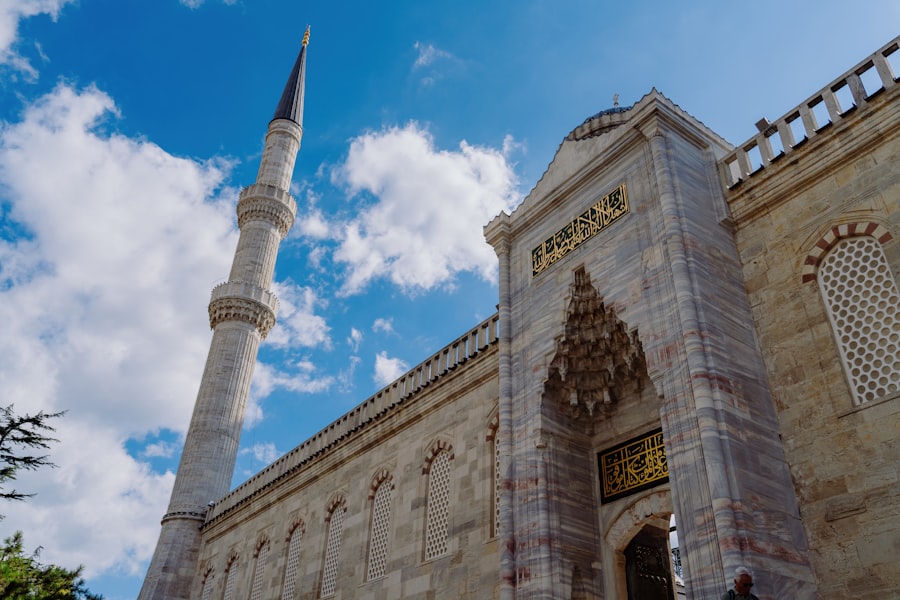
Selim I’s reign left an indelible mark on Ottoman culture and architecture. His conquests brought wealth and resources that fueled artistic endeavors and architectural projects throughout the empire. One of his most significant contributions was the commissioning of grand mosques and public buildings that reflected the empire’s newfound power and prestige.
The architectural style during this period blended traditional Ottoman elements with influences from conquered regions, resulting in a unique aesthetic that characterized Selim’s era. The most notable example of Selim’s architectural legacy is the Mosque of Selim I in Edirne, which stands as a testament to his vision for grandeur and beauty. Completed in 1575, this mosque features intricate tile work, soaring domes, and elegant minarets that exemplify the zenith of Ottoman architecture.
Beyond religious structures, Selim’s patronage extended to various art forms, including calligraphy, painting, and literature. This cultural flourishing during his reign contributed to the rich tapestry of Ottoman heritage that continues to be celebrated today.
Selim I’s Legacy in the Islamic World

Selim I’s legacy extends far beyond his military conquests; he is remembered as a pivotal figure in Islamic history. By asserting control over Mecca and Medina, he positioned himself as a caliph and protector of Islam, earning respect among Muslim communities across the globe. His efforts to unify Sunni Islam under Ottoman leadership resonated with many who sought stability during a time of political fragmentation in the Islamic world.
Moreover, Selim’s reign marked a significant shift in the balance of power within Islam. The Safavid Empire, which adhered to Shia Islam, posed a direct challenge to Sunni authority. Selim’s military victories against the Safavids not only expanded Ottoman territory but also reinforced Sunni dominance in the region.
This religious rivalry would have lasting implications for sectarian relations within Islam, shaping political dynamics for centuries to come.
Relations with European Powers
Selim I’s reign also witnessed complex interactions with European powers, particularly as the Ottoman Empire expanded its influence into Eastern Europe and beyond. While Selim primarily focused on consolidating power within the Islamic world, he could not ignore the growing presence of European states seeking to challenge Ottoman authority. His military successes prompted both fear and admiration among European leaders, who recognized the Ottomans as a formidable force on the continent.
The relationship between Selim I and European powers was characterized by both conflict and diplomacy. While there were instances of military engagement, such as skirmishes with Habsburg forces in Hungary, Selim also engaged in diplomatic efforts to secure alliances and maintain stability along his borders. These interactions laid the groundwork for future relations between Europe and the Ottoman Empire, influencing trade routes and political alliances that would shape international dynamics for generations.
Selim I’s Personal Life and Family
Selim I’s personal life was marked by both triumphs and tragedies that shaped his character as a ruler. He married multiple times throughout his life, with his most notable wife being Hafsa Sultan, who played a significant role in court politics during his reign. Their union produced several children, including Suleiman I, who would later succeed him as sultan.
The relationships within Selim’s family were often fraught with tension, reflecting the broader struggles for power within the imperial court. Despite his reputation for ruthlessness in politics, Selim had moments of introspection that revealed a more complex personality. He was known for his interest in poetry and literature, often engaging with scholars and artists at court.
Religious Policies and Interactions with Non-Muslim Communities
Selim I’s reign was marked by significant religious policies that shaped interactions with non-Muslim communities within the empire. While he positioned himself as a defender of Sunni Islam, he also recognized the importance of maintaining stability among diverse religious groups under Ottoman rule. His approach to governance included granting certain freedoms to non-Muslims while ensuring their loyalty to the empire.
The millet system was one such policy that allowed religious communities to govern themselves according to their own laws while remaining subject to Ottoman authority. This system fostered relative peace among different faiths within the empire, enabling Christians and Jews to coexist alongside Muslims. Selim’s pragmatic approach to religious diversity contributed to social cohesion during his reign and set a precedent for future rulers in managing religious pluralism within the empire.
Succession and the Transition of Power
As Selim I approached the end of his reign, questions regarding succession loomed large over the imperial court. His son Suleiman was groomed for leadership from an early age, but tensions among potential heirs created uncertainty about who would ultimately succeed him. Selim’s experiences with familial rivalries influenced his decisions regarding succession planning; he sought to ensure a smooth transition while minimizing potential conflicts.
Upon Selim’s death in 1520, Suleiman ascended to the throne as Suleiman I, marking a new chapter in Ottoman history. The transition was relatively seamless due to Selim’s careful preparations; however, it also set into motion new challenges as Suleiman faced pressures from both internal factions and external threats. The legacy of Selim I continued through Suleiman’s reign as he built upon his father’s achievements while navigating an increasingly complex political landscape.
Evaluating Selim I’s Reign and Impact on History
Selim I’s reign is often viewed through multiple lenses—military leader, cultural patron, religious authority—each contributing to his complex legacy within history. His aggressive expansionist policies transformed the Ottoman Empire into one of the most powerful states of its time while establishing it as a central player in Islamic politics. The conquests he achieved not only expanded territory but also solidified Ottoman influence over key religious sites.
Moreover, Selim’s administrative reforms laid essential groundwork for future governance structures within the empire that would endure long after his death. His ability to balance military might with cultural patronage created an environment where art and scholarship flourished alongside conquest—a duality that defined much of Ottoman history thereafter. In conclusion, evaluating Selim I’s impact reveals a multifaceted ruler whose legacy continues to resonate through history.
His reign marked a pivotal moment for both the Ottoman Empire and the broader Islamic world—a time when power dynamics shifted dramatically amid cultural flourishing and religious consolidation. As historians reflect on this era, they recognize Selim I not merely as a conqueror but as an architect of an empire that would leave an indelible mark on global history for centuries to come.
Selim I, also known as Selim the Grim, was a significant figure in the expansion of the Ottoman Empire during the early 16th century. His reign marked a pivotal moment in the empire’s history, as he transformed it into a major world power. For more insights into the historical context and impact of Selim I, you can read a related article on the topic at Real Lore and Order.
WATCH THIS! 🗺️ The Map That Proves Humans Explored Earth 5,000 Years Too Early
FAQs
Who was Selim I?
Selim I, also known as Selim the Grim, was the Ottoman Sultan from 1512 to 1520. He is known for significantly expanding the Ottoman Empire’s territory and consolidating its power.
When did Selim I rule the Ottoman Empire?
Selim I ruled the Ottoman Empire from 1512 until his death in 1520.
What were the major achievements of Selim I?
Selim I is credited with expanding the Ottoman Empire into the Middle East, including the conquest of the Mamluk Sultanate in Egypt and Syria. He also secured control over the holy cities of Mecca and Medina, making the Ottoman sultans the custodians of Islam’s holiest sites.
How did Selim I earn the nickname “Selim the Grim”?
Selim I was called “the Grim” due to his stern and ruthless nature, especially in dealing with his rivals and consolidating power within the empire.
What was Selim I’s impact on the Ottoman Empire’s religious authority?
By conquering the Mamluk territories and gaining control over Mecca and Medina, Selim I established the Ottoman sultans as the protectors of the Islamic holy places, enhancing their religious legitimacy.
Who succeeded Selim I as Ottoman Sultan?
Selim I was succeeded by his son, Suleiman the Magnificent, who became one of the most famous Ottoman sultans.
What military campaigns is Selim I known for?
Selim I is known for his military campaigns against the Safavid Empire in Persia and the Mamluk Sultanate in Egypt and Syria, which greatly expanded Ottoman territory.
How did Selim I’s reign affect the Ottoman Empire’s position in the world?
Selim I’s conquests transformed the Ottoman Empire into a major imperial power, controlling key trade routes and religious centers, and setting the stage for its golden age under his successor.