
The star at the center of Earth’s solar system, the Sun, currently exists in a stable state known as the main sequence. This phase, characterized by continuous hydrogen fusion in its core, has provided the necessary conditions for life to flourish on Earth for billions of years. However, this stability is not eternal. The Sun, like all stars, undergoes a predictable life cycle, culminating in a series of dramatic transformations that will ultimately render it unrecognizable to its current form. One of the most significant and final stages in this stellar evolution is the formation of a planetary nebula, a spectacle of ejected stellar material colloquially described by some as “smoke” due to its ethereal, cloud-like appearance, signaling the inevitable demise of the Sun as we know it.
For approximately 4.6 billion years, the Sun has diligently converted hydrogen into helium within its core. This process, nuclear fusion, releases an immense amount of energy, creating the outward pressure that balances the inward pull of gravity. This delicate equilibrium is the hallmark of a main-sequence star.
Core Hydrogen Fusion
At the Sun’s heart, temperatures reach an astonishing 15 million Kelvin, and pressures are millions of times greater than Earth’s atmospheric pressure. Under these extreme conditions, hydrogen nuclei (protons) overcome their electrostatic repulsion and fuse to form helium nuclei. This process, primarily through the proton-proton chain reaction, releases gamma rays, which are subsequently absorbed and re-emitted as they slowly make their way to the Sun’s surface.
Stellar Mass and Lifespan
The lifespan of a main-sequence star is directly proportional to its mass. More massive stars, despite possessing a greater supply of nuclear fuel, consume it at a significantly higher rate due to increased core temperatures and pressures. Consequently, their main-sequence lifetimes are considerably shorter than those of less massive stars. The Sun, with its intermediate mass, is expected to remain on the main sequence for a total of approximately 10 billion years, meaning it is currently about halfway through this stable phase.
Gradual Luminosity Increase
Even during its main-sequence lifetime, the Sun is not entirely static. As hydrogen is converted into helium in the core, the core slowly contracts, increasing its temperature and density. This leads to a gradual increase in the Sun’s luminosity. Over billions of years, the Sun has become approximately 30% brighter than it was when it first formed, a change that has significant implications for Earth’s climate on geological timescales.
In a thought-provoking article on the potential consequences of global warming, the discussion highlights how smoke and pollution can contribute to atmospheric changes that may ultimately affect sunlight reaching the Earth. This phenomenon, often referred to as “global dimming,” raises concerns about its long-term implications for our climate and ecosystems. For more insights on this critical issue, you can read the full article here: Smoke and Its Impact on Sunlight.
The Red Giant Phase
Upon the exhaustion of hydrogen fuel in its core, the Sun will embark on a series of profound transformations, marking its departure from the main sequence. The initial and most dramatic of these changes will be its expansion into a red giant.
Core Contraction and Shell Burning
Once the core’s hydrogen is depleted, fusion ceases. Without the outward pressure generated by fusion, gravity asserts its dominance, causing the inert helium core to contract. This contraction increases the core’s temperature and density. Simultaneously, hydrogen fusion ignites in a shell surrounding the now-contracting helium core. This “shell burning” is a precarious process, releasing even more energy than core fusion, leading to a dramatic increase in the Sun’s overall luminosity and radius.
Expansion and Cooling
The intense energy output from the hydrogen-burning shell drives the outer layers of the Sun to expand enormously. As these layers expand, they cool, explaining the “red” in “red giant.” The Sun’s radius is predicted to swell to such an extent that it will engulf Mercury, Venus, and potentially even Earth. The Earth’s fate at this stage is a subject of ongoing debate among astrophysicists, with possibilities ranging from complete engulfment to being tidally stripped and scorched.
Helium Flash and Horizontal Branch
As the helium core continues to contract and heat, it will eventually reach a critical temperature and density (approximately 100 million Kelvin). At this point, helium fusion will ignite suddenly and explosively in a process known as the “helium flash.” This event, occurring deep within the Sun’s core, will not be directly observable from the outside. Following the helium flash, the Sun will enter a brief, more stable phase called the horizontal branch, where it will fuse helium into carbon and oxygen in its core. This phase is significantly shorter than the main sequence.
The Asymptotic Giant Branch (AGB)

After exhausting the helium in its core, the Sun will undergo a second, even larger expansion, entering the asymptotic giant branch (AGB) phase. This stage is characterized by further dramatic changes in the Sun’s structure and activity.
Double Shell Burning
Similar to the red giant phase, the exhaustion of helium in the core leads to its contraction. This time, fusion will cease in the core, and two distinct burning shells will form: an inner helium-burning shell converting helium to carbon and oxygen, and an outer hydrogen-burning shell converting hydrogen to helium. This double-shell burning configuration makes the AGB star extremely luminous and unstable.
Thermal Pulses and Mass Loss
The AGB phase is marked by periods of intense instability known as “thermal pulses.” During these pulses, the helium-burning shell experiences runaway fusion, causing a sudden increase in luminosity and a dramatic expansion of the outer layers. These pulses are crucial for the later formation of planetary nebulae. The Sun will experience significant mass loss during this phase, driven by powerful stellar winds. These winds, far more energetic than the solar wind currently emanating from the Sun, will carry away a substantial fraction of the Sun’s outer envelopes.
Enrichment of the Interstellar Medium
The material ejected during the AGB phase, primarily carbon, oxygen, and other heavier elements synthesized inside the star, plays a vital role in enriching the interstellar medium. This enriched gas and dust eventually condense to form new stars and planetary systems. Therefore, the Sun, in its death throes, will contribute the building blocks for future generations of stars and planets.
The Planetary Nebula Formation
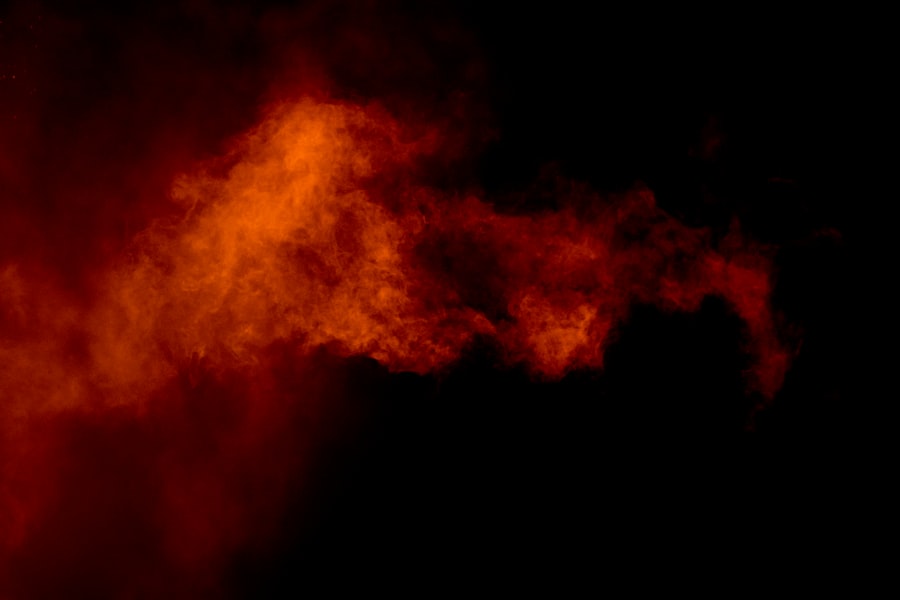
The culmination of the Sun’s stellar evolution, and the metaphorical “smoke” often referred to, is the formation of a planetary nebula. This breathtaking celestial phenomenon is a direct consequence of the immense mass loss during the AGB phase.
Ejection of Outer Layers
As the Sun sheds its outer layers during its AGB phase, the remaining core becomes increasingly exposed. The powerful stellar winds and thermal pulses eventually eject the vast majority of the star’s hydrogen and helium envelope into space. This material, expanding outwards at tens of kilometers per second, forms a beautiful, often intricate, shell of glowing gas.
Ionization by the Central Star
Once the outer layers have been sufficiently ejected, the extremely hot, exposed stellar core, now a nascent white dwarf, emits intense ultraviolet radiation. This high-energy radiation ionizes the surrounding ejected gas, causing it to glow in various vibrant colors. The specific colors observed depend on the chemical composition of the nebula and the density of the gas. For example, oxygen often glows green, and hydrogen glows red.
Short-Lived Spectacle
Planetary nebulae are relatively short-lived astronomical phenomena, lasting only for tens of thousands of years, a fleeting moment in cosmic timescales. As the ejected material continues to expand and thin out, it eventually disperses into the vastness of interstellar space. The central white dwarf, however, will persist for billions, even trillions, of years.
In a fascinating exploration of environmental impacts, an article discusses how smoke from wildfires can contribute to atmospheric changes that may ultimately affect sunlight reaching the Earth. This phenomenon raises concerns about climate change and its potential to alter weather patterns significantly. For more insights on this topic, you can read the full article here. Understanding these connections is crucial as we navigate the complexities of our changing planet.
The White Dwarf Remnant
| Metric | Description | Value | Unit |
|---|---|---|---|
| Smoke Density | Concentration of smoke particles in the atmosphere | 0.05 | g/m³ |
| Solar Radiation Reduction | Percentage decrease in sunlight reaching Earth’s surface | 75 | % |
| Atmospheric Opacity | Measure of atmosphere’s transparency due to smoke | 0.9 | Unitless (0-1 scale) |
| Duration of Smoke Presence | Estimated time smoke remains in atmosphere | 5 | Years |
| Temperature Drop | Average global temperature decrease due to smoke | 3 | °C |
| Photosynthesis Reduction | Decrease in global photosynthesis rates | 60 | % |
After the planetary nebula dissipates, the Sun will leave behind its final, compact remnant: a white dwarf. This fate awaits the vast majority of stars with masses similar to our Sun.
Stellar Corpse Composition
The white dwarf will be composed primarily of carbon and oxygen, the end products of helium fusion in the Sun’s core. It will represent the compressed core of the original star, lacking any ongoing nuclear fusion. Its internal structure is held against further collapse by a quantum mechanical effect known as electron degeneracy pressure, which prevents electrons from occupying the same quantum state.
High Density and Low Luminosity
White dwarfs are incredibly dense, packing the mass of the Sun into a volume roughly the size of Earth. Despite their high temperatures initially, they are faint objects compared to main-sequence stars due to their small surface area. They do not generate energy through fusion; rather, they slowly radiate away their remaining thermal energy into space.
Gradual Cooling and Black Dwarf
Without an internal heat source, the white dwarf will gradually cool over eons. Its luminosity will steadily decrease, and its color will shift from white to yellow, then orange, and eventually red. Over timescales far exceeding the current age of the universe, the white dwarf is theorized to cool down completely, becoming a “black dwarf” – a cold, dark, and theoretical object that has yet to be observed due to the immense time required for cooling. This final state represents the ultimate cessation of all stellar activity for a star like the Sun, a silent monument to its once fiery existence.
In conclusion, the Sun’s journey from a life-sustaining hydrogen burner to a cool, dark white dwarf is a cosmic epic spanning billions of years. The “smoke” of the planetary nebula, while a beautiful spectacle, serves as an undeniable harbinger of the Sun’s ultimate demise. This understanding, gleaned from decades of astronomical observation and theoretical modeling, offers a profound perspective on the transient nature of even the most seemingly immutable celestial bodies. While Earth’s present inhabitants will not witness these dramatic transformations, the knowledge of the Sun’s predictable life cycle underscores the dynamic and ever-evolving nature of the universe in which we reside. The Sun’s end is not merely a cessation but a transformation, a monumental act of stellar recycling that paves the way for new beginnings in the vast cosmic tapestry.
FAQs
What is the concept behind “smoke that will end the sun”?
The phrase “smoke that will end the sun” typically refers to large-scale smoke or particulate matter in the atmosphere that could block sunlight, potentially leading to significant environmental and climatic effects.
How can smoke affect sunlight reaching the Earth?
Smoke particles in the atmosphere can scatter and absorb sunlight, reducing the amount of solar radiation that reaches the Earth’s surface, which can lead to cooling effects and disruptions in weather patterns.
What are the sources of smoke that could impact the sun’s visibility?
Major sources include large wildfires, volcanic eruptions, and industrial pollution, all of which can release vast amounts of smoke and aerosols into the atmosphere.
Could smoke from wildfires or other sources actually “end” the sun?
No, smoke cannot literally end the sun. However, dense smoke can significantly reduce sunlight reaching the surface, causing temporary darkness or dimming, but the sun itself remains unaffected.
What are the potential environmental impacts of prolonged smoke coverage?
Prolonged smoke coverage can lead to reduced photosynthesis in plants, lower temperatures, disrupted ecosystems, and health issues in humans due to poor air quality.